Key Criteria for Smart Camera Chipsets A HiSilicon Analysis
Selecting a smart camera chipset requires evaluating several key criteria. These include image quality, AI processing, power
Selecting a smart camera chipset requires evaluating several key criteria. These include image quality, AI processing, power efficiency, and robust security. This security must ensure regulatory compliance. The smart camera market is expanding rapidly, with analysts projecting a compound annual growth rate of nearly 10% through 2030.
This analysis breaks down these key criteria. It uses HiSilicon's chipset solutions as a practical example. The guide shows how a leading chipset meets demanding requirements, especially for security and NDAA compliance. HiSilicon provides a path to NDAA compliance, with a focus on NDAA security for an NDAA-compliant camera. This is crucial for any NDAA-related camera project.
Key Takeaways
- Good smart cameras need clear video. The Image Signal Processor (ISP) makes pictures look good by fixing colors and removing blurry parts.
- Smart cameras use special chips called NPUs for AI. These chips help cameras understand what they see, like finding people or cars, and they work fast.
- Cameras need to save power. Chips that use less power make cameras last longer and stop them from getting too hot, which helps them work better.
- Security is very important for cameras. Chips must have strong security to stop hackers and follow rules like NDAA, which keeps data safe.
- A good development kit helps make new cameras quickly. This kit gives tools to build smart camera features, making it easier for companies to create new products.
KEY CRITERIA FOR IMAGE QUALITY:
Excellent video quality is the foundation of any effective smart camera. The chipset's ability to capture and process light into a clear, detailed image determines its overall performance. This process is not accidental; it is the direct result of a powerful, dedicated component.
THE ROLE OF THE ISP:
The Image Signal Processor (ISP) is the brain behind a camera's vision. It takes raw, imperfect data from the image sensor and reconstructs it into a final picture. The ISP's primary job is to enhance video quality through a series of complex steps. These steps include:
- Demosaicing: Creating a full-color image from the sensor's initial data.
- Color Correction: Ensuring colors appear accurate and natural.
- Noise Reduction: Removing visual grain, especially in low light.
- Distortion Correction: Fixing issues like bent lines (lens distortion) or color fringing (chromatic aberration).
A larger sensor with bigger pixels can capture more light. This provides the ISP with a stronger signal, which is crucial for better low-light performance and a higher signal-to-noise ratio. The ISP then uses this data to produce a clean, sharp video.
EVALUATING ISP PERFORMANCE:
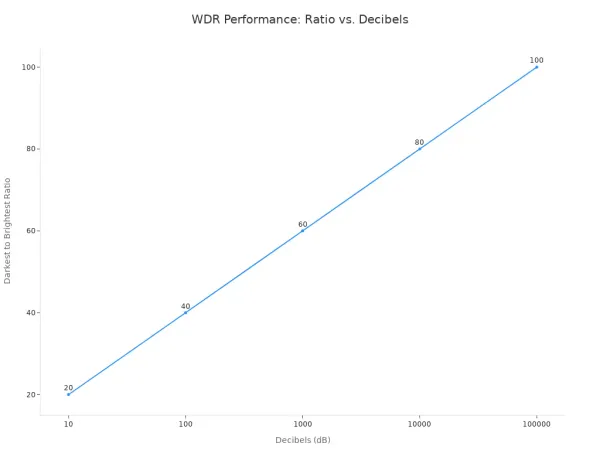
Evaluating an ISP's performance involves looking at specific features that impact real-world video. Two of the most critical functions are Wide Dynamic Range (WDR) and 3D Noise Reduction (3DNR).
Note: WDR measures the ability to capture detail in scenes with both very bright and very dark areas. This performance is measured in decibels (dB). A higher dB value means better video quality in challenging light.
Noise reduction is another key performance indicator. While 2DNR cleans up a single video frame, 3DNR is far more advanced. It compares multiple frames to intelligently separate noise from actual movement, resulting in a much cleaner video.
| Feature | 2D Noise Reduction (2DNR) | 3D Noise Reduction (3DNR) |
|---|---|---|
| Category | Spatial Noise Reduction | Temporal Noise Reduction |
| Mechanism | Analyzes one frame at a time. | Analyzes a sequence of frames. |
| Advantages | Avoids motion blur. | Extremely effective at noise removal. |
| Disadvantages | Less effective; can soften edges. | May cause blur with fast motion. |
HiSilicon's latest-generation ISPs, found in series like the Hi35xx, deliver industry-leading WDR and 3DNR. This advanced high-definition video processing ensures clear, usable footage, making them a benchmark for high-performance security solutions.
AI PROCESSING AND ON-DEVICE INTELLIGENCE:
Modern smart cameras do more than just record video; they analyze and understand it. This leap from passive recording to active intelligence is driven by the processing power embedded within the chipset. On-device AI reduces latency, enhances privacy, and ensures operation even without a network connection.
THE NEURAL PROCESSING UNIT (NPU):
A dedicated Neural Processing Unit (NPU) is essential for running AI tasks directly on a camera. It handles complex calculations for features like object detection and behavioral analysis efficiently. The performance of an NPU is commonly measured in Tera Operations Per Second (TOPS), which quantifies how many trillion calculations it can perform each second.
The formula for TOPS is generally:
TOPS = 2 × MAC unit count × Frequency / 1 trillion
ENABLING ADVANCED AI FEATURES:
A powerful and efficient NPU enables a wide range of intelligent features. HiSilicon's NPU architecture is designed for a high TOPS-to-watt ratio, a critical metric for performance efficiency. While some leading accelerators achieve ratios around 16 TOPS per watt, HiSilicon's focus on efficiency allows a smart camera to run sophisticated algorithms with minimal power consumption. This capability unlocks advanced on-device functionalities, including:
- Object and Person Detection: Identifying humans, vehicles, and animals to reduce false alarms from environmental factors.
- Behavioral Analysis: Recognizing unusual activities like trespassing, loitering, or falls by learning normal patterns.
- Facial and License Plate Recognition: Granting access to authorized individuals or identifying specific vehicles for security and management.
This powerful processing even makes it possible to run compact on-device Large Language Models (LLMs), opening new possibilities for intelligent interaction and data interpretation.
POWER EFFICIENCY AND THERMAL DESIGN:
Power efficiency is a cornerstone of modern chipset design. It directly impacts a device's lifespan, form factor, and operational reliability. A focus on efficiency allows manufacturers to build more advanced and durable products.
THE IMPORTANCE OF LOW POWER:
Low power consumption is critical for smart camera longevity and design flexibility. A typical 4K security camera can consume around 12 watts of power. This energy use generates heat. Excessive heat is a primary cause of electronic component failure. It can degrade image quality by causing digital noise and color inaccuracies before a thermal protection system shuts the device down entirely.
Excellent thermal efficiency is therefore not just a feature; it is a requirement for reliability. High efficiency enables smaller, fanless designs that are essential for portable devices like UAVs or sealed outdoor units. These designs must prevent dust and moisture ingress, which makes heat dissipation a major challenge. A design with superior power efficiency minimizes heat from the start, simplifying thermal management and improving device durability. This focus on efficiency is paramount.
MODERN LOW-POWER ARCHITECTURES:
Manufacturers achieve high efficiency through advanced hardware design. The choice of semiconductor process node is fundamental to this goal. Modern architectures have moved to smaller process nodes, such as 12nm, which provide an optimal balance of performance and power efficiency. This technology is a significant leap from older, less efficient 28nm nodes.
A smaller process node allows for a more compact and power-efficient chipset. HiSilicon leverages advanced 12nm process nodes and sophisticated power management techniques to maximize this efficiency. This approach minimizes energy consumption and heat output. The result is superior performance efficiency, allowing a smart camera to run complex AI tasks without overheating. This commitment to efficiency ensures stable operation and extends the product's service life.
CHOOSING A SECURE SECURITY CAMERA CHIPSET:
Robust security is non-negotiable for modern security camera systems. A secure security camera chipset provides the foundation for protecting a device from cyberattacks. Strong cybersecurity measures prevent unauthorized access and ensure data integrity for any surveillance camera system. The entire security posture of a camera depends on the underlying chipset.
ESSENTIAL HARDWARE SECURITY LAYERS:
Software vulnerabilities create significant cybersecurity risks. Attackers exploit default passwords, misconfigurations, and software flaws to hijack devices. They can integrate a camera into a botnet for malicious attacks. Enhanced cybersecurity starts at the hardware level to counter these threats.
A chipset with a hardware Root of Trust (RoT) establishes an unbreakable chain of trust. This security feature uses immutable code to verify the device’s firmware during boot-up. If the system detects any tampered code, it will refuse to start, preventing malware from running. This process provides fundamental security.
Additionally, a dedicated cryptographic engine accelerates encryption. It offloads intensive calculations from the main processor. This enhances security and improves performance, a key feature for any advanced IP camera chipset. This hardware-level security is vital for enhanced cybersecurity.
UNDERSTANDING NDAA COMPLIANCE:
The National Defense Authorization Act (NDAA) includes critical rules for the video surveillance industry. Section 889 of the NDAA specifically addresses national security risks. It prohibits U.S. federal agencies from procuring or using surveillance equipment from certain companies. These cybersecurity concerns are central to the NDAA regulation. This focus on national security makes NDAA compliance a key requirement. The NDAA directly impacts component selection for security camera systems. Achieving compliance with the NDAA is essential for federal contracts. This NDAA standard also influences the private sector. The goal of the NDAA is to bolster national security.
PATHS TO NDAA CAMERA COMPLIANCE:
Achieving NDAA camera compliance requires careful component sourcing. Manufacturers must ensure their products contain no parts from banned entities. The NDAA ban includes companies like Huawei, ZTE, Hikvision, and Dahua, along with their affiliates. Full NDAA compliance is a prerequisite for selling to the U.S. government. Many enterprise customers also demand NDAA-compliant products for their own security.
Building NDAA-compliant security cameras means selecting a chipset from a trusted, non-listed supplier. This ensures the final product meets federal security standards. This path to NDAA camera compliance allows manufacturers to build trustworthy and competitive NDAA-compliant camera systems. This level of compliance and security is what the market now demands for surveillance. The NDAA has reshaped the security landscape.
CONNECTIVITY AND DATA THROUGHPUT:
A smart camera's ability to transmit video data reliably is just as important as its ability to capture it. The right connectivity ensures that high-quality footage reaches its destination without interruption. This is a critical consideration for any modern IoT device.
EVALUATING CONNECTIVITY OPTIONS:
Manufacturers must choose between wired and wireless solutions. Power over Ethernet (PoE) and Wi-Fi are the two primary options. Each has distinct advantages. PoE provides a highly stable and secure connection, making it ideal for professional installations. Wi-Fi offers unmatched flexibility and ease of installation, which is perfect for many home and commercial IoT settings. The choice often depends on the specific application and environment. A weak Wi-Fi signal can disrupt service, while PoE requires physical cable runs.
| Feature | Power over Ethernet (PoE) | Wi-Fi Camera |
|---|---|---|
| Reliability | Very Stable, Wired Connection | Can be spotty; depends on Wi-Fi signal |
| Installation | More Complex, Requires Cabling | Easy, DIY-Friendly |
| Security | High (Closed, Wired Network) | Medium (Vulnerable to Wi-Fi threats) |
| Ideal For | Business & Advanced Home Users | General Home & DIY IoT Projects |
While Wi-Fi is convenient, a network with many connected devices can lead to congestion. This is a common challenge in a dense IoT environment. A strong Wi-Fi network is essential for reliable performance.
BALANCING SPEED AND EFFICIENCY:
High-resolution video demands significant bandwidth. Streaming 4K video, for example, typically requires a connection speed of around 15-19 Mbps. A powerful chipset must manage this data throughput with great efficiency.
Modern video compression standards are key to this balance. Codecs like H.265 (HEVC) deliver the same video quality as older standards but at nearly half the bitrate. This advancement is crucial for reducing storage costs and easing network load, especially on a busy Wi-Fi network. This efficiency allows more Wi-Fi cameras to operate smoothly. The latest compression technologies enable high-quality video transmission even over limited bandwidth, a vital feature for today's interconnected IoT world.
DEVELOPMENT ECOSYSTEM AND SUPPORT:
A powerful processor is only as good as the software that runs on it. A strong development ecosystem provides the tools and support that manufacturers need to build innovative products. This support system is a critical factor in the success of any smart camera project.
THE VALUE OF A ROBUST SDK:
A Software Development Kit (SDK) is the essential toolkit for developers. It provides the building blocks needed to create custom applications and features. A comprehensive SDK saves countless hours of development time. It typically includes several key layers:
- Middleware: This layer offers Application Programming Interfaces (APIs) for core functions like video capture, encoding, and AI processing.
- Application Layer: It provides sample code and libraries for specific tasks, such as facial recognition or object detection.
- Development Tools: A complete environment includes cross-compilation toolchains, debugging tools, and documentation to streamline the entire workflow.
A robust SDK gives developers direct access to the hardware's capabilities. It allows them to control the Image Signal Processor (ISP) for image tuning and leverage the Neural Processing Unit (NPU) for AI tasks. This level of control is vital for creating a differentiated and high-performing product.
ACCELERATING TIME-TO-MARKET:
A mature development ecosystem directly accelerates a product's time-to-market. It allows companies to integrate advanced features without starting from scratch. For example, some businesses have used modular SDKs to embed complex analytics or privacy tools into their platforms in a matter of hours. This rapid deployment transforms a lengthy development cycle into a quick and efficient process.
A powerful chipset combined with a mature SDK gives manufacturers a significant competitive advantage. It enables them to quickly develop, test, and launch new smart cameras. This agility allows companies to respond swiftly to market trends and customer needs, ensuring their products remain relevant and competitive. Ultimately, a strong support ecosystem turns a component into a complete solution.
Evaluating a smart camera chipset requires a checklist of key criteria. These key criteria cover ISP quality, AI power, and robust security. HiSilicon provides a path to NDAA compliance with its focus on NDAA security. This NDAA security is essential for any NDAA camera. The company's commitment to NDAA security and overall security ensures NDAA compliance. This focus on NDAA security and total security helps manufacturers meet all key criteria for NDAA, making their products ready for any NDAA project under NDAA rules.
FAQ
What does NDAA mean for security cameras?
The National Defense Authorization Act (NDAA) sets security rules. Section 889 of the NDAA bans federal use of specific surveillance equipment. This NDAA rule aims to improve national security. The NDAA has become a global standard for secure systems, making NDAA compliance essential for many projects.
How can a manufacturer ensure NDAA compliance?
Manufacturers achieve NDAA compliance by avoiding components from banned companies. This requires careful sourcing for every part. Building an NDAA-compliant camera means the final product is secure. This focus on NDAA standards helps create trustworthy devices for the market. The NDAA shapes the entire supply chain.
What is the most critical feature in a smart camera chipset?
Image quality is fundamental, but robust hardware security is the most critical feature. A secure chipset protects against cyber threats and provides a foundation for system integrity. This security is also a core requirement for meeting strict regulations like the NDAA.
Is a Wi-Fi camera less secure than a wired one?
A Wi-Fi camera can be less secure due to network vulnerabilities. Wired connections are generally more stable and protected. However, strong encryption and a secure network can protect wireless devices. Proper setup is vital for maintaining security, especially for systems requiring NDAA compliance.