Embedded AI Chips and their impact on intelligent sensing solutions
Embedded ai chips are changing intelligent sensing in big ways. Devices do more than collect data now. They can study and react to data right away. Local ai processing is now very important
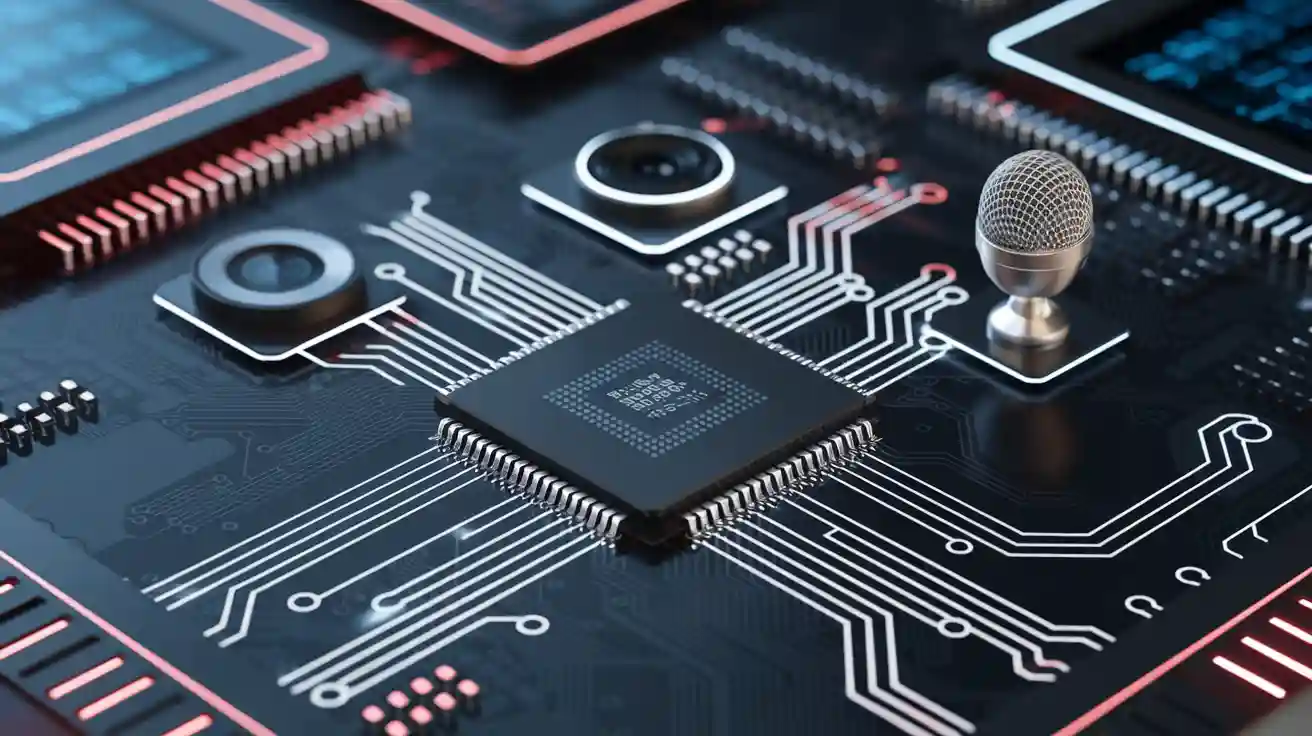
Embedded ai chips are changing intelligent sensing in big ways. Devices do more than collect data now. They can study and react to data right away. Local ai processing is now very important. More people are using it. In Latin America, use went up by 18 percent in 2024. The market is growing fast:
|
Statistic Description |
Numerical Value / Projection |
|---|---|
|
Over USD 15 billion |
|
|
Projected AI chip market by 2032 |
Exceeding USD 100 billion |
|
Smartphones shipping with embedded AI chips in 2024 |
Over 1.4 billion units |
|
AI-enabled devices at the edge by 2030 |
Over 50 billion devices |
These new changes make embedded ai chips very important. They help many industries with modern sensing solutions.
Key Takeaways
-
Embedded AI chips help devices handle data right away. This makes sensing quicker and more correct. Devices do not need to send data to the cloud.
-
These chips use less energy and keep data safe. They store data on the device. This is very important for wearables, cars, healthcare, and factories.
-
AI-driven embedded systems let smart devices work on their own. This helps make things safer and more efficient in many jobs.
-
There are problems like not enough resources and too much heat. New designs and cooling ways are needed. These help AI chips stay strong and work well.
-
In the future, embedded AI chips will be even smarter. They will save more energy. They will be used more for real-time sensing in many areas.
Impact of Embedded AI Chips
Real-Time Processing
Embedded ai chips have changed how devices use information. Before, sensors sent data to the cloud for checking. Now, ai-driven embedded systems study data right on the device. This lets devices make choices right away.
Texas Instruments' C2000 microcontrollers have neural processing units. These show how real-time data processing works. These chips are five to ten times faster than software-only ways. In solar and energy storage, the chips find faults almost at once. The embedded ai chips also spot faults with over 99% accuracy. The new C29 core makes signal-chain work twice as fast. This helps cars and high-voltage systems work better.
New ai-driven embedded systems are much better than old ones. The AMD Ryzen AI 9 365 SoC and AMD Ryzen AI 9 HX 370 SoC can do up to 80 trillion operations each second. These chips handle many ai tasks at once. Regular CPUs cannot do this. The AI Chips 2023-2033 report says ai chips will grow by 24.4% each year. This is because more people need special chips for ai inference and machine learning.
Many things use these new ai chips. The table below shows how ai-driven embedded systems help with accuracy and speed in sensing:
|
Application Area |
Sensor Type(s) |
AI Model(s) |
Performance Metric |
|---|---|---|---|
|
Foot strike angle prediction |
Wearable pressure insoles |
Multiple Linear Regression |
>90% accuracy |
|
Ankle angle prediction |
Shoe pressure sensors (6 FSRs) |
K-Nearest Neighbors (KNN) |
>93% accuracy (squats), >87% (bends) |
|
Fall risk prediction |
Wireless pressure insoles |
Logistic Regression, RF |
AUC=0.88, Accuracy=0.81, Specificity=0.88 |
|
Gas source localization |
Gas sensor array (CO2, temp-humidity, MOS) |
CNN-LSTM + DNN |
93.9% accuracy |
|
Tool wear prediction |
Tool sensors (acceleration, sound frequency) |
CNN + Bidirectional LSTM + Linear Regression |
RMSE < 8.1% |
|
Robotic hand tactile sensing |
Tactile sensors (shear force data) |
CNN |
Position accuracy within 3 mm, Angle accuracy within 9° |
These results show that ai-driven embedded systems are very accurate and quick. Devices can now do ai inference on the edge. This means they do not need to send as much data to the cloud. It also makes them work better.
Tip: Real-time processing with embedded ai chips lets devices react to changes right away. This is very important for safety and trust in healthcare and factories.
Active Sensing
Active sensing is a big step for ai-driven embedded systems. Old sensors only watched what happened around them. They waited for things like light or heat and sent this data away. With embedded ai chips, sensors now do more.
Modern ai-driven embedded systems use sensors that send out signals, like LiDAR or RADAR. These sensors shoot out waves or laser pulses. They then check how the signals come back. Embedded ai chips study this data on the device. They use machine learning to understand what it means. This helps devices know what is happening and make their own choices.
In the Internet of Things (IoT), ai-driven embedded systems have made sensors active. Espressif's ESP32 microcontrollers mix wireless with ai inference. These systems can hear speech or find strange patterns on the device. Neuromorphic processors from Texas Instruments let sensors check data on hardware. This makes things faster and cuts down on sending data.
Active sensing has many good points:
-
Devices can act as soon as something happens.
-
Local ai inference keeps data private on the device.
-
Systems are more reliable since they do not need the cloud.
Active sensing helps with things like watching the environment, home security, and factory work. For example, ai-driven embedded systems in factories can find broken machines before they cause trouble. In healthcare, wearable devices use ai inference to watch how patients move. They can warn about risks, like falls, with high accuracy.
Note: Active sensing with embedded ai chips lets devices do more than just watch. They can now understand, guess, and act. This makes intelligent sensing solutions smarter and more independent.
What Are Embedded AI Chips

Core Functions
Embedded ai chips act like the brains in smart devices. They help these systems do things like machine learning and data processing right on the device. These chips can train ai models and run ai algorithms well, even if the device is small or does not use much power.
-
They look at sensor data right away. This is important for things like self-driving cars, health watches, and factory robots.
-
Special processors, like GPUs and edge accelerators, make these systems work faster.
-
In cars, these chips help with driver-assistance, stopping crashes, and fixing problems before they happen.
-
Embedded ai systems use ai algorithms to find patterns, guess what will happen, and make choices without always needing the cloud.
The table below shows how different places and industries use ai-driven embedded systems:
|
Industry/Region |
Adoption Rate / Engagement |
Key Uses and Notes |
|---|---|---|
|
Overall Organizations |
Broad adoption across sectors |
|
|
Larger Companies |
>54% SMBs using AI |
Larger firms adopt AI more frequently |
|
Information & Communication |
~48.72% AI engagement |
Leading sector in AI adoption |
|
Healthcare |
66% physician AI usage |
AI used in clinical settings |
|
Finance |
Extensive AI in trading, fraud detection |
High AI integration in financial services |
|
Manufacturing |
AI for supply chain, predictive maintenance |
Significant AI use in operations |
|
Retail |
93% discuss generative AI at board level |
Growing AI use in development and marketing |
|
North America |
36.84% adoption |
Leading region with $73.98B market size in 2025 |
|
EU |
13.48% adoption |
Varied but increasing adoption |
|
China |
High adoption |
Rapid growth, especially in manufacturing |
|
India |
59% adoption |
Rapid growth across sectors |

Why They Matter
Embedded ai chips are very important in today’s sensor systems. They let smart devices handle information on their own. This means they do not need to send as much data to the cloud. Local processing helps devices make fast choices in things like self-driving cars and fixing machines before they break.
Note: Gartner says that by 2025, most data from companies will be made and used outside of regular data centers. This shows why embedded ai chips are needed for smart local systems.
The market for these smart systems is getting bigger. In 2023, the market was worth over USD 20 billion. The main reasons are more IoT, car electronics, health tech, and factory robots. Companies like Intel, Qualcomm, and NXP Semiconductors are leaders in this area.
|
Metric/Aspect |
Details |
|---|---|
|
Market Valuation (2023) |
Exceeded USD 20 billion |
|
Projected CAGR (2025-2032) |
5.1% |
|
Key Industry Drivers |
IoT, automotive electronics, consumer devices, healthcare, telecommunications, industrial automation |
|
Leading Companies |
Intel, Qualcomm, NXP Semiconductors |
|
Regional Market Leaders |
North America, Asia-Pacific |
|
Application Areas |
Autonomous vehicles, smart consumer products, healthcare devices |
|
Trends Supporting Growth |
Edge computing, machine learning advancements, energy-efficient technologies |
Generative ai and machine learning are changing how these smart systems are built. These new ideas help make things faster and let devices do more, like spotting problems early or recognizing pictures. Ai model training and ai algorithms keep making embedded ai systems better, so they are a big part of the future for smart sensing.
Key Technologies
Microcontrollers
Microcontrollers are very important in many embedded AI systems. They run machine learning models right on the device. This means they do not need the cloud for fast AI work. Many smart sensor units use microcontrollers to handle sensor data quickly. The MLPerf Tiny Benchmark Suite shows microcontrollers can do jobs like keyword spotting and finding odd things. They use little power and memory. Decision tree algorithms are the most accurate and fastest. Multi-layer perceptrons can reach 0.97 accuracy with small memory use. These results show microcontrollers work well for AI in places with few resources.
|
Algorithm |
Accuracy |
Memory Footprint |
Classification Speed |
Notes |
|---|---|---|---|---|
|
Decision Tree (DT) |
Best |
Lowest |
Fastest |
Most efficient |
|
Random Forest (RF) |
Comparable |
Low |
Fast |
Efficient |
|
Multi-Layer Perceptron (MLP) |
0.97 |
Moderate |
Moderate |
Limited by SRAM |
|
Support Vector Machine (SVM) |
Weakest |
Largest |
Slowest |
Least efficient |
NPUs and Accelerators
Neural processing units and AI accelerators make embedded AI chips work better. These parts handle hard AI jobs. They help smart sensor units work faster and save energy. ARC NPX NPUs can do up to 96,000 multiply-accumulate jobs each cycle. They can reach thousands of TOPS on one chip. AI accelerators use 100 to 1,000 times less energy than regular processors. This is very important for real-time and safety jobs, like driver-assistance systems. Some systems mix NPUs, DSPs, and microcontrollers. This helps them handle sensor fusion and AI jobs better.
AI Sensors
AI sensors mix normal sensing with built-in processing. They study data right where it is made. This means they do not need to send all the data to the cloud. Many smart systems now use AI sensors in electronics, cars, and factories. These sensors let smart sensor units make choices right away. Using AI sensors and processors helps with things like finding objects, watching the environment, and fixing things before they break. This way is better for privacy, makes things faster, and helps smart devices work well.
Tip: AI sensors let devices learn about their surroundings and act fast. This makes them very important for new sensor fusion solutions.
GPUs
GPUs are important in embedded AI chips, especially for jobs that need lots of things done at once. Companies like NVIDIA use RISC-V cores in their GPUs to handle AI jobs well. GPUs help with image recognition, video work, and other sensor jobs. Mobile chips from Qualcomm, Apple, and Google have strong GPU and NPU parts. This shows how important these are in embedded AI. Car chips also use powerful GPUs to help with self-driving and smart sensor units.
Intelligent Sensing Applications
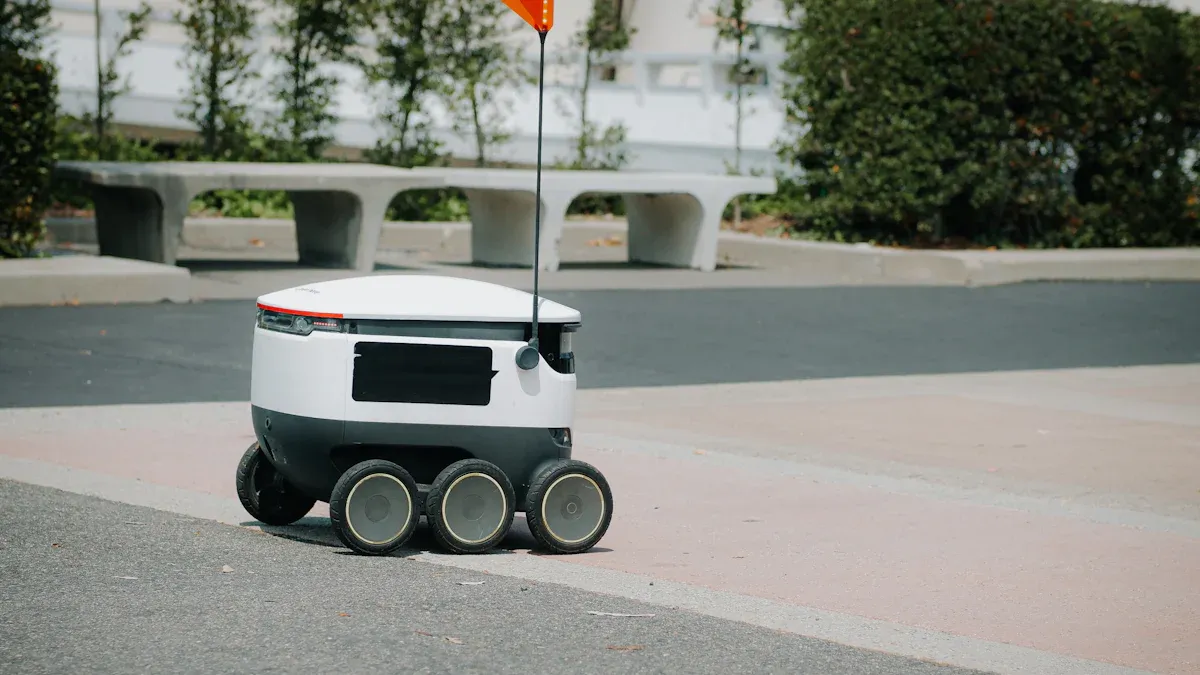
Smart Cameras
Smart cameras with ai-driven embedded systems can now study images right away. These cameras have ai chips inside to look at pictures as soon as they take them. In Turkey, more than 750 intersections use smart cameras to watch traffic. These cameras check traffic and find problems without sending data to the cloud. In factories, smart cameras like Cognex In-Sight and Luxonis OAK-D check products and find mistakes. They use sensor data over time and make choices on their own on the line. This helps stop errors and makes products better. More companies want smart vision with embedded ai because it is faster and more trusted.
Industrial IoT
Industrial IoT uses ai-driven embedded systems to help with making things and moving goods. Companies like TSMC and Samsung use ai to guess what people will buy and keep track of supplies. Qualcomm uses ai to check if suppliers are risky. These systems look at sensor data over time to find problems and stop machines from breaking. Ai helps fix things before they break, so work does not stop and money is saved. Nvidia uses ai to track shipments and pick the best routes. Embedded ai in industrial IoT also helps find strange things in the environment, so factories can act fast. In-sensor ai computing and micro edge AI let devices study data on their own, which makes them work better and keeps data private.
Healthcare Devices
Healthcare devices now use ai-driven embedded systems to watch patients and help doctors and nurses. Wearable sensors collect data about heart rate, movement, and other signs. Embedded ai chips look at this data right away and find things like odd heartbeats or falls. These systems help keep medical tools working well by checking them often. Hospitals use ai to study patient data and give better care. Local processing keeps private information safe and lets staff act quickly. More healthcare places use embedded ai, which leads to better care and safer places.
Automotive
Cars get a lot of help from ai-driven embedded systems. New cars use ai chips to study data from cameras, radar, and other sensors. These systems can look at videos right away and find dangers or guess crashes in less than 50 milliseconds. Advanced Driver Assistance Systems (ADAS) use ai for steering, finding people, and checking blind spots. Ai helps fix car parts before they break and makes them last longer. Embedded ai in cars helps them make choices on their own, which makes driving safer and smoother. In-sensor ai computing and micro edge AI keep data in the car, which helps keep it private and makes things faster.
The AI-Enabled Embedded Systems Market could grow from $8.5 billion in 2024 to $35.7 billion by 2034. Big areas are cars, factory robots, healthcare, and home gadgets. Companies like NVIDIA, Intel, and Qualcomm are helping this market grow fast.
|
Sector |
Example Use Cases |
AI Benefits |
|---|---|---|
|
Smart Cameras |
Traffic, quality inspection |
Real-time analytics, defect detection |
|
Industrial IoT |
Supply chain, predictive maintenance |
Cost savings, anomaly detection |
|
Healthcare Devices |
Patient monitoring, equipment reliability |
Early warnings, privacy |
|
Automotive |
ADAS, predictive maintenance |
Safety, autonomous decision-making |
Trends in Embedded AI Chips
Edge AI
Edge computing is changing how devices use ai. Companies put ai chips right into sensors and devices now. This means data gets processed where it is made. Devices do not have to send all their information to the cloud. This helps keep data private and makes things faster. The semiconductor market is growing quickly. Sales could reach $697 billion in 2025. A lot of this growth comes from ai accelerators and edge computing. Car makers use more ai chips every year. They use them in electric vehicles and driver-assistance systems. Factories are being built to keep up with the need for more chips. Chips are getting smaller and stronger with new designs like 3D stacking. These changes help devices do hard sensing jobs right at the edge.
Energy Efficiency
Saving energy is very important for ai chips now. Devices at the edge need to use less power but still run ai models fast. New ai chips use less energy and work better than old ones. GPU-accelerated computing can be up to 46 times faster. It can also use 10 times less energy than regular CPUs. Some servers with ai chips in data centers are three times more energy efficient. PayPal uses ai chips to find fraud and has cut server energy use by almost eight times. These changes help companies save money and lower pollution. Energy-saving ai chips let small devices, like wearables and sensors, use ai without running out of battery.
Security
Security is more important as more devices use ai and edge computing. Local processing keeps private data on the device. This helps protect people’s privacy. Special ai chips now have features to stop hackers and keep data safe. More devices connect to networks because of edge computing. So, strong security is needed. Companies add encryption and secure boot to ai chips. This keeps data safe from the start. As ai goes into cars, factories, and homes, security will stay important. The industry keeps working on safe and trusted ai chips for all kinds of sensing solutions.
Benefits
Low Latency
Embedded ai chips help devices answer fast by working on data right on the device. This way, they do not have to send data to the cloud, which can slow things down. For example, when ai inference happens at the edge, smart cameras and robots can act right away. Tests show that ai accelerators like Intel Gaudi2 can make things almost twice as quick, going from 85 milliseconds to about 45 milliseconds. In fast networks, new ai hardware keeps waiting times short, even with lots of data. This is very important for things like self-driving cars, where every tiny bit of time matters.
-
Devices handle data right away, so they can decide fast.
-
Local ai inference means no waiting for the cloud.
-
Quick answers help keep people safe in hospitals and cars.
Efficiency
Special ai hardware helps devices use less energy and work better. Many embedded systems use ai accelerators and smart models, like ones with weight pruning and quantization, to save power. Data centers check how well they use energy with things like Power Usage Effectiveness (PUE) and Performance per Watt (PPW). These show that ai chips can do more jobs while using less power. For example, wafer-scale ai accelerators and chip-on-wafer tech let devices do more ai tasks without needing more energy. Good cooling and using leftover energy also help the planet.
|
Metric Name |
Description |
Benefit |
|---|---|---|
|
PUE |
Ratio of total energy to IT equipment energy |
Measures energy efficiency |
|
PPW |
AI computations per watt |
Encourages efficient hardware |
|
Inference Efficiency |
Energy per 1000 queries |
Tracks ai inference savings |
Enhanced Security
Embedded ai chips make things safer by keeping important data on the device. When data stays local, it does not travel over the internet, so it is harder for hackers to steal. This helps groups follow privacy rules, like GDPR. Many ai systems now use encryption and secure boot, which makes it tough for bad people to get in. Federated learning also helps by letting devices learn together without sharing raw data. As more places use ai, these safety steps are even more important for keeping people and companies safe.
Tip: Local ai inference helps devices make fast choices and keeps private data safe from hackers.
Challenges
Resource Limits
Embedded AI chips often have strict limits. Many devices use small processors and do not have much memory. These chips must run complex AI models with little space or power. Designers must pick between model size and speed. Some chips cannot run big neural networks. This can make real-time sensing slower or less accurate. When packaging changes from 2.5D to 3D ICs, power delivery gets harder. Higher current density and fewer power pins can cause voltage problems. Performance may not be the same for every chip. These limits make it tough to run advanced AI tasks on small devices.
Thermal Management
Thermal management is a big problem for embedded AI chips. When chips do AI work, they get hot. In 3D stacked chips, heat cannot get out easily. Hotspots can form inside and hurt the chip or make it less reliable. Old cooling methods cannot reach deep layers. Engineers now use new thermal materials like liquid metal, graphene sheets, and thermal gels. Some companies use single-layer TIM1.5 to lower thermal resistance. Others use copper-plated diamond to help heat move better. Active cooling, like direct-to-chip liquid cooling and microfluidic cooling, is used more now. These solutions make design harder but help keep AI chips safe and working well.
Note: The market for new cooling and thermal materials is growing fast. This shows how important it is to fix heat problems in AI chip design.
Deployment
Putting embedded AI chips into use can be hard. Each device might need its own setup. Engineers must match AI models to the hardware. Connecting sensors and other systems can take a lot of time. Power and heat problems may need special designs. Updating AI models on devices in the field is not easy. Security and privacy rules add more steps. Companies must test systems to make sure they work well in real life. These problems can slow down how fast AI is used in new sensing solutions.
Future Outlook
Innovations
The future for embedded AI chips will bring many new ideas. Companies are working on neuromorphic computing. This is a way to make chips act like the human brain. These chips can handle time series data better. Energy-saving designs are also important now. Engineers make chips that use less power but still do hard jobs. Edge computing is getting more popular. Devices now process data where it is made. This cuts down on waiting and keeps data safe.
Makers now create chips that learn from time series data right on the device. This means smart cameras, health monitors, and robots can react faster. Training AI models on these chips is happening more often. Devices can spot new patterns in time series data without needing cloud updates. These new ideas help industries fix problems quickly and make smarter choices.
Note: Neuromorphic chips and edge computing will lead the next wave of AI solutions. These changes help devices understand and use time series data right away.
Opportunities
Many industries have new chances with embedded AI chips. The market will grow fast from 2025 to 2032. This is because chip designs are better and AI is used more in daily devices. IoT, healthcare, factories, and transport are helping this growth. Devices now study time series data on their own. This helps them find patterns and make quick choices.
The need for automation and smart tech is a big reason for growth. Companies spend money on chips that work with time series data. They use them for things like fixing machines before they break and keeping places safe. The market is growing in areas like machine learning and natural language processing. Experts think people who invest early will get good returns.
-
More people want real-time study of time series data.
-
New chip designs help make better AI solutions.
-
Growth in different places and good risk plans help companies win.
Tip: Companies that use embedded AI chips for time series data can work better and beat their rivals.
Embedded AI chips are making smart sensing better. They help devices make faster choices and use less energy. These chips also keep data safer. The market will grow from about $9.87 billion in 2024 to $25.68 billion by 2031. This shows that more people want devices that work fast and keep information private. As new hardware and smarter ways to use AI come out, companies should think about how these tools can help them. Readers can think about how embedded AI chips might change their jobs or give them new ideas.
FAQ
What is an embedded AI chip?
An embedded AI chip is a tiny processor inside a device. It does artificial intelligence tasks right on the device. This chip helps the device study data and decide things fast. The device does not need to send data to the cloud.
How do embedded AI chips improve sensing solutions?
Embedded AI chips look at sensor data on the device. They help devices act faster and with better accuracy. This means there are fewer delays. It also makes things safer in healthcare, factories, and cars.
Are embedded AI chips energy efficient?
Yes. Most embedded AI chips are made to use less power. They let devices run AI models without using up the battery. This is great for wearables and IoT sensors.
What industries use embedded AI chips the most?
Industries like automotive, healthcare, manufacturing, and consumer electronics use these chips. The chips help with real-time analytics, fixing things before they break, and smart automation.
Do embedded AI chips help protect data privacy?
Yes. Local processing keeps private data on the device. This lowers the chance of data leaks and helps companies follow privacy rules like GDPR.