Maximizing Inductor Power Efficiency in Electronic Circuit Design
To get the best power efficiency in your circuit, pick an inductor with low DC resistance, high saturation current, and good thermal performance. These features help your circuit work well and stay reliable.
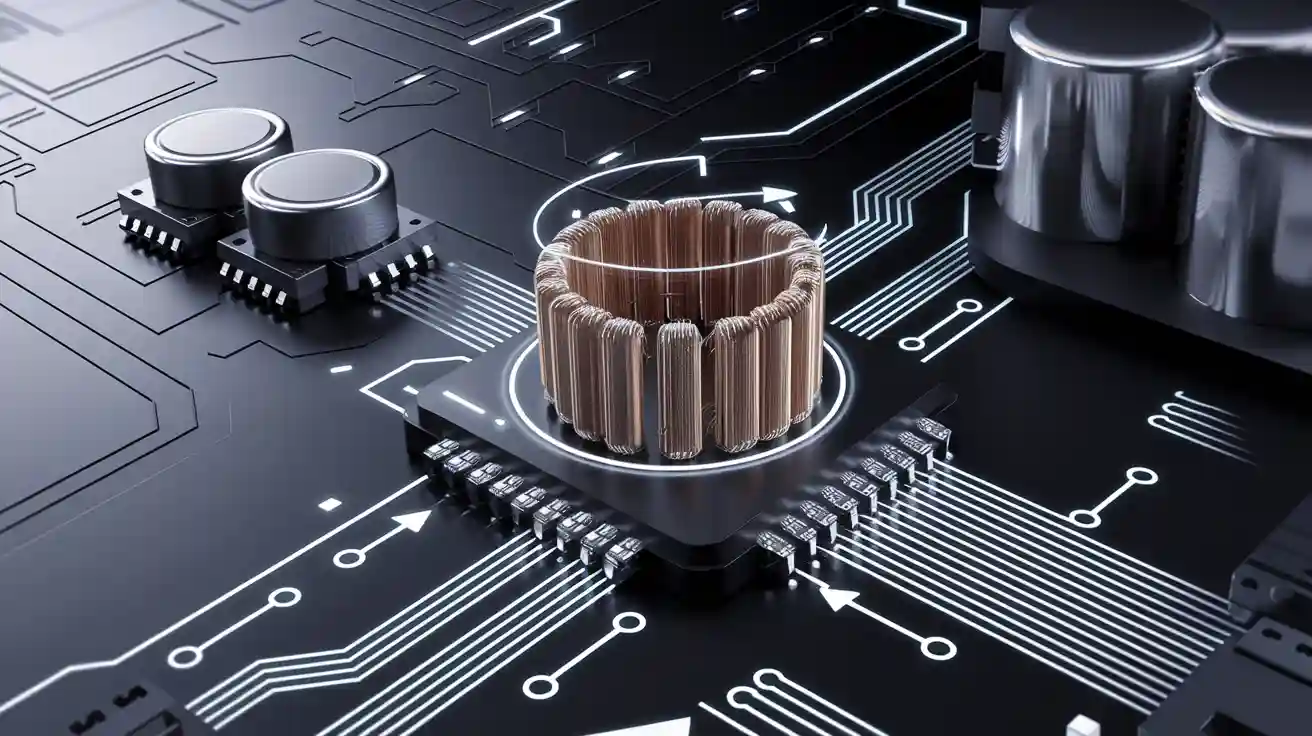
To get the best power efficiency in your circuit, pick an inductor with low DC resistance, high saturation current, and good thermal performance. These features help your circuit work well and stay reliable.
-
Low DC resistance means less power is lost as heat.
-
High saturation current stops the inductor from losing inductance when the load is heavy, so power efficiency does not drop.
-
Good thermal management keeps the inductor cool enough, which helps it work safely and last longer.
Key Takeaways
-
Pick inductors with low DC resistance and the best core material. This helps save power and keeps your circuit cool. - Choose an inductor with a saturation current 20% higher than your biggest load. This stops energy loss and keeps your circuit safe. - Put inductors close to switching parts on your PCB. Use short and wide traces to lower energy loss and noise. - Use good thermal management like heat sinks or cooling pads. This keeps inductors safe and helps them work well. - Test your design with simulation tools before building it. This helps you find problems early and make your circuit better.
Inductor Power Efficiency Basics
Energy Storage Role
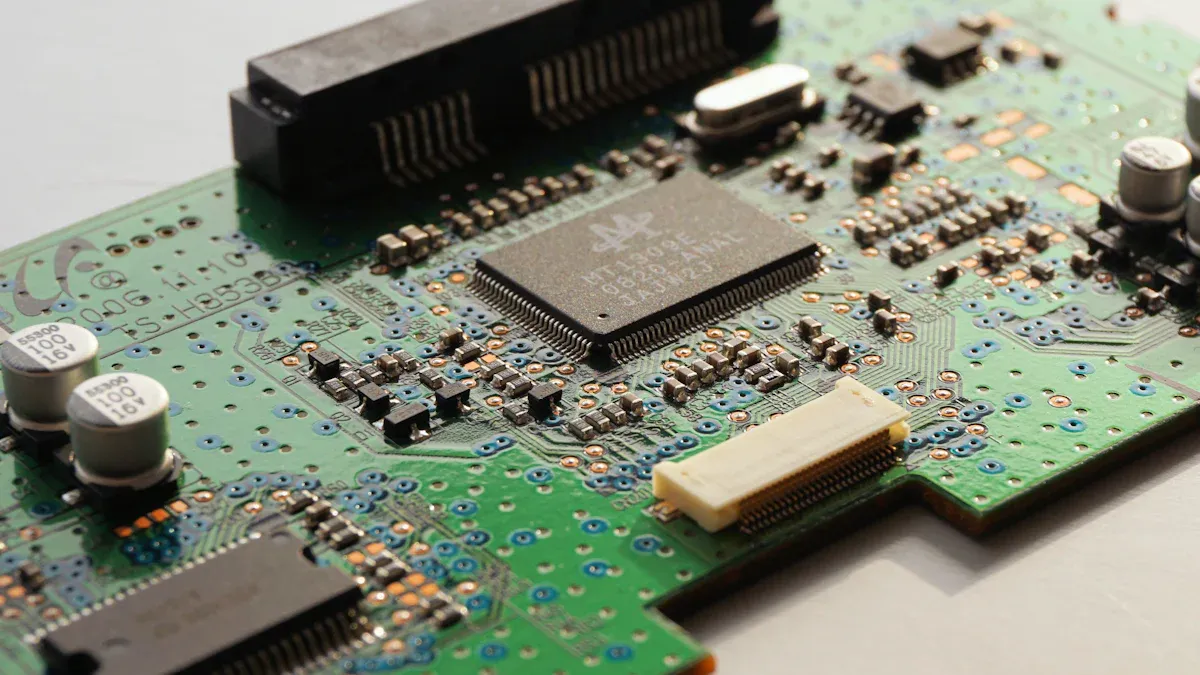
An inductor stores energy in your circuit. When current moves through it, a magnetic field forms. This field keeps energy and gives it back when needed. In switching regulators like dc-dc converters, the inductor holds energy for part of the cycle. Then it gives the energy during another part. This helps current move smoothly. It also helps save energy. If you put the inductor in the right spot on your PCB, you can stop problems like parasitic inductance and electromagnetic interference. Good placement helps your circuit use less power and stay cool and safe.
Voltage Regulation
Inductors help control voltage in circuits. In dc-dc converters and power supplies, they smooth out bumpy voltage from switches. This makes the output voltage steady. It helps your circuit work the way it should. Picking an inductor with low DC resistance and the right inductance value helps save energy and keep voltage steady. Magnetic shielding and strong core materials also help stop energy loss and keep voltage stable. These things make your circuit work better and last longer.
EMI Suppression
Electromagnetic interference, or EMI, can hurt your circuit. Inductors help by slowing down quick changes in current. This filters out high-frequency noise. You see inductors in power supplies and RF circuits for this reason. Shielded inductors keep magnetic fields inside, which lowers EMI and protects sensitive electronics. Using inductors with capacitors and resistors in filters blocks even more noise. This helps save energy and keeps your circuit working well.
Tip: Always pick inductors that fit your circuit’s needs for energy storage, voltage control, and EMI suppression. This helps your circuit use power better and work well.
Key Factors for Efficient Power Conversion
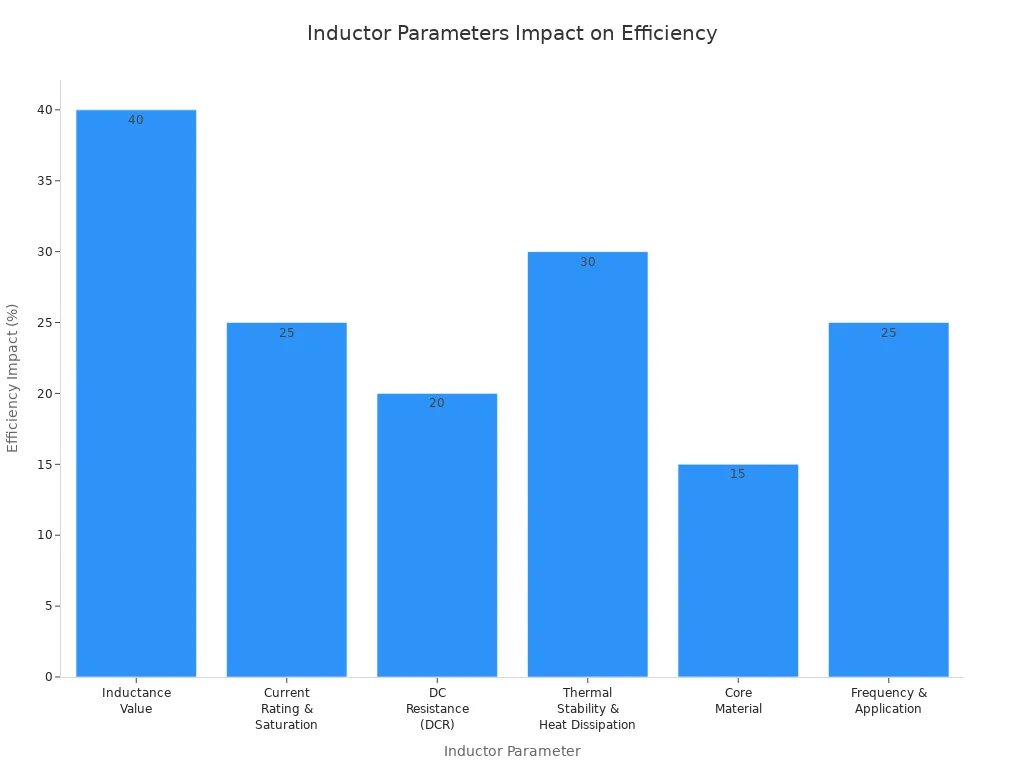
Picking the right power inductor is very important for saving energy. Every part of the inductor changes how well your circuit works. The table below shows how each inductor part affects power use and how your circuit runs.
|
Inductor Parameter |
Impact on Power Conversion Efficiency |
Explanation |
|---|---|---|
|
Inductance Value |
Stops up to 40% of possible losses |
The right inductance matches the frequency and quality factor (Q) for best results. |
|
Current Rating & Saturation Current |
Makes the circuit about 25% more reliable |
Lets the inductor handle more current without getting too hot or unstable. |
|
DC Resistance (DCR) |
Saves up to 20% of power |
Lower DCR means less power is lost, so the circuit works better. |
|
Thermal Stability & Heat Dissipation |
Cuts down failures from heat by up to 30% |
Good thermal control stops the circuit from failing because of heat. |
|
Core Material (Ferrite vs. Metal Alloy) |
Makes the circuit about 15% more efficient |
The core you pick changes how well the inductor works at different frequencies and currents. |
|
Frequency & Application Type |
Makes the circuit up to 25% more efficient |
Picking the right inductor for high or low frequency helps save energy. |
Inductance Value
You need to pick the right inductance value for your inductor. This value decides how much energy the inductor can hold. It also controls how much current moves up and down in your circuit. If the value is too low, the current jumps up and down a lot. This wastes energy and can make the inductor stop working right. If the value is too high, the inductor gets hotter and loses more energy. The best value keeps the current steady and the inductor cool. Most power supplies work best when ripple current is about 30% to 40% of the load current. This helps your circuit use less energy and run smoothly.
Tip: Always choose an inductance value that matches your circuit’s frequency and load. This helps you save energy and keeps your circuit working well.
DC Resistance (DCR)
DC resistance, or DCR, is how much the wire inside the inductor resists current. Lower DCR means less energy is lost as heat. In power inductors that carry a lot of current, DCR is very important. When current flows, the energy lost is the current squared times the DCR. If DCR is high, you lose more energy and the circuit can get too hot. Always pick an inductor with the lowest DCR that fits your size and budget. This can save up to 20% of power and keep your circuit cool.
Core Material
The core material inside the inductor changes how it works. Ferrite cores are good for high frequencies and do not waste much energy, but they do not handle heat as well. Metal composite cores, like Fe-based alloy powder, let the inductor handle more current and stay cooler. These cores help the inductor work at higher frequencies and bigger currents without getting too hot. Powdered iron cores are good for high current and cost less, but they do not store as much energy. Laminated steel cores keep energy loss low even when it is hot, which is good for tough places.
|
Core Material |
Key Properties & Effects on Efficiency and Thermal Performance |
|---|---|
|
Mn-Zn Ferrite |
High permeability, great at high frequencies, low energy loss, high efficiency, but not as good with heat. |
|
Powdered Iron |
Handles more current, good for high current, costs less, better with heat, but stores less energy. |
|
Laminated Steel |
Low energy loss, works well in hot places, good for high temperatures. |
|
Metal Composite (Fe-based alloy powder) |
Handles high current, spreads heat about 10× better than ferrite, stays cooler, works better at high frequencies and big currents. |
Note: Metal composite cores can make the inductor about 0.7% more efficient at high frequencies and keep it up to 4°C cooler than ferrite cores.
Saturation Current
Saturation current is the most current your inductor can take before it stops storing energy well. If you go over this limit, the inductor cannot hold energy and the current jumps up and down more. This wastes energy and can break your circuit. Always pick an inductor with a saturation current at least 20% higher than your biggest load. This keeps your circuit safe and working well, even when the load is heavy.
Warning: If you go over the saturation current, the current can run away, the circuit can act strange, and parts can break.
Thermal Management
Good thermal management keeps your inductor and circuit cool. If things get too hot, the inductor does not work as well and loses energy. High heat also makes parts wear out faster and can cause them to break. Use heat sinks, thermal pads, or special cooling to keep your inductor at a safe temperature. This helps your circuit work well and last longer.
-
Good thermal management:
-
Stops overheating and keeps inductors working right.
-
Keeps electrical properties steady and saves energy.
-
Lowers the chance of failure and helps parts last longer.
-
Uses heat sinks, pads, and cooling to spread heat.
-
Tip: Always check your inductor’s temperature when it is working. If it gets too hot, add more cooling or pick a different inductor.
When you understand and balance these key factors, you can save energy, make your circuit work better, and keep power steady for everything you need.
High Current Power Inductors in Design
Benefits in Power Conversion
High current power inductors help your circuit work better. They can handle a lot of current without getting too hot. These inductors do not lose their strength when working hard. When you use them, you get some good things:
-
Your circuit stays cool and works well, even when it is hot.
-
You can use bigger loads because the inductor can handle more power.
-
Less energy is wasted, so your circuit lasts longer.
-
Lower DC resistance helps your circuit save power.
For example, some high current power inductors from Würth Elektronik do not wear out fast from heat. They keep working well in tough places. Vishay’s low-profile inductors can take up to 75% more current. They also have very low resistance. This makes them great for small things like EV chargers. ITG Electronics’ PFC chokes help your circuit by To get the best power efficiency in your circuit, pick an inductor with low DC resistance, high saturation current, and good thermal performance. These features help your circuit work well and stay reliable.making power use better and wasting less energy.
Compact Circuit Solutions
High current power inductors help you make smaller circuits. You can put them in tight spots and they still work well. Here is how they help:
-
Shielded inductors stop noise from messing up your signals.
-
They hold energy, so your circuit gets steady power.
-
When you use them with capacitors, they block noise and make your circuit work better.
|
Feature |
Explanation |
|---|---|
|
Stops the inductor from losing power, keeps things steady. |
|
|
Low DC Resistance (DCR) |
Saves energy and makes your circuit work better. |
|
Compact Package Size |
Fits in small places, good for new designs. |
|
Energy Storage & Filtering |
Keeps current and voltage steady, helps your signals stay clear. |
|
Higher Power Density |
Lets you build small circuits that still work well. |
Shielded Inductors
Shielded inductors are important in today’s electronics. They have a metal cover that keeps the magnetic field inside. This stops noise and keeps other devices safe. You get better sound and pictures in your devices. Shielded high current power inductors also protect sensitive parts. They help your devices last longer and use less energy. They can even make batteries last twice as long in portable devices. Shielded inductors are smaller, work better, and are more reliable than unshielded ones, especially at high frequencies.
Tip: Pick shielded high current power inductors if you want strong EMI protection and the best power use.
Avoiding Common Efficiency Pitfalls
Overloading and Saturation
If you use too much current, your inductor can get overloaded. When this happens, the inductor hits saturation. It cannot hold energy well anymore. The current goes up fast and causes more heat. This can hurt your circuit and make it work badly. To stop this, always check the highest current your inductor can take. Pick one with a saturation current at least 20% higher than your biggest load. This keeps your circuit safe and stops wasted energy.
Tip: Always look at the inductor’s current rating. Too much current wastes energy and can break your circuit faster.
Ignoring DCR Losses
If you forget about DCR losses, your circuit can waste a lot of energy. DCR is DC resistance and it makes I²R losses. These losses get bigger as current goes up. Even a small increase in DCR can waste more energy, especially with high current. The lost energy turns into heat and lowers efficiency. DCR also gets higher when the inductor gets hot, making things worse. Always check the DCR and use PL(DCR) = IL(AVG)² × DCR to see how much power you lose. Picking an inductor with low DCR helps your circuit stay cool and work better.
Poor Layout Practices
A bad PCB layout can hide energy losses in your circuit. Long or thin traces add parasitic inductance. This makes unwanted currents and phase shifts. Your circuit has to work harder and gets hotter. Sometimes, you need bigger or more costly parts to fix these problems. To avoid this:
-
Keep traces short and wide.
-
Put the power inductor near the switching parts.
-
Use solid ground planes.
|
Common Layout Mistake |
Resulting Problem |
Best Practice |
|---|---|---|
|
Long, thin traces |
More parasitic inductance |
Use short, wide traces |
|
Poor component placement |
Higher energy losses |
Place parts close together |
|
Weak ground connections |
Unstable circuit efficiency |
Use solid ground planes |
Note: Good layout helps you save energy and makes your circuit work better.
Optimizing for Efficient Power Conversion
Layout and Simulation
You can make your circuit work better with smart layout and simulation. Put your inductor close to the switching parts to stop noise and save energy. Use short and wide traces so resistance stays low. A good layout helps your board stay cool and meet design needs.
Simulation tools let you test your circuit before you build it. These tools show how the inductor acts, including things like inter-winding capacitance and leakage inductance. You can change values in the simulation to see what happens in different situations. This helps you find problems early and make your circuit use less energy. Some software even shows where the board gets hot and how the inductor handles big currents. You save time and money because you do not need to build as many test boards.
Tip: Always use simulation to check for voltage spikes, current overshoot, and heat problems. This step helps you make strong circuits that meet your design needs.
High-Frequency Considerations
Inductors act differently at high frequencies. Fast current changes can cause AC losses in your circuit. Skin and proximity effects make the wire resist more, which causes more heat and wastes energy. Some inductors work well at 500kHz but not at 2MHz.
Pick core materials like iron-alloy for better results at high frequencies. Look at how the wire is wound, because direct wire-to-pad contact can lower resistance. Shielded inductors help stop electromagnetic interference, which keeps your circuit steady. Use modeling tools to check both AC and DC losses so your design stays safe.
Note: High-frequency inductors must handle ripple currents and work in many temperatures.
Selection Checklist
Use this checklist to pick the best inductor for your circuit:
-
Pick an inductance value a little higher than you need for steady work.
-
Make sure the rated current is at least 1.5 times your highest current to stop saturation.
-
Choose low DC resistance to save power and keep things cool.
-
Check that the self-resonant frequency is higher than your circuit’s frequency.
-
Pick a package that fits your board and cooling needs.
-
Make sure the quality factor (Q) is right for steady work.
-
Think about things like temperature and vibration.
-
Use simulation tools to test your design before you build it.
✅ Following this checklist helps you meet your design needs and makes sure your circuits work well.
You can make inductor power efficiency better by doing a few things:
-
Pick inductors with low DC resistance and the best core material for your circuit.
-
Make sure the saturation current is higher than the most current your circuit will use.
-
Check that the self-resonant frequency is much higher than the frequency your circuit uses.
-
Control heat by choosing the right inductor size and putting it in a good spot on your board.
Simulation tools and checklists help you test your design and stop mistakes before they happen. If you pick the right parameters and make smart choices, your circuits will work well, last longer, and use less energy. Use these tips to make your projects better and see real results.
FAQ
What is the most important factor for inductor efficiency?
You should look for low DC resistance. Low DCR means less energy turns into heat. This helps your circuit use less power and stay cooler. Always check the DCR before picking an inductor.
How do I know if my inductor is overheating?
Carefully touch the inductor after your circuit runs for some time. If it feels hot, you might need better cooling. You can also use a thermal camera or a sensor. High heat means you should improve how you cool the inductor.
Can I use any inductor for high-frequency circuits?
No, you need inductors made for high frequencies. Look for iron-alloy or ferrite cores. These materials work better at fast speeds. Check the self-resonant frequency. It should be higher than your circuit’s frequency.
Why does inductor placement on the PCB matter?
Putting the inductor close to switching parts lowers noise and energy loss. Short, wide traces help keep resistance low. Good placement makes your circuit work better and stay steady.
How do I prevent inductor saturation?
Pick an inductor with a saturation current at least 20% higher than your circuit’s highest current. This keeps the inductor from losing energy storage. Always check the datasheet for the saturation current.