Evaluating HiSilicon Vendors A Strategic RFP Guide
You need a solid plan to select the right HiSilicon vendor. A successful Request for Proposal (RFP) starts with focusing on

You need a solid plan to select the right HiSilicon vendor. A successful Request for Proposal (RFP) starts with focusing on the most critical areas. Your RFP must demand specific details from potential partners.
Key Components for Your RFP
- Detailed Technical Specifications
- Proof of HiSilicon-Specific Experience
- A Transparent Supply Chain Strategy
- A Clear Engineering Support Model
- A Detailed Cost Breakdown
- A Structured RFP Template
This guide provides a strategic framework for each component. You can build an RFP that thoroughly vets vendors and protects your project's success.
Key Takeaways
- Define your project needs clearly. This includes technical details and compliance rules. This helps vendors give accurate proposals.
- Check vendor experience. They need proven skills with HiSilicon chips. Ask for past project examples and how they use HiSilicon tools.
- Look at the vendor's company health. Check their finances and history. A stable partner is important for long projects.
- Evaluate their engineering and support. A good vendor helps improve your design. They also offer support after your product launches.
- Use an RFP template and scoring. This makes comparing vendors fair. It helps you choose the best partner, not just the cheapest one.
DEFINING PROJECT SCOPE

A clear project scope is the foundation of your RFP. It tells potential vendors exactly what you need to build. This clarity prevents misunderstandings and ensures you receive accurate, comparable proposals.
THE EXECUTIVE SUMMARY
You should start with a concise executive summary. This section gives vendors a high-level snapshot of your project. Describe your product's purpose, your target market, and your primary business goals. A strong summary helps vendors quickly understand your vision and decide if they are a good fit for the partnership.
HISILICON TECHNICAL SPECIFICATIONS
You must provide precise technical requirements. Vague specifications lead to inaccurate quotes and project delays. For a HiSilicon-based video product, you need to detail every component.
Example: Key Specs for a Hi35xx Video Project
- SoC: HiSilicon Hi3535 dual-core Cortex A9 @ 1.0 GHz
- Video Input: Support for 32 channels @ 1080p
- Video Compression: H.264
- Storage: 2x SATA ports (up to 8TB each)
- Connectivity: Gigabit Ethernet port
- Power Consumption: Less than 10W (without HDD)
This level of detail ensures vendors propose solutions that meet your exact performance needs.
COMPLIANCE AND CERTIFICATION
Your product must meet legal standards for the markets where you plan to sell it. Your RFP Template should demand proof of a vendor's ability to meet these requirements.
For products sold in Europe, you must address CE marking. The CE mark shows your product complies with EU safety and consumer protection rules. This mark also declares compliance with the RoHS directive, which restricts hazardous materials like lead and mercury. Ask vendors how they will provide a technical file and a Declaration of Conformity (DoC) to prove compliance.
Data privacy is equally important, especially for video devices. Regulations like Europe's GDPR and California's CCPA treat video recordings of people as personal data. You must ask vendors how their hardware and software solutions will help you comply with these strict data protection laws.
EVALUATING VENDOR CAPABILITIES
Your project's success depends on your vendor's skills. A detailed technical specification is only the first step. You must now dig deeper to confirm a potential partner has the stability, experience, and support structure to deliver on their promises. This evaluation protects your investment and ensures a smooth development process.
COMPANY BACKGROUND AND STABILITY
A partnership for a complex electronics project can last for years. You need a vendor who will be there for the long haul. A financially unstable partner introduces significant risk to your project, potentially halting production or support unexpectedly. You must verify their corporate health.
Your RFP should ask for documents that prove their legal and financial standing.
- Business Registration: Request a Certificate of Incorporation or a Good Standing Certificate to confirm the company is legally registered and compliant.
- Operational History: Check their online presence. A professional website, active social media, and positive client reviews on platforms like Google or Trustpilot indicate a healthy, engaged business.
- Reference Checks: Ask for contact information from previous clients. Speaking directly with them gives you honest insight into the vendor's reliability and service quality.
You also need to assess their financial health. High debt, for example, can impact a vendor's ability to fund operations and meet their obligations. Ask for key financial metrics to get a clear picture.
Key Financial Health Indicators
- Debt-to-Equity Ratio: This shows how much the company relies on debt versus its own funds. A high ratio can be a warning sign.
- Current Ratio: This measures the ability to pay short-term bills. A ratio below 1.0 may suggest liquidity issues.
- Interest Coverage Ratio: This reveals how easily a company can make interest payments on its debt. A low number signals potential financial distress.
HISILICON DESIGN EXPERIENCE
General electronics experience is not enough. You need a partner with proven, hands-on expertise in the HiSilicon ecosystem. Your RFP must demand specific proof of their capabilities with these powerful SoCs. Generic claims are not acceptable.
Ask vendors to provide case studies for projects using SoCs similar to yours, such as the Hi35xx or Hi37xx series. This demonstrates their direct experience. Have they successfully built products like these?
- Home security monitors or vehicle dash cameras
- AI cameras for smart TVs or facial recognition access controls
- Smart doorbells, smart locks, or robotic vacuum cleaners
- Interactive whiteboards or commercial LCD billboards
Questions to Gauge True HiSilicon Expertise
- Provide at least two case studies for commercialized products using the HiSilicon Hi35xx or Hi37xx series. What challenges did you overcome?
- Describe your team's experience with the HiSilicon software development kit (SDK).
- How have you utilized HiSilicon's ecosystem tools, such as the HiHope development platform or LiteOS, in past projects?
The answers to these questions separate true specialists from generalists. A partner familiar with HiSilicon's specific tools and software will solve problems faster and build a more optimized product.
ENGINEERING AND SUPPORT MODEL
A great vendor acts as an extension of your own team. You need to evaluate their engineering processes and the support model they offer. A strong partner provides constructive feedback to improve your design for manufacturability and cost-effectiveness.
You can assess their technical capabilities by asking how they approach key design disciplines. A capable design house will have expertise across a wide range of areas.
| Core Competency | Description |
|---|---|
| Electrical Design | Expertise in schematic capture, PCB layout, and signal integrity. |
| Software Engineering | Proficiency in firmware, drivers, and application-level software. |
| Mechanical Design | Skills in enclosure design, thermal management, and industrial design. |
| Design for Excellence | Strategies (DfX) to optimize for manufacturing, testing, and cost. |
| Test Development | Ability to create and automate tests for production and quality control. |
Your RFP Template should include questions that reveal how they work. A strong engineering partner will not just build what you ask for; they will help you build it better.
- Review Their Process: Ask them to describe their typical design review process. How do they identify potential design flaws before they become manufacturing problems?
- Assess Their Feedback: During discussions, observe their feedback. Do they offer constructive solutions to improve your design without compromising quality?
- Evaluate Their Support: Define the post-launch support model. How will they handle bug fixes, software updates, or component end-of-life issues?
A clear engineering and support plan ensures you have a reliable partner ready to tackle challenges throughout your product's entire lifecycle.
USING AN RFP TEMPLATE FOR EVALUATION
Using a standardized framework is the most effective way to compare vendor proposals fairly. A structured RFP template ensures every vendor receives the same information and follows the same submission rules. This approach standardizes the bidding process, which saves you time and simplifies your decision-making. It creates a fair, transparent competition that helps you identify the best partner, not just the one with the best sales pitch.
STRUCTURING THE RFP TEMPLATE
Your RFP Template must be clear, comprehensive, and easy for vendors to follow. A well-organized document prevents ambiguity and ensures you receive high-quality, relevant proposals. You should structure your document with clear sections that guide vendors through your requirements.
- Project Overview and Timeline: Briefly restate your project's purpose and goals. Provide a clear timeline for the selection process, development, and target go-live date.
- Detailed Requirements: This section expands on your technical specifications. It details the specific products, services, and deliverables you expect.
- Vendor Qualifications: Ask about the vendor's company culture, support model, and financial stability. This helps you evaluate them as a long-term partner.
- Legal Clauses: Include provisions for intellectual property (IP) protection, dispute resolution, and governing law. This protects your project and clarifies responsibilities.
Key Questions to Include in Your RFP
- How do you manage ongoing cost reductions, and how are those savings shared with us?
- What specific IP security measures do you have in place to protect our product design?
- Can you guarantee that key personnel assigned to our project will not be pulled to other programs?
- Is all design and manufacturing work performed in-house, or do you subcontract certain tasks?
Finally, encourage vendors to suggest alternative ideas. A great partner may see a more efficient or cost-effective way to achieve your goals. Allowing for scope variation can lead to innovative solutions you had not considered.
DEFINING SCORING CRITERIA
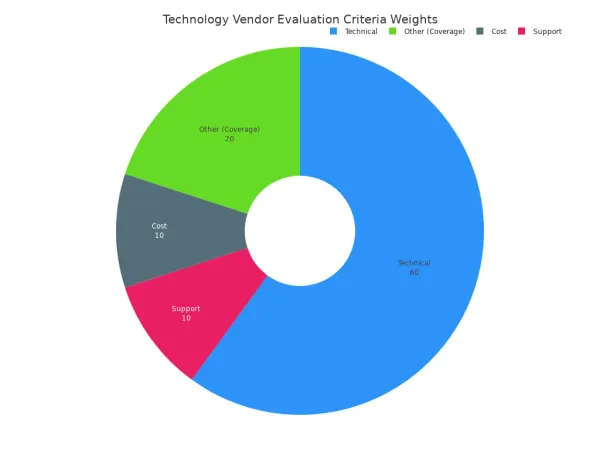
You must define your evaluation criteria before you send out the RFP. This ensures an objective, transparent selection process. A weighted scoring matrix is the best tool for this job. It forces you to prioritize what matters most and provides a clear, data-driven way to rank proposals.
You assign a weight to each category based on its importance to your project's success. For a complex HiSilicon project, technical fit and specific experience are often more critical than cost alone.
Here is a sample scoring matrix you can adapt for your evaluation:
| Evaluation Category | Weight | Description |
|---|---|---|
| Technical Fit | 40% | How well the proposed solution meets your detailed technical specifications and performance requirements. |
| HiSilicon Experience | 30% | Demonstrated success with similar HiSilicon SoCs, SDKs, and development tools. |
| Total Cost of Ownership | 20% | Includes NRE, unit costs, tooling, and long-term support fees. |
| Engineering & Support | 10% | The quality of their engineering process, support model, and ability to act as a design partner. |
| Total | 100% |
Sharing these criteria in your RFP shows vendors exactly how you will judge their proposals. This transparency helps them focus their responses on your key priorities.
COMPARING VENDOR PROPOSALS
A structured approach makes comparing proposals simple and effective. The most difficult element to compare is often cost, as different vendors may present pricing in different formats. You can solve this problem by providing a mandatory pricing table in your RFP.
This requires every vendor to break down their costs in the exact same way. It allows you to easily compare pricing side-by-side for each product and service. Your table should include itemized lines for all anticipated costs.
Example: Standardized Pricing Table | Item Description | Unit of Measure | Quantity | Unit Cost ($) | Total Cost ($) | | :-------------------------------- | :-------------- | :------: | :-----------: | :------------: | | Non-Recurring Engineering (NRE) | Lump Sum | 1 | | | | Hardware Design & Layout | Included in NRE | 1 | N/A | N/A | | Firmware Development | Included in NRE | 1 | N/A | N/A | | Tooling & Molds | Lump Sum | 1 | | | | Prototypes | Per Unit | 10 | | | | Unit Cost (1k Volume) | Per Unit | 1000 | | | | Unit Cost (10k Volume) | Per Unit | 10000 | | | | Annual Support Fee | Per Year | 1 | | |
By combining a detailed RFP Template, a weighted scoring matrix, and a standardized pricing table, you create a powerful evaluation system. This framework removes guesswork and empowers you to make an objective, data-backed decision to select the ideal HiSilicon vendor for your project.
ASSESSING SUPPLY CHAIN AND MANUFACTURING

A great design is useless if you cannot build it. You must carefully assess a vendor's supply chain and manufacturing capabilities. Global events can easily disrupt production, so you need a partner with a solid plan to manage these risks and deliver a high-quality product.
COMPONENT SOURCING STRATEGY
Your vendor's ability to source authentic HiSilicon components is critical. The global semiconductor supply chain faces many challenges. You must understand how a vendor plans to navigate them.
Current Global Supply Chain Risks 🌏
- Geopolitical Tensions: New tariffs and export restrictions on minerals like gallium can increase costs and create shortages.
- Production Concentration: Over 90% of advanced semiconductors are made in Asia, making the supply chain vulnerable to regional events like natural disasters.
- Shipping Bottlenecks: Issues in major shipping lanes like the Panama Canal and the Red Sea can cause significant delays.
You need to confirm your vendor sources components through legitimate channels. Ask for proof of their partnerships with authorized distributors. Your RFP should require them to provide traceability documents that confirm all parts are authentic and sourced correctly.
MANUFACTURING AND QUALITY CONTROL
A reliable manufacturing process ensures every unit you produce meets your standards. Your RFP must demand details about a vendor's quality control (QC) procedures. Top-tier vendors use automated testing to catch defects early.
Ask potential partners if they use these key inspection methods:
- In-Circuit Testing (ICT): This test checks the electrical properties of each component on the circuit board. It quickly finds issues like short or open circuits.
- Automated Optical & X-Ray Inspection (AOI/AXI): AOI visually inspects for correct component placement. AXI uses X-rays to find hidden flaws in solder joints that are not visible on the surface.
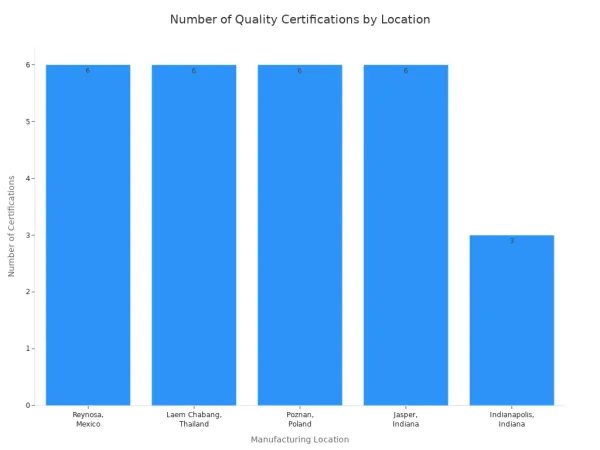
Finally, verify their quality management certifications. These standards show a vendor's commitment to excellence. Look for certifications like ISO 9001 for general quality and IATF 16949 if you are in the automotive sector. These certifications are a clear indicator of a mature and reliable manufacturing operation.
Selecting the right HiSilicon vendor rests on three critical pillars: proven expertise, a transparent supply chain, and an objective evaluation process. You must verify a partner’s skills in each area.
Use this guide’s framework to build your comprehensive RFP. A well-crafted proposal is the first step to de-risking your project. It empowers you to forge a strong vendor partnership and successfully bring your product to market. 🚀
FAQ
Why is HiSilicon-specific experience so important?
General electronics experience is not enough. You need a partner familiar with HiSilicon's unique software development kits (SDKs) and tools. This expertise helps them solve problems faster. It also ensures they build a more optimized and reliable product for you.
How can I protect my intellectual property (IP) with a vendor?
You must include IP protection clauses in your RFP. Always sign a Non-Disclosure Agreement (NDA) before sharing sensitive project details. A professional vendor will have clear security protocols to safeguard your design and software from the very beginning.
Should I always choose the vendor with the lowest cost?
No. You should evaluate the total cost of ownership, not just the initial price. A low bid can hide future expenses. Use your scoring matrix to balance cost against critical factors like technical fit, experience, and long-term support.
What if a vendor suggests a different HiSilicon SoC?
You should listen to their recommendation. A strong partner may identify a more powerful or cost-effective SoC for your project. Ask them to provide clear data that justifies their suggestion. This kind of feedback can lead to a better final product.