How Integrated Circuits Perform Key Functions in Electronics
Integrated circuit functions include amplification, power management, data storage, and communication, enabling efficient and compact modern electronics.
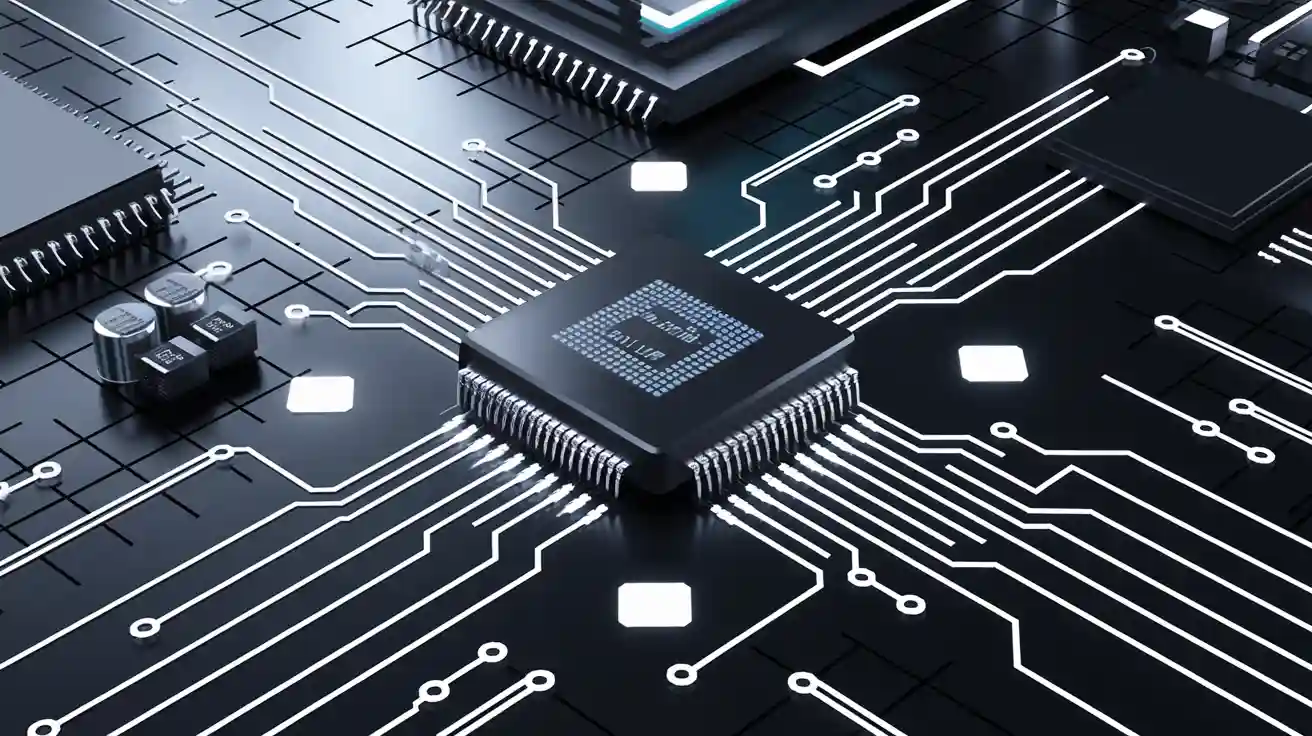
Integrated circuits have revolutionized how electronic devices operate by integrating multiple components such as transistors, resistors, and capacitors into a single chip. These integrated circuit functions enable devices to perform tasks more efficiently. For instance, your smartphone or computer depends on integrated circuits to process data, manage power, and store information.
The demand for integrated circuit functions continues to grow rapidly. In 2023, the global market size was valued at $439.8 billion, with projections indicating it could nearly double to $875.6 billion by 2032. This growth is driven by the increasing need for compact and powerful electronics, particularly in areas like IoT and consumer gadgets. Integrated circuit functions make modern devices faster, smaller, and more reliable, which is why they are central to nearly every electronic innovation today.
Key Takeaways
-
Integrated circuits, or chips, put many electronic parts into one unit. This makes devices like smartphones and computers work better.
-
The global market for chips is growing fast. It might reach $875.6 billion by 2032 because people want smaller and stronger electronics.
-
Chips do important jobs like boosting signals, controlling voltage, and storing data. They are key to modern technology.
-
Some chips, called ASICs, are made for special tasks. They work well and are very reliable in many industries.
-
Energy-saving chips use less power, helping devices last longer. They also support eco-friendly technology.
What Is an Integrated Circuit?
Definition of an Integrated Circuit
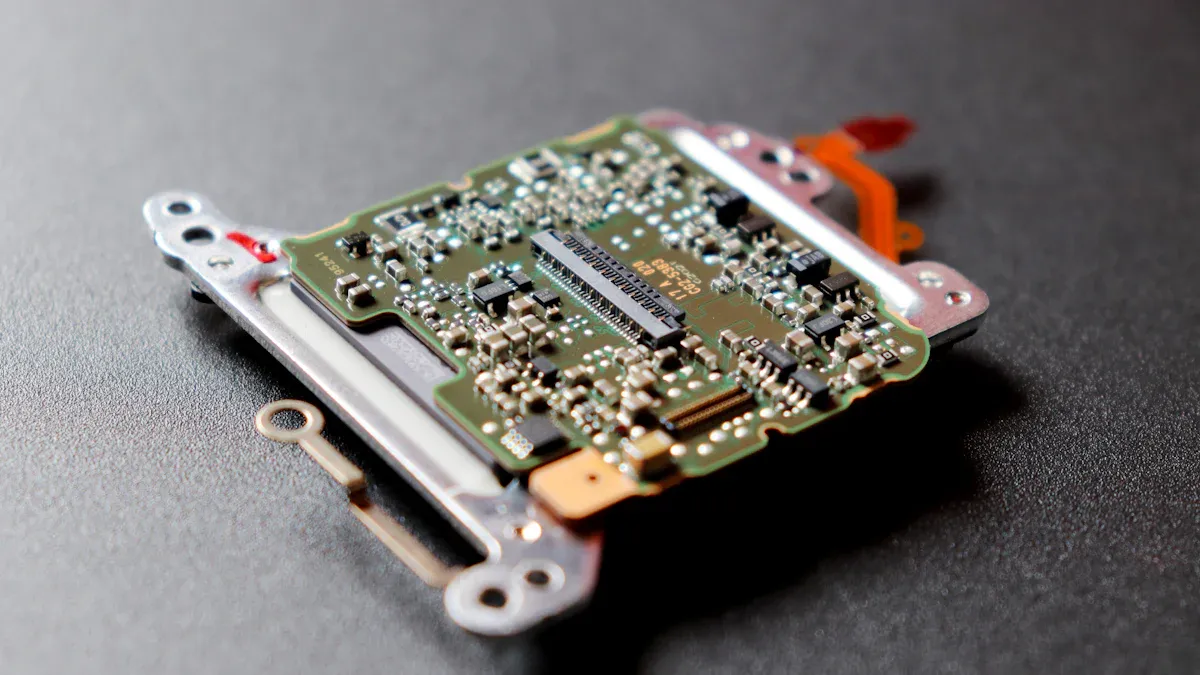
An integrated circuit is a compact electronic device that combines multiple components, such as transistors, resistors, and capacitors, into a single chip. You can think of it as a miniature version of a complete electronic circuit. These circuits are designed to perform specific functions, ranging from simple tasks like amplification to complex operations like data processing. Integrated circuits are the backbone of modern electronics, enabling devices to operate efficiently and reliably.
Tip: Integrated circuits are often referred to as "chips" or "microchips" in everyday language.
Design and Construction of Integrated Circuits
Integrated circuit design involves creating a blueprint for how the components will interact within the chip. Engineers use specialized software to map out the circuit's layout, ensuring optimal performance and minimal defects. The construction process begins with a silicon wafer, which serves as the base material. Layers of semiconductor materials, such as silicon carbide or gallium nitride, are added to create the circuit's structure.
Manufacturing integrated circuits requires precision. For example, defect rates for advanced nodes like 28 nm range between 0.08–0.10 defects per square inch, while 16 nm nodes have slightly higher defect rates of 0.10–0.30. Process complexity also increases with smaller nodes, ranging from 7.5–9.5 for 28 nm processes to 10–14 for 16 nm processes. These metrics highlight the intricate nature of integrated circuit construction.
Types of Integrated Circuits
Integrated circuits are classified based on their function, application, and industry vertical. Here’s a breakdown:
|
Classification Type |
Description |
|---|---|
|
By Function |
Digital ICs handle binary data, Analog ICs process continuous signals, and Mixed-Signal ICs combine both. |
|
By Application |
ICs serve sectors like Consumer Electronics, Automotive, and Medical Devices. |
|
By Industry Vertical |
Consumer Electronics dominate, followed by Automotive, IT & Telecommunications, and Healthcare. |
Digital ICs are widely used in computing and communication devices, while Analog ICs excel in applications like audio processing. Mixed-Signal ICs bridge the gap, making them ideal for devices requiring both digital and analog functionalities.
Note: Application-Specific Integrated Circuits (ASICs) are gaining popularity due to their efficiency and compact size.
Integrated circuits have evolved significantly over the past 60 years. Initially developed for military use, they now power industries like transportation, agriculture, and aerospace. This evolution reflects their versatility and importance in technological innovation.
Key Integrated Circuit Functions
Integrated circuits play a vital role in modern electronics by performing essential tasks that enable devices to function efficiently. Let’s explore some of the key functions of integrated circuits and how they contribute to the performance of electronic systems.
Amplification and Signal Processing
Amplification is one of the primary functions of integrated circuits. In audio systems, for example, amplifiers boost weak signals to drive speakers and produce clear sound. Integrated circuits designed for amplification often include operational amplifiers, which are versatile components used in audio equipment, medical devices, and communication systems. These amplifiers ensure that signals are processed with minimal distortion, maintaining high-quality output.
Signal processing is another critical function. Integrated circuits handle tasks such as filtering, modulation, and demodulation, which are essential in communication devices like smartphones and radios. For instance, a microprocessor in your smartphone processes incoming signals to deliver clear voice calls and fast internet connectivity. The ability of integrated circuits to manage these tasks efficiently makes them indispensable in modern electronics.
Did you know? Signal processing integrated circuits can perform millions of calculations per second, enabling real-time data analysis in applications like video streaming and GPS navigation.
Voltage Regulation and Power Management
Integrated circuits are crucial for managing power in electronic devices. Voltage regulation ensures that components receive a stable power supply, preventing damage from fluctuations. For example, voltage regulator chips in laptops and smartphones maintain consistent power levels, extending the lifespan of the device.
Power management integrated circuits optimize energy usage, making devices more efficient. These circuits control battery charging, monitor power consumption, and reduce energy waste. In IoT devices, power management is especially important because it extends battery life, allowing devices to operate for longer periods without recharging.
|
Metric |
2-D Integrated Circuits |
3-D Integrated Circuits |
|---|---|---|
|
Interconnect Delay |
Reduced |
|
|
Chip Area |
Larger |
Smaller |
|
Repeater Count |
Higher |
Lower |
|
Total Wire-Length |
Longer |
Shorter |
|
Wiring Pitch |
Smaller |
Larger |
This table highlights how advancements in integrated circuit design, such as the shift from 2-D to 3-D structures, improve power management by reducing interconnect delays and chip area.
Data Storage and Logical Operations
Integrated circuits are at the heart of data storage and logical operations. Memory chips, such as DRAM and flash memory, store vast amounts of data in a compact form. These chips have achieved remarkable advancements, with cell dimensions as small as 2 μm and integrated scales reaching 1024. This miniaturization allows devices like smartphones and laptops to store more data while maintaining a small size.
Logical operations are another key function of integrated circuits. Microprocessors execute Boolean logic operations to perform tasks ranging from simple calculations to complex algorithms. For example, a single molecular HDD unit has demonstrated the ability to perform 14 out of 16 Boolean logic operations, showcasing the efficiency of integrated circuits in handling logical tasks.
Additionally, materials like monolayer molybdenum disulphide (MoS2) have shown promise for next-generation circuits. With a high ON/OFF current ratio (~10) and a low subthreshold slope (64 mV/dec), these materials enhance the reliability of data storage and logical operations.
Tip: The functions of integrated circuits in data storage and logical operations are critical for applications like cloud computing, artificial intelligence, and blockchain technology.
Communication Interfaces
Integrated circuits play a vital role in enabling communication between electronic devices. These circuits manage the exchange of data and signals, ensuring seamless interaction across systems. Whether you're using a smartphone, a computer, or a smart home device, integrated circuits handle the communication interfaces that make these technologies work together.
How Integrated Circuits Enable Communication
Integrated circuits facilitate communication by processing and transmitting signals. They act as the bridge between hardware components, converting data into formats that other devices can understand. For example, in a computer, integrated circuits manage the flow of information between the processor, memory, and peripherals like keyboards and monitors. Without these circuits, devices would struggle to share data effectively.
Types of Communication Interfaces
Integrated circuits support various types of communication interfaces, each designed for specific applications. Here are some common examples:
-
Serial Communication Interfaces
Serial interfaces transmit data one bit at a time. They are widely used in devices like microcontrollers and sensors. Examples include UART (Universal Asynchronous Receiver-Transmitter) and SPI (Serial Peripheral Interface). These interfaces are simple and efficient, making them ideal for low-speed data transfer. -
Parallel Communication Interfaces
Parallel interfaces send multiple bits of data simultaneously. They are faster than serial interfaces but require more wiring. Integrated circuits with parallel interfaces are often found in printers and older computer systems. -
Wireless Communication Interfaces
Integrated circuits also enable wireless communication through technologies like Bluetooth, Wi-Fi, and NFC (Near Field Communication). These circuits process radio signals, allowing devices to connect without physical cables. For instance, your smartphone uses integrated circuits to pair with wireless earbuds or access the internet.
|
Communication Type |
Speed |
Use Case Examples |
|---|---|---|
|
Serial |
Low to Medium |
Microcontrollers, Sensors |
|
Parallel |
High |
Printers, Legacy Computer Systems |
|
Wireless |
Variable |
Smartphones, IoT Devices, Wearables |
Real-World Applications
Integrated circuits in communication interfaces power many everyday technologies. In IoT devices, they enable sensors to send data to cloud servers for analysis. In automotive systems, they allow different components, like the engine control unit and infotainment system, to communicate. Even in healthcare, integrated circuits manage data transfer in medical devices like pacemakers and diagnostic tools.
Tip: When choosing a device, consider its communication capabilities. Integrated circuits determine how well it connects with other systems.
Integrated circuits have transformed how devices communicate. They ensure compatibility, improve efficiency, and support the growing demand for interconnected technologies. As you explore modern electronics, you'll notice that integrated circuits are the unsung heroes behind seamless communication.
Examples of Integrated Circuits in Electronics
Microprocessors and Their Applications
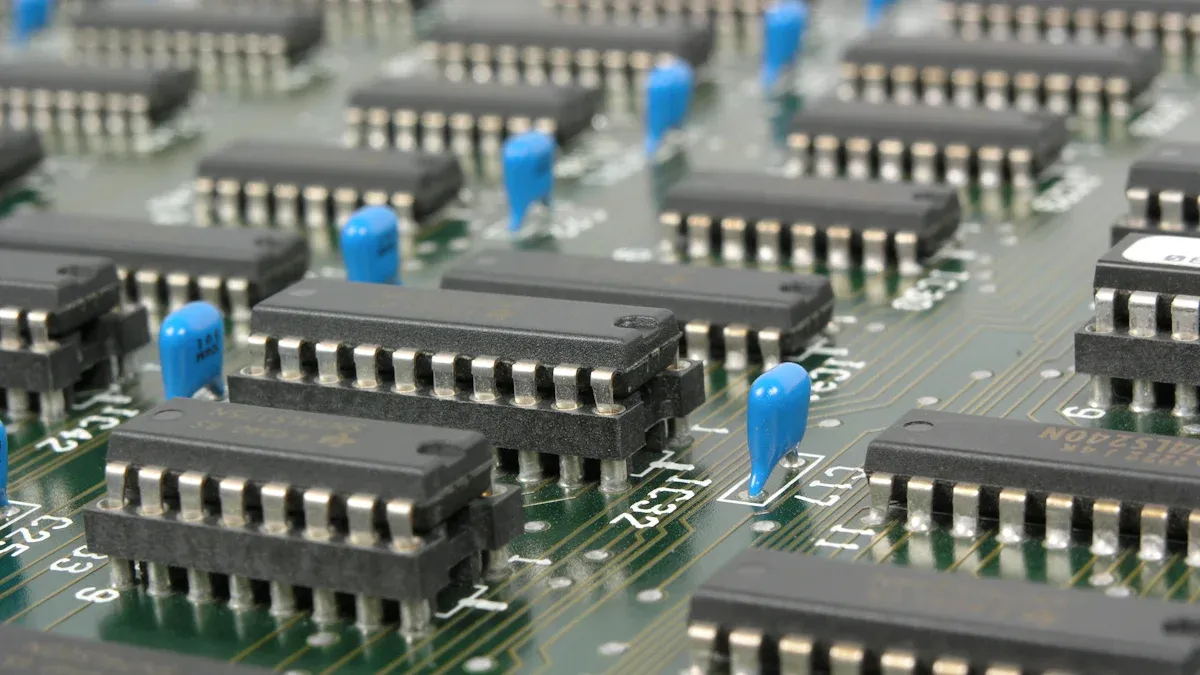
Microprocessors are among the most versatile integrated circuits. Acting as the brain of electronic devices, they perform critical functions like data processing and logical operations. A microprocessor, also known as the central processing unit (CPU), executes instructions to control the overall operation of a device. For example, in a smartphone, the CPU manages tasks such as running apps, browsing the internet, and processing images.
These microchips are essential in various industries. In domestic settings, they power smart home appliances like programmable thermostats and automated lighting systems. In industrial systems, microprocessors control heavy machinery and robotics. They also play a vital role in transportation, enabling navigation in cars and advanced monitoring in airplanes. The applications of integrated circuits in the medical field include patient monitoring systems and robotic surgery. This versatility highlights the benefits of using integrated circuits in modern technology.
|
Examples of Microprocessor Use |
|
|---|---|
|
Domestic Applications |
Smart home appliances, programmable thermostats, smart TVs, digital-controlled refrigerators, automated lighting. |
|
Industrial Systems |
Operation of heavy machinery, traffic systems, automation, robotics. |
|
Transportation Industry |
Navigation in automobiles, advanced monitoring in trains and airplanes. |
|
Medical Industry |
Patient monitoring systems, robotic surgery, medical equipment like CT scanners and ECG machines. |
Operational Amplifiers in Signal Processing
Operational amplifiers, or op-amps, are specialized integrated circuits designed for signal processing. These components amplify weak signals, making them suitable for audio systems, medical devices, and communication technologies. For instance, in audio equipment, op-amps enhance sound quality by reducing noise and distortion. In medical devices, they amplify bio-signals like heartbeats for accurate monitoring.
Digital signal processing often relies on op-amps to filter, modulate, and demodulate signals. This ensures clear communication in devices like smartphones and radios. The benefits of using integrated circuits like op-amps include their compact size, reliability, and ability to handle complex tasks efficiently.
Memory Chips for Data Storage
Memory chips are integral to data storage in electronic devices. These integrated circuits store information in a compact and efficient manner. Dynamic Random Access Memory (DRAM) and flash memory are common examples. DRAM is widely used in computers to store temporary data, while flash memory powers devices like USB drives and smartphones.
Advancements in memory chip technology have enabled devices to store more data in smaller spaces. For example, modern microchips can achieve cell dimensions as small as 2 μm. This miniaturization supports the growing demand for portable and high-capacity storage solutions. Whether in laptops, gaming consoles, or cloud servers, memory chips demonstrate the diverse applications of integrated circuits.
|
Application Examples |
|
|---|---|
|
Computing and IT |
Microprocessors, DRAM, flash memory, GPUs, networking ICs (Wi-Fi, Bluetooth, Ethernet) |
|
Consumer Electronics |
Video processing ICs, audio amplifier ICs, embedded sensors in mobile phones and wearables |
|
Automotive Electronics |
Microcontrollers for ECUs, ABS, airbags, infotainment systems, GPS navigation |
|
Medical Devices |
Imaging ICs for X-ray, CT, MRI; wearable devices for monitoring health parameters |
Tip: When choosing a device, consider its memory capacity and processing power. These factors depend on the integrated circuits inside.
Application-Specific Integrated Circuits (ASICs)
Application-Specific Integrated Circuits (ASICs) are custom-designed chips tailored for specific tasks. Unlike general-purpose integrated circuits, ASICs focus on optimizing performance for a particular application. This specialization makes them highly efficient and reliable in their intended roles.
One of the biggest advantages of ASICs is their ability to integrate multiple functions into a single chip. This reduces system complexity and simplifies design. By minimizing the number of components, ASICs also lower manufacturing costs and improve overall efficiency. For example, a custom ASIC in a medical device enhanced precision and reliability, leading to better patient outcomes. Similarly, an ASIC developed for automotive systems increased durability and safety, improving vehicle performance.
ASICs are widely used in industries where precision and efficiency are critical. In consumer electronics, they power devices like smartphones and gaming consoles. In healthcare, ASICs enable advanced diagnostic tools and wearable medical devices. Automotive applications include engine control units and advanced driver-assistance systems (ADAS). These chips ensure that systems operate smoothly and meet the demands of modern technology.
Tip: ASICs are ideal for applications requiring high performance and low power consumption. Their custom design ensures they meet specific requirements without unnecessary features.
The growing demand for specialized integrated circuits has made ASICs a cornerstone of innovation. Whether in medical devices, vehicles, or consumer gadgets, these chips demonstrate how tailored solutions can optimize performance and reliability.
Advantages of Integrated Circuits
Cost-Effectiveness and Affordability
Integrated circuits (ICs) offer significant cost advantages over traditional discrete components. Their compact design allows manufacturers to integrate multiple functions into a single chip, reducing the need for separate components. This integration simplifies production and lowers costs. Mass production further enhances affordability, as ICs can be manufactured in large quantities with minimal variation.
-
ICs are generally more affordable than discrete components.
-
Their small size supports diverse applications, from consumer electronics to industrial systems.
-
Efficient mass production reduces overall manufacturing expenses.
Market analysis highlights the cost-effectiveness of ICs compared to traditional electronic components. Their ability to combine multiple functions into one chip minimizes the size and complexity of devices. This leads to lower production costs and makes ICs a preferred choice for modern electronics.
Miniaturization and Space Efficiency
Integrated circuits have revolutionized electronics by enabling miniaturization. Their compact size allows you to enjoy smaller, lighter devices without sacrificing functionality. For example, smartphones, wearables, and portable medical devices rely on ICs to pack advanced features into tiny spaces.
The space efficiency of ICs also benefits industries like aerospace and automotive, where reducing weight and size is critical. By replacing bulky discrete components, ICs make it possible to design sleek, efficient systems. This miniaturization has paved the way for innovations like IoT devices, which require compact and energy-efficient solutions.
Tip: When choosing electronics, consider how ICs contribute to their portability and performance.
Enhanced Performance and Reliability
Integrated circuits deliver superior performance and reliability compared to traditional components. They process data faster, consume less power, and operate with greater precision. Research by Adit Singh highlights advancements in testing methods that detect subtle manufacturing variations in ICs. These methods improve reliability by addressing potential failures that traditional tests might miss.
-
ICs are designed to handle complex tasks with high efficiency.
-
New testing methodologies ensure resilience in modern computing systems.
-
Support from initiatives like the Open Compute Project underscores the importance of reliable ICs.
The enhanced performance of ICs makes them indispensable in applications like artificial intelligence, cloud computing, and advanced medical devices. Their reliability ensures that your devices function smoothly, even under demanding conditions.
Did you know? Integrated circuits can perform millions of operations per second, enabling real-time processing in technologies like autonomous vehicles and smart home systems.
Energy Efficiency in Modern Devices
Integrated circuits play a crucial role in improving energy efficiency in modern electronics. They optimize power usage, allowing devices to perform complex tasks while consuming less energy. This efficiency is especially important in portable devices like smartphones and laptops, where battery life is a key concern.
Modern integrated circuits use advanced technologies to minimize energy waste. For example:
-
Gallium Nitride (GaN) chips excel in power conversion, reducing energy loss during operation.
-
Silicon Carbide (SiC) materials handle high temperatures and conduct heat efficiently, enabling smaller and more energy-efficient designs.
-
Dynamic Voltage and Frequency Scaling (DVFS) adjusts voltage and frequency based on workload, ensuring CPUs and GPUs consume only the energy they need.
-
Power Gating shuts down unused sections of a circuit, cutting unnecessary power consumption.
These innovations make integrated circuits indispensable in energy-conscious applications.
Tip: Devices with energy-efficient integrated circuits not only save power but also reduce heat generation, improving reliability and lifespan.
Integrated circuits also support renewable energy systems. In solar panels and wind turbines, they manage power conversion and storage, ensuring maximum energy utilization. Their ability to operate efficiently under varying conditions makes them ideal for sustainable technologies.
|
Technology |
Benefit |
|---|---|
|
Gallium Nitride |
High efficiency in power conversion, reducing energy loss. |
|
Silicon Carbide |
Operates at high temperatures, enabling compact and efficient designs. |
|
DVFS |
Dynamically adjusts power usage based on workload. |
|
Power Gating |
Eliminates energy waste by deactivating unused circuit sections. |
Integrated circuits have transformed how devices manage energy. By reducing power consumption and enhancing efficiency, they contribute to a greener, more sustainable future. When you choose devices with advanced integrated circuits, you support innovation that prioritizes energy conservation.
Integrated circuits have become the backbone of modern electronics, enabling devices to perform complex tasks with remarkable efficiency. Their ability to integrate multiple components into a compact chip has revolutionized industries, from consumer electronics to healthcare. You can see this transformation in the evolution of technology, starting with Jack Kilby's first functional IC in 1958 and Intel's groundbreaking microprocessor in 1971.
The trend toward miniaturization and enhanced performance continues to shape the future of integrated circuit function. Moore's Law predicts that the number of components on ICs will double every two years, driving advancements in artificial intelligence and 5G technologies. By 2034, market growth is expected to reach 2.4x, fueled by innovations like 3.2Tbps transceivers. These projections highlight the enduring importance of ICs in shaping the next generation of electronics.
Integrated circuits are not just components; they are catalysts for innovation. Their role in improving energy efficiency, reducing device size, and enhancing reliability ensures their relevance in future technologies. As you explore modern devices, remember that ICs are the silent heroes powering your gadgets and paving the way for technological breakthroughs.
FAQ
What is the main purpose of an integrated circuit?
An integrated circuit combines multiple electronic components into a single chip. It performs essential tasks like data processing, power management, and signal amplification. This compact design improves efficiency and reliability in electronic devices.
How does the integrated circuit function in a GPU?
In a graphics processing unit, the integrated circuit processes complex calculations required for rendering images and videos. It handles tasks like shading, texture mapping, and 3D transformations, ensuring smooth graphics performance in gaming and design applications.
What is the difference between a digital circuit and an analog circuit?
A digital circuit processes binary data (0s and 1s), while an analog circuit handles continuous signals. Integrated circuits often combine both types to create mixed-signal chips for versatile applications like smartphones and IoT devices.
Why are integrated circuits important in modern electronics?
Integrated circuits enable devices to perform complex tasks efficiently. They reduce size, cost, and power consumption while improving performance. From smartphones to medical devices, they are the backbone of modern technology.
How does the integrated circuit function in data storage?
Integrated circuits in memory chips store and retrieve data quickly. They use technologies like DRAM and flash memory to provide compact and reliable storage solutions for devices like laptops, smartphones, and cloud servers.