Which HiSilicon Connectivity Options Are Right for You
Choosing the best HiSilicon connectivity options depends on your product's needs. Key factors include mobility, data speed,
Choosing the best HiSilicon connectivity options depends on your product's needs. Key factors include mobility, data speed, and power efficiency. A quick guide helps make the right choice. Use 5G for high-speed wireless mobility. Pick LTE for broad mobile coverage. Select Wi-Fi for local high-speed wireless. Go with Ethernet for the most stable wired connection. These connectivity options serve different purposes. For example, 4G LTE provides reliable mobile broadband access. A mobile hotspot can also offer 4G LTE connectivity. The cellular market shows rapid growth, with technologies like LTE Cat 1 bis connections increasing 68% year-over-year in early 2024. This highlights the expanding demand for mobile broadband solutions.
Key Takeaways
- Choose Ethernet for devices that need a very stable and secure wired connection, like security cameras in a fixed spot.
- Use Wi-Fi for devices that need fast wireless internet in a small area, like smart home gadgets or office equipment.
- Pick 4G LTE for devices that need internet on the go, like mobile hotspots or trackers, because it covers a wide area.
- Select 5G for devices that need super-fast internet and almost no delay, like self-driving cars or advanced factory robots.
HiSilicon WiFi Solutions
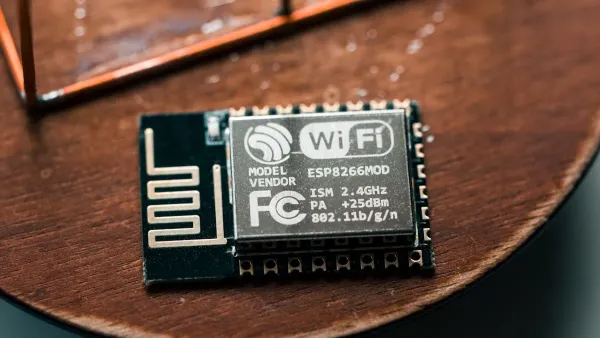
HiSilicon WiFi solutions provide excellent connectivity for local environments. They are perfect for products that operate within a fixed area like a home or office. This technology offers a great balance of speed, cost, and ease of deployment.
Ideal Use Cases
HiSilicon's wifi chips are designed for the smart home market. They power many devices that require a constant, reliable connection. A security camera streaming HD video is a prime example. It sends large amounts of data over the local network without interruption. Office equipment like printers also benefits from stable wifi connectivity.
HiSilicon's focus on this area is clear:
- The company officially lists "Smart Home" as a key application for its products.
- Its chips are found in devices like low-power wireless monitoring cameras.
Speed and Efficiency
Modern wifi standards deliver impressive performance. Wi-Fi 6, for instance, excels in crowded environments with many connected devices. It reduces congestion and improves overall efficiency. HiSilicon's WiFi-IoT solution supports embedded Power Amplifiers (PAs) and Low-Noise Amplifiers (LNAs). It operates on a standard 20 MHz bandwidth, ensuring compatibility and stable performance for IoT devices.
Note: The 5 GHz wifi band should not be confused with cellular 5G. The 5 GHz band offers a faster, less congested connection than the older 2.4 GHz band, making it ideal for high-bandwidth tasks.
Power Consumption
Power efficiency is critical for many smart devices, especially those running on batteries. HiSilicon designs its chips for low power consumption. This extends the battery life of devices like wireless cameras and sensors. It allows them to operate for longer periods before needing a recharge or battery replacement.
Cost and Infrastructure
Wi-Fi is a very cost-effective solution. It uses existing infrastructure found in nearly every home and office. There are no monthly data fees associated with its use. This makes it an affordable choice for consumer electronics and business equipment. The initial hardware cost is low, and the setup is straightforward for the end-user.
HiSilicon LTE (4G) Solutions
HiSilicon's LTE (4G) solutions offer a mature and reliable choice for mobile connectivity. This technology provides a powerful balance of widespread coverage, solid performance, and cost-efficiency. It is the go-to standard for countless devices needing dependable mobile broadband access. The 4G LTE network is robust and widely available.
Ideal Use Cases
The 4G LTE standard is perfect for products that require connectivity on the move. It serves devices that operate outside the range of a Wi-Fi network. Use cases include asset trackers, in-vehicle infotainment systems, and portable payment terminals. A 4G LTE mobile hotspot is another excellent example, providing internet access to multiple devices anywhere. These applications depend on consistent mobile broadband. The LTE Advanced standard further improves performance for these devices.
Coverage and Reliability
The greatest strength of 4G LTE is its vast coverage. Global organizations provide detailed maps showing network availability.
- The GSMA offers
Mobile Coverage Mapsthat help identify the reach of 2G, 3G, and 4G networks, even in rural areas. - In the U.S., the FCC provides a map detailing 4G LTE coverage from major carriers.
This extensive infrastructure ensures that products using LTE maintain a stable connection across most populated areas. The LTE Advanced protocol enhances this reliable mobile broadband experience. This makes LTE a trusted technology.
Cost-Effectiveness
LTE presents a cost-effective solution for mobile broadband needs. The hardware for 4G LTE is generally less expensive than newer 5G components. Data plans for LTE are also competitive. The technology's maturity means the infrastructure is already built out, reducing deployment costs for service providers. This makes LTE Advanced a smart financial choice for many commercial products. The LTE Advanced standard offers great value.
Low-Power Cellular IoT
Beyond high-speed mobile broadband, the LTE ecosystem includes low-power options for the Internet of Things (IoT). Technologies like NB-IoT (Narrowband-IoT) are part of the 4G LTE family. HiSilicon works with partners to develop NB-IoT modules based on its chipsets. These modules focus on extremely low power consumption and reduced device cost. This makes massive IoT deployments, like smart meters and environmental sensors, feasible using the LTE network. LTE Advanced also supports these IoT applications.
HiSilicon 5G Solutions
HiSilicon's 5G solutions represent the cutting edge of wireless technology. They deliver unparalleled performance for the most demanding applications. This option is for products where speed, low latency, and future-readiness are top priorities.
Ideal Use Cases
The power of 5G unlocks new possibilities for advanced industries. It is essential for industrial automation, autonomous vehicles, and Fixed Wireless Access (FWA). FWA uses the cellular network to provide home and business internet. 5G LAN can even serve as a wireless replacement for traditional network cabling in complex environments.
A great example is a drone performing real-time 4K video inspection. It needs the massive bandwidth and low latency of a 5G connection to stream high-quality video without delay.
Performance and Latency
5G cellular technology delivers a significant leap in performance. It requires a device with a SIM slot for connectivity. The technology offers superior speed and lower latency compared to even the best Wi-Fi connections. This responsiveness is critical for applications like remote surgery or controlling heavy machinery, where even a millisecond of lag can have major consequences.
Future-Proofing
Choosing 5G is an investment in the future. The technology is evolving toward standalone (SA) deployments. This evolution will enable powerful features like network slicing. Network slicing allows operators to create dedicated virtual network segments for specific customers or use cases. This ensures guaranteed performance for critical services. Early adopters are already using this for applications like:
- Priority access for first responders.
- Dedicated resources for enterprise clients.
- Enhanced Fixed Wireless Access.
Cost and Power Draw
The advanced capabilities of 5G come at a premium. The hardware components are more expensive than their 4G counterparts. Data plans also reflect the higher performance levels. Additionally, 5G modems typically have a higher power draw. This makes them better suited for devices with access to a constant power source or those with large batteries.
HiSilicon Ethernet Solutions
HiSilicon's ethernet solutions provide the gold standard for wired connectivity. This option is unmatched for products that demand maximum stability, security, and consistent speed. It is the definitive choice for stationary devices where a physical connection is practical.
Ideal Use Cases
Ethernet is ideal for high-performance, fixed-location devices. Network Video Recorders (NVRs) and high-resolution IP cameras rely on this connection for uninterrupted data transfer. HiSilicon supports these applications with specialized processors. The HiSilicon Hi3521A processor, for example, is an excellent fit for these systems.
- It features one Gigabit Ethernet port.
- The port includes an integrated FE PHY.
- It supports 10/100/1000 Mbit/s full-duplex or half-duplex modes.
Stability and Security
A wired connection offers superior stability. It is immune to the radio frequency interference that can disrupt Wi-Fi signals. This physical link also provides a security advantage. A device connected via a cable cannot be accessed without physical entry into the network, making it far more secure than wireless alternatives.
Speed and Reliability
Wired connections deliver consistent, high-speed performance. Unlike wireless technologies, the speed does not degrade with distance (within limits) or due to environmental factors. The ability to operate in full-duplex mode allows devices to send and receive data simultaneously. This capability ensures a reliable, low-latency data stream perfect for critical applications.
Physical Limitations
The primary drawback of an ethernet connection is its physical nature. Devices are tethered by a cable, which completely removes mobility. The length of the cable also imposes a strict range limit on the network. For most common cable types, this distance is capped at 100 meters for optimal performance.
Cable Length Limits for 1 Gbps Speed
Cable Category Maximum Length Cat5e 100 meters Cat6 100 meters Cat7 100 meters
This physical constraint makes it unsuitable for any product designed to be portable.
Comparing Connectivity Options: A Side-by-Side Look
Choosing the right technology requires a direct comparison. Each of HiSilicon's connectivity options has distinct strengths. This side-by-side look clarifies which solution best fits specific product requirements.
Primary Use Case
The ideal application often dictates the best connectivity choice. Ethernet provides the most stable connection for stationary devices like Network Video Recorders. Wi-Fi offers wireless freedom for local devices within a home or office.
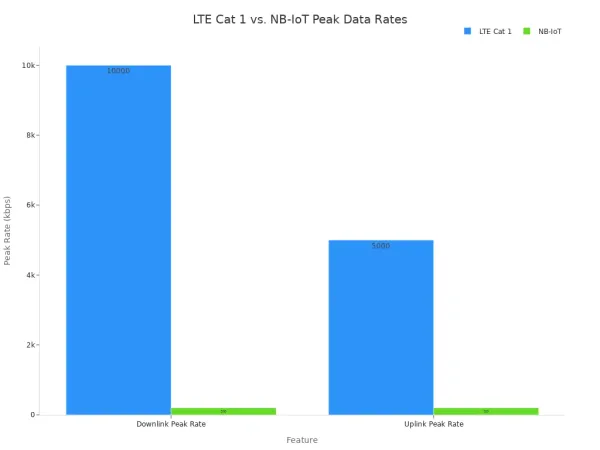
Cellular technologies serve products that need to operate over large areas. The 4G LTE standard is incredibly versatile. LTE Cat-1, for example, is a better choice than NB-IoT for applications needing moderate data rates and mobility.
- Wearables and point-of-sale terminals
- Vehicle telematic data
- Video surveillance and connected healthcare
- Shared mobility like bike and scooter rentals
This makes 4G LTE perfect for a portable mobile hotspot or devices requiring reliable mobile broadband. The LTE Advanced standard enhances this capability further. In contrast, 5G Fixed Wireless Access (FWA) serves a different need. It becomes preferable to a fiber optic ethernet connection in specific scenarios.
- It enhances rural connectivity where laying cable is too expensive.
- It allows for quick deployment in new communities or for temporary events.
- It restores connectivity fast in areas prone to disasters.
Maximum Speed
Performance varies significantly across technologies. Theoretical maximums provide a benchmark, while real-world speeds show practical performance. Wi-Fi 6 can theoretically reach 9.6 Gbps, and 5G can hit 10 Gbps. The LTE Advanced protocol also delivers impressive speed, with some categories reaching up to 2 Gbps.
| Technology | Theoretical Max Speed (Download) | Typical Real-World Speed (Urban) |
|---|---|---|
| Ethernet | 1 Gbps (Gigabit) | 1 Gbps (Consistent) |
| Wi-Fi 6 | 9.6 Gbps | Varies (Depends on congestion) |
| 4G LTE Advanced | Up to 2 Gbps (Cat 20) | 40-100 Mbps |
| 5G (Sub-6GHz) | Up to 10 Gbps | 150-900 Mbps |
Wi-Fi 6 excels in managing network congestion. It uses technologies like BSS Coloring to reduce interference from neighboring networks. This makes it highly efficient for crowded indoor environments with many connected devices. For low-power IoT, the speed difference is also critical. LTE Cat-1 offers much higher data rates than NB-IoT, making it suitable for applications that transmit more data.
Mobility and Range
Mobility is a key differentiator. Ethernet has no mobility, as it is physically tethered. Wi-Fi offers local mobility, but its range is limited and affected by obstacles. Cellular technologies like 4G LTE provide true mobility over vast distances.
The effective range of a single access point or tower shows this difference clearly.
| Technology | Environment | Typical Range / Coverage |
|---|---|---|
| Wi-Fi (2.4 GHz) | Indoors | ~40 meters |
| Cellular (LTE/5G) | Indoors | Up to 16,000 sq. ft. |
| Cellular (LTE/5G) | Outdoors | Up to 500,000 sq. ft. |
Building materials also impact signal strength, especially for Wi-Fi. Lower frequency signals generally penetrate objects better.
Wall Type 2.4 GHz Wi-Fi Attenuation 5 GHz Wi-Fi Attenuation Reinforced Concrete 50% 90%
This physical limitation makes 4G LTE and its LTE Advanced protocol the superior choice for consistent mobile broadband coverage.
Power and Cost
The total cost of ownership (TCO) and power consumption are critical business considerations. Enterprises often use multiple connectivity options, which can lead to a higher TCO. A "hybrid networking" approach, where each technology is used for its best-suited purpose, helps optimize costs. For large industrial areas, a private cellular network (using LTE or 5G) can offer a lower TCO than Wi-Fi because it requires far fewer access points.
Power consumption is another key factor. For devices that transmit data frequently, energy efficiency can determine battery life.
| Technology | Energy Efficiency (Relative) |
|---|---|
| 5G | 10% of current consumption |
| Wi-Fi 6 | 32% of current consumption |
While 5G hardware and data plans are currently more expensive, the cost of 4G LTE technology is very competitive. The mature infrastructure for LTE makes it a cost-effective solution for reliable mobile broadband. The LTE Advanced standard provides excellent value for many commercial products.
Selecting the right HiSilicon connectivity options depends entirely on an application's unique requirements. There is no single best choice, only the right one for a specific job. This final summary empowers a confident decision.
Choose ethernet for stationary reliability. Select wifi for local wireless freedom. For dependable mobile broadband, the 4g lte standard is a strong choice. The 4g lte network provides proven mobile broadband. The versatile 4g lte and lte systems support many mobile broadband needs. This makes 4g lte and lte a go-to solution.
FAQ
### Which is better for a mobile product, Wi-Fi or 4G LTE?
4G LTE provides the best connectivity for mobile products. It offers broad, reliable coverage over vast distances. Wi-Fi works well for local wireless access within a building. A product needing true mobility requires a cellular connection like 4G LTE for consistent performance anywhere.
### Is 5G always a better choice than 4G LTE?
No, 5G is not always better. 4G LTE offers a mature, cost-effective solution with wide coverage. 5G provides superior speed and low latency for advanced applications. The right choice depends on a product's specific performance needs and budget.
### Why would a product use Ethernet instead of Wi-Fi?
A product uses Ethernet for maximum stability and security. A wired connection is immune to wireless interference. It provides a consistent, high-speed data link. This makes it the top choice for stationary devices like network recorders and secure office equipment.
### What is the best option for a battery-powered IoT device?
Low-power cellular technologies are ideal for battery-powered IoT devices.
- NB-IoT works best for devices sending small, infrequent data packets.
- LTE Cat-1 suits devices needing higher data rates, like simple video monitors.
These options extend battery life significantly, making large-scale deployments practical.