Understanding IC Integrated Circuits: Types, Applications, and Future Trends in Electronic Components
Integrated Circuits revolutionized modern electronics by combining multiple electronic components into a single chip. These compact devices serve as the foundation of most electronic systems, driving innovation in consumer products, industrial machinery, and medical equipment. Their ability to enhance performance while reducing size and cost has made them indispensable.
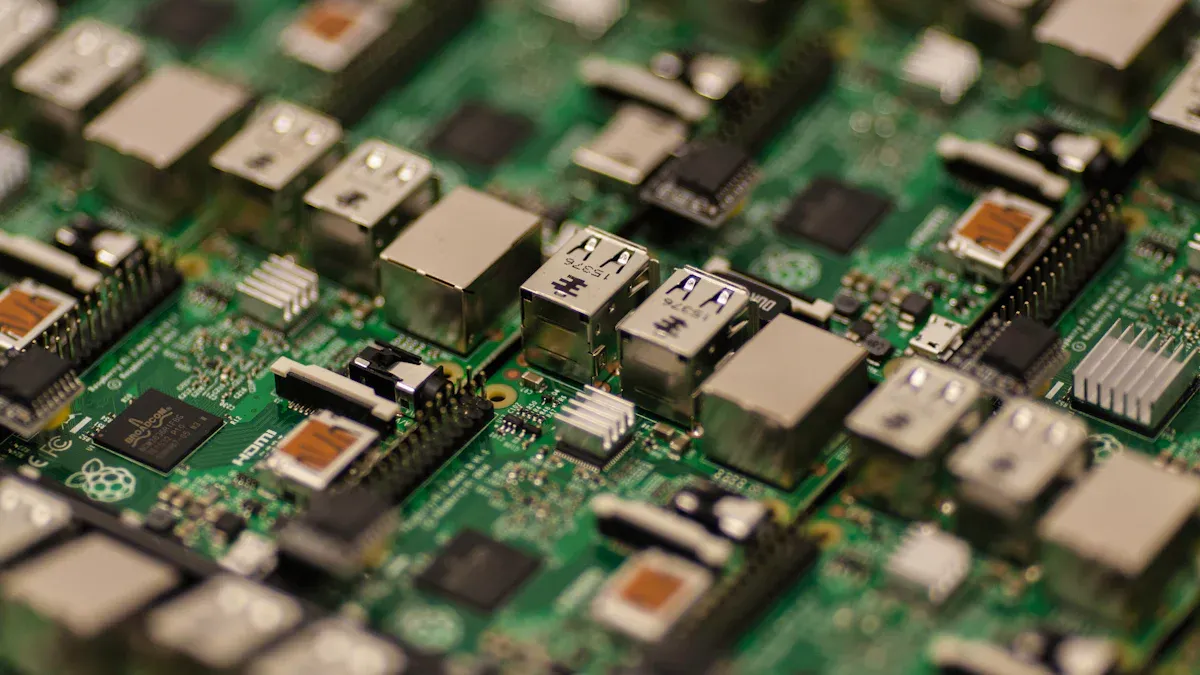
Integrated Circuits revolutionized modern electronics by combining multiple electronic components into a single chip. These compact devices serve as the foundation of most electronic systems, driving innovation in consumer products, industrial machinery, and medical equipment. Their ability to enhance performance while reducing size and cost has made them indispensable.
The influence of Integrated Circuits continues to grow. For example:
-
The Analog IC market is expected to generate $84.95 billion in revenue by 2025, with a CAGR of 10.34% from 2025 to 2029.
-
The Digital IC market is projected to reach $554.17 billion by 2037, expanding at a CAGR of 9.2%.
These numbers highlight their critical role in shaping the future of technology.
Key Takeaways
-
Integrated Circuits (ICs) are key parts of modern electronics. They combine many components into one chip to work better and save space.
-
The Analog IC market might grow to $84.95 billion by 2025. This shows more people need them for real-time signal tasks.
-
Digital ICs use binary signals to do computing jobs. They are in devices like smartphones and computers.
-
Mixed-Signal ICs connect analog and digital signals. They are important for things like communication systems and collecting data.
-
Power Management ICs help devices use energy wisely. They make batteries last longer and share power efficiently in electronics.
-
IC technology is improving with AI, quantum computing, and eco-friendly designs. These changes will make ICs work faster and better.
-
New materials like graphene and 3D IC building methods will change how ICs are made and used.
-
Knowing about IC types and uses helps you pick the right ones. This can make your projects work better and last longer.
What Are Integrated Circuits?
Definition and Core Components
Integrated Circuits are the building blocks of modern electronics. These tiny chips combine multiple electronic components, such as transistors, resistors, and capacitors, onto a single piece of semiconductor material. This integration allows them to perform complex functions while occupying minimal space.
Transistors, the core elements of Integrated Circuits, act as electronic switches. They control the flow of electrical current, enabling the chip to process information. By arranging these transistors in specific patterns, designers create essential components like logic gates, amplifiers, and memory cells.
Did you know? Integrated Circuits are used in everything from microprocessors and memory devices to communication systems and sensors. Their versatility makes them indispensable in modern technology.
Evolution and Historical Milestones
The journey of Integrated Circuits began in the late 1950s when Jack Kilby and Robert Noyce independently developed the concept of integrating multiple components onto a single semiconductor substrate. This breakthrough revolutionized electronics, paving the way for compact and efficient devices.
Here’s a timeline of key milestones in the evolution of Integrated Circuits:
|
Year |
Milestone |
Description |
|---|---|---|
|
1961 |
First Monolithic IC Computer |
Texas Instruments built the first general-purpose computer using ICs. |
|
1965 |
SDS 92 |
One of the earliest commercial applications of Integrated Circuits. |
|
1969 |
IBM System/360 Model 85 |
IBM incorporated ICs into computer logic for the first time. |
|
1969 |
Data General Nova |
Medium-scale integration circuits enabled the production of 50,000 units. |
|
1971 |
IBM System/370 |
Marked the extensive use of Integrated Circuits in computing systems. |
These milestones highlight the rapid advancements in IC technology, which have transformed industries and everyday life.
Importance in Modern Technology
Integrated Circuits play a crucial role in shaping the devices you use daily. They provide the logic and control needed for sensors, communication systems, and safety mechanisms. For example, ICs are essential in smartphones, laptops, and automotive systems. They also host software and drive final elements to achieve safe states in critical applications.
The high level of integration in these chips simplifies system design while improving reliability. By reducing the number of components, ICs enhance diagnostic coverage and minimize the risk of failure. This makes them vital in industries like healthcare, automotive, and consumer electronics.
Tip: Next-generation technologies like 5G, IoT, and AI rely heavily on Integrated Circuits. Their ability to handle complex tasks efficiently ensures they remain at the forefront of innovation.
Types of Integrated Circuits
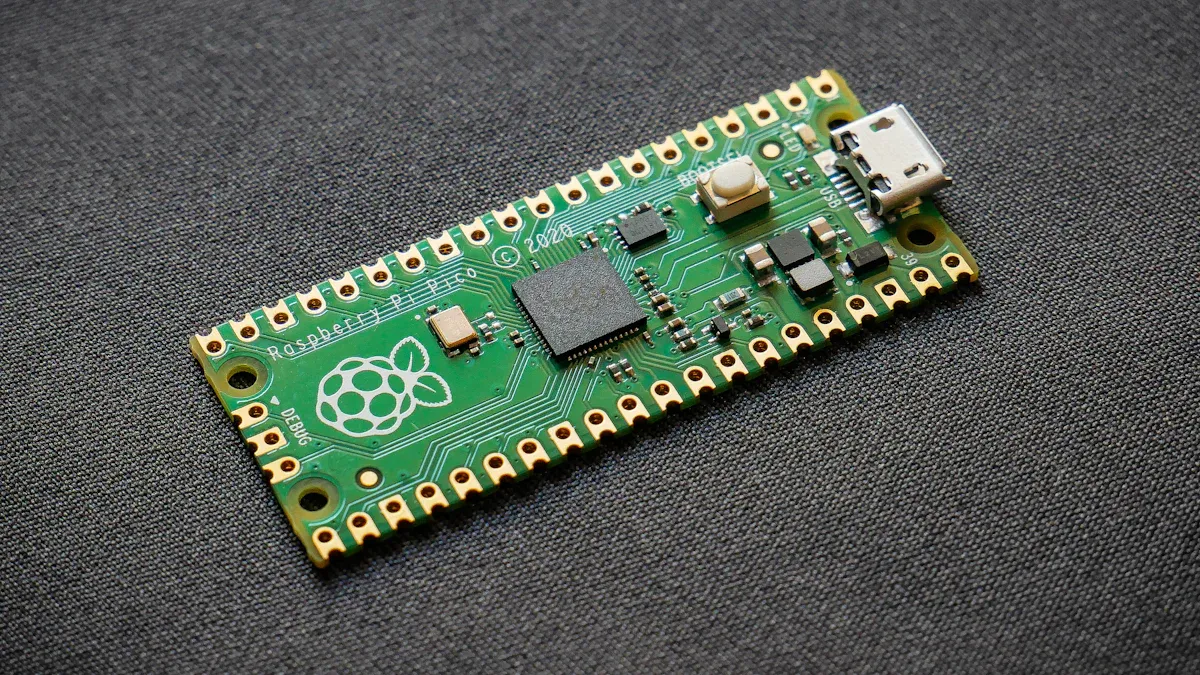
Integrated Circuits come in various types, each designed to perform specific functions. Understanding these types helps you choose the right IC for your application. Let’s explore the key categories: Analog, Digital, and Mixed-Signal Integrated Circuits.
Analog Integrated Circuits
Key Characteristics
Analog Integrated Circuits process continuous signals, making them ideal for applications requiring real-time signal handling. These circuits excel in speed and efficiency, offering several advantages over digital counterparts.
|
Characteristic |
Description |
|---|---|
|
Quick response to input changes |
Analog circuits respond more quickly to changes in input signals compared to digital circuits. |
|
Compact size |
Analog integrated circuits are compact, making them suitable for various applications. |
|
Low power dissipation |
They are often more power-efficient than digital circuits, ideal for battery-powered devices. |
|
Real-time signal processing |
Analog ICs can process signals in real-time, crucial for applications requiring speed and precision. |
These characteristics make Analog ICs indispensable in systems where precision and speed are critical.
Common Applications
You’ll find Analog Integrated Circuits in a wide range of devices. They are commonly used for:
-
Amplifying signals in audio systems.
-
Regulating voltage in power supplies.
-
Conditioning signals in biomedical measurements.
-
Controlling industrial processes and motion systems.
Their ability to handle real-time signal processing ensures reliable performance in these applications.
Digital Integrated Circuits
Key Characteristics
Digital Integrated Circuits operate using binary signals (0s and 1s). This makes them highly reliable and efficient for tasks involving logic and computation. They are designed to handle complex operations with precision.
Some key features include:
-
High processing speed for computational tasks.
-
Scalability, allowing integration of millions of transistors on a single chip.
-
Robust error detection and correction mechanisms.
These characteristics make Digital ICs the backbone of modern computing and communication systems.
Common Applications
Digital Integrated Circuits power many of the devices you use daily. Examples include:
-
Microprocessors in computers and smartphones.
-
Memory chips for data storage.
-
Logic gates in digital systems.
Their versatility and efficiency make them essential in consumer electronics, automotive systems, and industrial automation.
Mixed-Signal Integrated Circuits
Key Characteristics
Mixed-Signal Integrated Circuits combine the best of both analog and digital worlds. They process both continuous and binary signals, enabling seamless communication between analog and digital components.
These circuits offer significant advantages in latency and energy efficiency. For instance, analog signal processing in mixed-signal ICs often outperforms digital methods in speed and power consumption. Recent advancements, such as photonic processors, demonstrate how analog processes can execute mathematical operations with lower latency and energy usage compared to digital electronics.
Common Applications
Mixed-Signal Integrated Circuits are vital in applications requiring both analog and digital functionalities. You’ll find them in:
-
Analog-to-Digital Converters (ADCs) and Digital-to-Analog Converters (DACs).
-
Communication systems for signal modulation and demodulation.
-
Data acquisition systems in instrumentation and control.
Their ability to bridge analog and digital domains makes them indispensable in modern technology.
Specialized Integrated Circuits
Specialized Integrated Circuits are designed to perform specific tasks with exceptional efficiency. These circuits cater to unique requirements in various industries, ensuring optimal performance and reliability. Two prominent types of specialized ICs are Power Management ICs and RF ICs.
Power Management ICs
Power Management ICs (PMICs) are essential for managing power distribution in electronic devices. They regulate voltage, control power flow, and ensure energy efficiency. These ICs are crucial in devices where power optimization is a priority, such as smartphones, laptops, and electric vehicles.
Key Features of Power Management ICs:
-
Voltage Regulation: PMICs maintain a stable voltage supply, protecting sensitive components from damage.
-
Battery Management: They monitor and optimize battery performance, extending battery life.
-
Energy Efficiency: By minimizing power loss, PMICs enhance the overall efficiency of electronic systems.
-
Compact Design: Their small size allows them to fit into space-constrained devices.
You’ll find PMICs in applications like LED drivers, portable chargers, and renewable energy systems. For example, in electric vehicles, PMICs manage the power flow between the battery and the motor, ensuring smooth operation and extended range.
Tip: When designing energy-efficient devices, consider using PMICs to reduce power consumption and improve reliability.
RF ICs and Their Uses
RF ICs (Radio Frequency Integrated Circuits) handle high-frequency signals used in wireless communication. These ICs are vital in devices that rely on transmitting and receiving data over radio waves, such as smartphones, Wi-Fi routers, and satellite systems.
Applications of RF ICs:
-
Wireless Communication: RF ICs enable seamless connectivity in mobile networks, Bluetooth devices, and IoT systems.
-
Radar Systems: They process signals in radar applications, crucial for automotive safety and air traffic control.
-
Satellite Communication: RF ICs ensure reliable data transmission in space-based systems.
RF ICs are designed for high performance and reliability. They operate efficiently in challenging environments, such as extreme temperatures or high electromagnetic interference. Their compact design also allows for integration into small devices without compromising functionality.
|
Feature |
Description |
|---|---|
|
Customization |
ASICs are tailored for specific applications, ensuring optimal performance. |
|
High Performance |
They provide high-speed processing for specialized tasks. |
|
Energy Efficiency |
ASICs consume less power by eliminating unnecessary functions. |
|
Compact Design |
They occupy less space on silicon wafers, allowing for efficient designs. |
|
Reliability |
ASICs offer high reliability and long-term stability for consistent performance. |
|
Cost Efficiency |
In high-volume production, they can be more cost-effective than general-purpose processors. |
The table above highlights the advantages of application-specific ICs, such as RF ICs, in delivering high performance and energy efficiency. These features make them indispensable in modern communication systems.
Did you know? RF ICs are the backbone of 5G technology, enabling faster data speeds and lower latency for next-generation networks.
Applications of Integrated Circuits

Integrated Circuits play a pivotal role in shaping the functionality and efficiency of devices across industries. Their versatility and compact design make them indispensable in consumer electronics, automotive systems, and healthcare technologies.
Consumer Electronics
Smartphones and Tablets
Integrated Circuits are the backbone of modern smartphones and tablets. They enable advanced features like high-speed processing, efficient power management, and seamless connectivity. Microprocessors and memory chips within these devices handle complex tasks, ensuring smooth user experiences. Power Management ICs optimize battery life, allowing you to enjoy extended usage without frequent charging.
Note: The consumer electronics segment holds the largest market share in the Integrated Circuit market. High production rates of devices like smartphones, smart TVs, and tablets drive this growth. The demand for enhanced performance and advanced features sustains this dominance.
Wearable Technology
Wearable devices, such as smartwatches and fitness trackers, rely heavily on Integrated Circuits for their compact design and functionality. These ICs enable features like real-time health monitoring, GPS tracking, and wireless communication. Mixed-Signal ICs bridge analog and digital domains, ensuring accurate data acquisition and processing. Their energy-efficient design makes them ideal for battery-powered wearables.
-
Key Benefits of ICs in Wearables:
-
Compact size for lightweight designs.
-
Low power consumption for extended battery life.
-
High reliability for continuous operation.
-
Automotive Industry
Electric Vehicles (EVs)
Electric vehicles depend on Integrated Circuits for efficient power management and advanced control systems. Power Management ICs regulate the flow of electricity between the battery and motor, ensuring optimal performance. Logic ICs handle data routing and processing, enabling features like regenerative braking and energy optimization.
Tip: The shift toward electric and hybrid vehicles has increased the demand for electronic components. These vehicles require systems for battery management, power electronics, and advanced safety features, boosting the adoption of Integrated Circuits.
Advanced Driver Assistance Systems (ADAS)
ADAS technologies, such as lane-keeping assistance and collision avoidance, rely on Integrated Circuits for real-time data processing. Mixed-Signal ICs play a crucial role in sensor integration, converting analog signals from cameras and radar into digital data for analysis. These ICs ensure quick response times, enhancing vehicle safety and driver convenience.
-
Market Insights:
-
Passenger cars increasingly integrate electronic systems powered by ICs for engine control and ADAS functionalities.
-
Commercial vehicles use ICs for fleet management, telematics, and safety systems, reflecting broader market demand.
-
Healthcare and Medical Devices
Diagnostic and Monitoring Equipment
Integrated Circuits are vital in diagnostic tools like ECG machines and blood glucose monitors. Analog ICs process real-time signals from sensors, ensuring accurate measurements. Mixed-Signal ICs convert these signals into digital data for analysis and storage. Their reliability and precision make them indispensable in medical diagnostics.
Did you know? The healthcare sector benefits from ICs' ability to handle complex tasks efficiently. Devices like portable monitors and imaging systems rely on ICs for high performance and compact designs.
Implantable Medical Devices
Implantable devices, such as pacemakers and cochlear implants, depend on Integrated Circuits for their functionality. Power Management ICs ensure energy efficiency, extending battery life in these life-saving devices. Mixed-Signal ICs facilitate communication between sensors and processors, enabling real-time monitoring and adjustments.
|
Metric |
Value |
|---|---|
|
Market Value in 2025 |
|
|
Projected CAGR (2025-2033) |
9.46% |
|
Key Sectors |
Consumer electronics, Automotive, IoT devices |
|
Major Players |
Texas Instruments, STMicroelectronics, Infineon, Intel, Analog Devices |
Integrated Circuits continue to revolutionize healthcare by enabling compact, efficient, and reliable medical devices.
Industrial and IoT Applications
Integrated Circuits play a vital role in industrial and IoT systems, enabling smarter, faster, and more efficient operations. These chips power the technologies that drive automation, enhance productivity, and improve decision-making in industrial environments.
Smart Sensors and Automation
Smart sensors equipped with Integrated Circuits are transforming industrial automation. These sensors collect real-time data, process it locally, and communicate with other devices to optimize operations. For example, in manufacturing, smart sensors monitor equipment performance, detect anomalies, and predict maintenance needs. This reduces downtime and improves efficiency.
Automation systems also rely on Integrated Circuits to control robotic arms, conveyor belts, and other machinery. These chips process data from sensors and execute precise commands, ensuring smooth and accurate operations. For instance, in a casting production line, Integrated Circuits enable rapid processing and analysis of each casting in just 2.3 seconds. This results in a throughput of 26 castings per minute, with a total of 37,440 casts in 24 hours. The system achieves an impressive accuracy rate of 96%, with a mean absolute error of only 0.05 mm.
Fun Fact: Blockchain technology, when integrated with IoT systems, enhances data integrity and traceability. Scores of 0.99 and 0.98, respectively, highlight the reliability of such systems.
Industrial Control Systems
Industrial control systems depend on Integrated Circuits for efficient and reliable operation. These systems manage processes like temperature regulation, pressure control, and energy distribution in factories and power plants. Integrated Circuits ensure precise control and real-time monitoring, which are essential for maintaining safety and productivity.
Advanced control systems also use Integrated Circuits to analyze data and make decisions autonomously. For example:
-
They detect defects in products with an F1-score of 0.94, outperforming traditional methods.
-
They maintain consistent quality by minimizing errors, as shown by a root mean square error of just 0.07 mm.
Integrated Circuits also support connectivity in IoT-enabled factories. They allow devices to communicate seamlessly, creating a network of smart machines that work together efficiently. This connectivity improves scalability and flexibility, making it easier to adapt to changing production demands.
Tip: When designing industrial systems, consider using Integrated Circuits to enhance performance, accuracy, and reliability.
Future Trends in Integrated Circuits
Miniaturization and the End of Moore’s Law
You’ve likely heard of Moore’s Law, which predicted that the number of transistors on a chip would double approximately every two years. For decades, this trend drove the rapid advancement of Integrated Circuits. However, recent data shows a slowdown in transistor miniaturization. Challenges in achieving smaller fabrication processes, such as 10nm and 7nm, have made it harder to maintain the exponential growth Moore’s Law envisioned. Technologies like FinFET and strained SiGe have helped increase transistor density, but at a slower pace.
Despite these challenges, innovation continues. Researchers are exploring materials like graphene to push the boundaries of miniaturization. Flexible ICs are also gaining traction, especially for wearable electronics. These advancements promise to keep Integrated Circuits at the forefront of technology, even as Moore’s Law reaches its limits.
Did you know? By 2025, 3D ICs are expected to see significant growth, offering higher performance and efficiency for demanding applications.
Artificial Intelligence Integration
Artificial Intelligence (AI) is transforming how you interact with technology. Integrated Circuits optimized for AI workloads are becoming essential. These chips, often called AI accelerators, handle tasks like image recognition, natural language processing, and predictive analytics with remarkable efficiency. Their design focuses on parallel processing, which speeds up AI computations while reducing energy consumption.
The demand for AI-optimized ICs is growing rapidly. You’ll see them in everything from autonomous vehicles to smart home devices. For example, AI chips in self-driving cars process data from sensors and cameras in real time, ensuring safe navigation. In healthcare, these ICs enable faster analysis of medical images, improving diagnostic accuracy.
Tip: As AI becomes more pervasive, expect Integrated Circuits to evolve, offering even greater efficiency and performance for machine learning applications.
Advancements in Quantum Computing
Quantum computing represents the next frontier in technology. Unlike traditional computers, which use binary bits, quantum computers use qubits to perform calculations. This allows them to solve complex problems much faster. Integrated Circuits play a crucial role in quantum computing by controlling and stabilizing qubits.
You might wonder how this impacts everyday life. Quantum computing could revolutionize fields like cryptography, drug discovery, and logistics. For instance, it could optimize supply chains or accelerate the development of new medicines. While still in its early stages, advancements in quantum ICs are paving the way for these breakthroughs.
Fun Fact: The integration of quantum computing with AI could lead to even more powerful systems, capable of solving problems that are currently impossible for classical computers.
Sustainability and Green Electronics
Sustainability has become a key focus in the electronics industry. As a consumer, you may notice how environmental concerns are shaping the design and production of modern devices. Integrated Circuits play a significant role in this shift by enabling energy-efficient technologies and reducing electronic waste.
One way ICs contribute to sustainability is through their compact design. Smaller chips require fewer raw materials, which reduces the environmental impact of manufacturing. Additionally, energy-efficient ICs help lower power consumption in devices like smartphones, laptops, and IoT systems. This not only saves energy but also reduces greenhouse gas emissions.
Recycling and reusing materials from old electronics is another important aspect of green electronics. Manufacturers are now designing ICs with recyclability in mind. For example, some companies use modular designs that make it easier to separate and recover valuable components. This approach minimizes waste and conserves resources.
You can also see the impact of green electronics in renewable energy systems. ICs are essential in solar panels, wind turbines, and energy storage systems. They optimize power conversion and distribution, ensuring maximum efficiency. By supporting clean energy technologies, ICs help reduce reliance on fossil fuels.
Tip: When purchasing electronics, look for devices with energy-efficient certifications like ENERGY STAR. These products often use advanced ICs designed for sustainability.
Emerging Materials and Fabrication Techniques
The development of new materials and fabrication methods is transforming the world of Integrated Circuits. Traditional silicon-based ICs are reaching their physical limits, but researchers are exploring innovative alternatives to push the boundaries of performance and efficiency.
Graphene is one such material gaining attention. It is a single layer of carbon atoms arranged in a hexagonal lattice. Graphene offers exceptional electrical conductivity and flexibility, making it ideal for next-generation ICs. You might see graphene-based ICs in flexible displays, wearable devices, and high-speed communication systems.
Another promising material is gallium nitride (GaN). GaN ICs operate at higher voltages and temperatures than silicon, making them perfect for power electronics. They are already being used in electric vehicles and fast-charging systems.
In terms of fabrication, 3D IC technology is revolutionizing chip design. Unlike traditional 2D chips, 3D ICs stack multiple layers of circuits vertically. This approach increases performance while reducing the space required. It also improves energy efficiency by shortening the distance electrical signals need to travel.
Flexible electronics are another exciting development. These ICs can bend and stretch without breaking, opening up possibilities for wearable technology and medical implants. Imagine a smart bandage that monitors your health in real time or a foldable smartphone that fits in your pocket.
Fun Fact: Researchers are even experimenting with biodegradable materials for ICs. These could lead to electronics that decompose naturally, reducing e-waste.
Integrated Circuits have transformed modern technology by enabling compact, efficient, and high-performance devices. You see their impact across industries, from consumer electronics to healthcare and automotive systems. Each type of IC serves unique purposes, whether managing power, processing data, or bridging analog and digital signals. Future trends like AI integration, quantum computing, and sustainable designs promise even greater advancements. As technology evolves, Integrated Circuits will remain essential in driving innovation and shaping the devices you rely on every day.
FAQ
1. What is an Integrated Circuit (IC)?
An Integrated Circuit (IC) is a small chip that combines multiple electronic components like transistors and resistors. It performs complex functions in a compact form, making it essential for modern electronics.
2. How do ICs improve device performance?
ICs enhance performance by integrating multiple functions into a single chip. This reduces size, increases speed, and improves energy efficiency, enabling devices to operate more effectively.
3. What are the main types of ICs?
The main types include:
-
Analog ICs: Process continuous signals.
-
Digital ICs: Handle binary data.
-
Mixed-Signal ICs: Combine analog and digital functions.
-
Specialized ICs: Designed for specific tasks like power management or RF communication.
4. Where are ICs commonly used?
You’ll find ICs in:
-
Consumer electronics like smartphones and wearables.
-
Automotive systems, including EVs and ADAS.
-
Medical devices like pacemakers.
-
Industrial automation and IoT applications.
5. What is the role of Power Management ICs?
Power Management ICs regulate voltage, manage battery performance, and optimize energy use. They ensure devices operate efficiently while extending battery life.
6. How do ICs support IoT devices?
ICs enable IoT devices to process data, communicate wirelessly, and operate efficiently. Mixed-Signal ICs, in particular, bridge analog sensors and digital systems, ensuring seamless functionality.
7. What is the future of IC technology?
The future includes advancements in AI integration, quantum computing, and sustainable designs. Emerging materials like graphene and 3D ICs promise higher performance and energy efficiency.
8. Why are ICs important in healthcare?
ICs power diagnostic tools, monitoring devices, and implantable technologies. They ensure precision, reliability, and compact designs, which are critical for medical applications.
Tip: Explore ICs tailored to your needs for optimal performance and efficiency in your projects.