A Complete Description of Integrated Circuits: Functions, Types, and Applications
An integrated circuit, or IC, is a small electronic chip that serves as a prime example in the description of integrated circuit technology. It combines parts like transistors, resistors, and capacitors into one piece. This tiny design helps it do many jobs, like handling data, boosting signals, or controlling power, very efficiently.
A Complete Description of Integrated Circuits: Functions, Types, and Applications
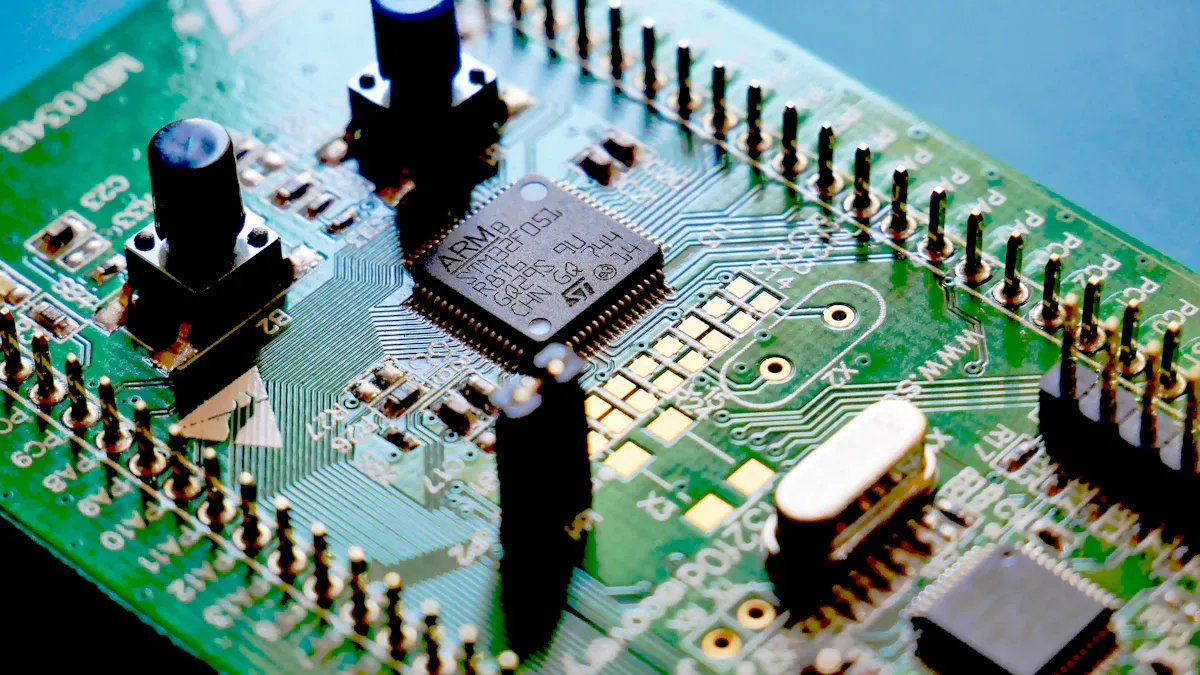
An integrated circuit, or IC, is a small electronic chip that serves as a prime example in the description of integrated circuit technology. It combines parts like transistors, resistors, and capacitors into one piece. This tiny design helps it do many jobs, like handling data, boosting signals, or controlling power, very efficiently.
Why are integrated circuits so important today? They are small and can do many things, making them key to modern technology. For example, in 2023, the value of ICs in North America was $272.04 billion. This happened because more people wanted smartphones, car electronics, and IoT devices. From 2024 to 2032, ICs are expected to grow by 13.4% each year. When you use a phone or drive a car, you enjoy the amazing power of these tiny chips.
Key Takeaways
-
Integrated circuits (ICs) are tiny chips with many electronic parts. They help make devices smaller and work better.
-
ICs do important jobs like boosting signals, handling data, and controlling power. These tasks are needed for today’s technology.
-
There are different IC types: analog, digital, and mixed-signal. Each type is made for specific uses in things like phones and cars.
-
ICs are very important in industries like healthcare, cars, and communication. They make devices work faster and last longer.
-
People want more ICs because of new tech like IoT, AI, and electric cars.
Functions of Integrated Circuits
Integrated circuits (ICs) are very important in electronics. They help devices work well and do their jobs right. Here are three main jobs ICs do: making signals stronger, handling data, and managing power.
Signal Amplification
One big job of ICs is making signals stronger. This means they take weak signals and make them strong enough to use. For example, in speakers, ICs make sound signals louder so you can hear them clearly. In radios, ICs make signals stronger for better communication.
Here’s some data about how ICs handle signal amplification:
|
Parameter |
Value |
|---|---|
|
Maximum Input Power |
10 dBm |
|
Linear Operating Range |
-20 dBm to 5 dBm |
|
Nonlinear Operating Range |
-5 dBm to 5 dBm |
|
Input Impedance |
50 ohms |
|
10 dBm Equals |
2 Vpp sine wave |
|
-5 dBm Equals |
0.25 Vpp sine wave |
|
5 dBm Equals |
1.12 Vpp sine wave |
This table shows how ICs work with signals. ICs are very precise, which helps them work well in things like audio systems and fiber optics.
Data Processing
ICs are great at handling and working with data. They can process information very fast, which is important for computers, phones, and AI systems. ICs help with tasks like math, pictures, and learning.
Studies show ICs use big datasets to work better. For example:
-
A dataset with 1 million points was used to test ICs.
-
These datasets include details like shapes, materials, and electrical info.
-
Engineers use real data, like power use and speed, to improve ICs.
With these datasets, ICs do amazing things like helping AI and making computers faster.
Power Management
ICs also manage power in devices. They make sure power is used wisely to save energy and keep devices working well. For example, in phones, ICs help batteries last longer and stop them from overheating.
In advanced systems, ICs are built carefully to handle delicate parts. This makes them work well even in tough conditions. For example, photonic ICs need to be very exact to keep signals strong and avoid errors. This helps ICs manage power in complex systems.
By managing power, ICs make electronics more energy-efficient and reliable, from small gadgets to big machines.
Signal Conversion
Signal conversion is a key job of integrated circuits. It helps devices work together by changing signals into different forms. You see this every day when using phones, TVs, or music players.
What is Signal Conversion?
Signal conversion means changing a signal's format to match other parts in a system. Some devices use analog signals, while others need digital ones. Integrated circuits make this change easy, so different technologies can work smoothly.
Types of Signal Conversion
Integrated circuits do many types of signal conversion. Here are the main ones:
-
Analog-to-Digital Conversion (ADC):
ADC turns analog signals, like sound waves, into digital data. For example, when you record your voice on a phone, ADC changes it into digital info. -
Digital-to-Analog Conversion (DAC):
DAC does the opposite. It changes digital signals into analog ones. This is important for speakers, which turn digital audio into sound you can hear. -
Voltage Level Conversion:
Some systems need signals at certain voltage levels. Integrated circuits adjust these levels to connect parts. For example, microcontrollers use this to work with sensors. -
Frequency Conversion:
Frequency conversion changes a signal’s frequency to fit a system. Radios and phones use this to tune signals to the right frequency.
How Signal Conversion Impacts Your Devices
Signal conversion makes electronics flexible and useful. Without it, devices couldn’t work together. For example:
-
Smartphones use it for calls, videos, and internet.
-
Medical devices use it for accurate sensor readings, like heart monitors.
-
Cars use it to connect cameras, sensors, and safety systems.
Integrated circuits combine these tasks into one chip. This makes devices smaller, simpler, and better at their jobs.
Real-World Example: Audio Systems
Think about an audio system. Playing music uses DAC to create sound. Recording with a microphone uses ADC to process input. Integrated circuits handle both jobs well, giving clear sound quality.
Tip: Next time you use a device, remember how integrated circuits manage signal conversion. It’s amazing how they make technology work.
By mastering signal conversion, integrated circuits have changed how devices work. They improve compatibility, boost performance, and make technology easier to use.
Types of Integrated Circuits
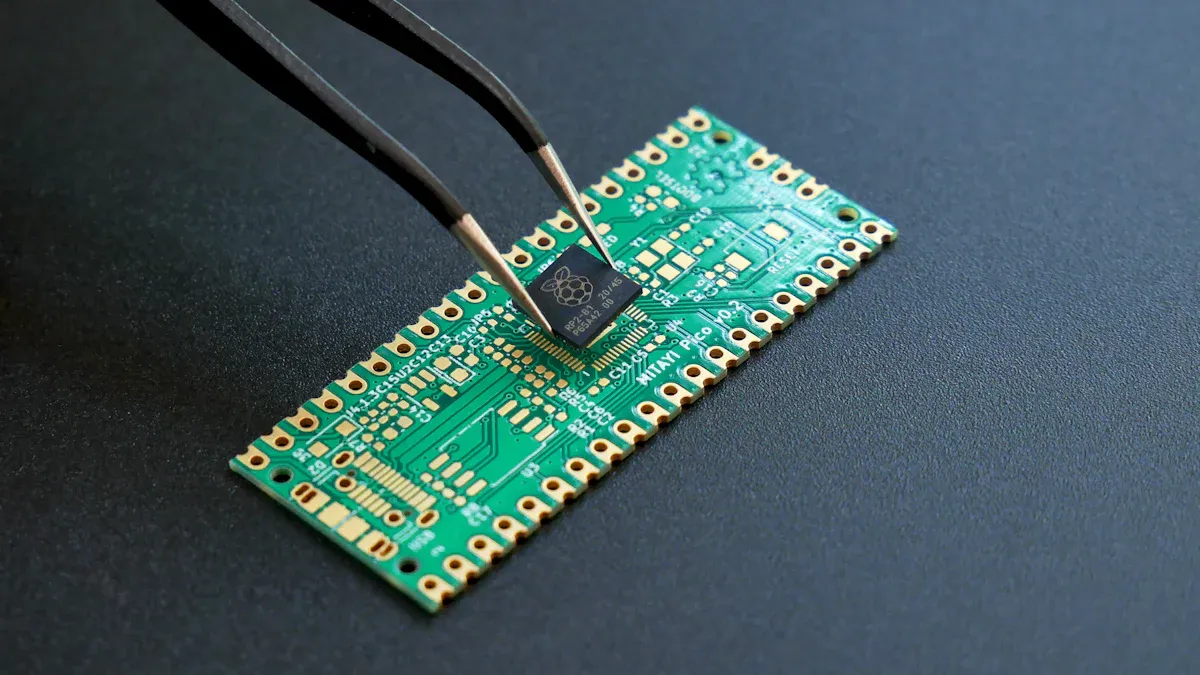
Integrated circuits (ICs) come in different types for specific tasks. Knowing these types helps you see their importance in technology. The three main types are analog, digital, and mixed-signal ICs.
Analog Integrated Circuits
Analog ICs work with continuous signals. They are used in devices needing high accuracy. Examples include audio amplifiers, radios, and oscillators. When you play music on a speaker, analog ICs keep the sound clear.
New analog ICs use less power but still perform well. Engineers now combine analog and digital circuits into one chip, called system-on-a-chip (SoC). This makes devices more efficient and cheaper to produce.
Digital Integrated Circuits
Digital ICs use binary signals, like 0s and 1s, to work. They are found in computers, phones, and other digital gadgets. These ICs are great at handling data, storing it, and sharing it.
Here’s how analog and digital ICs differ:
|
Factors |
Analog Circuits |
Digital Circuits |
|---|---|---|
|
Signal Representation |
Continuous signals |
Binary signals |
|
Precision and Fidelity |
High precision, great for audio |
Best for data processing |
|
Noise and Interference |
Sensitive to noise |
Better at blocking noise |
|
Design Complexity |
Harder to design |
Easier to design |
|
Integration and Scalability |
Hard to scale |
Easy to scale |
Digital ICs are easier to design and make in large numbers. This is why they are common in everyday electronics.
Mixed-Signal Integrated Circuits
Mixed-signal ICs combine analog and digital features. They handle both continuous and binary signals. These ICs are used in cars, phones, and medical tools. For example, car safety systems use them to connect sensors and improve safety.
The market for mixed-signal ICs is growing fast. In 2023, it was worth $98.74 billion. By 2033, it may grow to $185.63 billion, with a yearly growth rate of 6.74%. This growth comes from 5G, electric cars, and self-driving tech.
AI is also changing how mixed-signal ICs are made. AI tools help test and design these ICs faster and better. These improvements make mixed-signal ICs very important in today’s devices.
Note: Mixed-signal ICs connect analog and digital systems, helping devices work together smoothly.
Memory Integrated Circuits
Memory ICs are important for storing and retrieving data. They are used in computers, phones, and other devices needing quick data access. Types of memory ICs include RAM, ROM, and flash memory. Each type has a specific job.
You use memory ICs every day. Saving files, watching videos, or gaming all rely on them. RAM stores data temporarily for active tasks. Flash memory keeps data even when the device is off.
The need for memory ICs is growing with new technology. Here are some key facts:
|
Metric |
Value |
|---|---|
|
Projected Revenue (2025) |
|
|
Projected Revenue (2029) |
US$260.62bn |
|
CAGR (2025-2029) |
5.28% |
|
Projected Revenue from China (2025) |
US$62.81bn |
These numbers show how memory ICs are vital in industries like computing and IoT. As devices get smarter, faster memory will be even more important.
Application-Specific Integrated Circuits
ASICs are chips made for specific tasks. Unlike general ICs, they are designed to meet special needs. You can find ASICs in healthcare, cars, and factories.
ASICs combine many parts into one chip. This saves power, improves performance, and makes devices work better. For example, in factories, ASICs reduce failures by combining timers, controllers, and other parts.
Here’s how ASICs help different industries:
|
Industry Segment |
Benefits of ASICs |
Evidence |
|---|---|---|
|
Industrial |
Fewer failures, reliable performance |
ASICs combine parts into one chip, reducing failures and improving reliability. |
|
General |
Saves power, adds features |
ASICs are popular for saving power, adding features, and protecting designs. |
|
Market Growth |
More use of timers, controllers |
Factories are using more ASICs with timers and controllers, boosting growth. |
ASICs are changing industries by offering custom solutions. As tech advances, ASICs will play a bigger role in making electronics better.
How Integrated Circuits Work
Learning how integrated circuits work shows their role in devices. These small chips combine parts and follow rules to do hard tasks. Let’s look at their parts, how they work, and how they are made.
Components of an Integrated Circuit
An integrated circuit has tiny parts like transistors, resistors, capacitors, and logic gates. These parts work together to handle signals and data. Transistors act as switches or make signals stronger. Resistors control how much current flows. Capacitors store and release energy. Logic gates do binary tasks like math.
Here’s a simple table about IC design:
|
Aspect |
Description |
|---|---|
|
Design Process |
Uses special techniques to plan how ICs work. |
|
Components |
Includes transistors, resistors, capacitors, and logic gates. |
|
Digital vs Analog Design |
Digital focuses on binary; analog works with continuous signals. |
|
RTL vs Physical Design |
RTL shows behavior; physical design makes layouts. |
|
Standard Cells |
Basic logic gates help design and make ICs faster. |
These parts and methods help ICs work in devices like phones and computers.
Operational Principles
Integrated circuits control electrical signals to do their jobs. Digital ICs use binary signals like 0s and 1s. Analog ICs handle smooth signals like sound waves. Mixed-signal ICs do both, letting phones manage calls, music, and data at once.
Microprocessors depend on ICs to work. They process binary data very fast to run computers and other gadgets.
Manufacturing Process
Making an integrated circuit starts with its design. Engineers plan how the chip will work. Then, silicon wafers are used to build the chip. Terminals are added to connect it, and plastic resin seals it.
Many companies help make ICs. For example, Ajinomoto provides special materials for packaging. Big companies like Intel and Nvidia make microprocessors and other chips. This teamwork creates strong and useful ICs.
Tip: When you use a device, think about the work behind its ICs. These chips make modern technology possible.
Applications of Integrated Circuits
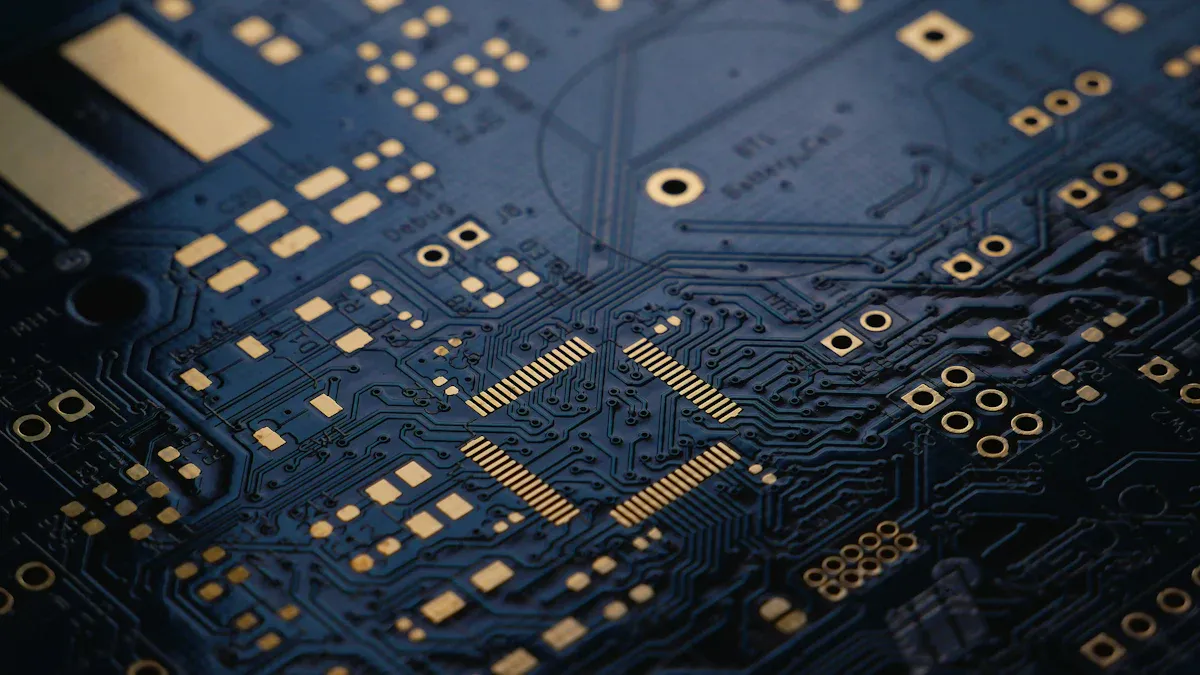
Integrated circuits (ICs) are very important in today’s technology. They power many devices and systems in different industries. By combining many functions into one chip, ICs have changed how we use technology. Let’s look at some main uses of ICs.
Computing and Consumer Electronics
ICs are the main part of computers and gadgets. They help devices like phones, laptops, and smart home tools do hard tasks quickly. These chips store data, process information, and control systems, making them essential in our digital lives.
Why Are ICs Important in Consumer Electronics?
ICs do key jobs like math, saving data, and wireless tasks. For example, in a smartphone, ICs run apps and connect to Wi-Fi. As IoT grows, ICs that use less power and support wireless tech are needed more. This is especially true for AI and machine learning tools.
Consumer Electronics Market Growth
The market for ICs in electronics is growing fast. Here’s a quick look:
|
Year |
Market Size (USD Billion) |
CAGR (%) |
|---|---|---|
|
518.22 |
||
|
2025 |
541.13 |
4.42 |
|
2034 |
798.66 |
This growth comes from more demand for portable gadgets and smart devices. New wireless tech and 5G are also helping IC makers grow.
Tip: When you use a smart device, remember ICs are the tiny chips making it work.
Communication Systems
ICs have changed how communication works. They make sending data faster and more reliable. From phones to satellites, ICs keep communication smooth.
How Do ICs Improve Communication?
ICs handle signals, change frequencies, and encode data. For example, in mobile networks, ICs send and receive signals. This gives clear calls and fast internet.
New Ideas in Communication ICs
Recent research shows big improvements in ICs for communication. One area is Network on Chip (NoC) for multimedia devices. Here’s a summary:
|
Aspect |
Description |
|---|---|
|
Study Focus |
|
|
Key Contribution |
Complete design flow for real-time applications |
|
Evaluation Metrics |
Tested scalability on large industrial cases |
|
Technology Used |
90 nm and 65 nm low-power tech |
|
Scalability Offered |
Physical, architectural, and functional scalability |
These ideas are making communication systems better and more scalable.
Note: ICs are not just for personal gadgets. They are also used in industrial and military communication systems.
Automotive Industry
Cars depend on ICs to work better, safer, and smarter. From engine controls to safety systems, ICs are key in modern vehicles.
How ICs Are Used in Cars
ICs do many jobs in cars, such as:
-
Engine Control: Managing fuel and ignition for better performance.
-
Safety Systems: Running airbags, ABS, and ADAS.
-
Infotainment: Powering screens, navigation, and music systems.
Self-driving cars need even more ICs. They use 8 to 20 sensor chips to process data from cameras and radars.
Automotive IC Market Trends
The need for ICs in cars is growing with electric and self-driving vehicles. Key trends include:
-
Using energy-saving chips like silicon carbide for better results.
-
Moving to ASICs for special tasks in vehicles.
Did You Know? Electric cars use more ICs than regular cars, driving innovation in the auto industry.
ICs are making cars smarter, safer, and more efficient.
Healthcare and Medical Devices
Integrated circuits are crucial in healthcare. They help with advanced tools for diagnosing, monitoring, and treating patients. These small chips improve care and save lives.
How Integrated Circuits Help Healthcare
Integrated circuits let medical devices do hard tasks accurately. For example:
-
Patient Monitoring Systems: ICs read sensor data to check heart rate, blood pressure, and oxygen. This helps doctors act fast in emergencies.
-
Imaging Equipment: ICs in MRI and CT scanners create clear images. These help doctors find health problems quickly.
-
Wearable Health Devices: Fitness trackers and smartwatches use ICs to track steps, sleep, and heartbeats. They help you stay healthy.
New Ideas in Medical ICs
New IC technology makes medical devices smaller and better. For example:
-
Miniaturization: Tiny ICs fit into implants like pacemakers, making them more comfortable.
-
Energy Efficiency: Modern ICs use less power, so batteries last longer in devices.
-
Wireless Connectivity: ICs connect devices to the Internet, letting doctors check patients remotely.
Did You Know? Some ICs can find early signs of diseases, helping with faster treatment.
With these chips, healthcare becomes quicker, more accurate, and more personal.
Industrial Automation and IoT
Integrated circuits are key to industrial automation and IoT. They make factories, smart homes, and devices work better by sharing data and running tasks automatically.
How Integrated Circuits Improve Factories
In factories, ICs control machines and keep things running smoothly. For example:
-
Process Automation: ICs handle jobs like building, packing, and checking quality. This reduces mistakes and boosts output.
-
Energy Management: ICs save energy in factories, cutting costs and helping the planet.
-
Safety Systems: ICs power alarms and sensors to spot dangers, keeping workers safe.
How IoT Uses Integrated Circuits
IoT devices depend on ICs to share data easily. For example:
-
Smart Sensors: ICs in sensors measure things like temperature and motion. This helps make better choices.
-
Edge Computing: ICs process data on devices, so they don’t always need the cloud. This speeds things up.
-
Connectivity: ICs support Wi-Fi and Bluetooth, helping devices talk to each other.
Industrial IC Market Growth
The need for ICs in factories and IoT is growing fast. Here’s a quick look:
|
Metric |
Value (USD Billion) |
CAGR (%) |
|---|---|---|
|
34.88 |
N/A |
|
|
Expected Market Size in 2024 |
36.49 |
N/A |
|
Expected Market Size by 2035 |
60.00 |
N/A |
|
Expected CAGR (2025 - 2035) |
N/A |
4.63 |
This growth comes from more automation and smarter devices. Better IC designs, like smaller sizes and lower power use, make chips more reliable and useful.
Tip: As IoT grows, ICs will make homes smarter, factories safer, and devices more connected.
Integrated circuits are changing factories and IoT by making systems smarter, cheaper, and more efficient.
Advantages of Integrated Circuits
Compact Size
Integrated circuits are very small, making them perfect for modern gadgets. Their tiny size lets makers add more features to smaller devices. For example, smartphones, medical tools, and wearables use ICs to fit advanced tech into small spaces. This has changed technology, making devices easier to carry and more useful.
The small size of ICs comes from their smart design. Engineers combine many tiny parts, like MOSFETs, into one chip. This makes electronic systems smaller and cheaper. Studies show that smaller, reliable ICs are now used more in power electronics. They are important for energy-saving and signal tasks.
Cost Efficiency
Integrated circuits save money by combining many functions into one chip. This means fewer parts are needed, lowering costs for both makers and buyers. ICs make devices cheaper and easier to produce.
Research shows ICs cost about $4.00 per square centimeter to make. New tech has doubled their efficiency, cutting costs even more. The IC market is growing worldwide, with different regions and companies shaping trends. These factors make ICs a smart, affordable choice for industries like electronics and cars.
|
Metric |
Value |
|---|---|
|
$4.00/cm² |
|
|
Cumulative energy demand (CED) |
9 to 38 MJ/cm² |
|
Share of on-site energy |
~75% |
|
Technology node evolution |
Increased by more than 2x |
High Reliability
Integrated circuits are very dependable, helping devices work well for a long time. Their strong design and careful testing make them reliable. Engineers check ICs for possible problems before they are made. They use standards like MIL-HDBK-217 to predict and fix issues early.
Because ICs are so reliable, they are used in important tools like medical devices and car safety systems. For example, ICs in airbags and brakes ensure these systems work when needed. ICs can handle tough conditions and last a long time, making them a trusted choice for critical jobs.
Tip: Pick devices with integrated circuits for better performance and longer life. They are built to last and work well.
Energy Efficiency
Integrated circuits help devices use less energy. These chips are made to save power while still working well. This means gadgets like phones, laptops, and smart devices last longer and cost less to run.
ICs are efficient because of their smart design. Engineers build circuits to avoid wasting power. For example, modern ICs use special transistors and layouts to save energy. This makes them perfect for portable gadgets and tools that need low power.
Here’s a table showing how much power different IC parts use:
|
Component |
Power Use |
Sensitivity |
Efficiency |
|---|---|---|---|
|
Receiver |
-99dBm |
N/A |
|
|
Transmitter |
N/A |
N/A |
41% |
|
AFE |
< 100 nW |
N/A |
N/A |
These numbers show how ICs save energy. For example, the receiver uses only 152µW, making it great for small devices like sensors and fitness trackers.
Energy-saving ICs also help the planet. By using less power, they cut carbon emissions and support eco-friendly tech. Whether it’s a phone or a smart home device, ICs make sure your gadgets work well without wasting energy.
Tip: Choose devices with energy-saving ICs to lower your bills and help the environment.
Enhanced Performance
Integrated circuits make devices work faster and better. They help gadgets handle hard tasks easily, like gaming or using AI tools.
ICs are tested to check their performance. For example:
-
Machine learning tests show how well ICs do tasks like recognizing pictures or processing data. These tests prove ICs are getting smarter and more accurate.
-
System tests check how ICs handle heavy workloads. This helps improve chips for faster and stronger performance.
These tests have led to big improvements in ICs. For instance, AI tasks like recognizing images now have fewer mistakes, showing how advanced ICs have become.
ICs also combine many features into one chip. This makes devices faster and reduces delays. For example, a phone chip can run apps, process photos, and connect to Wi-Fi all at once. This makes your gadgets work smoothly and quickly.
Did You Know? Powerful ICs are key for new tech like self-driving cars and virtual reality.
By saving energy and boosting performance, ICs have changed technology. They make gadgets faster, smarter, and more reliable, giving you the best experience.
Integrated circuits have changed technology by putting many parts on one chip. They do important jobs like handling data, changing signals, and managing power. This makes them very useful in healthcare, cars, and gadgets. Their small size, strong design, and low energy use make devices work better and cost less. In the future, new ideas like quantum tech, AI-powered chips, and special materials like Thin-Film Lithium Niobate will improve ICs. These changes will create faster, smarter, and more efficient devices to meet rising needs.
FAQ
What makes integrated circuits different from traditional circuits?
Integrated circuits put many parts, like transistors, into one chip. Traditional circuits use separate parts connected by wires. Integrated circuits save space and work better.
How do integrated circuits help devices use less energy?
Integrated circuits are designed to stop wasting power. They help devices like phones and smart gadgets use less energy, which is better for the planet.
Can you fix a broken integrated circuit?
No, you can’t fix a broken integrated circuit. It’s made as one piece. If it breaks, you need to replace the whole chip.
Why are integrated circuits so important today?
Integrated circuits make devices smaller, faster, and more reliable. They are used in things like phones and medical tools, changing how we live and work.
Do space devices use integrated circuits?
Yes, space devices need integrated circuits. They help with communication, navigation, and handling data in satellites and spacecraft.