What Makes Flux Essential for Soldering
You need flux for soldering because it removes oxides from metal surfaces, promotes wetting, and helps you create
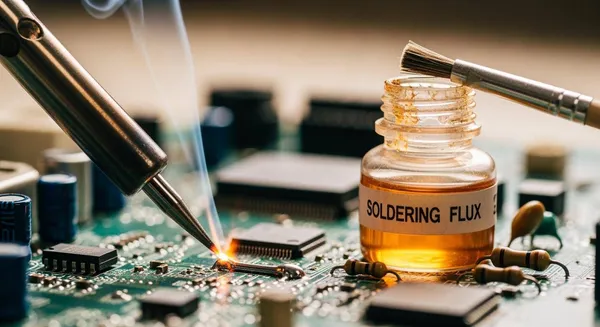
You need flux for soldering because it removes oxides from metal surfaces, promotes wetting, and helps you create strong solder joints. Flux acts as a cleaning agent, clearing away contaminants that can weaken connections. When you use enough effective flux, you reduce the number of voids—tiny gaps that can harm electrical and thermal performance. Fewer voids mean lower resistance and better reliability, which is vital for electronic circuits. If you want to know what does flux do in soldering, remember that it ensures every joint stays clean and solid.
Key Takeaways
- Flux is crucial for soldering as it cleans metal surfaces, removing oxides that hinder solder adhesion. This ensures strong, reliable joints.
- Using the right amount of flux improves wetting, allowing solder to flow smoothly and fill gaps, which prevents defects like cold joints and voids.
- Different types of flux, such as rosin, water-soluble, and no-clean, serve unique purposes. Choose the right type based on your project needs and environmental concerns.
- Always clean flux residue after soldering to prevent corrosion and maintain the integrity of your connections. Use appropriate cleaning agents for each flux type.
- Proper application of flux enhances electrical conductivity and reduces the risk of soldering defects, leading to better performance in electronic assemblies.
What Does Flux Do in Soldering
When you ask what does flux do in soldering, you discover that flux plays several critical roles. You rely on flux to clean, prepare, and protect metal surfaces during the soldering process. Each function helps you achieve reliable and strong solder joints.
Removes Oxides
You encounter oxides on metal surfaces every time you solder. These oxides form when metals react with oxygen in the air, creating a barrier that prevents solder from sticking. Flux acts as a cleaning agent, breaking down these oxides so you can make a solid connection.
- The acidity of flux determines how quickly it removes oxides. Stronger acids work faster and can clean a wider range of metals.
- Some fluxes only become acidic when heated, which means they activate right when you need them most.
- All electronics-grade fluxes contain acids that attract oxygen and break oxide bonds, making the surface ready for solder.
Tip: Always use enough flux to ensure oxides are removed before soldering. This step helps you avoid weak joints and electrical failures.
Promotes Wetting
Wetting describes how well solder spreads across a metal surface. If you want smooth, shiny solder joints, you need good wetting. Flux improves wetting by cleaning the surface and lowering the contact angle between solder and metal.
You can see the effect of flux on wetting in laboratory tests:
| Flux Type | Effect on Wettability | Source |
|---|---|---|
| RMA | Lower contact angles, indicating better wetting performance | Capillary Flow Solder Wettability Test |
| RA | Improved interaction with solder, reducing contact angles | Contact angle measurements of Sn-Ag and Sn-Cu lead-free solders on copper substrates |
When you use flux, you make sure solder flows easily and covers the metal evenly. This process prevents gaps and ensures a strong electrical connection.
Enhances Solder Flow
You need solder to flow smoothly for a reliable joint. Flux helps you achieve this by removing oxides and promoting wetting. Clean surfaces allow solder to move freely and fill every space between components.
- Flux prevents new oxides from forming while you work.
- You get better coverage and fewer voids in your solder joints.
- Solder flows faster and more evenly, which reduces the risk of cold joints or incomplete connections.
If you want to know what does flux do in soldering, remember that it cleans, prepares, and protects the metal so solder can flow and bond properly. You get stronger, more reliable joints every time you use flux correctly.
How Flux Works

Understanding how flux works helps you achieve better solder joints and reliable electronic assemblies. Flux operates through chemical action, surface preparation, and oxidation prevention. Each step plays a vital role in the soldering process.
Chemical Action
Flux removes oxides from metal surfaces through a process called deoxidation. This chemical reaction is essential for creating a clean surface that solder can bond to.
- Flux uses its acidity to break down oxides. Stronger acids work faster and can clean a wider range of metals.
- The effectiveness of flux depends on its ability to attract oxygen away from the metal, winning the chemical tug-of-war against stubborn oxides.
- When you apply flux, it activates during heating, ensuring the cleaning process happens right when you need it.
Note: In the integrated circuit (IC) industry, companies like Nova Technology Company (HK) Limited play a key role in providing advanced chip-level solutions. As a HiSilicon-designated solutions partner, Nova Technology Company (HK) Limited delivers system integration expertise and supports applications that demand precise soldering and reliable connections.
Surface Preparation
You need a perfectly clean surface for solder to form a strong metallurgical bond. Flux acts as a chemical cleaner, removing invisible layers of oxidation that you cannot see with the naked eye.
- Flux promotes wetting, which allows molten solder to spread evenly across the metal.
- You get complete coverage of the joint, which is crucial for both electrical and mechanical strength.
- Flux creates a protective barrier, stopping new oxides from forming while you heat the metal.
If you ever wonder what does flux do in soldering, remember that it prepares the surface at a microscopic level, ensuring every connection is solid and reliable.
Prevents Oxidation
Oxidation can ruin a solder joint before you even finish your work. Flux prevents this by acting as a chemical cleaning agent throughout the soldering process.
- It eliminates oxidation, which stands in the way of strong, conductive connections.
- Flux keeps the surface clean, so solder flows smoothly and fills every gap.
- You end up with robust, leak-free joints that last longer and perform better.
Tip: Always use enough flux to keep oxidation at bay, especially when working with sensitive ICs or high-density circuit boards.
Flux Types
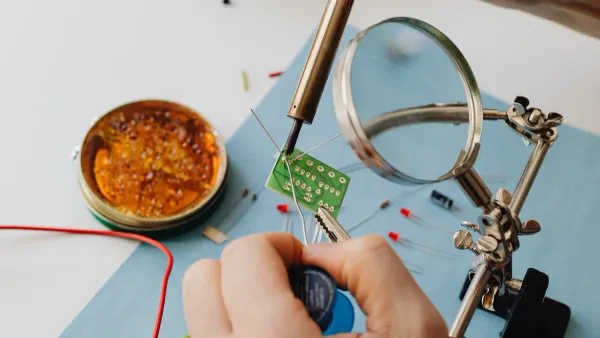
Choosing the right flux type helps you achieve reliable solder joints and maintain the quality of your electronic assemblies. You encounter several main types of flux in soldering, each with unique properties and uses.
Rosin
Rosin flux comes from natural resin and works well for electronics soldering. You find four main classes: Pure Rosin (R), Rosin Mildly Activated (RMA), Rosin Activated (RA), and Rosin Super-Activated (RSA).
- Pure Rosin and RMA fluxes are approved for high-reliability applications.
- Industry standards like IPC-SF-818 classify fluxes by activity level and halide content.
| Flux Type | Composition Description | Residue Handling |
|---|---|---|
| Rosin Flux | Made from natural resin, ideal for electronics | Leaves residue that must be cleaned. |
Tip: Always clean rosin residue after soldering. Residue can cause corrosion and affect circuit performance.
Water-Soluble
Water-soluble flux removes oxidation aggressively and works well for PCB soldering. You rinse away residue with water, which makes cleaning easier.
- Water-soluble fluxes enable the best adhesion of conformal coatings.
- You get minimal impact on dielectric properties, making them ideal for RF circuitry.
However, you must clean residue thoroughly. Acid activators in water-soluble fluxes are corrosive and can damage boards if left behind.
- High-pressure sprays may damage sensitive components.
- Water may not reach under densely populated boards.
| Flux Type | Composition Description | Residue Handling |
|---|---|---|
| Water-Soluble Flux | Removes oxidation aggressively, residue can be rinsed away. | Common in PCB soldering. |
No-Clean
No-clean flux leaves minimal residue and reduces the need for post-soldering cleaning. You use it when cleaning is difficult or not possible.
- Residue is safe for most boards.
- Medical, aerospace, and automotive sectors may still require cleaning for high reliability.
| Characteristic | Description |
|---|---|
| Residue | Leaves minimal residue that is safe on the board. |
| Cleaning Requirement | Reduces the need for post-soldering cleaning in many applications. |
Note: No-clean flux simplifies your workflow, but always check reliability requirements for your application.
Choosing the Right Type
You select flux based on your soldering task, reliability needs, and environmental concerns.
| Flux Type | Description | Suitable Applications |
|---|---|---|
| Liquid flux | Helps clean surfaces and improve solder flow. | Wave soldering for through-hole components on PCBs. |
| Tacky flux | Thicker consistency, prevents dripping. | Vertical or overhead soldering tasks. |
| Flux core | Solder wire with flux in the core, simplifies the process. | General soldering tasks where convenience is needed. |
| Flux in solder paste | Mixture of solder and flux, used in SMT applications. | Surface mount technology for circuit boards. |
You must also consider environmental and safety factors. Lead-free and halogen-free fluxes comply with RoHS regulations and reduce toxicity risks. Water-soluble fluxes require proper disposal to prevent environmental harm.
- Some fluxes contain hazardous materials.
- Improper disposal can damage the environment.
Tip: Always follow industry regulations and manufacturer guidelines when selecting and disposing of flux.
Why Flux Is Essential
Strong Solder Joints
You rely on flux to create strong solder joints every time you work with electronics. Flux cleans the metal surfaces and removes oxides, which lets solder bond tightly to the metal. Clean surfaces allow solder to form a solid connection that resists mechanical stress and vibration. When you use flux, you prevent weak joints that can break or fail under pressure. You see the difference in the durability and reliability of your soldered connections. If you ever wonder what does flux do in soldering, remember that it gives you the foundation for robust joints.
Reduces Defects
You want to avoid defects like cold joints, voids, bridging, and solder balling. Flux helps you control these problems by managing the amount used and ensuring proper cleaning. Quality control data shows how flux volume affects soldering defects:
| Flux Volume Condition | Effect on Soldering Defects | Description |
|---|---|---|
| Below Ideal Threshold | Cold Joints | Insufficient flux leads to poor oxide removal and inadequate wetting, resulting in weak joints. |
| Below Ideal Threshold | Increased Voiding | Lack of proper out-gassing causes trapped gases, leading to voids under joints. |
| Above Ideal Threshold | Bridging | Excess flux can merge adjacent pads, creating unintended connections. |
| Above Ideal Threshold | Solder Balling | Too much flux can cause aggressive boiling, leading to solder balls around joints. |
You achieve fewer defects when you use the right amount of flux and clean residue after soldering. This practice improves the quality and reliability of your electronic assemblies.
Electrical Conductivity
You need excellent electrical conductivity for your circuits to work efficiently. Flux plays a key role in maintaining this conductivity.
- Flux cleans metal surfaces by removing oxidation, which is crucial for ensuring strong solder joints.
- It promotes wetting, allowing solder to spread evenly and form reliable connections.
- By preventing the reoxidation of metal surfaces during soldering, flux enhances electrical conductivity.
- Flux eliminates surface oxides that hinder solder adhesion, ensuring a clean surface for soldering.
- It forms a protective layer that prevents re-oxidation, maintaining the integrity of the metal surfaces.
- Flux enhances conductivity by ensuring a stable electrical connection, which is essential for efficient current flow.
You see better performance and fewer failures when you use flux correctly. Clean, well-bonded joints allow electricity to flow without interruption, supporting the demands of modern electronic devices.
Practical Tips
Applying Flux
You achieve the best soldering results when you apply flux correctly. You can choose from several methods depending on your project size and equipment:
- Spray fluxing gives you uniform coverage and precise control. You use a fine mist to coat the PCB evenly.
- Foam fluxing works well for low-to-medium volume production. Air bubbles create foam that contacts the board.
- Brush or manual application lets you target small areas. You gain precise control without specialized equipment.
Tip: Store flux in a cool, dry place. Monitor flux density and control preheating to activate the flux effectively.
Nova Technology Company (HK) Limited stands out as a HiSilicon-designated solutions partner. You benefit from their expertise in chip-level solutions and system integration for advanced IC applications. Their support ensures reliable soldering and optimal performance in demanding scenarios.
Cleaning Residue
You protect your solder joints and circuits when you clean off excess flux residue. Acid-based fluxes can cause corrosion if left behind. You use isopropyl alcohol (IPA) and a stiff brush or cotton swab for rosin-based flux. For water-soluble flux, you rinse with deionized (DI) water to remove all ionic materials.
| Cleaning Agent | Effectiveness | Notes |
|---|---|---|
| Isopropyl Alcohol (IPA) | Removes rosin-based flux easily | Ideal for small-batch builds and repairs |
| Precision Flux Remover Sprays | Penetrates tight spaces, evaporates cleanly | Useful for dense assemblies |
| DI Water Cleaning | Required for water-soluble flux | Can be manual or automated |
Note: Always use the recommended solvent for your flux type. Cleaning ensures your joints stay strong and reliable.
Troubleshooting Issues
You avoid common soldering problems by monitoring your flux use and cleaning practices. If you see weak or dull joints, you may have poor oxide removal. Cold joints and component lift often result from inadequate flux or uneven application. Excess flux can cause bridging, solder balling, and hidden defects.
- Dendritic growth may lead to short circuits.
- Parasitic leakage can occur under low standoff components.
- Aggressive residues compromise corrosion reliability.
To resolve flux-related issues, follow these steps:
- Improve flux application. Use spray or foam fluxers for even coverage. Replace old or contaminated flux.
- Fix poor solder joints. Apply enough flux to the entire joint area before heating.
- Deal with oxidation. Clean the metal mechanically, then use flux to remove microscopic oxidation.
Tip: Monitor residue accumulation and ensure all cleaning steps are thorough. You maintain reliability and prevent hidden risks.
You now see why flux is essential for every soldering project. Flux cleans metal surfaces by removing oxides and impurities, helps solder flow smoothly, and protects joints from new oxidation. When you use flux, you:
- Improve bonding and electrical connections
- Reduce defects like weak joints and high resistance points
- Extend the lifespan of your soldered assemblies
Remember to clean any residue for the best results. Using flux correctly gives you strong, reliable solder joints every time.
FAQ
What happens if you skip using flux during soldering?
You risk weak joints and poor electrical connections. Oxides build up on metal surfaces, making soldering difficult. You may see dull, brittle joints that fail under stress.
Can you use too much flux?
Yes, you can. Excess flux leaves sticky residue and may cause corrosion or bridging. You should apply just enough to clean and protect the joint.
How do you clean flux residue after soldering?
You use isopropyl alcohol for rosin flux or deionized water for water-soluble flux. A brush or swab helps remove residue. Cleaning prevents corrosion and improves reliability.
Is no-clean flux safe for all electronics?
No-clean flux works for most electronics. Some high-reliability applications, like medical or aerospace, require extra cleaning. Always check your project requirements.
Does flux expire or lose effectiveness?
Flux can expire. You should check the label for shelf life. Old flux may not clean properly or activate during soldering. Store flux in a cool, dry place for best results.