Ceramic vs Electrolytic Capacitors Which is Better
The debate of electrolytic capacitor vs ceramic often misses a key point. The "better" capacitor is the one that fits the circuit's specific job. Elec
The debate of electrolytic capacitor vs ceramic often misses a key point. The "better" capacitor is the one that fits the circuit's specific job. Electrolytic capacitors are the workhorses for high-capacitance needs. These capacitors store large amounts of energy. Ceramic capacitors, however, excel in different applications. These capacitors are perfect for high-frequency signal filtering. The market for both capacitors is growing, with ceramic capacitors expected to surpass USD 15 billion by 2034. This growth is driven by demand for stable capacitors in electric vehicles and 5G technology. Choosing the right capacitor, whether electrolytic capacitors or ceramic capacitors, is vital for performance. These capacitors have distinct roles. Electrolytic capacitors handle power, while ceramic capacitors manage noise. Understanding these capacitors ensures a reliable electronic design.
Key Takeaways
Choose the right capacitor for the job. Electrolytic capacitors store a lot of energy. Ceramic capacitors clean up fast electrical signals.
Electrolytic capacitors are big and store much power. They must connect the right way. Ceramic capacitors are small and work well with fast signals. They can connect in any direction.
Circuits often use both types of capacitors. Electrolytic capacitors handle big power needs. Ceramic capacitors remove small, fast electrical noise.
Ceramic capacitors last longer. They do not have liquid inside. Electrolytic capacitors can dry out over time.
Electrolytic Capacitor vs Ceramic: A Direct Comparison
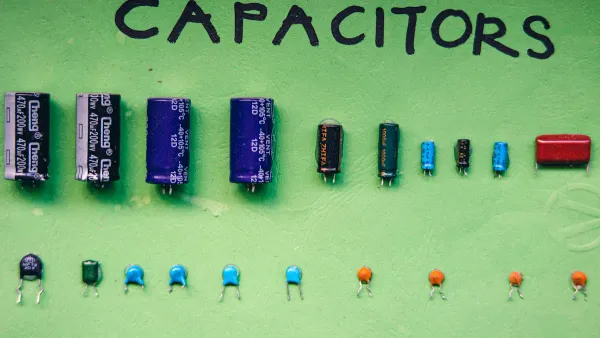
Choosing between an electrolytic capacitor vs ceramic depends on the job. A direct comparison highlights the key differences. The following table provides a quick reference for these two common capacitor types.
Feature | Electrolytic Capacitors | Ceramic Capacitors |
|---|---|---|
Primary Use | Bulk energy storage, power supply filtering | High-frequency decoupling and noise filtering |
Polarity | Polarized (must be installed correctly) | Non-Polar (can be installed either way) |
Capacitance | Very high (0.1µF to over 2,000,000µF) | Lower (pF to a few hundred µF) |
Size | Larger for a given capacitance | Smaller and more compact |
Cost | Low cost for high capacitance | Low cost for low capacitance; can be pricey at high values |
Use Case: Bulk Energy Storage vs. High-Frequency Filtering
The main difference between ceramic capacitors and electrolytic capacitor applications is their intended function. Electrolytic capacitors are the champions of energy storage. They offer enormous capacitance values, sometimes reaching over 2,000,000µF. This makes them perfect for smoothing out voltage in power supplies. Ceramic capacitors serve a different purpose. They are specialists in high-frequency tasks. Their low internal resistance allows them to filter out unwanted electrical noise from circuits, protecting sensitive components. These capacitors are essential for modern electronics like phones and computers.
Polarity: Polarized vs. Non-Polar
Polarity is a critical safety and functional distinction in the electrolytic capacitor vs ceramic debate. Electrolytic capacitors are polarized components. They have a positive and a negative terminal that must connect correctly in a DC circuit.
Warning: Connecting electrolytic capacitors backward is dangerous. A reverse voltage can destroy the internal dielectric layer. This failure causes the capacitor to heat up rapidly, generate hydrogen gas, and potentially bulge or explode.
In contrast, ceramic capacitors are non-polar. You can install these capacitors in any direction. This feature makes them ideal for AC circuits where the current direction changes, such as in audio signal paths. The flexibility of these capacitors simplifies circuit design.
Cost and Size: General Trade-offs
Cost and physical size often guide the selection of capacitors. Electrolytic capacitors provide the most capacitance for the lowest cost, a key reason for their use in power supplies. However, these capacitors are physically larger than ceramic capacitors. Ceramic capacitors are very small, making them perfect for crowded circuit boards. While a 100µF ceramic capacitor exists, it is often much more expensive than an electrolytic capacitor with the same rating. For this reason, engineers choose electrolytic capacitors for bulk storage and use smaller ceramic capacitors for filtering.
Key Differences in Technical Performance
The choice between an electrolytic capacitor vs ceramic goes beyond the basics of capacitance and polarity. The key differences in their technical performance stem directly from their internal construction. Understanding these characteristics helps engineers select the perfect component for a circuit's stability and efficiency.
The Difference Between Ceramic Capacitors and Electrolytic Capacitor Construction
The materials and assembly methods for these capacitors define their behavior. An aluminium electrolytic capacitor has a complex and fascinating construction. Its dielectric layer is formed through a process called anodic oxidation.
A high-purity aluminum foil (the anode) is placed in an electrolytic bath.
Applying a positive voltage causes the aluminum to react with water, forming aluminum hydroxide.
This compound then converts into a very thin, insulating layer of aluminum oxide (Al₂O₃).
This incredibly thin oxide layer is the dielectric. Its thickness is proportional to the voltage applied during formation, which directly impacts the capacitor's final voltage rating.
Ceramic capacitors, in contrast, use solid ceramic materials for their dielectric. The characteristics of ceramic capacitors depend on their class.
Class 1 ceramic capacitors use stable materials like Titanium Oxide, often with additives such as Zn, Zr, and Nb. They offer high stability and low loss.
Class 2 ceramic capacitors use ferroelectric materials with a high dielectric constant, most commonly Barium Titanate (BaTiO₃). These provide much higher capacitance in the same package size.
Capacitance Density vs. Physical Size
Capacitance density refers to how much capacitance can be packed into a given physical volume. Electrolytic capacitors are the champions here. The extremely thin aluminum oxide dielectric allows for very high capacitance values in a component that is still relatively small. This is one of the main advantages and disadvantages of electrolytic capacitors; they offer great storage but can still be bulky.
Ceramic capacitors offer lower capacitance for their size compared to electrolytics. However, their overall physical footprint is much smaller, especially for the pF (picofarad) to low µF (microfarad) values used in many modern electronics. This makes them perfect for high-density circuit boards where space is a premium.
Frequency Response: ESR and Inductance
A capacitor's performance at high frequencies is critical for filtering and decoupling tasks. Two important parameters are Equivalent Series Resistance (ESR) and inductance.
Tech Tip: What is ESR? Every real-world capacitor has a small amount of internal resistance, called ESR. It causes the capacitor to dissipate heat and limits its ability to react to fast current changes. A lower ESR is almost always better.
Ceramic capacitors have a very low ESR. In contrast, electrolytic capacitors have a significantly higher ESR. For example, a 100µF aluminium electrolytic capacitor might have an ESR around 0.087 Ohms at 100 kHz, while a ceramic capacitor of a similar value would be much lower.
Inductance is another internal property that affects high-frequency performance. The wound-foil construction of electrolytic capacitors creates more internal inductance. Ceramic capacitors are built from stacked layers, resulting in extremely low inductance. This low inductance is a key reason why ceramic capacitors are superior for filtering high-frequency noise.
Voltage Effects: Stability and Rating
Voltage affects these two types of capacitors in different ways. All capacitors have a maximum voltage rating that should not be exceeded. It is good practice to "derate" a capacitor by choosing one with a voltage rating significantly higher than the expected circuit voltage.
A major difference appears in capacitance stability under a DC voltage, known as DC bias.
Electrolytic capacitors maintain a relatively stable capacitance value as long as the voltage is below their rating and the polarity is correct.
Class 2 ceramic capacitors can lose a significant portion of their stated capacitance when a DC voltage is applied. A capacitor might lose 50% or more of its capacitance at its rated voltage.
Engineers must account for this effect when designing circuits that rely on a specific capacitance value.
Reliability: Leakage Current and Lifespan
Long-term reliability is a crucial factor in electronic design. Here, the advantages and disadvantages of ceramic capacitors and electrolytics become very clear. Leakage current is a small DC current that passes through the capacitor. Ideally, this should be zero.
Electrolytic capacitors have a higher leakage current. For a typical 100µF, 25V aluminium electrolytic capacitor, the leakage current might be specified as less than or equal to 3 µA. Ceramic capacitors have excellent insulation resistance, resulting in extremely low leakage current.
Lifespan is another critical consideration. Standard electrolytic capacitors use a wet electrolyte that can evaporate over time, especially at high temperatures. This drying-out process causes the capacitor's performance to degrade and eventually fail. Solid polymer electrolytic capacitors solve this issue, offering a much longer operational life.
Capacitor Type | Capacitance | Voltage | Temperature | Lifespan (at 105°C) |
|---|---|---|---|---|
Wet Aluminum | 47µF | 6.3VDC | 105°C | |
Polymer Aluminum | 47µF | 6.3VDC | 105°C | 2000 hours |
Because they are solid-state devices with no liquid to evaporate, ceramic capacitors have a very long operational lifespan, limited primarily by physical or electrical overstress.
Application Showdown: Choosing the Right Capacitors
Understanding the technical differences is one thing; seeing them in action is another. The best capacitor selection becomes clear when looking at typical applications. Let's explore a few common scenarios to see where each of these capacitors is the superior choice.
Power Supply Filtering
Power supplies must provide a smooth, stable DC voltage. Electrolytic capacitors are essential here. They act as large reservoirs, storing energy to smooth out ripples from the AC-to-DC conversion process. Their high capacitance is perfect for this bulk filtering role. However, a Texas Instruments application note highlights that for high-frequency ripple, the capacitor's ESR is often more critical than its capacitance. This is why many designs place low-ESR ceramic capacitors in parallel with electrolytic capacitors to handle high-frequency noise that the larger capacitors miss.
High-Frequency Decoupling
Modern digital integrated circuits (ICs) switch states millions of times per second. Each switch demands a quick burst of current. Decoupling capacitors provide this local energy.
The Go-To Choice: Small 0.1µF ceramic capacitors are the standard for this job.
Speed Matters: Ceramic capacitors have extremely low inductance, which is vital for fast performance.
This rapid response stabilizes the voltage right at the IC, preventing glitches. These are typical applications where ceramic capacitors are unmatched.
Signal Coupling and Audio Filtering
In audio and other signal-path applications, capacitors perform signal filtering by blocking DC voltage while allowing AC signals to pass. This is a classic example of a high-pass filter. For these typical applications, standard electrolytic capacitors are often avoided because an audio signal's changing polarity can reverse-bias them, causing distortion. Instead, engineers prefer non-polarized capacitors like film or non-polar electrolytic capacitors. The capacitor value is chosen to set a cutoff frequency well below the audible range, ensuring the audio signal passes through without alteration. This makes proper capacitor selection crucial for high-fidelity signal filtering. For expert guidance on these complex circuit designs, companies like Nova Technology Company (HK) Limited, a HiSilicon-designated solutions partner, provide specialized support.
The electrolytic capacitor vs ceramic debate resolves with the application. Engineers choose electrolytic capacitors for high capacitance. They use ceramic capacitors for high-frequency signal filtering. The best capacitor always meets specific circuit needs.
Key Takeaway: The right choice depends on several selection factors. These include voltage, capacitance, and physical size.
Understanding the differences between these two types of capacitors is fundamental. A reliable circuit depends on the right capacitors. Modern devices use hundreds of ceramic capacitors alongside electrolytic capacitors, proving both capacitors are essential capacitors for modern electronics. These electrolytic capacitors and ceramic capacitors are vital capacitors.
FAQ
Can I replace an electrolytic capacitor with a ceramic one?
Engineers sometimes replace electrolytic capacitors with ceramic capacitors. This works if the ceramic capacitor has the correct capacitance and voltage rating. However, high-capacitance ceramic capacitors are often more expensive. These capacitors have different performance characteristics.
What happens if you install electrolytic capacitors backward?
Warning: Installing polarized capacitors backward is dangerous. Reverse voltage destroys the capacitor's internal layer. This failure can cause the component to overheat and explode. Always check the polarity markings on these capacitors.
Why do circuits use both types of capacitors together?
Designers often combine these capacitors.
The electrolytic capacitor provides bulk energy storage.
The ceramic capacitor filters high-frequency noise.
Using both capacitors ensures a stable power supply. These capacitors serve different roles.
Which capacitors have a longer lifespan?
Ceramic capacitors generally last longer. They are solid-state devices without liquid parts. Standard electrolytic capacitors contain a wet electrolyte that can dry out over time, especially at high temperatures. These capacitors have a defined operational life.