Your Guide to Power Supply Filtering with Capacitors
A filter capacitor acts like a tiny battery for a power supply. This concept explains how filter capacitor works to stabiliz
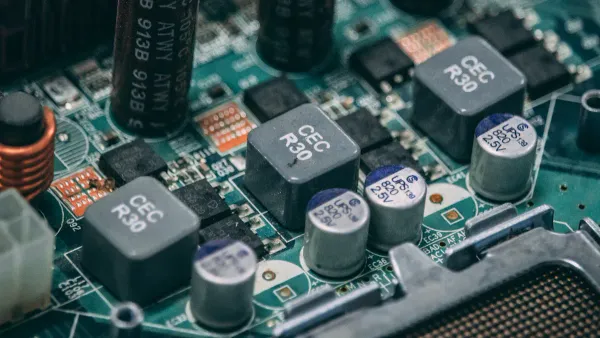
A filter capacitor acts like a tiny battery for a power supply. This concept explains how filter capacitor works to stabilize a power supply output voltage. Capacitors perform two main jobs for the power supply. They smooth bumps in the output voltage and guide unwanted noise away from the circuit.
A water dam's reservoir smooths a river's flow. This is how filter capacitor works. The filter capacitor smooths the power supply output voltage. It stores and releases energy for the power supply. Capacitors are essential components.
Key Takeaways
- Filter capacitors smooth power supply voltage. They also remove unwanted electrical noise. This makes power supplies stable.
- Capacitors have important features. These include capacitance, ESR, and ESL. Understanding these helps choose the right capacitor.
- Place capacitors close to chips. Use short, wide traces on the circuit board. This helps capacitors work best.
- Use different types of capacitors together. This filters noise across many frequencies. It makes the power supply cleaner.
The Role of a Filter Capacitor
A filter capacitor performs two critical jobs in a power supply. It smooths the main DC voltage and shunts unwanted electrical noise to the ground. Understanding these roles helps designers build stable and reliable circuits.
Smoothing Voltage and Ripple
The primary function of a filter capacitor is to stabilize the output voltage of a power supply. After an AC signal is rectified, it still contains periodic variations, or "ripple." A filter capacitor acts like a small reservoir, charging during voltage peaks and discharging during voltage troughs. This action smooths out the ripple, creating a more stable DC output voltage. A stable output voltage is crucial for a good transient response when the load changes suddenly.
Engineers measure the effectiveness of this smoothing using a metric called the ripple factor (RF).
- The ripple factor compares the amount of AC ripple to the average DC voltage.
- It is calculated with the formula
RF = Vac / Vdc. - A lower ripple factor indicates a better-performing power supply with a cleaner output.
Bypassing High-Frequency Noise
Modern electronics, especially digital circuits, generate high-frequency noise. A filter capacitor provides a path of least resistance for this noise to escape to the ground, protecting sensitive components. A high-frequency bypass capacitor is essential here.
Note: Common sources of high-frequency noise include:
- Harmonics within digital signals.
- High-frequency currents generated when circuits switch states.
- Sudden current changes from charging and discharging internal gates.
For a filter capacitor to work effectively, designers must place it as close as possible to an integrated circuit's (IC) power pins. This proximity minimizes trace length, which reduces impedance and prevents transient noise from polluting the power supply line.
Understanding Capacitor Impedance
A capacitor's opposition to alternating current is called impedance, and it changes with frequency. The impedance of an ideal capacitor is calculated as Xc = 1 / (2πfC). This formula shows that a filter capacitor has low impedance to high-frequency signals (like noise) and high impedance to low-frequency signals (like DC). This is the core of the frequency characteristics of filter capacitor. The output capacitance from capacitors on the output directly impacts the output voltage response of a switching power supply. Different types of capacitors have unique impedance profiles.
| Capacitor Type | Impedance at High Frequency | Best Use Case |
|---|---|---|
| Aluminum Electrolytic | Moderate | Bulk energy storage, smoothing low-frequency ripple. |
| Ceramic | Very Low | Bypassing high-frequency noise, improving transient performance. |
| Tantalum | Low | High capacitance in a small size, good for filtering. |
Choosing the right output capacitance ensures the power supply delivers a stable output voltage under various conditions.
Key Capacitor Characteristics
Choosing the right filter capacitor involves more than just its capacitance value. Engineers must also consider its non-ideal properties. Understanding capacitance, ESR, and ESL helps in designing a stable and efficient power supply.
Capacitance (C) for Bulk Filtering
Capacitance measures a component's ability to store an electrical charge. For a power supply, a large bulk filter capacitor acts as a local energy reservoir. It provides current during a sudden load change, or transient. Insufficient output capacitance can make a voltage regulator unstable. When the load changes, the bulk filter capacitor must supply current if the main power supply cannot respond quickly. Without enough output capacitance, the input voltage to a regulator can wobble, affecting the stability of the output voltage. A larger output capacitance is often needed to handle a large transient and maintain a stable output voltage. The capacitors on the output are critical for a good transient response.
Equivalent Series Resistance (ESR)
An ideal capacitor has zero resistance. A real filter capacitor has a small internal resistance called Equivalent Series Resistance (ESR). Think of ESR as a small resistor in series with the capacitor. This resistance causes two main problems:
- It generates heat when current flows through it, described by the formula
P = I² * R. High ESR can cause a filter capacitor to overheat and fail. - It causes a voltage drop, which reduces the filter capacitor's effectiveness.
Different capacitors have different ESR values. Low ESR is crucial for an efficient power supply.
| Capacitor Type | Typical ESR Range |
|---|---|
| Ceramic | 0.01 to 0.1 Ohms |
| Aluminum Electrolytic | 0.5 to 30 Ohms |
Equivalent Series Inductance (ESL)
Every filter capacitor also has a small amount of inductance, called Equivalent Series Inductance (ESL). ESL acts like a tiny inductor that chokes off high-frequency currents. This property limits a filter capacitor's ability to remove high-frequency noise. At very high frequencies, the ESL can dominate the frequency characteristics of filter capacitor, making it ineffective. This unwanted inductance can cause ringing and ripple on the output voltage during a transient event.
Pro Tip 💡: To combat ESL in a high-frequency power supply, designers use special low-ESL capacitors. Techniques like LW reverse and 3-terminal capacitor construction reduce internal inductance, improving performance for a fast transient.
Power Supply Design and Layout
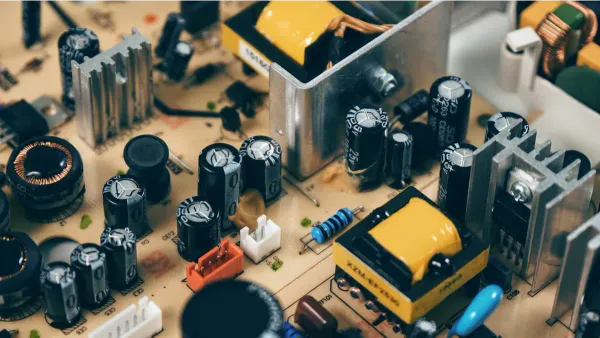
Effective filtering depends on more than just capacitor selection. The physical design and layout of the power supply on a printed circuit board (PCB) are equally important. Proper component placement and trace routing ensure that a filter capacitor can perform its job correctly. A poor layout can introduce unwanted inductance and resistance, making even the best filter capacitor ineffective.
Decoupling and Bypassing
Engineers use the terms decoupling and bypassing to describe how a filter capacitor manages power. While often used interchangeably, they refer to two distinct but related functions that stabilize a power supply.
- Bypass Capacitor: This capacitor filters AC noise from a DC signal. It provides a clean DC signal to a circuit, which is especially important when the main power supply is not perfectly clean.
- Decoupling Capacitor: This capacitor acts as a local energy source. It supplies quick bursts of current during a sudden load change, or transient. This prevents the supply voltage from dropping and decouples the IC from the rest of the power supply.
A bulk capacitor, often a large electrolytic type, supports the main power supply during peak current demands. It functions like a small uninterruptible power supply (UPS). A decoupling capacitor, usually a smaller ceramic type, handles the high-frequency needs of a specific component. A high-frequency bypass capacitor is critical for this role.
A vendor might recommend using a 0.1 μF capacitor in parallel with a 1000 pF capacitor. For noise above tens of MHz, an additional ceramic capacitor from 0.01 μF to 0.001 μF should be added.
Following manufacturer recommendations for decoupling is crucial. Chip makers perform extensive testing to find the optimal output capacitance values for their components.
Wideband Filtering Techniques
Digital circuits produce noise across a wide range of frequencies. A single filter capacitor cannot maintain low impedance across this entire spectrum. To solve this, designers use multiple capacitors in parallel to achieve wideband filtering.
- A large capacitor (e.g., 10 μF) handles low-frequency ripple.
- A medium capacitor (e.g., 0.1 μF) manages mid-frequency noise.
- A small capacitor (e.g., 0.01 μF) filters high-frequency noise.
This combination creates a low-impedance path to ground for a broad range of noise. However, combining different capacitor values can create anti-resonance, where impedance peaks at certain frequencies.
Atar Mittal, General Manager at Sierra Circuits, explains, “When you have multiple capacitors with different values and resonant frequencies in a circuit, there is a possibility of generating resonance peaks... To avoid this, you can incorporate multiple capacitors of the same value near the power supply.”
For advanced filtering, designers may use special components. Three-terminal feedthrough capacitors offer very low ESL and provide excellent noise suppression across a wide frequency range. They can simplify PCB layout and reduce the total number of components needed for a power supply.
Circuit Board Layout Practices
The physical placement of a filter capacitor on a PCB dramatically affects its performance. The goal is to minimize the inductance of the current loop from the IC power pin, through the capacitor, and to the ground pin. A smaller loop area reduces noise and improves filtering.
- Proximity is Key: Place the filter capacitor as close as possible to the IC's power pin. For high-speed circuits, this distance is critical.
- Use Wide, Short Traces: Connect the capacitor to the power and ground pins using wide, short traces. This reduces both resistance and inductance.
- Minimize Vias: Vias add inductance, which harms high-frequency performance. If vias are necessary, use multiple vias in parallel to reduce their total inductance. Connect the IC pin to the capacitor first, then to the via.
- Dedicate Capacitors: Assign a separate decoupling capacitor to each power pin on an IC. Sharing a single capacitor between multiple pins is a common mistake that reduces effectiveness.
Power planes offer a low-inductance path for power distribution compared to simple traces. The inherent capacitance between power and ground planes provides excellent bypassing for very high-frequency noise. This "free" capacitance is a valuable part of a power supply design. For complex designs, especially those involving advanced SoCs, partnering with an experienced firm can be beneficial. For example, Nova Technology Company (HK) Limited is a HiSilicon-designated solutions partner that provides expertise in implementing these best practices. Proper layout of the output capacitance is essential for managing a fast transient and maintaining a stable output voltage.
Building RC and LC Filters
Designers can combine a filter capacitor with other components to create more advanced filters. The two most common types are the RC (Resistor-Capacitor) filter and the LC (Inductor-Capacitor) filter. Both are low-pass filters, meaning they allow low-frequency signals (like DC) to pass while blocking high-frequency signals (like noise).
An RC filter is simple and inexpensive. However, the resistor dissipates power as heat, making it inefficient. An LC filter is more efficient and offers superior filtering performance, making it ideal for a switching power supply and other power applications. The inductor in an LC filter stores energy in a magnetic field and releases it, which helps smooth the output voltage and improve the output voltage response. This is one of the key applications of filter capacitor design.
| Feature | RC Filter | LC Filter |
|---|---|---|
| Efficiency | Lower (resistor causes power loss) | Higher (inductor stores energy) |
| Performance | Gentle roll-off | Steeper roll-off, better attenuation |
| Transient Response | Slower | Faster, better for sudden load changes |
| Cost & Complexity | Low cost, simple | Higher cost, more complex |
The frequency at which an LC filter begins to block signals is its resonant frequency. Designers calculate this using the formula:
f = 1 / (2π√(L×C))
Here, f is the frequency in Hertz, L is the inductance in Henries, and C is the output capacitance in Farads. Choosing the right values is critical for creating a power supply with a stable output voltage and excellent transient response. The right applications of filter capacitor and inductor pairing can significantly reduce noise.
A filter capacitor serves two vital roles in a power supply. A bulk filter capacitor smooths low-frequency ripple. A high-frequency filter capacitor bypasses noise. Effective power supply design requires more than a large capacitance value. Engineers must understand ESR and ESL to select the correct filter capacitor. This choice ensures a stable power supply. Mastering filter capacitor selection and placement is a key skill. It dramatically improves the reliability of any power supply, especially in critical systems.
- Aerospace systems
- Medical electronic applications
- Military systems
A well-designed power supply with the right filter capacitor ensures stable and reliable performance.
FAQ
Why do designers use multiple capacitors in parallel?
Designers use multiple capacitors to filter noise across a wide frequency range. A large capacitor handles low frequencies. A small capacitor filters high frequencies. This combination creates a low-impedance path for noise, improving overall power supply stability and performance for sensitive circuits.
Can a capacitor have too much capacitance?
Yes, excessive capacitance can cause problems. A very large capacitor can draw a high inrush current when the power supply turns on. This current can damage components. It can also slow down a voltage regulator's response time, affecting its performance.
What happens if a filter capacitor is placed far from the IC?
Placing a capacitor far from an IC adds inductance from the long PCB traces. This extra inductance makes the capacitor less effective at filtering high-frequency noise. The IC may not receive clean power, leading to unstable operation or errors.
Key Takeaway: Always place high-frequency bypass capacitors as close as possible to the IC's power and ground pins for the best filtering results.
What is the difference between a bypass and a decoupling capacitor?
Engineers often use these terms interchangeably, but they have distinct roles.
- Bypass capacitors shunt unwanted AC noise to the ground, providing a clean DC voltage.
- Decoupling capacitors act as local energy reservoirs, supplying quick bursts of current to an IC.