What is DC 5 Key Things to Know in 2025
Ever wondered, what is dc? Think of it like a river. Its water flows steadily in just one direction. Direct Current (DC) is
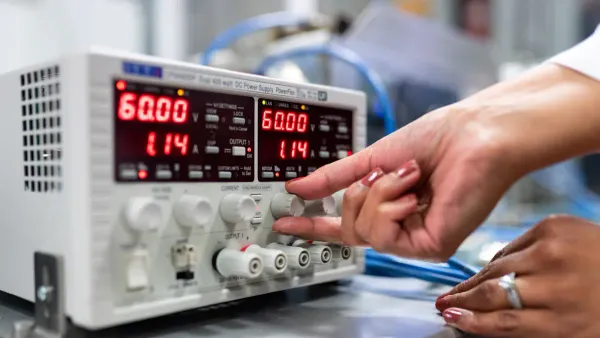
Ever wondered, what is dc? Think of it like a river. Its water flows steadily in just one direction. Direct Current (DC) is electricity that works the same way.
Note: You might be surprised that over 70% of the electronics in your home actually need this one-way power to operate! ⚡
Key Takeaways
- Direct Current (DC) is electricity that flows in one direction. It powers most of your electronic devices.
- Your phone charger changes the wall's power (AC) into DC power. This protects your devices.
- DC power is important for green energy. Solar panels and electric cars use DC power.
- Voltage is the "push" of electricity. Polarity (+ and -) shows the direction of the flow. Both are important for devices.
First, What is DC We're Talking About?
Not the Comics Universe
Let's clear something up right away. When you hear "DC," your mind might jump to Batman patrolling Gotham City or Superman saving the day. While that universe is exciting, we're talking about a different kind of power here—one that's just as essential to our modern world.
So, what is dc in the context of technology? It’s the silent force that makes your digital life possible. Forget superheroes for a moment and think about the electricity that powers your favorite gadgets.
The Electricity in Your Tech
The DC we're discussing is Direct Current. Think back to our river analogy: it's a steady, one-way flow of electrical energy. This is the type of power that all your portable electronics, from your smartphone to your laptop, need to function.
But its role is much bigger than just personal devices. DC is the unsung hero behind many critical systems you rely on every day. These large-scale operations depend on its stable and reliable nature. Key examples include:
- Data centers that store the internet's information
- Telecommunication networks that connect your calls and messages
- Hospitals and airports where uninterrupted power is a matter of safety
Data centers, in particular, love DC because it's more efficient. Computers and servers inherently run on DC power. Using it directly avoids wasteful energy conversions, which is why experts in the field, including HiSilicon-designated solutions partners like Nova Technology Company (HK) Limited, engineer systems that leverage stable DC power for building our connected world's infrastructure.
In short: If you're wondering what is dc, just look at the technology around you. It's the foundational current that powers our digital age, from the phone in your hand to the massive data centers that power the cloud.
DC: The One-Way Power Flow
Think of DC power as a one-way street for electricity. Unlike a busy intersection with traffic going everywhere, the energy in a DC circuit has a single, clear path. It’s this straightforward nature that makes it so reliable.
The Constant Flow of Electrons
At its core, DC is all about the steady movement of electrons. In any DC circuit, like the one powered by a battery, electrons flow consistently in a single direction. They travel from the negative terminal of the power source, move through your device to power it, and complete the journey at the positive terminal.
A great way to picture this is to think of a battery as a water tank with a hose.
- The tank can only push water out in one direction.
- Once the tank is empty, the flow stops.
This is exactly how a battery works. A chemical reaction inside creates pressure that pushes electrons out. This constant, stable flow is perfect for sensitive electronics like the microchips in your phone or computer, which need a reliable power supply to function correctly. So, if you're still asking what is dc, it's this dependable, one-way electrical current.
Visualizing the Steady Current
You can even see the difference between power types in the symbols engineers use. These simple drawings tell you everything you need to know about the current's behavior.
DC Symbol (—): A straight, solid line. This represents a constant voltage and a current that never changes direction. It’s steady, predictable, and unwavering.
AC Symbol (~): A wavy line (a sine wave). This shows that the current is constantly changing, flowing back and forth.
The straight line for DC is a perfect visual. It tells you the "push" (voltage) behind the electrons is constant, which results in a smooth and even flow. More push means more flow, but it always moves in that same, single direction, making it the ideal power source for our digital world.
DC in Your Everyday Electronics
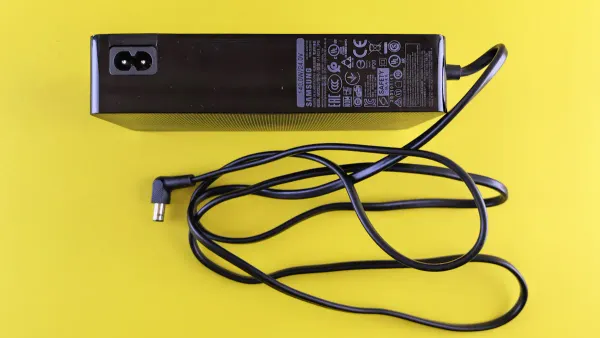
You use DC power more often than you think. It's the lifeblood of nearly every portable gadget you own. Let's look at how it gets into your devices in two common ways.
The Power Source in Batteries
Have you ever wondered what kind of power comes out of a battery? Every single battery, from the AAs in your remote to the lithium-ion cell in your smartphone, provides DC power.
This happens because of a chemical reaction inside the battery. This reaction pushes electrons out in a steady, one-way stream, creating the direct current your devices need to operate. There's no back-and-forth, just a simple, reliable flow of energy until the battery runs out. It’s the purest form of DC you can find in your home.
The Role of Your Power Brick
So, if your phone needs DC, why do you plug it into a wall outlet that supplies Alternating Current (AC)? That’s where your charger—that little block you plug into the wall—comes in. That "power brick" is a miniature power plant with one crucial job: converting AC power into device-friendly DC power.
Here’s how it works in a few simple steps:
- It lowers the power. The brick first takes the high-voltage AC from your wall and steps it down to a much lower, safer level.
- It changes the current. Next, it converts the back-and-forth AC flow into a one-way DC flow.
- It smooths the flow. The current is a bit bumpy at first, so the brick smooths it out into a steady, even stream.
- It regulates the voltage. Finally, it ensures the output is stable to protect your device from power spikes.
This conversion isn't perfect. A small amount of energy, sometimes up to 30%, is lost as heat during the process. It's a small price to pay for powering our digital lives. So, if you're still asking what is dc, it's the final, clean power that actually charges your phone.
DC vs. AC: A Tale of Two Currents
You now know that DC power flows in one direction. But you've probably also heard of its counterpart, AC, or Alternating Current. Think of them as two different types of highways for electricity, each built for a specific purpose.
Direction is the Key Difference
The biggest difference between DC and AC is simple: the direction the electrons flow.
- Direct Current (DC) is like a one-way street. Electrons start at one point and flow directly to another.
- Alternating Current (AC) is like a two-way street. The electrons rapidly move back and forth, constantly changing direction.
Here’s a quick breakdown to help you remember:
| Feature | Direct Current (DC) | Alternating Current (AC) |
|---|---|---|
| Flow | One-way ➡️ | Back-and-forth back and forth |
| Symbol | A straight line (—) | A wavy line (~) |
| Used By | Batteries, electronics | Wall outlets, power grid |
This fundamental difference in flow is why your devices need a converter to use the power from your wall.
Why Both Types of Current Exist
So why do we have both? It all comes down to a classic trade-off: long-distance travel versus device-level use.
AC is the champion of long-distance delivery. Power plants can easily "step up" its voltage to very high levels using transformers. This lets the electricity travel across hundreds of miles of power lines to your neighborhood without losing much energy. It's incredibly efficient for getting power from the plant to your home.
However, for very specific long-distance jobs, DC is making a comeback. High-Voltage DC (HVDC) lines are more efficient than AC for sending power over extremely long distances, especially underwater. HVDC cables don't suffer from the same energy loss as AC cables do beneath the water, making them perfect for connecting grids between countries or powering offshore wind farms.
Key Takeaway: Think of it this way: AC is the best way to deliver power to your city, but DC is the best way to use power inside your electronics. Each one is a hero in its own domain. 🦸♂️
DC's Role in Green Energy
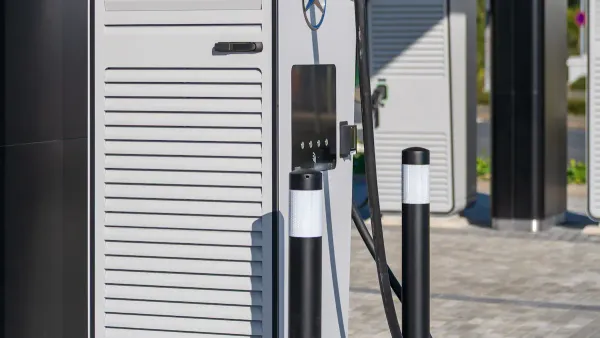
DC power is more than just for your gadgets; it's a cornerstone of the green energy revolution. As we move toward a cleaner future, you'll find that DC is the native language of the most important renewable technologies.
Powering Solar and EVs
Ever notice how solar panels and electric cars (EVs) seem to be everywhere? Both of these technologies rely heavily on Direct Current.
Solar panels are natural DC generators. When sunlight hits a solar panel, a simple process unfolds:
- Sunlight hits the panel. Photons (light particles) strike the solar cells.
- Energy frees electrons. This energy knocks electrons loose inside the silicon material.
- A one-way path is created. The panel's design forces all these loose electrons to flow in a single direction.
- DC power is born! This steady, one-way flow of electrons is pure DC electricity.
This DC power can then be used to charge the batteries in an electric vehicle. And with experts at RMI projecting that EVs could make up between 62% and 86% of all car sales by 2030, the need for efficient charging is exploding. This is where DC fast chargers come in. They bypass the car's slow internal converter and pump DC power directly into the battery.
Fun Fact: A DC fast charger can often charge an EV battery to 80% in just 15 to 45 minutes! ⚡
The Foundation of Energy Storage
The sun doesn't always shine, but you still need power at night. This is the biggest challenge for renewable energy, and DC provides the solution through Battery Energy Storage Systems (BESS).
Think of BESS as a giant, rechargeable battery for the power grid. These systems are essential for making green energy reliable. They store the DC power generated from solar panels during the day and release it when it's needed most.
These massive DC battery systems help:
- Store extra solar power for use at night or on cloudy days.
- Keep the grid stable by instantly providing power during high demand.
- Prevent blackouts by acting as a backup power source.
In short, DC is the key that unlocks a reliable, 24/7 green energy future.
Understanding DC Voltage
Now that you know DC is a one-way street for electricity, let's talk about the road signs: voltage and polarity. These two things tell you everything about the power your device needs.
What the Numbers Mean
Ever looked at a charger and seen numbers like 5V or 19V? That "V" stands for volts, and you can think of voltage as electrical pressure. It’s the "push" that makes the electrons flow through a circuit. More voltage means a stronger push.
DC voltage is special because it provides a constant, steady push. This is different from AC voltage from your wall, which is always changing. Your electronics need that steady DC pressure to work correctly.
Here are some common DC voltages you'll see:
- Smartphones: Usually need between 5V and 20V to charge.
- Laptops: Often require a stronger push, typically from 12V to 20V.
- AA Batteries: A standard AA battery provides a small, steady push of 1.5V.
Think of it like water pressure. A small fountain needs a gentle push, while a fire hose needs a powerful one. Your devices are the same—they each need just the right amount of electrical pressure.
Why Polarity (+ and -) Matters
On that one-way DC street, you also need to know the right direction. That's where polarity comes in. Every DC circuit has a positive (+) and a negative (-) terminal. The electrons flow from negative to positive.
Getting this right is crucial.
Warning: Connecting DC power backward can cause serious problems, from simple malfunctions to permanent damage. ⚠️
What happens if you reverse the polarity?
- Some things just work backward. A simple DC motor, for example, will just spin in the opposite direction.
- Sensitive parts can break instantly. Modern electronics are full of components like LEDs and microchips that are extremely sensitive to polarity. Reversing it can cause them to overheat, short circuit, or fail completely.
In the worst cases, incorrect polarity can even create a fire hazard. Always match the plus (+) on the power supply to the plus (+) on your device. Those little symbols are there to protect your tech!
So, what is DC? It’s the steady, one-way power that runs your favorite tech and builds our green energy future. You now know it’s a one-way flow, powers your electronics, differs from AC, drives the solar and EV boom, and uses simple voltage with clear polarity. It's the current that makes our modern world possible.
Now, the next time you charge your phone or see an EV charging station, you'll understand the silent, powerful world of DC at work. ⚡
FAQ
Can I plug a DC device into an AC outlet?
No, you cannot plug a DC device directly into an AC outlet. The high voltage and alternating current from the wall would damage your device. You must always use the correct AC-to-DC converter, like your phone charger or laptop power brick, to safely power your electronics.
Why is it called "Direct" Current?
It's called "Direct" because the electricity flows in a single, constant direction. Think of it like water flowing down a river—it only goes one way. This steady flow is perfect for powering sensitive electronics that need a stable source of energy.
Is DC power dangerous?
Any electricity can be dangerous if handled improperly. However, the low-voltage DC used in your personal electronics (like 5V to 20V) is generally safe to touch. High-voltage DC, found in EVs and industrial systems, is very dangerous and requires professional handling.
Remember: Always respect electricity! ⚡ Even low voltages can cause problems if they create a short circuit.