Battery Charger ICs power up your favorite electronics
Choosing the right battery charger IC is very important for all electronic devices. The battery needs the charger to charge safely and work well.
Choosing the right battery charger IC is very important for all electronic devices. The battery needs the charger to charge safely and work well. Battery charger ICs affect how long the battery lasts, how the device works, and how safe it is. Each charger IC controls how much current goes in, checks the battery while charging, and manages the charging steps. People need to look at charge profiles, IC topology, and safety features when picking one. Picking the right IC makes sure the battery gets the right charge every time.
Key Takeaways
-
Picking the right battery charger IC keeps charging safe. It helps batteries last longer and makes devices work better. You should find charger ICs that fit your battery type. They must handle the correct voltage and current. They also need strong safety features. Good charger ICs use power well and keep heat under control. They stop batteries from getting hurt while charging. Different devices need different ICs. Small wearables need tiny, low-power ICs. Power tools need fast, high-power ICs with cell balancing. Learn about new charger IC technologies and certifications. This helps you choose safe, efficient, and reliable options for your devices.
Performance Factors
Charging Efficiency
Battery charger ICs help make charging more efficient. They control how energy moves from the charger to the battery. This helps stop power and heat from being wasted. When charging is efficient, less energy is lost. Devices can work longer on one charge. The IC sets the highest charge current. This makes sure the battery gets enough energy but does not get too hot.
Manufacturers make charger ICs for different voltages. Devices under 5V, like smartphones and IoT gadgets, use small ICs. These focus on saving energy and charge slower. Tablets and other devices that use 5-10V need medium charging speed and efficiency. These may get a little warm. Devices over 10V, like power tools, need fast charging. They use bigger and more complex ICs. The table below shows how voltage changes what the IC does:
|
Performance Criteria |
Description and Impact on Charger IC Performance |
|---|---|
|
Below 5V |
Small, saves energy, charges slowly (small devices) |
|
5-10V |
Medium speed and efficiency, some heat (tablets) |
|
Above 10V |
High power, fast charging, big and complex (power tools) |
When engineers pick the right IC, devices work well and batteries last longer.
Power Management
Power-management ICs help move energy between the charger, battery, and device. They use power path control to send energy where it is needed. When charging, the IC can send power to the system or the battery. This depends on what the device needs. This smart control lets devices work even while charging.
Low quiescent current is also important. It means the IC uses little energy when not in use. This saves battery and helps the device last longer. Power-management ICs can also give fast charge current. This makes charging faster. By handling these things, the IC helps the device work better.
Safety Features
Safety features keep the battery and device safe while charging. Charger ICs have over-voltage, over-current, and short-circuit protection. These stop charging if voltage or current gets too high. Soft-start helps stop sudden power surges at the start.
Battery protection is very important for lithium-ion and lithium-polymer batteries. These batteries need careful watching to stop overheating or damage. The IC checks things like battery voltage and resistance. It keeps checking and can change charging to keep the battery safe.
Tip: Always pick charger ICs with strong safety features. This keeps the battery and device safe every time you charge.
Thermal Control
Thermal control helps keep charging safe and efficient. Charger ICs watch the temperature and can lower charge current if it gets too hot. High efficiency means less heat, but the IC still needs to handle extra warmth. If it gets too hot, the IC can slow or stop charging to protect the battery.
Power-management ICs often have thermal sensors. These sensors help the IC react fast to temperature changes. Good thermal control helps the battery last longer and stops overheating. With thermal management and other safety features, the IC makes charging safe and reliable.
Note: Good thermal control and battery protection work together. They help keep devices safe and make batteries last longer.
Battery Charger ICs: Selection Criteria
You need to think about many things when picking a battery charger ic. Every device is different and needs the right ic to charge safely and work well. The list below shows what to check when choosing for any battery-powered device.
Battery Chemistry
Each battery chemistry needs its own way to charge. The ic must fit the battery type to give the right charge. For example, lithium-ion batteries need careful control of voltage and current. Nickel-metal hydride batteries need a different charging method. Using the wrong ic can charge the battery wrong, make it not last as long, or even be unsafe.
The table below shows that each battery chemistry has its own normal voltage. This is why charger ics are made for certain battery types:
|
Battery Chemistry |
Nominal Cell Voltage (V) |
|---|---|
|
Nickel-based |
1.2 |
|
Alkaline |
1.5 |
|
Silver-oxide |
1.6 |
|
Lead acid |
2.0 |
|
Primary lithium |
3.0 - 3.9 |
|
Li-ion |
3.6 |
|
Li-phosphate |
3.2 |
|
Li-titanate |
2.4 |
Picking the right charger ic for the battery chemistry stops damage and keeps things balanced. For batteries with more than one cell, the ic should help match and balance the cells. Some battery management ic solutions have these features for more advanced uses.
Voltage & Current Ratings
Voltage and current ratings are very important when picking a charger ic. The ic must handle the battery’s highest charge voltage and current. If the ic cannot do this, the battery may not charge all the way or safely. The ic controls voltage and current so the battery gets the right energy at each step.
Some important things to look at are:
-
Highest charge current (amps)
-
How close the voltage is to the target
-
Range of supply voltage
-
Quiescent current (IQ) for power use when idle
-
How many cells it can support
-
Temperature range it works in
A charger ic that works well does not waste much energy or get too hot. Fast charging needs higher current, but the ic must keep the battery safe. Some battery management ic designs use different charging methods, like constant-current/constant-voltage for lithium-ion or multi-stage charging for lead-acid batteries.
Package & Integration
The size and how much is built into the ic matter for fitting in a device. Small devices need tiny ics, while big ones can use larger packages. Some common package types are QFN, DFN, BGA, and DIP. The ic’s integration level tells you how many features are inside, like charge lights, thermal sensors, and safety circuits.
A charger ic with lots of features built in can make the design easier and use fewer extra parts. This helps the device work better and last longer. Designers should check the datasheet to see how the ic handles power and what features it has.
Tip: Always look at the ic’s package type and how many features it has. Make sure it fits the device’s size and needs.
Compliance
Compliance means the charger ic meets safety and performance rules. Certified ics keep users and devices safe from things like overcharging or getting too hot. Groups like the TL Certification Center and CTTL lab test and approve charger ics and other products.
The table below shows how many charger ics and related products are certified:
|
Category |
Quantity |
Percentage |
Notes |
|---|---|---|---|
|
Total Certified Products |
100% |
Includes mobile phones, tablets, speakers, adapters, and chips |
|
|
Enterprises Involved |
30 |
N/A |
Brands include Vivo, OPPO, Huawei, Anker, and others |
|
Certified Chips (Charger ICs) |
25 |
30% |
Represents a significant portion of certified products, highlighting IC importance |
|
Adapters |
38 |
45% |
Largest category among certified products |
|
Terminal Products |
21 |
25% |
Includes mobile phones, tablets, and speakers |
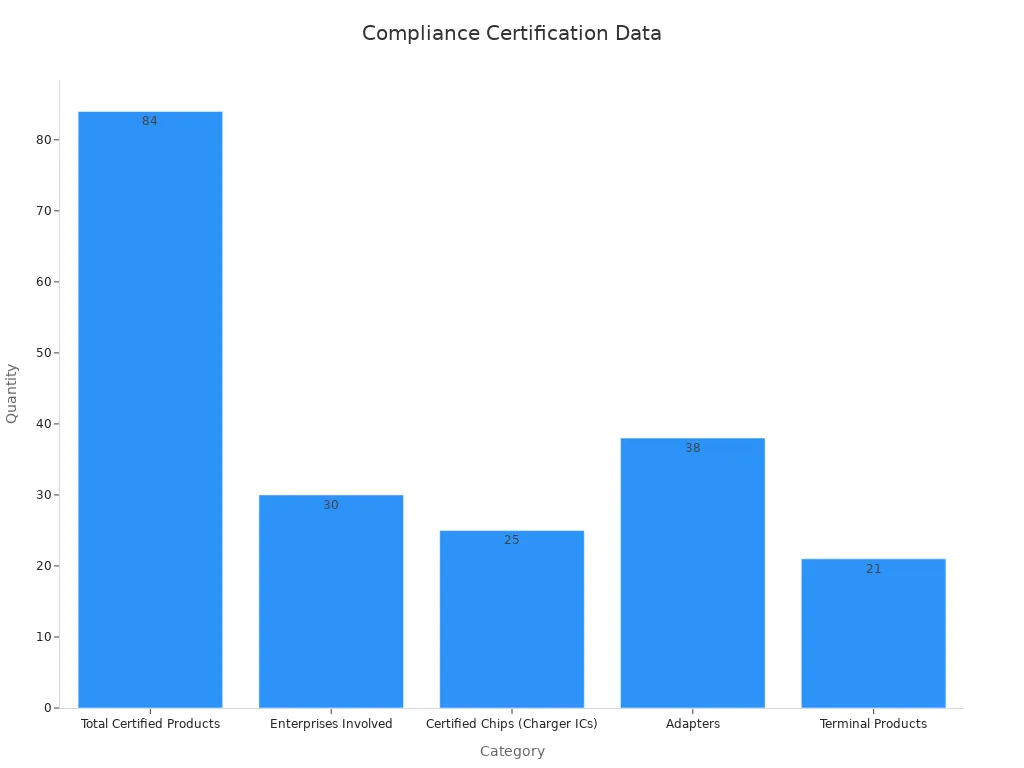
Fast charging groups and test centers have made strict tests for battery charging. These tests make sure every charger ic is safe, works with other devices, and is efficient. Picking a certified ic lowers risk and helps the battery charge well.
Key Charger IC Selection Checklist
-
Make sure the ic matches the battery chemistry (Li-ion, NiMH, lead-acid, etc.)
-
Check that voltage and current ratings fit the battery and system
-
Pick the right size and features for the device
-
Make sure it is certified and follows safety rules
-
Look at datasheets for power and features
-
Think about efficiency, safety, and charging methods
Note: Picking the right battery charging ic helps the device work better, makes the battery last longer, and keeps everything safe.
Device Matching
Picking the right charger IC depends on the device type. Each device has its own needs. Engineers think about battery size, how fast it charges, and how much is built in. Some ICs have special features like cell balancing, HPB, and NVDC. These features help the device work better and stay safe.
Portable Devices
Smartphones, tablets, and laptops need to charge quickly and easily. The market for charger ICs in these devices was $7.7 billion in 2023. It may grow to $17.0 billion by 2032. This is a 9.2% growth rate each year. Most of these devices use Li-Ion or Li-Polymer batteries. These batteries last long and hold lots of energy. Many companies pick ICs that work with USB Power Delivery and fast charging. These ICs make design easier and work with many products. Companies also give kits and tools to help use new charging solutions.
|
Evidence Aspect |
Details |
|---|---|
|
Dominant Battery Segment |
Li-Ion/Li-Polymer for smartphones, tablets, laptops, wearables |
|
Technological Innovations |
Fast-charging ICs, USB PD, wireless charging, energy harvesting |
|
Manufacturer Support |
Evaluation kits, design tools, USB PD-compatible ICs |
Tip: For portable devices, pick charger ICs that support fast charging and work with many products.
Wearables
Wearables like smartwatches and fitness trackers use small batteries. They need careful charging. A wearable battery is about 100 mAh and needs about 60 mA to charge. Charger ICs like the STNS01 are very small, only 3 mm × 3 mm. They use very little power when not working, just 100 nA. This helps the battery last longer. These ICs can charge at different speeds, from 15 mA to 200 mA. They also stop charging at the right time, between 3-6 mA, to keep the battery safe.
|
Feature |
Statistic / Specification |
Performance Benefit / Usage Context |
|---|---|---|
|
Battery capacity in wearables |
~100 mAh |
Precise, low-current charging needed |
|
STNS01 chip size |
3 mm × 3 mm |
Fits small wearable designs |
|
Standby power consumption |
100 nA |
Extends battery life |
High-Drain Devices
Power tools and drones need to charge fast and use lots of power. They often have battery packs with more than one cell. Charger ICs for these devices must keep each cell balanced. HPB and NVDC features help give more power safely and quickly. Engineers want ICs that handle heat well and protect the device from too much current.
Note: High-drain devices need ICs that balance cells and support many cells for safety and long battery life.
Smart Home
Smart home devices like cameras and speakers need safe and steady charging. Many use one battery cell, but some need more for longer use. Charger ICs with power path control let the device work while charging. This makes things easier for users. Safety features and thermal sensors help keep the device safe in all kinds of places.
Smart home devices do better with charger ICs that are safe, efficient, and can control power paths.
Li-Ion Battery Charging ICs
Compatibility
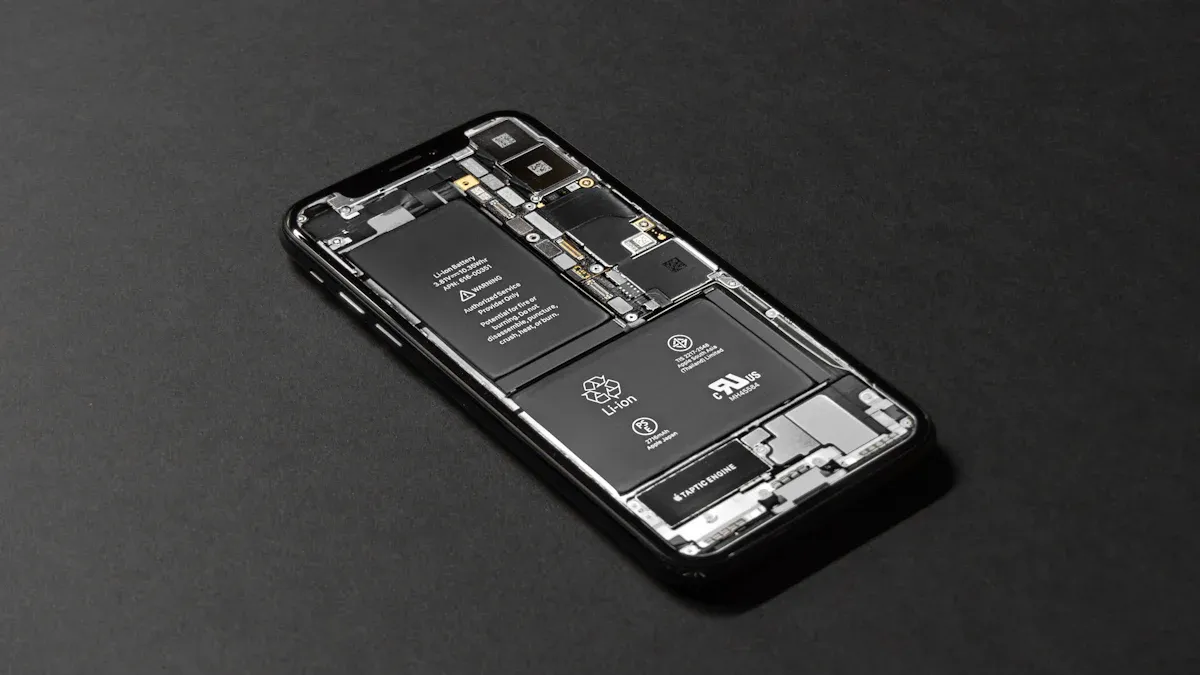
Li-ion battery charging ICs must fit the battery in each device. Engineers pick an IC that gives the right voltage and current for charging. These ICs work with both single-cell and multi-cell batteries. They change how they charge based on battery size. A good IC makes sure the battery gets the right charge every time. This helps the device last longer and keeps the battery in good shape. Many Li-ion battery charging ICs work with USB, wireless, and custom charging. This lets devices charge safely in many ways.
Safety
Safety is very important for Li-ion battery charging ICs. Each IC has special safety features to protect the battery while charging. Over-voltage, over-current, and short-circuit protection stop dangerous problems. The IC checks the battery’s temperature and can pause charging if it gets too hot. Battery protection circuits inside the IC stop overcharging and deep discharge. These safety systems help prevent fire or damage. Engineers trust these ICs to keep people and devices safe.
Tip: Always pick an IC with strong safety features and proven protection for every battery charging use.
Advanced Features
Modern Li-ion battery charging ICs have advanced features for better performance. Many ICs balance cells in multi-cell batteries. This keeps each cell charged the same and helps the battery last longer. Fast charging lets devices charge quickly without hurting the battery. Some ICs use smart algorithms to change the charge rate based on battery health. Protection features like thermal shutdown and fault detection add more safety. These advanced features help engineers make products that are reliable and work well.
|
Feature |
Benefit |
|---|---|
|
Cell balancing |
Longer battery life |
|
Fast charging |
Shorter charge times |
|
Smart algorithms |
Healthier batteries |
|
Extra protection |
Safer charging cycles |
Common Pitfalls
Safety Oversights
Some engineers forget about safety when picking a charger ic. They might not add over-voltage or over-current protection. Without these, batteries can get too hot or even catch fire. Devices need strong protection to stop short circuits and damage. Not every charger ic has built-in protection. Engineers should always check for these features before using an ic. Good protection keeps people and devices safe every time they charge.
Tip: Always pick charger ics with all the right protection for every battery.
Ignoring Thermal Limits
Thermal limits are important for battery safety. Some designers do not think about how much heat the ic can take. Devices can get hot quickly while charging. If the ic does not handle heat well, the battery can break or not last as long. Many charger ics have thermal sensors that slow or stop charging if it gets too hot. This helps keep the battery safe and working longer. Devices without thermal control can get damaged and have shorter battery life.
-
Devices with thermal sensors can react fast to heat.
-
Charger ics with thermal shutdown stop batteries from getting too hot.
-
Good thermal control helps make charging safe and reliable.
Underestimating Integration
Putting the charger ic into a device the right way is important for how long it lasts. Some engineers do not test the ic in real-life situations. They might skip multi-channel or RF tests and miss hidden problems. Integrated test systems control temperature, bias, and timing very well. These systems help find problems early and make devices more stable. Modular test platforms let engineers set up tests for different rules. Automated software tools collect and study data, so it is easier to find failures. When engineers use these ways, they make sure the ic works well and the device lasts longer.
-
Multi-channel testing makes devices more reliable and saves time.
-
Both DC and RF tests are needed to check everything.
-
Software tools help track how long devices last before failing.
-
Good integration stops early failures and keeps devices safe.
Note: Careful testing and putting charger ics in the right way help devices stay safe, stable, and last a long time.
Trends & Recommendations

Popular ICs
Battery charger ICs are changing as more people use electronics, electric cars, and health devices. Lithium-ion batteries are the top choice because they store lots of energy and last a long time. Switching ICs are popular since they save energy and work in many ways. Pulse ICs help batteries charge fast and last longer. Linear ICs are good for devices that need quiet operation and low cost. Big companies like Texas Instruments, Analog Devices, STMicroelectronics, and ON Semiconductor make new and better ICs.
|
Aspect |
Evidence Summary |
|---|---|
|
Market Drivers |
More electronics, electric cars, factory machines, and health gadgets are being made. |
|
Popular Battery Tech |
Lithium-ion batteries are used most because they hold lots of power and last long. |
|
Product Types |
Switching ICs save energy; Pulse ICs charge fast; Linear ICs are quiet and cheap. |
|
End-Users |
Companies want high-quality ICs they can change; others want ICs that are easy to use. |
|
Regional Trends |
Asia Pacific is ahead because of more factories and electric car stations; North America and Europe are also big. |
|
Market Growth |
The market may grow 5.3% each year from 2024 to 2032, reaching about $9.5 billion by 2032. |
|
Key Manufacturers |
Texas Instruments, Analog Devices, STMicroelectronics, ON Semiconductor |
|
Application Sectors |
Used in electronics, cars, factories, and health devices. |
New Technologies
The battery charger IC market is getting bigger fast. In 2022, the lithium battery charger IC market was $2.5 billion. It could reach $6.3 billion by 2030. This is because more electronics, electric cars, and green energy use lithium-ion batteries. Smart charger ICs now have safety and energy-saving features. ICs that charge many cells, wireless charging, and fast charging are now common. Government rules for clean energy and more electric cars also help this growth.
-
Smart charger ICs have safety and save energy.
-
New ICs can charge many battery cells at once.
-
Wireless charging is becoming more popular.
-
Fast charging is used for small devices.
-
Green energy and cutting carbon are important.
-
More electric cars mean more charger ICs are needed.
Future Outlook
The future for battery charger ICs looks bright. The market could grow from $16.44 billion in 2024 to $25.16 billion by 2029. New things like electric planes need special charger ICs that charge well, stay cool, and protect batteries. Smart power grids and green energy will use more charger ICs. Companies want ICs that use less energy and are safer. New materials like SiC and GaN help make ICs smaller and more powerful. AI and IoT will make charging smarter and safer.
-
Very fast charging and using green energy together
-
Modular designs work with many battery types
-
Built-in communication for cars to talk to power grids
-
AI and IoT help make charging safer and smarter
-
Local rules and teamwork affect how ICs are used
Note: Knowing these trends helps engineers pick the best battery charger ICs for new devices.
Picking the right battery charger IC takes a few important steps:
-
Make sure the IC works with the battery type and device.
-
Look at voltage, current, and safety features before choosing.
-
Read datasheets and check if the IC is certified.
-
Learn about new technology and what is popular in the industry.
Tip: Engineers should use expert advice and try ICs in real devices. Choosing and using the right IC helps devices work well and last longer.
FAQ
What is a battery charger IC?
A battery charger IC is a tiny chip. It helps control how a battery gets charged. The chip manages voltage and current. It also has safety features. Engineers use these chips to help batteries charge safely. This makes batteries last longer.
How do engineers choose the right charger IC?
Engineers look at the battery chemistry first. They check voltage and current ratings. They also look for safety features. Engineers read datasheets and check for certifications. They make sure the IC fits the device’s needs. They test the IC in real-life situations.
Why are safety features important in charger ICs?
Safety features keep batteries and devices safe from harm. Over-voltage and over-current protection stop problems. Thermal protection helps stop overheating. These features help prevent fires and battery failure.
Can one charger IC work with all battery types?
One charger IC cannot work with every battery type. Each battery chemistry needs its own charging method. For example, Li-ion and NiMH need different ways to charge. Using the wrong IC can hurt the battery or make it unsafe.