The Unseen Force Analog 2.0 in Modern Tech
Our world is a place of continuous analog signals. Modern digital technology, however, speaks a digital language. This creat

Our world is a place of continuous analog signals. Modern digital technology, however, speaks a digital language. This creates a challenge for analog in the digital age. This is where analog 2.0 comes in. It is the advanced integration of analog hardware with smart digital control. This technology acts as the essential translator between our physical world and digital devices. The core purpose of this analog-digital integration is to create hybrid systems with superior performance. The growth of this analog technology is significant, with the market projected to expand substantially.
| Metric | Value |
|---|---|
| Forecast period | 2025-2029 |
| Market growth 2024-2029 | USD 57.9 billion |
| Growth momentum & CAGR | Accelerating at a CAGR of 7.2% |
Key Takeaways
- Analog 2.0 combines analog hardware with smart digital control. This creates better hybrid systems.
- This technology helps devices connect with the real world. It makes them more accurate and saves power.
- Analog 2.0 is important for many new technologies. These include smart home devices, 5G internet, and self-driving cars.
- Digital control helps analog parts work better. It makes them more precise and stable.
- Analog 2.0 is not replacing digital technology. It works with digital technology to improve how our devices work.
The Rise of Analog 2.0
The resurgence of analog technology is not a return to the past. It is a sophisticated evolution. The rise of analog is driven by the need to overcome the distinct weaknesses of purely analog or purely digital systems. This new approach creates a powerful hybrid technology.
The Limits of Pure Analog and Digital
Historically, engineers faced a choice between two imperfect options. Pure analog systems struggle with precision. Their physical components can vary, leading to inconsistent results. These systems are also sensitive to noise and environmental changes like temperature, which complicates calibration efforts. A pure analog design has inherent uncertainty.
Purely digital systems have their own set of limitations. The real world is analog, but digital circuits only understand ones and zeros. This creates a translation problem.
A digital system needs special converters to read an analog signal. This conversion process adds complexity, increases cost, and can even lead to information loss if not handled perfectly.
Neither technology alone provides a perfect solution for interfacing with our physical world. The resurgence of analog thinking was necessary.
How Digital Control Revolutionized Analog Circuits
The solution is analog 2.0, where digital intelligence enhances analog hardware. This resurgence of analog is a direct response to modern demands. The rapid expansion of new technology sectors requires this hybrid approach. Key drivers include:
- The growth of the Internet of Things (IoT) and smart wearables.
- Advancements in 5G networks and automotive electronics.
- The need for high performance with low power consumption.
In this model, digital control acts as a constant supervisor for the analog circuits. It can make real-time adjustments to correct for noise or temperature drift. This digital oversight allows the analog technology to perform with a level of precision and stability that was previously impossible. The rise of analog, powered by digital smarts, is enabling the next wave of innovation. This is the core of the resurgence of analog.
Analog 2.0 in Action
The theory behind analog 2.0 is impressive. Its real-world applications, however, are what truly demonstrate its power. This advanced technology is not a future concept. It is the engine driving innovation today across many sectors. We see its impact in the tiny sensors in our smartwatches, the powerful networks that connect our phones, and the rich media experiences in our cars. These systems showcase how a smart digital layer elevates analog hardware to new levels of performance.
Smarter Sensing in IoT
The Internet of Things (IoT) relies on sensors to function. These devices are the digital eyes and ears of our connected world. The primary factor propelling the growth of the smart sensor market is the inherent reliance of IoT systems on sensors for essential data collection. This has created a massive demand for sensors that are not only accurate but also extremely power-efficient. This is a perfect challenge for analog 2.0.
Consider the MEMS (Micro-Electro-Mechanical Systems) microphones found in smart speakers and wearables. These tiny analog devices must always be listening for a wake word. A purely analog system would consume too much power. A purely digital system would be too complex and slow. Analog 2.0 provides the solution. A low-power analog circuit listens for sound. A smart digital controller analyzes the analog signals. The controller only wakes the main processor when it detects patterns matching a wake word. This hybrid approach makes modern data acquisition systems possible. It enables long battery life in devices that are always on. The market for these applications is expanding rapidly.
| Metric | Value |
|---|---|
| Market Size in 2025 | USD 77.1 Billion |
| Market Size in 2034 | USD 334.1 Billion |
| CAGR (2025-2034) | 17.7% |
| IoT & Smart Infrastructure Contribution | 12% of growth |
| Key IoT Applications | Connected homes, smart cities, environmental monitoring, energy management |
Next-Gen Wireless Communications
Modern wireless communication demands incredible performance. 5G and future networks must handle huge amounts of data with minimal delay. This requires sending and receiving very complex radio frequency (RF) signals. The analog RF front-end is the part of a device that interacts directly with these radio waves. Its performance is critical.
This is where digitally-assisted RF systems shine. In 5G technology, an important technique is called beamforming. Beamforming allows a base station to focus wireless signals directly at a user's device. This is like trading a floodlight for a laser pointer. It creates a stronger, faster, and more reliable connection. Achieving this requires precise control over the analog components that shape and direct the radio waves. Digital controllers constantly adjust the analog front-end. They modify the timing and strength of the signals to steer the beam in real-time. This digital supervision of analog hardware increases network capacity and bandwidth. It is a core reason why 5G can support so many more users and faster speeds. These systems are key to next-generation applications.
High-Fidelity Audio and Visuals
We expect perfect sound and picture quality from our devices. Achieving high-fidelity reproduction of analog signals like sound and light is a classic engineering challenge. Modern Class-D audio amplifiers are a great example of analog technology enhanced by digital control. These amplifiers are very efficient but can struggle with distortion. Analog 2.0 solves this. A digital feedback loop monitors the analog output signal. It compares the output to the original input. The digital controller then makes tiny, high-speed corrections to the analog amplification process. This results in crystal-clear audio with high dynamic range from a very efficient amplifier.
This principle extends to complex audio systems, especially in vehicles. Automotive Audio Bus (A2B) technology is upgrading in-car audio experiences. It replaces heavy, complex analog wiring with a simple digital bus.
“We have seen a strong interest in the A2B technology as car makers look to reduce the weight and cost of cabling in their production vehicles, as well as creating superior audio experiences for their customers. Our design analysis tools will ensure that system performance is optimized for the many different audio sources and playback devices in a modern vehicle,” stated Rainer Oder, General Manager, Mentor Automotive.
A2B technology delivers many benefits for automotive audio systems:
- It reduces system cost, weight, and design complexity.
- It delivers audio, control data, clock, and power over a single two-wire cable.
- Its low-latency nature is ideal for applications like active noise cancellation and hands-free systems.
- It provides up to a 50 Mbps bandwidth for superior audio quality and high dynamic range compared to old analog connections.
This technology simplifies the design of electrical systems. It allows a single digital bus to transmit dozens of audio signals throughout the vehicle. The result is immersive, high-quality sound for all passengers. These audio applications show the power of combining analog and digital strengths.
The Technology at its Core
The power of analog 2.0 comes from a few key technologies working together. These innovations merge the physical analog world with the logical digital world. They form the foundation for the advanced systems we use every day. Understanding these core components reveals how modern electronics achieve such high performance.
Mixed-Signal Systems on a Chip (SoCs)
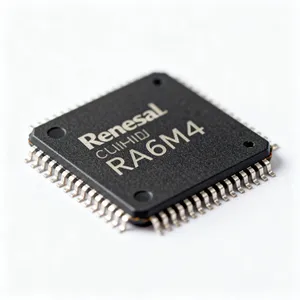
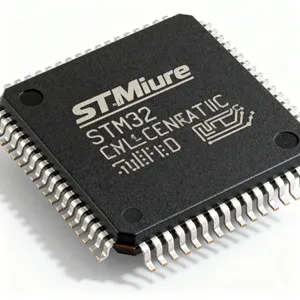
Engineers now place entire systems onto a single piece of silicon. These are called Mixed-Signal Systems on a Chip (SoCs). This technology combines analog circuits and digital processors together. This integration is a groundbreaking approach for many applications.
- IoT devices use these chips to connect, process, and send data.
- Medical devices rely on them for sensor interfaces and signal processing.
- Smart sensors become more powerful with this level of integration.
Putting analog and digital parts on one chip offers huge benefits. It reduces system cost, improves power efficiency, and enables compact designs. Companies specializing in these advanced solutions, like HiSilicon-designated partner Nova Technology Company (HK) Limited), help bring this powerful technology to more products.
The Role of Analog to Digital Converters
Analog to digital converters (ADCs) are essential translators. They convert real-world analog signals into digital signals that a processor can understand. The performance of these data acquisition systems depends heavily on the quality of the analog to digital converters. A good converter ensures accurate data acquisition. Key metrics for analog to digital converters include:
- Resolution: The number of bits the converter uses for each sample.
- Sampling Rate: How often the converter takes a measurement.
- Accuracy: How close the digital value is to the real analog signal.
Proper sampling is critical for accurate acquisition. The converter must perform sampling frequently enough to capture the signal's details. This process of sampling and acquisition is the first step in any digital system that interacts with the world. The quality of the analog to digital converters directly impacts the entire system's performance. Better analog to digital converters lead to better data acquisition. The converter is the heart of data acquisition systems. The analog to digital converters enable precise sampling for high-fidelity acquisition. The converter's sampling speed determines the system's bandwidth. High-speed sampling by the analog to digital converters is vital for modern communications. The converter must complete its acquisition quickly.
The Shift to Software-Defined Hardware
The final piece of this technology is making hardware flexible. Software-defined hardware allows software to control and reconfigure analog systems in real time. A great example is Software-Defined Radio (SDR). Traditional radios have fixed analog hardware. An SDR uses software to manage functions like modulation and signal processing. This allows a single device to handle many communication standards, from Wi-Fi to 5G. This technology separates the analog hardware from the digital software functions. This separation allows systems to adapt to new needs just by updating the software. This approach is used in military communications, cellular networks, and even amateur radio.
The Hybrid Future of Technology

The true potential of analog 2.0 emerges when it connects with artificial intelligence. This integration is shaping the hybrid future of computing. AI and machine learning systems need high-quality data to understand the world. This data comes from advanced sensors, creating a direct link between the physical analog world and the digital mind of AI.
Bridging Sensors to AI and Machine Learning
Physical AI systems rely on a constant stream of information. These systems are the foundation of robotics, autonomous vehicles, and smart infrastructure. They use a variety of sensors to perceive their environment.
- Cameras
- LiDAR and Radar
- Inertial Measurement Units (IMUs)
These devices generate mixed-signal data that AI uses for context and decision-making. For example, some edge AI platforms use special magnetic sensors to monitor power infrastructure. These systems capture a full spectrum of electromagnetic signatures. This clear analog data feeds directly into AI models on the device. The AI can then predict electrical failures before they happen. This shows how better analog technology leads to smarter AI systems.
Challenges and Opportunities Ahead
The path toward this advanced future has challenges. Designing these complex hybrid systems is difficult. As electronic components get smaller, new problems appear.
Key Design Challenges:
- Smaller parts create more signal noise and interference.
- Lower power levels make analog signals weaker and harder to read.
- Tiny variations in manufacturing can greatly affect performance.
These issues make designing reliable mixed-signal circuits a major hurdle. There is also a "talent gap." The industry needs more engineers with expertise in both analog and digital fields. These challenges, however, create incredible opportunities for new technological advancements.
The most exciting opportunity is the rise of "in-sensor" AI, a powerful form of analog computing. This technology processes sensor data directly in its native analog form. It does not need to convert the signal to digital first. This direct analog computing approach uses layers of analog neurons to make decisions. This method of analog computing is faster and uses much less power. This type of analog computing is a breakthrough. These advancements in analog computing are key. The future will see more analog computing.
This analog computing technology enables amazing new applications.
- Advanced Medical Devices: Wearable biosensors can use in-sensor analog computing to detect diseases like cancer or diabetes from biomarkers. This form of analog computing allows for real-time health monitoring.
- Autonomous Systems: In-sensor analog computing helps vehicles and robots process information instantly, improving safety and performance.
These advancements show that the continued fusion of analog and digital technology will define the next wave of innovation.
Analog 2.0 is not a replacement for digital systems but a crucial partner. This technology enables our devices to interact seamlessly with the physical world. It is the unseen force driving innovation and key advancements across sectors like AI, healthcare, and autonomous vehicles. The future of this hybrid integration points toward even more transformative technological advancements.
These advancements will power the next wave of physical AI, where smart machines understand and operate within the real world, changing technology forever.
FAQ
What is Analog 2.0?
Analog 2.0 is an advanced technology. It combines analog hardware with smart digital control. This fusion creates hybrid systems that perform better than purely analog or digital systems. It acts as a translator between the real world and our devices.
Why is Analog 2.0 important?
This technology is crucial for modern electronics. It enables devices to be more accurate, power-efficient, and responsive. Key areas like IoT, 5G communications, and high-quality audio depend on its superior performance to function effectively.
Is Analog 2.0 replacing digital technology?
No, Analog 2.0 is not a replacement for digital technology. Instead, it works as a vital partner. Digital circuits provide the intelligence to control and improve analog components. This partnership allows technology to interact seamlessly with the physical world.
What is an example of Analog 2.0 in daily life?
Smart speakers provide a great example. 🔊
A low-power analog circuit listens for a wake word. A digital controller then analyzes the sound. This hybrid system saves battery life while keeping the device ready to respond to commands.