The Evolution of Integrated Circuits: From Invention to Modern Applications in Electronics
Integrated circuits, or ICs, are small chips that represent a significant milestone in the evolution of integrated circuits. They hold many electronic parts like transistors, resistors, and capacitors in one unit, serving as the main components of modern electronics. The creation of ICs transformed technology by making devices smaller, cheaper, and more energy-efficient. This breakthrough allowed computers, smartphones, and other gadgets to become integral to everyday life.
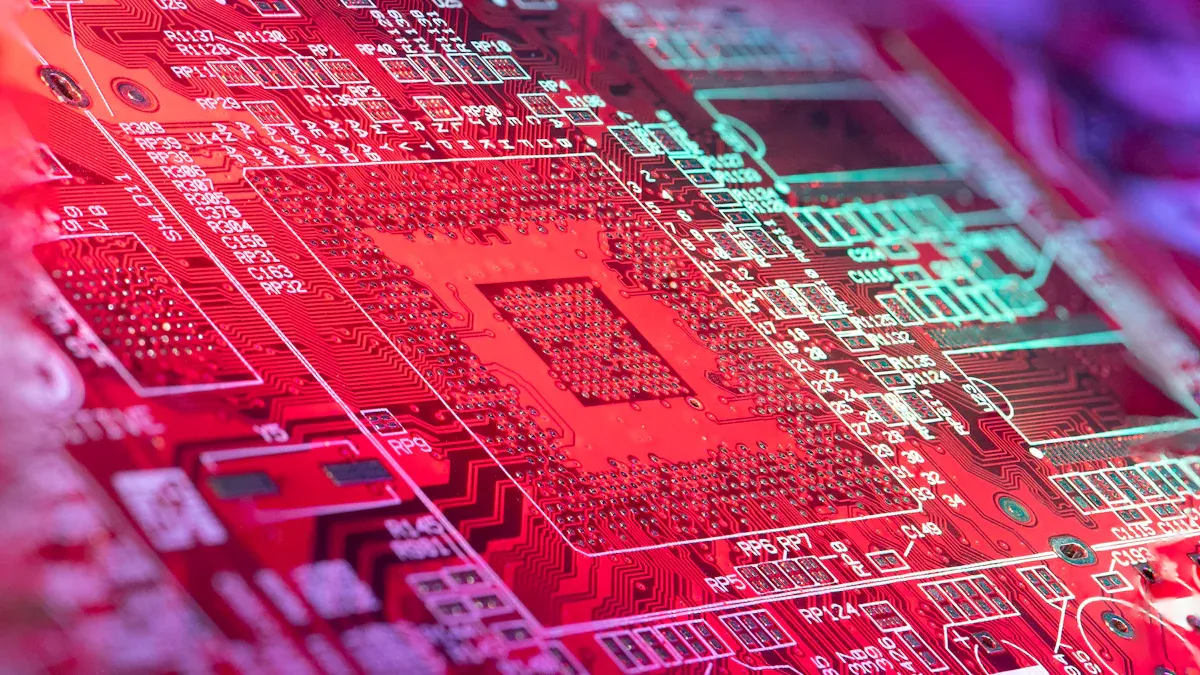
Integrated circuits, or ICs, are small chips that represent a significant milestone in the evolution of integrated circuits. They hold many electronic parts like transistors, resistors, and capacitors in one unit, serving as the main components of modern electronics. The creation of ICs transformed technology by making devices smaller, cheaper, and more energy-efficient. This breakthrough allowed computers, smartphones, and other gadgets to become integral to everyday life.
Moore observed that chip parts double almost every year, which has accelerated the evolution of integrated circuits and technology growth. For example:
The IC market may grow 13.4% yearly from 2024 to 2032.
By 2037, the digital IC market could reach $554.17 billion, indicating their widespread use.
From aiding space missions, such as the Apollo Guidance Computer, to powering today’s smart devices, ICs have revolutionized industries and inspired new innovations. Their ongoing evolution of integrated circuits continues to drive technology forward.
Key Takeaways
-
Integrated circuits (ICs) changed technology by making gadgets smaller, cheaper, and use less power.
-
Moore's Law says chips will have twice as many transistors every two years, making electronics faster and stronger.
-
System-on-Chip (SoC) puts many functions on one chip, saving money and improving performance.
-
Smaller chips make powerful devices that are easy to carry, like smartphones and smartwatches.
-
The future of ICs includes 3D ICs and quantum computing, which will make devices even better and more efficient.
The Evolution of Integrated Circuits: From Transistors to ICs
The Invention of the Transistor: A Big Change in Electronics
In 1947, the transistor was invented and changed electronics forever. William Shockley, Walter Brattain, and John Bardeen made it at Bell Labs. This small device replaced large vacuum tubes. It was more reliable and worked better. Transistors quickly became the key part of modern electronics. They helped make devices smaller and faster.
The transistor's importance can be seen in the TX-0 computer. Built at MIT in 1956, it was the first computer to use transistors. This invention started the digital revolution. Radios, TVs, and early computers began using transistors. They worked better and were more useful than vacuum tubes.
The invention of the transistor led to integrated circuits. Engineers combined many transistors into one chip. This made devices smaller and more efficient. It was a big step forward for technology.
Jack Kilby and Robert Noyce: Creating the First Integrated Circuits
In 1958, Jack Kilby showed the first integrated circuit at Texas Instruments. He used a germanium chip to connect electronic parts. His test showed a green sine wave on an oscilloscope. This proved his idea worked and impressed many people.
At the same time, Robert Noyce improved the idea at Fairchild Semiconductor. He created the planar process to build parts on silicon chips. Noyce also used aluminum to connect the parts. This made it easier to produce integrated circuits in large numbers.
These ideas changed electronics forever. Kilby and Noyce helped make devices smaller, cheaper, and more reliable. Their work led to modern computers, phones, and other electronics.
Early Uses: Moving from Vacuum Tubes to ICs
Switching from vacuum tubes to integrated circuits changed electronics. Vacuum tubes were big, broke easily, and used a lot of power. Integrated circuits were smaller, stronger, and used less energy.
|
Feature |
Vacuum Tubes |
Integrated Circuits |
|---|---|---|
|
Size |
Big and heavy |
Small with many parts inside |
|
Reliability |
Broke often |
Stronger and lasted longer |
|
Power Efficiency |
Used a lot of power |
Used less power |
|
Cost |
Expensive to make |
Cheaper to produce |
|
Performance |
Worked slower |
Worked faster |
|
Versatility |
Few uses |
Many different uses |
Early integrated circuits were used in space missions like Apollo. They were small and worked well for space travel. Calculators and radios also used ICs, making them affordable for everyone.
This change started the evolution of integrated circuits. It brought new ideas and shaped the future of electronics.
The Rise of Microprocessors and Their Impact
Microprocessors: The Core of Modern Technology
Microprocessors are the key part of modern computers. These small chips handle hard tasks very quickly. Over time, they have been improved to use less power. Features like changing speed based on tasks save energy. Other methods, like turning off unused parts, help batteries last longer. This makes microprocessors perfect for laptops and smartphones.
Microprocessors have changed many industries. They are used in personal computers and factory machines. Their ability to do tough math fast makes them very important today.
Moore's Law: Boosting Chip Power Over Time
Moore's Law has guided how chips improve. It says the number of parts on a chip doubles every two years. This has made computers much faster over time. Between 1997 and 2004, this helped the U.S. economy grow by 3.4% each year.
Better chip designs have led to amazing advancements. For example, a graphics chip in 2025 may have over 92 billion parts. Making these chips is also cheaper, with costs dropping by half every three years. This shows how Moore's Law keeps pushing chip technology forward.
ICs in Everyday Electronics: From Computers to Phones
Integrated circuits have changed gadgets like computers and phones. In 2023, the market for these parts was worth $72 billion. By 2032, it could grow to $112 billion. This shows how much people need chips, especially microprocessors.
Smartphones now use the most integrated circuits. New tech like 5G and better memory chips make them even more important. Integrated circuits have made devices faster, cheaper, and easier to use. This has helped electronics become a big part of our lives.
|
Aspect |
1960s Technology |
Current Technology |
|---|---|---|
|
Type |
Analog systems |
Digital systems |
|
Components |
Mechanical, pneumatic, electric |
Integrated circuits |
|
Flexibility |
Limited to simple control tasks |
Advanced control loops |
|
Performance |
Lower efficiency |
Enhanced performance and efficiency |
|
Adoption in Industry |
Gradual transition |
Widespread use in power industry |
Advancements in Integrated Circuit Technology
System-on-Chip (SoC): Combining Many Functions
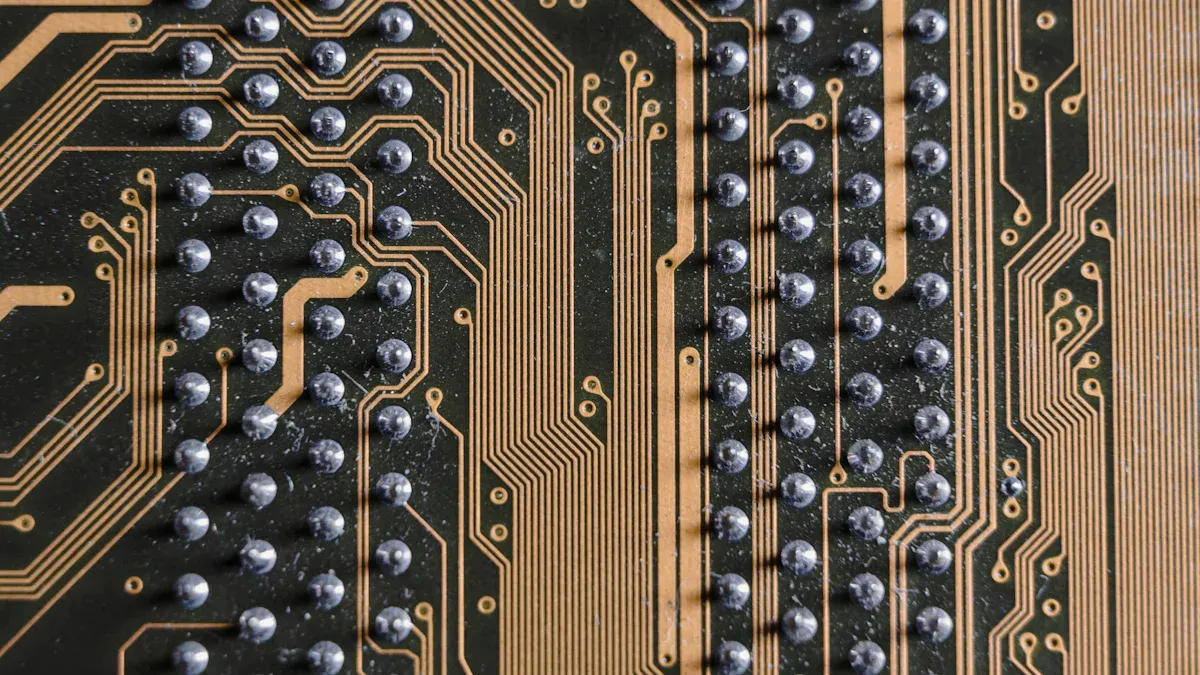
System-on-Chip (SoC) technology has changed modern electronics. It combines processors, memory, and other parts into one chip. This makes devices smaller and simpler.
SoCs are built to save power and work efficiently. They are perfect for smartphones and IoT gadgets. SoCs use less energy and cost less to make than using many chips. Although designing a SoC can be expensive, it saves money over time.
New SoC designs show how fast this technology is growing. For example, AMD's Versal AI Edge Series Gen 2 and Microchip's PolarFire SoC FPGA are advanced. These help improve AI, machine learning, and edge computing, making devices smarter and faster.
Tip: SoCs are key to small, powerful gadgets that work smoothly every day.
VLSI and ULSI: Adding More Transistors
Very Large Scale Integration (VLSI) and Ultra Large Scale Integration (ULSI) have made chips much better. They allow more transistors to fit on one chip, making devices faster and more efficient.
VLSI chips have parts as small as 2.0 microns. ULSI chips are even smaller, going down to 0.2 microns. Smaller parts mean more transistors, better performance, and less power use. Techniques like power gating and voltage scaling help save energy too.
-
VLSI and ULSI make small, powerful chips possible.
-
New models for short-channel IGFETs improve speed and understanding.
-
Future ULSI chips will have even more transistors and power.
These technologies have led to better computers, graphics, and energy-saving devices.
Miniaturization: Tiny Chips with Big Power
Miniaturization has helped make electronics smaller and better. As chips shrink, they get faster and use less energy.
|
Technology Node |
Improvements |
Benefits |
|---|---|---|
|
14nm |
Uses less energy, faster switching, fewer leaks |
Better performance and efficiency |
|
7nm |
Improved designs for AI and high-power tasks |
Higher abilities |
|
5nm and Beyond |
New transistors to fix quantum problems |
Keeps improving performance |
Smaller chips are in high demand for phones, IoT, and wearables. Tiny chips allow smaller designs, making devices easier to carry and use. For example, new manufacturing methods create complex chips that are small but powerful.
Miniaturization helps your devices work better and fit your life. From smartwatches to laptops, tiny chips make it all possible.
Societal and Technological Impacts of ICs
Revolutionizing Telecommunications and Connectivity
Integrated circuits have changed telecommunications by making connections faster and stronger. 4G and 5G networks need advanced chips like radio frequency ICs and system-on-chip designs. These chips help build systems for quick communication.
Smartphones have increased the demand for integrated circuits. These chips handle tasks like data processing and app performance. They make modern communication smooth and easy.
|
Year |
Market Size (in billion USD) |
CAGR (%) |
|---|---|---|
|
401.81 |
N/A |
|
|
2025 |
446.80 |
11.2 |
As the market grows, integrated circuits connect people and devices everywhere.
Enabling Economic Growth and Innovation
Integrated circuits help economies grow by improving technology. Governments are spending a lot to make more chips. For example:
-
Tata Semiconductor will spend USD 31.80 billion to make chips in India.
-
Russia plans to use USD 2.54 billion for research and chip production.
These efforts show the global push for making chips locally.
New technologies like AI and IoT need more integrated circuits. These chips make devices faster, smaller, and better. This boosts economic activity and innovation.
|
Year |
Market Size (USD Billion) |
CAGR (%) |
|---|---|---|
|
2024 |
685.01 |
N/A |
|
2030 |
1438.42 |
13.2 |
Integrated circuits are key to shaping industries and growing economies.
Addressing Challenges: Manufacturing and Environmental Concerns
Making integrated circuits uses many resources and harms the environment. Chip production needs lots of water, chemicals, and energy. For example, one chip uses about 32 liters of water and 2.5 oz of chemicals.
Chip factories also release carbon dioxide. In 2020, TSMC produced 15 million tons of CO2. E-waste disposal adds to pollution, with over 20 million tons dumped globally this year. This waste pollutes soil and water.
To reduce harm, companies are recycling and tracking chemical use. Cutting emissions is also important for making chip production greener.
Note: Solving these problems is vital for keeping the semiconductor industry sustainable.
The Future of Integrated Circuits
3D ICs: Smaller Chips with More Power
Devices are getting smaller but stronger. This is thanks to 3D integrated circuits (3D ICs). These chips stack layers on top of each other instead of lying flat. Stacking makes them faster, smaller, and use less power.
Through-Silicon Via (TSV) technology improves 3D ICs. TSVs connect layers quickly, helping data move faster with fewer delays. Phones and IoT gadgets need these compact, powerful chips. Companies are spending a lot to make 3D ICs for 5G networks and future tech.
|
Evidence Description |
Key Points |
|---|---|
|
TSV advancements |
Faster connections between layers for better data transfer. |
|
Demand for smaller devices |
Makes chips faster while saving space and energy. |
|
Investments by chip companies |
Focused on improving speed and efficiency. |
|
5G network impact |
Helps faster data and stronger connections. |
|
Better component links |
Cuts power use, changing the electronics market. |
3D ICs are a big step forward. They help make devices faster, smaller, and more efficient.
Quantum Computing: A New Way to Solve Problems
Quantum computing is changing how chips work. Unlike regular chips, quantum processors use qubits. Qubits can be in many states at once, solving hard problems faster than normal computers.
Quantum computing is no longer just an idea. Companies like Multiverse Computing use quantum chips to find factory defects and improve trading profits.
The quantum computing market is growing fast. By 2034, it could grow from $0.5 billion to $8.6 billion. Technologies like superconducting qubits and photonic qubits are used in cryptography, machine learning, and drug research.
|
Aspect |
Details |
|---|---|
|
Market Size |
Expected to grow from $0.5 billion in 2024 to $8.6 billion by 2034 |
|
Growth Rate |
Around 32.9% yearly growth |
|
Key Technologies |
Superconducting Qubits, Trapped Ions, Photonic Qubits |
|
Applications |
Cryptography, Machine Learning, Drug Discovery, Optimization, Material Simulation |
|
Deployment |
On-Premises, Cloud-Based, Hybrid |
|
End Users |
Healthcare, Manufacturing, Energy, Government, Retail, Telecommunications, Transportation |
Quantum computing will change industries. It solves problems that regular computers can't handle.
Greener and Smarter IC Designs
Technology is focusing on saving energy. Chips are now made to use less power but still work well. Generative AI helps design better power management chips (PMICs). These chips spread energy evenly, making devices more efficient.
Renewable energy is also boosting demand for energy-saving chips. In 2023, renewable energy made up 24.5% of the EU's energy use. PMICs help manage this energy without wasting it.
-
Generative AI improves energy-saving PMIC designs.
-
Renewable energy increases the need for smarter chips.
-
Green chips cut pollution while staying powerful.
Energy-efficient chips help the environment and make technology better for the future.
The growth of integrated circuits has changed technology in 60 years. Starting with transistors and leading to microprocessors, each step brought new ideas. Integrated circuits made small, reliable devices possible, like phones and spacecraft. They have also helped improve computing, communication, and farming.
Even with their big impact, problems still exist. Making chips uses many resources, and teamwork in the industry is still limited but improving. New ideas like 3D ICs and quantum computing keep advancing, ensuring integrated circuits stay important for future technology.
FAQ
What are integrated circuits, and why are they important?
Integrated circuits (ICs) are small chips with many parts like transistors and resistors combined into one. They help make devices smaller, faster, and work better. Without ICs, gadgets like smartphones, computers, and smartwatches wouldn’t be possible.
How do integrated circuits differ from traditional circuits?
Traditional circuits use separate parts connected by wires. Integrated circuits put all these parts into one chip. This saves space, uses less power, and works more reliably. ICs can also be made in large numbers, making electronics cheaper.
What is Moore’s Law, and how does it relate to ICs?
Moore’s Law says the number of transistors on a chip doubles every two years. This has helped ICs improve quickly, making them stronger and more efficient. It’s the reason why your devices keep getting faster and smarter.
How do ICs contribute to environmental challenges?
Making ICs uses a lot of water and energy. It also creates e-waste and carbon pollution. Companies are finding greener ways to make ICs, like recycling materials and using less energy, to solve these problems.
What is the future of integrated circuits?
The future of ICs includes new ideas like 3D ICs, quantum computing, and energy-saving designs. These changes will make chips smaller, faster, and better for the environment. They will power future technologies like AI, IoT, and green energy systems.
Tip: Keep learning about IC updates to see how they improve the technology you use every day.