How a Flow Sensor Works in Everyday Uses
A flow sensor helps you measure how fast a liquid or gas moves through a pipe or tube. You find this sensor in things you us
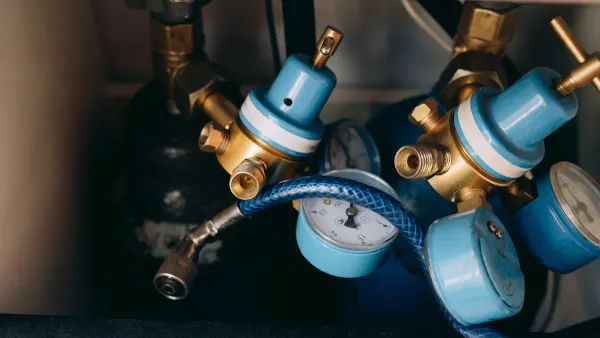
A flow sensor helps you measure how fast a liquid or gas moves through a pipe or tube. You find this sensor in things you use every day, like cars, washing machines, and medical equipment. Picture water flowing through a garden hose—just as you watch the stream, the sensor counts the speed and amount. If you're wondering how does a flow sensor work, it uses signals, such as electrical or acoustic waves, to turn movement into numbers that processors can read. Many industries use flow sensors because they help control and monitor important actions.
| Year | Market Size (USD Billion) |
|---|---|
| 2025 | 2.45 |
| 2035 | 3.45 |
Key Takeaways
- Flow sensors measure the speed and amount of liquids or gases in pipes, helping to control and monitor various systems.
- Different types of flow sensors, like magnetic, thermal, and Coriolis, use unique methods to convert flow into measurable signals.
- Flow sensors are essential in everyday appliances, cars, and medical devices, improving efficiency and safety.
- Regular maintenance and calibration of flow sensors ensure accurate readings and optimal performance in various applications.
- Advancements in flow sensor technology, such as IoT integration, enhance their precision and energy efficiency.
How Does a Flow Sensor Work
Basic Operation
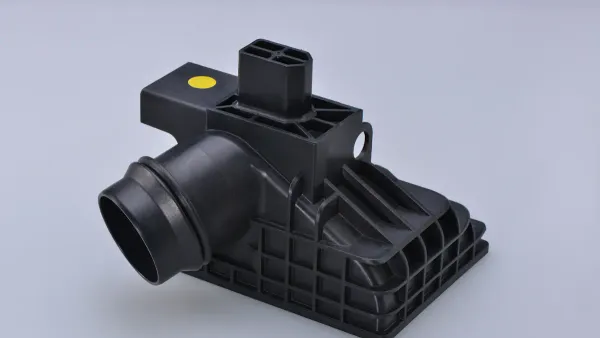
When you ask, "how does a flow sensor work," you start with the basics. A flow sensor detects how much and how fast a substance moves through a pipe. You can think of it like a speedometer for water or air. The sensor sits inside or outside the pipe and watches the flow. It turns this movement into signals that you can measure.
Some sensors use magnets and electricity. Magnetic flow sensors use Faraday's Law of Electromagnetic Induction. When a liquid moves through a magnetic field, it creates a small voltage. The sensor picks up this voltage. The faster the liquid moves, the higher the voltage. This method helps you get a clear reading of the flow rate.
Other sensors use heat. Thermal flow sensors work by heating a tiny part of the sensor. As the fluid passes by, it carries away some of the heat. The sensor measures the temperature difference. The more flow you have, the more heat gets carried away. This change helps you know how fast the fluid is moving. Experiments show that the way you place the sensor and how much heat it loses can change how well it works.
You also find sensors that use vibrations. Coriolis meters, vibrating tube meters, and phase shift meters all use this idea. The flow moves through a tube that vibrates. The movement of the fluid twists or shifts the tube. The sensor measures this twist or phase shift. The more twist, the more flow you have. Coriolis meters stand out because they measure mass flow directly. They do not get confused by changes in temperature or density. These meters can reach accuracy levels as high as ±0.1%.
Tip: When you wonder how does a flow sensor work, remember that each type uses a different trick—magnetism, heat, or vibration—to turn flow into numbers you can use.
Measuring Liquid Flow
You see flow sensors in many places where you need to measure liquid flow. If you look at water systems in your home or city, you might find Venturi meters. These meters have no moving parts and need little care. They work well for drinking water because they stay accurate for a long time.
| Flow Meter Type | Key Features | Applications |
|---|---|---|
| Venturi Meters | High accuracy, no moving parts, easy to maintain | Drinking water systems |
| Electromagnetic Meters | Handle changing flow, work in odd-shaped pipes | Industrial systems with changing flow |
Electromagnetic meters also help you measure liquid flow. They work well when the flow changes a lot or when pipes have strange shapes. These meters use the same magnetic principle you saw earlier. When you ask, "how does a flow sensor work" in these cases, you see that the sensor turns the speed of the liquid into an electric signal.
Coriolis meters also measure liquid flow. They use the twist in vibrating tubes to find out how much liquid passes through. You get very high accuracy with these meters, even if the liquid changes temperature or density.
Measuring Gas Flow
Measuring gas flow brings new challenges. Gases can move fast or slow, and the sensor must keep up. You also need the sensor to work in different places, from small pipes to big ducts. Sometimes, the gas is dirty or wet, which can make it hard to get a good reading.
| Challenge | Description |
|---|---|
| Accurate measurement | You need to measure both low and high gas flow rates. |
| Environmental durability | The sensor must work in many different conditions. |
| Compatibility with installation size | The sensor must fit in many spaces. |
| Issues with dirty or wet gas | Some sensors lose accuracy with impure gases. |
| Regular calibration and maintenance | You must check and adjust sensors often to keep accuracy high. |
Thermal flow sensors help you measure gas flow. They heat a small part of the sensor. As the gas moves past, it takes away some heat. The sensor checks how much the temperature drops. The faster the gas flow, the more heat it takes. This method works well for clean gases and gives you a quick answer.
Coriolis meters also measure gas flow. They use the same twisting tube idea as with liquids. The sensor checks how much the tube twists as the gas moves through. This method gives you high accuracy, even if the gas changes temperature or pressure. You can trust these meters for both small and large amounts of gas flow.
When you ask, "how does a flow sensor work" for gases, you see that the sensor must handle many problems. It must stay accurate, work in tough places, and fit in different pipes. You also need to check and adjust the sensor often to keep it working well.
Note: If you want to know how do flow meters work for both liquids and gases, remember that the sensor always looks for a way to turn movement into a signal you can measure. Each method—magnetic, thermal, or vibration—has its own strengths for different jobs.
Types of Flow Sensors
Mechanical Sensors
You often see mechanical sensors in places where you need to measure the flow of liquids or gases under tough conditions. These sensors use moving parts, like paddles or turbines, that spin or move when the flow passes by. The movement gets turned into a signal you can read. You might find these sensors in high-pressure or high-temperature environments. They also work well with fluids that can be corrosive or erosive.
- Common uses for mechanical sensors include:
- Biomedical devices, such as measuring blood flow or lung air flow
- Automotive systems, like checking air intake or gasoline flow
- Weather stations for wind speed and direction
- Monitoring river and stream flow
- Industrial settings, such as water cooling systems or mass-flow controllers
Mechanical sensors handle tough jobs, including combustion optimization, emission control, and even deep-sea or spacecraft propulsion systems.
Thermal Sensors
Thermal sensors measure flow by heating a small part of the sensor and watching how much heat the moving fluid carries away. You get high reliability and good repeatability with this type of sensor. These sensors do not have moving parts, so they last a long time and need little maintenance. You often use thermal sensors for gas flow in pipelines, flue gas from chimneys, and air flow in heating or ventilation systems.
| Advantages | Disadvantages |
|---|---|
| High reliability | Sensitivity to fluid composition can cause errors. |
| Good repeatability | Can be blocked if gas scales on the tube wall. |
| High measurement accuracy | Limited use for pulsating flows and viscous liquids. |
| Small pressure loss | Requires dry and pollution-free gas for accurate readings. |
| No moving parts | Not suitable for high viscosity gases due to changes in heat transfer characteristics. |
| Wide range ratio | |
| Quick response | |
| No temperature and pressure compensation needed |
You should know that thermal sensors work best with clean, dry gases. If the gas is dirty or wet, the readings can become less accurate.
Coriolis Sensors
Coriolis sensors use a vibrating tube to measure the flow. When the fluid moves through the tube, it causes a twist. The sensor measures this twist to find out the mass flow. You get very high accuracy with Coriolis sensors, even if the fluid changes temperature, pressure, or viscosity. These sensors can measure mass flow, volume flow, density, and temperature all at once.
| Advantage | Description |
|---|---|
| Self-draining capability | Easy cleaning and maintenance |
| Easy implementation | Simple setup for gas and fluid flow measurement |
| No moving parts | Less wear and tear, more reliable |
| Multi-parameter measurement | Measures mass flow, volume flow, density, and temperature |
| Viscosity independence | Accurate even with thick or thin fluids |
| High accuracy | Very precise mass flow and density measurements |
| Pressure and temperature unaffected | Stays accurate in changing conditions |
| Bidirectional flow | Works in both directions |
| Adjustable measuring range | Can fit different flow rates and density needs |
You find Coriolis sensors in many industries, such as oil and gas, water treatment, power plants, chemical factories, food and beverage production, and life sciences. These sensors also help with special tasks like catalyst research, liquid delivery in semiconductor manufacturing, and pharmaceutical production.
Applications of Flow Sensors
Home Appliances
You use flow meters every day in your home. These devices help you monitor fluid flow in appliances like dishwashers and washing machines. When you start a wash cycle, the flow monitor checks how much water enters the machine. This process helps the appliance use just the right amount of water, saving resources and improving performance.
Flow meters also work in HVAC systems. They measure air flow to keep your home at a comfortable temperature. You get better air quality because the system adjusts based on the flow readings. If you want the best applications for saving water and energy, flow meters play a key role.
- Common home appliances that use flow meters:
- Dishwashers
- Washing machines
- HVAC systems
Flow meters provide real-time data on fluid movement. You can prevent leaks and make sure your appliances run efficiently. These sensors help you manage water and energy, leading to greater resource efficiency and reliability.
Tip: If you want to improve efficiency in your home, choose appliances with advanced flow meters. They help you save water and energy every day.
Automotive
You find flow meters in almost every modern car. These devices measure the air entering the engine. The mass air flow sensor sends this data to the engine control module. The module uses the information to time fuel injection and keep the air-fuel mixture just right. You get better fuel efficiency and lower emissions.
The mass air flow sensor sits in the intake air stream. It converts temperature changes into signals for the engine control unit. This process helps your car run smoothly and reduces pollution. Flow meters also help with emissions control. Remote sensing technology uses flow meters to identify high-emitting vehicles. Cities like Hong Kong and Chicago have seen big drops in pollutants because of these systems.
If you want the best applications for clean air and fuel savings, flow meters are essential. They help you drive safely and protect the environment.
Medical Devices
You rely on flow meters in many medical devices. Ventilators use flow monitors to check airflow rates and adapt to each patient’s needs. These devices work with other sensors to keep lungs working well and patients comfortable. In anesthesia machines, flow meters provide feedback on gas flow and pressure. You get safe and precise delivery of anesthesia.
- Flow meters in medical devices:
- Monitor airflow in ventilators
- Work with sensors for pressure, temperature, humidity, CO2, and O2
- Ensure safety in anesthesia machines
Miniature flow meters in wearable drug delivery systems help patients manage their health. These sensors detect problems early and allow for quick intervention. Large-volume autoinjectors use flow meters to make sure patients get the right dose. You reduce the risk of complications and improve treatment accuracy.
Note: Accurate flow meters in medical devices help you stay safe and get the best care possible.
Industrial Uses
You see flow meters everywhere in industry. They help you measure fluid flow in food and beverage factories, oil and gas plants, chemical processing, power generation, and water and wastewater treatment. Flow meters ensure you get the right amount of fluid at the right time. You keep products safe and processes efficient.
| Industry | Importance of Flow Meters |
|---|---|
| Food & Beverage | Ensures hygiene and precise ingredient proportions for consistent product quality and safety. |
| Oil & Gas | Provides reliable flow control for safe and efficient extraction, processing, and transportation operations. |
| Chemical Processing | Requires robust flow control for hazardous substances, ensuring accurate measurement and safe handling. |
| Power Generation | Regulates essential fluids for efficient and safe energy production, minimizing environmental impact. |
| Water and Wastewater | Manages flow rates for effective treatment and responsible environmental management. |
The industrial flow sensor market reached USD 4.5 billion in 2024. Experts expect it to grow to USD 7.8 billion by 2033. The process industries segment made up about 29.73% of the market revenue in 2024. You see more flow meters in oil and gas, water treatment, pharmaceuticals, and chemical manufacturing. Smart and IoT-enabled flow meters help you predict problems and keep operations running smoothly.
If you want the best applications for process control and safety, flow meters are vital. They help you accurately measure wastewater and potable drinking water. You can trust flow meters to keep your wastewater and water utilities working well.
Fuel Cell Systems
You use flow meters in fuel cell systems for homes and businesses. These devices provide accurate measurements of fluid flow, which is essential for optimal performance. Flow meters help you keep the system safe by making sure the gas flow stays correct.
| Feature | Description |
|---|---|
| Accurate Measurements | Provides precise flow rate measurements essential for optimal performance in fuel cell systems. |
| High Performance | Engineered to meet demanding standards for quality and efficiency. |
| Safety Assurance | Contributes to the safe operation of fuel cell systems by ensuring correct gas flow. |
Recent advancements in flow meters for fuel cell systems include nanotechnology, wireless sensor networks, IoT integration, and machine learning algorithms. These technologies give you real-time data, remote monitoring, and predictive maintenance. You get durable sensors that last longer and provide multi-parameter monitoring for a complete view of system health.
If you want the best applications for energy efficiency and safety, flow meters in fuel cell systems are the answer. You can monitor fluid flow and keep your system running at peak performance.
Callout: The global flow sensor market size was USD 4.29 billion in 2024. Experts expect it to reach USD 6.46 billion by 2032, showing strong growth in all applications.
Flow sensors play a vital role in your daily life. You find them in homes, cars, hospitals, and factories. These sensors help you measure and control the flow of liquids and gases with high accuracy.
- Flow sensors boost efficiency in industries like food production and medicine.
- New technologies make sensors smarter, more precise, and energy efficient.
- They support water conservation and help companies meet environmental standards.
| Key Benefit |
|---|
| Confirming flow patterns and improving processes |
| Tracking how fluids move and change over time |
| Supporting smart, automated systems |
Next time you use an appliance or ride in a car, remember the flow sensor working quietly to keep everything running smoothly.
FAQ
What is the main purpose of a flow sensor?
You use a flow sensor to measure how much liquid or gas moves through a pipe. This helps you control water, air, or other fluids in many devices and systems.
How do you know if a flow sensor is working correctly?
You can check the display or data from the sensor. If the numbers match what you expect, the sensor works well. Some sensors have warning lights or alarms for errors.
Can you use the same flow sensor for both liquids and gases?
Most flow sensors work best with either liquids or gases, not both. You should choose a sensor designed for the specific fluid you want to measure.
Why do some flow sensors need regular cleaning?
Dirt or buildup can block the sensor and cause wrong readings. You should clean the sensor as the manufacturer suggests to keep it accurate.
Tip: Always follow the care instructions for your flow sensor. This helps you get the best results and a longer sensor life.