How Sensors and Other Components Shape Industrial Automation
Sensors and other components of industrial automation form the backbone of this field. They enable machines to perform tasks with precision and consistency, reducing errors and improving productivity.
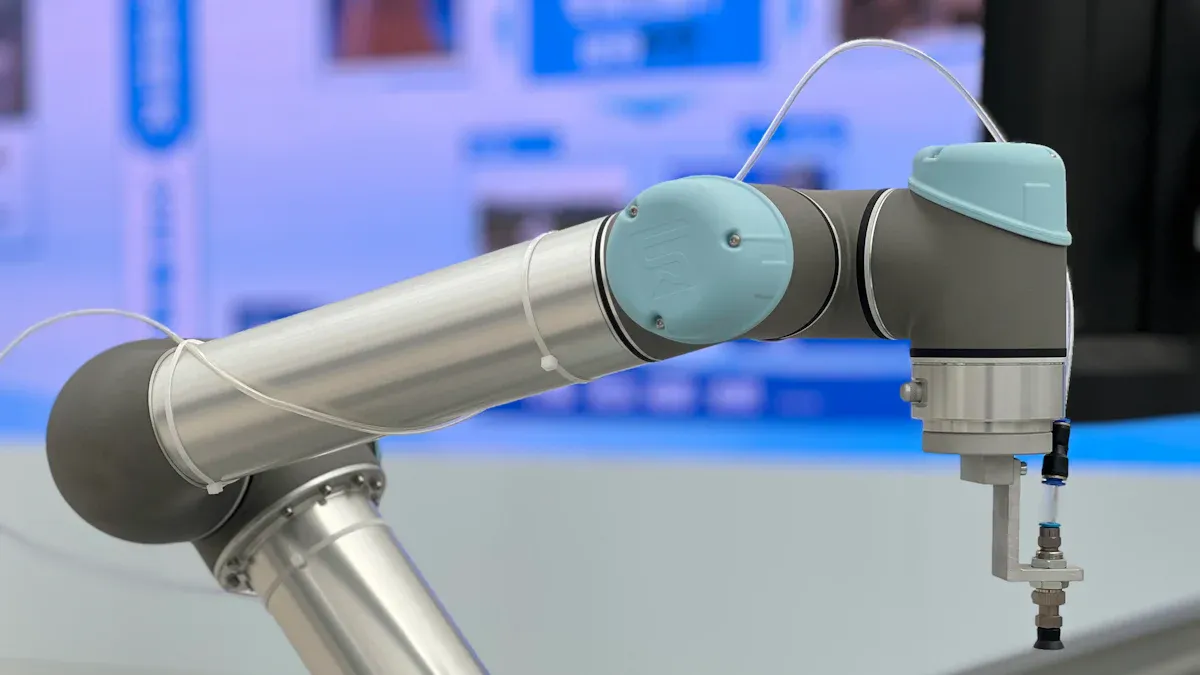
Sensors and other components of industrial automation form the backbone of this field. They enable machines to perform tasks with precision and consistency, reducing errors and improving productivity. By 2021, the industrial automation sector generated $214 billion in revenue, and projections suggest it will grow to $295 billion by 2028. This growth underscores the importance of the components of industrial automation in streamlining processes and enhancing operational efficiency. Whether monitoring temperature, detecting motion, or controlling pressure, these systems ensure seamless operation and reliability in industries worldwide.
Key Takeaways
-
Sensors gather live data to help machines make smart choices.
-
Controllers work like the brain, handling data and giving orders.
-
Actuators turn signals into actions, letting machines do their jobs.
-
Networks link parts together for smooth data sharing and tracking.
-
Energy-saving parts lower costs and help protect the environment.
-
New tech like AI and IIoT improve decisions and factory work.
-
Predictive maintenance stops breakdowns by using data, saving time and money.
-
Standard rules help different parts work well together in automation.
Understanding the Components of Industrial Automation
What Are the Core Components of Industrial Automation
The components of industrial automation form the foundation of modern manufacturing and production systems. These core components work together to ensure efficiency, precision, and reliability in industrial processes. You can think of them as the building blocks that enable machines to perform tasks with minimal human intervention.
Here are the key components that drive industrial automation systems:
-
SCADA (Supervisory Control and Data Acquisition): This system architecture uses computers and interfaces to monitor and control industrial processes at a high level.
-
Cybersecurity: Protecting interconnected systems from unauthorized access and vulnerabilities is essential for maintaining operational integrity.
-
OT Networks (Operational Technology Networks): These combine hardware and software to monitor and control industrial equipment and processes effectively.
Each of these components plays a unique role in creating seamless industrial automation solutions. SCADA systems provide real-time data, cybersecurity ensures the safety of operations, and OT networks enable communication between devices. Together, they form the backbone of industrial automation.
Why Are These Components Critical for Automation Systems
The importance of these core components lies in their ability to enhance productivity, reduce errors, and ensure safety. Without them, automation systems would lack the precision and reliability needed to meet industrial demands.
For example, cybersecurity is vital for protecting automation systems from cyber threats. According to recent statistics, robotic automation can reduce detection and response time to phishing attacks by 70%. Additionally, 68% of major global companies plan to increase spending on automated cybersecurity solutions. This highlights the growing reliance on secure systems in industrial automation.
SCADA systems are equally critical. They allow you to monitor processes in real-time, enabling quick decision-making and reducing downtime. OT networks, on the other hand, ensure seamless communication between devices, which is essential for maintaining operational efficiency.
The impact of these components extends across various sectors. In manufacturing, automating tasks can raise productivity growth to 1.4% annually. By 2030, implementing automation in manufacturing could increase revenue by $4.9 trillion annually. These figures demonstrate how the core components of industrial automation drive economic growth and innovation.
By understanding the role of these key components, you can appreciate how they shape the future of industrial automation solutions. They not only improve efficiency but also pave the way for advancements in technology and sustainability.
The Role of Sensors in Industrial Automation
How Sensors Enable Automation
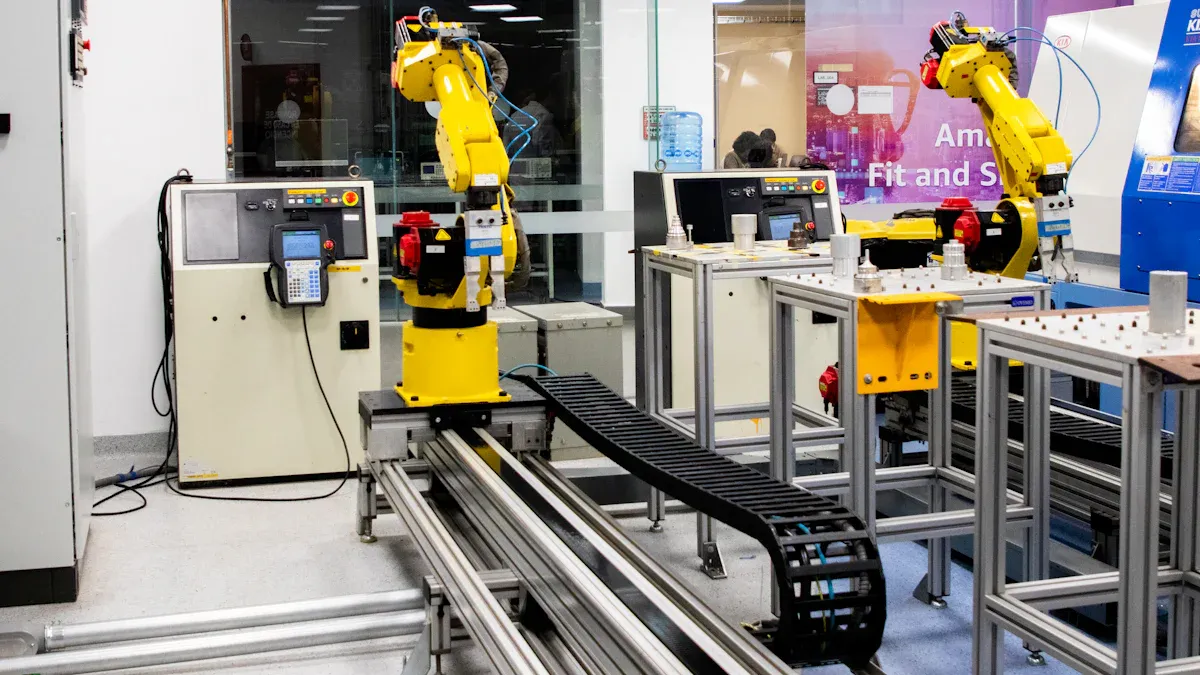
Sensors play a vital role in enabling automation by acting as the eyes and ears of industrial automation systems. They collect real-time data from the environment, such as temperature, pressure, or motion, and relay it to controllers for processing. This data allows machines to make informed decisions and perform tasks with precision. For example, a temperature sensor can monitor heat levels in a manufacturing process, ensuring products meet quality standards.
By integrating sensors, you can achieve greater efficiency and accuracy in industrial processes. Sensors also help reduce human intervention, minimizing errors and improving safety. In Industry 4.0, sensors connected through the industrial internet enable predictive maintenance, reducing downtime and optimizing maintenance costs. Manufacturing dashboards powered by sensor data provide insights into machine performance, helping you track production goals effectively.
Types of Sensors in Industrial Automation
Industrial automation systems rely on various types of sensors to monitor and control processes. Each sensor type serves a specific purpose, contributing to the overall efficiency of the system.
Proximity Sensors
Proximity sensors detect the presence or absence of objects within a certain range. These sensors are commonly used in assembly lines to ensure components are correctly positioned. They operate without physical contact, making them ideal for applications where wear and tear could be an issue.
Temperature Sensors
Temperature sensors measure heat levels in industrial processes. They are essential for maintaining optimal conditions in industries like food processing, chemical manufacturing, and metalworking. By monitoring temperature, you can prevent overheating and ensure product quality.
Pressure Sensors
Pressure sensors measure the force exerted by liquids or gases in a system. They are widely used in applications like hydraulic systems, pneumatic controls, and liquid pressure monitoring. These sensors help maintain system stability and prevent equipment damage.
Motion Sensors
Motion sensors detect movement and are often used in security and automation systems. In industrial settings, they monitor the movement of machinery or products on a conveyor belt. This ensures smooth operation and prevents bottlenecks in production.
Applications of Sensors in Industrial Automation Systems
Sensors have diverse applications in industrial automation systems. They enhance productivity, improve safety, and ensure quality control. Here are some key applications:
-
Predictive Maintenance: Sensors monitor equipment conditions, allowing you to predict failures and schedule maintenance before breakdowns occur. This reduces downtime and maintenance costs.
-
Inventory Management: Sensors track inventory levels in real-time, helping you optimize stock and reduce waste.
-
Quality Control: Sensors ensure products meet quality standards by monitoring parameters like temperature, pressure, and motion during production.
-
Safety Monitoring: Gas and chemical sensors detect hazardous substances, ensuring a safe working environment.
-
Energy Efficiency: Sensors optimize energy usage by monitoring and controlling processes, reducing operational costs.
|
Sensor Type |
Description |
|---|---|
|
Temperature Sensor |
Used for measuring temperature in various industrial processes. |
|
Proximity Sensor |
Detects the presence or absence of an object within a certain range. |
|
Pressure Sensor |
Widely used in applications like liquid pressure measurement and control. |
|
Position Sensor |
Measures the position of an object, crucial for automation. |
|
Motion Sensor |
Detects movement, often used in security and automation systems. |
|
Level Sensor |
Measures the level of substances, such as liquids or solids. |
|
Gas and Chemical Sensor |
Detects gas leakages, important for safety in industrial environments. |
|
Humidity Sensor |
Measures moisture levels in the air, relevant for various processes. |
|
Flow Sensor |
Measures the flow rate of liquids or gases in a system. |
|
Others |
Includes various specialized sensors not categorized above. |
The pressure sensor segment holds the largest market share due to its extensive use in high-performance applications. Meanwhile, gas and chemical sensors are growing rapidly because of their critical role in safety and leak detection.
Controllers and Their Role in Industrial Automation Systems
Overview of Controllers in Automation
Controllers are the brain of industrial automation systems. They process data from sensors and execute commands to actuators, ensuring smooth operation. By managing control systems, controllers enable machines to perform tasks with precision and consistency. You can think of them as the decision-makers that keep automation running efficiently.
Controllers are essential for maintaining real-time control and adapting to changing conditions. For example, they monitor production lines, adjust parameters, and ensure quality standards are met. Without controllers, automation systems would lack the intelligence needed to respond to dynamic industrial environments.
Types of Controllers
Programmable Logic Controllers (PLCs)
PLCs are widely used in industrial automation for monitoring and controlling processes. They are known for their reliability and simplicity. You can program PLCs using ladder logic, which makes them easy to configure for specific tasks. These controllers excel in applications like manufacturing and assembly lines, where timing and accuracy are critical.
PLCs have revolutionized industries by doubling assembly speeds in automotive manufacturing and reducing error rates by 40% compared to older systems. Their modular design allows you to expand input and output capabilities, making them versatile for various automation needs.
Distributed Control Systems (DCS)
DCS systems are designed for complex processes that require centralized control. They integrate multiple controllers into a single network, enabling seamless communication and coordination. You’ll find DCS systems in industries like oil and gas, power generation, and pharmaceuticals.
These systems improve regulatory compliance by 50% and increase production output by 30% in pharmaceutical manufacturing. Their ability to handle large-scale operations makes them ideal for environments where precision and scalability are essential.
How Controllers Manage Automation Processes
Controllers manage automation processes by collecting data, analyzing it, and executing commands. They act as intermediaries between sensors and actuators, ensuring the system operates efficiently. For example, a PLC can monitor temperature sensors and adjust heating elements to maintain optimal conditions.
Different types of controllers offer unique features for managing control systems. Here’s a detailed comparison:
|
Controller Type |
Description |
Key Features |
|---|---|---|
|
Programmable Logic Controllers (PLCs) |
Used for monitoring and controlling industrial processes. |
Simple programming, reliable operation, real-time control. |
|
Programmable Automation Controllers (PACs) |
Provide higher-level instructions for complex systems. |
Multi-discipline platform, enterprise compatibility, modular architecture. |
|
Remote Terminal Units (RTUs) |
Connect various hardware to control systems. |
Data collection from sensors, remote control capabilities. |
|
Supervisory Control and Data Acquisition (SCADA) |
Gathers and processes data for high-level control. |
Real-time monitoring, data integrity, long-distance control. |
PLCs are ideal for tasks requiring robust control and timing accuracy. PACs offer flexibility for high-end applications, while RTUs excel in remote monitoring. SCADA systems provide real-time insights, helping you make informed decisions.
Controllers ensure automation systems remain adaptable and efficient. By leveraging their capabilities, you can optimize processes, reduce downtime, and achieve higher productivity.
Actuators and Their Importance in Industrial Automation
What Are Actuators and How Do They Work
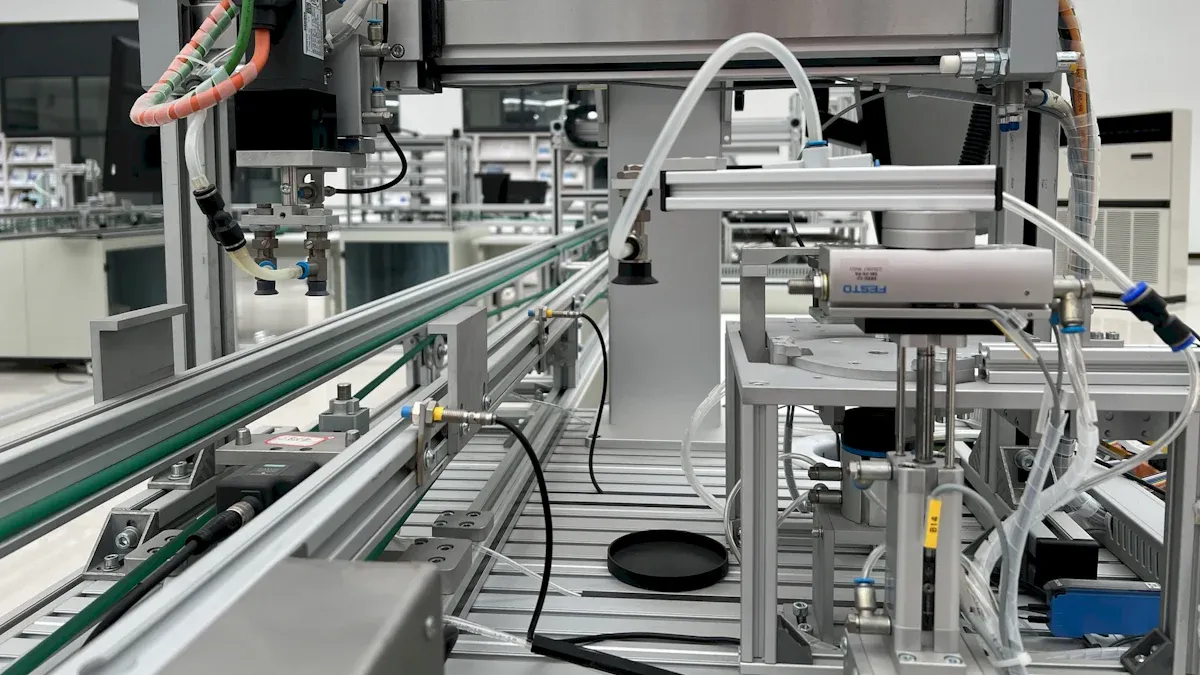
Actuators are essential components in industrial automation systems. They convert control signals into physical actions, such as moving a robotic arm, opening a valve, or starting a motor. These devices bridge the gap between the digital commands from controllers and the physical world, enabling machines to perform tasks with precision and efficiency.
Actuators operate at the foundational level of automation systems. They interact directly with physical processes, responding to signals from controllers like PLCs or RTUs. For example, when a temperature sensor detects overheating, the controller sends a signal to an actuator to open a cooling valve. This seamless interaction ensures that industrial processes remain efficient and safe.
In addition to executing commands, actuators provide feedback data, such as position or status, to verify actions and maintain process control. This feedback loop enhances reliability and allows for real-time adjustments, ensuring optimal system performance.
|
Level |
Description |
|---|---|
|
Physical devices like sensors and actuators that directly interact with processes. |
|
|
Level 1 |
Controllers such as PLCs and RTUs that manage processes based on sensor inputs. |
Types of Actuators
Actuators come in various types, each suited for specific industrial applications. Understanding their differences helps you choose the right one for your automation needs.
Hydraulic Actuators
Hydraulic actuators use pressurized fluid to generate motion. They excel in applications requiring high force and speed, such as heavy machinery or pressing operations. These actuators are robust and capable of handling demanding tasks. However, they require complex control systems and regular maintenance to manage fluid leaks and pressure levels.
Pneumatic Actuators
Pneumatic actuators rely on compressed air to produce motion. They are lightweight, cost-effective, and ideal for applications where speed and simplicity are priorities. For instance, they are commonly used in packaging systems and conveyor belts. While they offer rapid movement, their force output is limited compared to hydraulic actuators.
Electric Actuators
Electric actuators are gaining popularity due to their precision and energy efficiency. They use electric motors to create motion, making them suitable for tasks requiring accurate control, such as robotic arms or automated assembly lines. Unlike hydraulic or pneumatic actuators, electric actuators are easier to install and maintain. However, they may not provide the same level of force as hydraulic systems.
|
Actuator Type |
Key Features |
|
|---|---|---|
|
Linear Actuators |
23.70 billion USD |
Converts rotating motion to straight motion; reliable and mobile capabilities. |
|
Electric Actuators |
N/A |
Replacing pneumatic actuators; offers controllability and efficiency. |
|
IC Actuators |
N/A |
Integrated controller; easy installation and feedback options. |
Applications of Actuators in Industrial Automation
Actuators play a pivotal role in enhancing productivity and precision in industrial automation. Their applications span various industries, from manufacturing to energy production.
-
High-speed linear actuators improve productivity by enabling rapid and precise movements in assembly lines.
-
Hydraulic actuators deliver high force and speed, making them ideal for heavy-duty tasks like metal stamping or lifting.
-
Electric actuators provide precise control for robotic systems, ensuring accuracy in tasks like welding or material handling.
-
Electro-hydraulic actuators combine the strengths of hydraulic and electric systems, offering both high force and precision for specialized applications.
For example, Kyntronics' H-series actuators are designed for pressing operations that demand both speed and force. These actuators exemplify how advanced designs can meet the evolving needs of industrial automation.
Performance metrics further highlight the significance of actuators in automation systems:
|
Metric |
Description |
|---|---|
|
Maximum Torque |
The highest torque that an actuator can produce. |
|
Torque-to-Mass Ratio |
A measure of the actuator's torque relative to its mass, indicating efficiency. |
|
Efficiency |
The ratio of useful work output to total energy input, reflecting performance effectiveness. |
|
Parasitic Stiffness |
The inherent stiffness of the actuator that can affect its performance in dynamic applications. |
|
Variable Stiffness |
The ability of the actuator to change its stiffness, which can enhance adaptability. |
|
Maximum Range of Motion |
The total distance the actuator can move, crucial for determining operational capabilities. |
By selecting the right type of actuator and leveraging its capabilities, you can optimize your industrial automation system for better performance and reliability.
Communication Networks in Industrial Automation Systems
Importance of Communication Networks
Communication networks form the backbone of industrial automation systems. They enable seamless data exchange between sensors, controllers, actuators, and other components. Without reliable communication, your automation system would struggle to function efficiently. These networks ensure that every part of the system stays connected, allowing for real-time monitoring and control.
In industrial settings, communication networks improve operational efficiency and reduce downtime. For example, they allow you to monitor equipment remotely, identify issues early, and make adjustments without halting production. This level of connectivity enhances productivity and ensures that your system operates smoothly.
Types of Industrial Communication Networks
Industrial Ethernet
Industrial Ethernet is a high-speed communication network designed for industrial environments. It offers robust performance and reliability, making it ideal for automation systems. Unlike traditional Ethernet, it can withstand harsh conditions such as extreme temperatures, vibrations, and electromagnetic interference.
You can use Industrial Ethernet to connect devices like PLCs, sensors, and actuators. Its high data transfer rates ensure that your system processes information quickly and accurately. Additionally, its scalability allows you to expand your network as your automation needs grow.
Fieldbus Systems
Fieldbus systems are another popular choice for industrial communication. These networks connect field devices, such as sensors and actuators, to controllers. They simplify wiring and reduce installation costs, making them a cost-effective solution for many industries.
Fieldbus systems excel in applications where precise control is essential. For instance, they are commonly used in process industries like oil and gas, where maintaining consistent performance is critical. By using Fieldbus, you can achieve reliable communication and improve the overall efficiency of your automation system.
How Communication Networks Enable Seamless Integration
Communication networks play a crucial role in integrating various components of an industrial automation system. They ensure that data flows smoothly between devices, enabling real-time decision-making and control. For example, when a sensor detects a change in temperature, the network relays this information to the controller, which then adjusts the actuator to maintain optimal conditions.
The integration of Network Performance Management (NPM) and Self-Organizing Network (SON) solutions further enhances network performance. These technologies allow you to identify issues proactively, optimize network settings automatically, and make real-time adjustments. This level of integration ensures that your system remains efficient and reliable.
Key performance indicators highlight the effectiveness of communication networks in enabling seamless integration:
-
Call quality
-
Data performance
-
Network availability
-
Mobility
-
Signaling efficiency
By leveraging these networks, you can create a cohesive automation system that adapts to changing conditions and meets your operational goals.
Integration of Components for Seamless Automation
How Components Work Together in Industrial Automation Systems
Industrial automation systems rely on the seamless interaction of components like sensors, controllers, actuators, and communication networks. Each component plays a distinct role, but their collaboration ensures the system operates efficiently. Sensors collect data from the environment, controllers process this information, actuators execute physical actions, and communication networks enable real-time data exchange. Together, these elements create a cohesive system capable of performing complex tasks with precision.
For example, in a manufacturing plant, sensors monitor temperature and pressure levels. Controllers analyze this data and send commands to actuators, which adjust machinery to maintain optimal conditions. Communication networks ensure that all components stay connected, allowing for real-time optimization of processes. This integration reduces downtime, improves productivity, and ensures consistent quality.
The synergy between components also supports advanced technologies like predictive maintenance and AI-driven decision-making. By working together, these elements enable automation systems to adapt to changing conditions and meet industry demands.
Challenges in Integration and How to Overcome Them
Integrating multiple components in industrial automation systems presents several challenges. Labor shortages, downtime, and compliance complications often hinder seamless integration. However, innovative solutions can address these issues effectively.
|
Challenges |
Solutions |
|---|---|
|
Labor Shortages |
Alleviate labor shortage impacts through automation innovations |
|
Downtime and Deadlines |
Minimize downtime by embracing IoT connectivity, AI, ML, and advanced controls |
|
Compliance Complications |
Leverage automation technologies to enhance operational efficiency and compliance |
In manufacturing, integration complexity often arises due to the diverse range of equipment and processes. Comprehensive automation solutions, including robotics, simplify this complexity and enhance system performance. In healthcare, change management poses a significant challenge. AI-driven diagnostics and robot-assisted surgeries streamline operations and improve patient outcomes. Similarly, industries like finance and retail face security risks and integration hurdles. Automated fraud detection and AI-driven supply chains address these challenges effectively.
|
Sector |
Key Challenges |
Recommended Solutions |
|---|---|---|
|
Manufacturing |
Integration complexity |
|
|
Healthcare |
Change management |
AI-driven diagnostics and robot-assisted surgeries |
|
Finance and Banking |
Security risks |
Automated loan processing and fraud detection |
|
Retail and E-commerce |
Integration complexity |
AI-driven recommendations and automated supply chains |
|
Human Resources |
Change management |
Streamlined recruitment and onboarding processes |
By adopting these solutions, you can overcome integration challenges and create a robust automation system that meets operational goals.
Importance of Standardization and Interoperability
Standardization and interoperability are critical for ensuring seamless integration in industrial automation systems. Standardized protocols and interfaces allow components from different manufacturers to work together without compatibility issues. Interoperability ensures that sensors, controllers, actuators, and communication networks can exchange data efficiently, regardless of their origin.
For instance, Industrial Ethernet and Fieldbus systems use standardized communication protocols to connect devices. These standards simplify integration and reduce installation costs. Interoperability also supports scalability, enabling you to expand your system as your automation needs grow.
Standardization enhances reliability and reduces downtime by ensuring consistent performance across all components. Interoperability fosters innovation by allowing you to incorporate advanced technologies like AI and IoT into your system. Together, these principles create a foundation for real-time optimization and long-term success in industrial automation.
Emerging Trends in Industrial Automation Components
Advancements in Sensor Technology
Sensor technology is evolving rapidly, transforming how you approach industrial automation. By 2030, the demand for intelligent and reliable sensors is expected to surge, driven by their integration into smart devices and automation systems. These sensors enable real-time data collection, enhancing decision-making and operational efficiency.
Recent advancements include technologies like Time-of-Flight (ToF), LiDAR, and CMOS sensors. These innovations improve accuracy and expand the range of applications in industries such as automotive and mobile technology. For example, ToF sensors provide precise distance measurements, making them ideal for robotics and autonomous vehicles. Similarly, LiDAR technology enhances object detection, crucial for safety in automated systems.
|
Aspect |
Description |
|---|---|
|
Market Dynamics |
Insights into the growing demand for sensors across various sectors. |
|
Technical Insights |
Analysis of advanced technologies like ToF, LiDAR, and CMOS sensors. |
|
Strategic Roadmaps |
Projections for future product releases and design trends. |
|
Competitive Analysis |
Comparisons of market share and technological advancements globally. |
|
Technical Roadmaps |
Expert perspectives guiding innovation strategies. |
These advancements highlight the importance of staying updated with sensor technology trends. By leveraging these innovations, you can enhance your automation systems and remain competitive in the industry.
Role of Artificial Intelligence and Machine Learning
Artificial Intelligence (AI) and Machine Learning (ML) are revolutionizing industrial automation. These technologies enable systems to analyze vast amounts of data, predict outcomes, and optimize processes. For instance, AI-driven predictive maintenance solutions anticipate equipment failures, reducing downtime and extending the lifespan of machinery.
Research shows that AI can significantly impact industries. In manufacturing, AI is projected to generate $3.78 trillion in gains by 2035. Additionally, AI algorithms can increase leads by 50% and reduce call times by 60%. However, automation also poses challenges, such as job displacement. Studies estimate that 56.4% of jobs in transportation and storage could be automated, emphasizing the need for workforce adaptation.
AI and ML also enhance decision-making in real-time. By integrating these technologies, you can improve efficiency, reduce costs, and stay ahead in the competitive landscape of automation technology.
The Rise of Industrial IoT (IIoT)
The Industrial Internet of Things (IIoT) is reshaping the automation landscape. IIoT connects devices, enabling real-time data exchange and smarter decision-making. This connectivity supports predictive maintenance, allowing you to identify potential issues before they escalate. For example, IIoT systems can monitor machinery performance and provide diagnostics, reducing costs and preventing failures.
The manufacturing sector leads the adoption of IIoT, driven by the need for smarter production processes. Companies are transitioning to Industry 4.0 standards, which emphasize connected factories and data-driven operations. This shift enhances production efficiency and product quality, meeting the growing demand for automation in industries.
As IIoT continues to grow, its impact on industrial automation will expand. By adopting IIoT solutions, you can optimize your operations, improve productivity, and align with the future of connected industries.
Sustainability and Energy-Efficient Components
Sustainability has become a key focus in industrial automation. As industries grow, the demand for energy-efficient components increases. These components help you reduce energy consumption, minimize waste, and lower operational costs. By adopting sustainable practices, you can also meet environmental regulations and improve your company’s reputation.
Energy-efficient components play a vital role in automation systems. For example, variable frequency drives (VFDs) adjust motor speeds based on demand. This reduces energy usage and extends the lifespan of equipment. Similarly, LED lighting systems consume less power than traditional lights, making them a popular choice in factories. You can also use smart sensors to monitor energy usage and identify areas for improvement.
Tip: Switching to energy-efficient components not only saves money but also supports global efforts to combat climate change.
Another way to enhance sustainability is by using renewable energy sources. Solar panels and wind turbines can power automation systems, reducing reliance on fossil fuels. Battery storage systems store excess energy, ensuring a steady power supply even during outages. These solutions make your operations more resilient and environmentally friendly.
Recycling and reusing materials also contribute to sustainability. For instance, you can recycle old machinery or repurpose components for new applications. This reduces waste and conserves resources. Many companies now design products with a circular economy in mind, where materials are reused instead of discarded.
Here’s a quick comparison of traditional and energy-efficient components:
|
Component Type |
Traditional Approach |
Energy-Efficient Alternative |
|---|---|---|
|
Motors |
Fixed-speed motors |
Variable frequency drives (VFDs) |
|
Lighting |
Incandescent or fluorescent bulbs |
LED lighting systems |
|
Power Sources |
Fossil fuel-based generators |
Solar panels or wind turbines |
|
Sensors |
Basic sensors with limited functionality |
Smart sensors with energy monitoring |
By integrating energy-efficient components into your industrial automation system, you can achieve long-term benefits. These include lower energy bills, reduced carbon emissions, and improved operational efficiency. Sustainability is not just a trend; it’s a necessity for the future of automation.
Sensors, controllers, actuators, and communication networks form the backbone of industrial automation. Each component plays a unique role in ensuring your system operates efficiently. Sensors gather real-time data, controllers process it, actuators execute actions, and communication networks enable seamless communication. Together, they create a cohesive automation system that enhances productivity and reliability.
Seamless integration of these components is vital for achieving efficient operations. By connecting devices and enabling real-time data exchange, integration reduces downtime and improves performance. Standardized protocols and interoperable designs simplify this process, ensuring compatibility across industries.
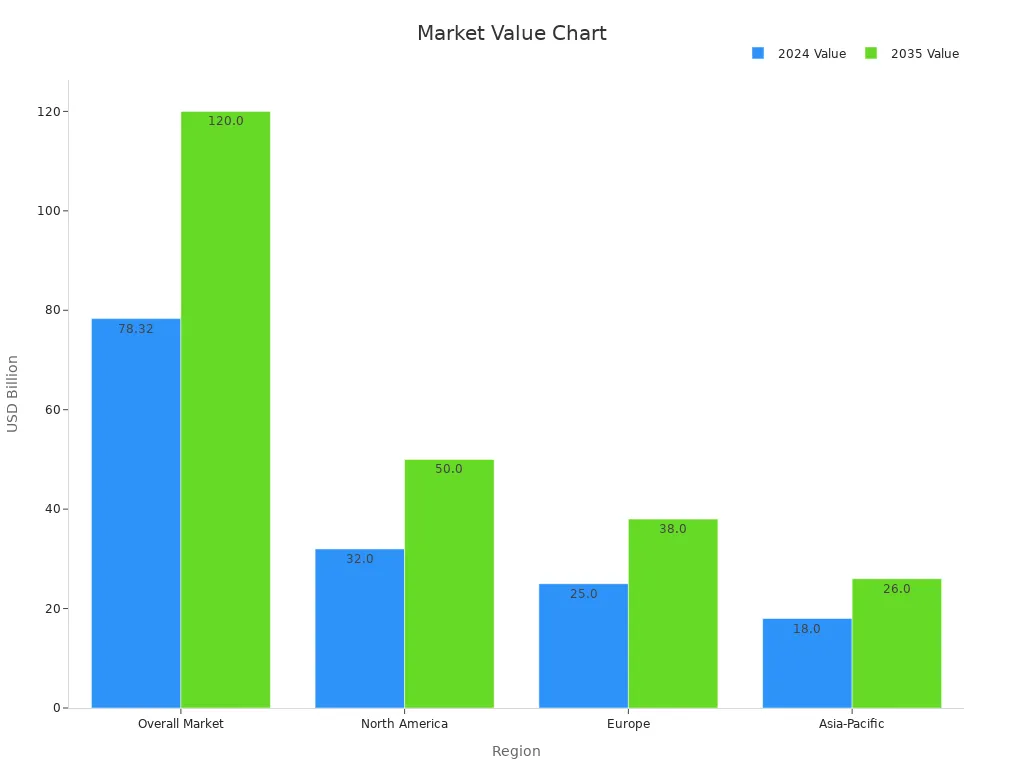
Emerging technologies like AI, IIoT, and advanced sensors are revolutionizing industrial automation. These innovations enhance decision-making, optimize processes, and pave the way for smarter systems. The global market for automation components reflects this growth, with projections showing significant increases across regions by 2035.
|
Component/Industry |
2024 Value (USD Billion) |
2035 Value (USD Billion) |
|---|---|---|
|
Overall Market |
120.0 |
|
|
North America |
32.0 |
50.0 |
|
Europe |
25.0 |
38.0 |
|
Asia-Pacific |
18.0 |
26.0 |
|
South America |
2.0 |
N/A |
|
Middle East and Africa |
1.32 |
N/A |
By embracing these advancements, you can position your operations for long-term success in the evolving landscape of industrial automation.
FAQ
What is industrial automation?
Industrial automation refers to the use of technology to control and monitor industrial processes. It reduces human intervention, improves efficiency, and ensures consistent quality in manufacturing and production systems.
How do sensors contribute to automation?
Sensors collect real-time data, such as temperature or motion, and send it to controllers. This data helps the system make decisions and execute tasks with precision.
What are the main components of an automation system?
An automation system typically includes sensors, controllers, actuators, and communication networks. These components work together to monitor, process, and execute tasks efficiently.
Why is communication important in industrial automation?
Communication networks connect all components, enabling seamless data exchange. This ensures real-time monitoring, quick decision-making, and smooth operation of the system.
How does artificial intelligence enhance automation?
AI analyzes large datasets, predicts outcomes, and optimizes processes. It enables predictive maintenance, reduces downtime, and improves decision-making in industrial automation systems.
What are the benefits of using energy-efficient components?
Energy-efficient components lower energy consumption, reduce operational costs, and minimize environmental impact. They also help meet sustainability goals and improve overall system performance.
Can automation systems adapt to changing conditions?
Yes, modern automation systems use advanced technologies like AI and IoT to adapt to dynamic environments. They analyze data in real-time and adjust operations to maintain efficiency.
How does predictive maintenance work in industrial automation?
Predictive maintenance uses sensors and data analytics to monitor equipment conditions. It identifies potential issues before they cause failures, reducing downtime and maintenance costs.