Integrated Circuit Technology and Applications
An integrated circuit is a small chip that contains many electronic components working together. This technology forms the core of most electronic devices in daily life.
An integrated circuit is a small chip that contains many electronic components working together. This technology forms the core of most electronic devices in daily life. Integrated circuits have made smartphones, computers, and smart devices faster and more powerful. Over the past decade, the global integrated circuit market has grown rapidly, reaching about USD 617 billion in 2023. People rely on this technology for high-speed internet, multitasking, and long battery life in their devices. Integrated circuits help pack more functions into tiny spaces, making technology smarter and more efficient.
Key Takeaways
-
Integrated circuits are tiny chips that combine many electronic parts to make devices smaller, faster, and more efficient.
-
Different types of integrated circuits—analog, digital, and mixed-signal—serve unique roles in processing real-world and digital signals.
-
Integrated circuits power many industries, including consumer electronics, automotive, medical, industrial, and aerospace, improving safety and performance.
-
Advanced technologies like 3D stacking, new materials, and EUV lithography help make integrated circuits more powerful and energy-efficient.
-
Future trends focus on quantum integration, energy optimization, and supporting AI and IoT, driving innovation in electronics and everyday life.
Integrated Circuits
Definition
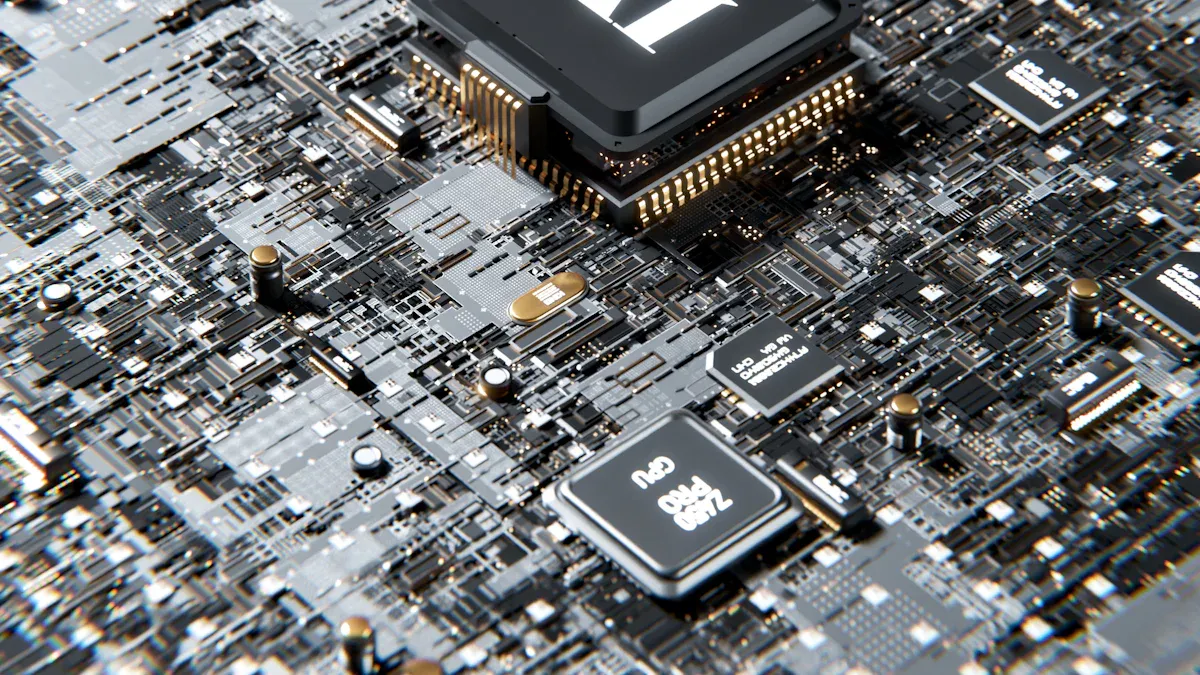
An integrated circuit is a tiny chip made from semiconductor material. This chip holds many electronic parts that work together to perform specific tasks. Engineers use integrated circuits in almost every modern electronic device. These circuits can handle both simple and complex operations. The design of each integrated circuit depends on its purpose. Some ICs process information, while others control power or store data. The technology behind integrated circuits allows for the creation of small, powerful, and reliable devices. The functions of integrated circuits have changed the way people use technology every day.
Components
Every integrated circuit contains several key components that help it perform its job. The main material used is a semiconductor, usually silicon. Inside the chip, engineers place tiny versions of electronic parts. Each part has a special role in the circuit. The table below shows the key components inside an integrated circuit and their main functions:
|
Component |
Function(s) |
|---|---|
|
Transistors |
Amplification, switching, digital computation |
|
Resistors |
Control current flow, voltage division |
|
Capacitors |
Filtering, signal conditioning, energy storage |
|
Diodes |
Allow current flow in one direction, rectification |
|
Analog ICs |
Process continuous signals; amplification, filtering, signal conditioning |
|
Digital ICs |
Perform logic operations, data processing, control functions |
|
Mixed-signal ICs |
Integrate analog and digital functions; data conversion, communications, sensor interfaces |
|
Microcontrollers |
Integrate CPU, memory, I/O ports; control embedded systems |
|
Memory ICs |
Store and retrieve data (RAM, ROM, EEPROM, flash) |
|
RF ICs |
Radio frequency applications; transceivers, amplifiers, frequency synthesizers |
|
Power Management ICs |
Regulate and control power supply and distribution |
|
Sensor ICs |
Interface with sensors; signal conditioning, amplification, analog-to-digital conversion |
These components work together to create circuits that can process signals, store information, and manage power. The design of each IC depends on the functions it needs to perform. Engineers use advanced technology to fit millions, or even billions, of these parts onto a single chip.
How They Work
Integrated circuits use their components to process electrical signals and perform many tasks. The design of each IC allows it to handle different types of signals and operations. Here are some ways integrated circuits work:
-
Integrated circuits combine transistors, resistors, and capacitors on a single chip. This setup allows them to complete complex tasks quickly.
-
Some ICs process analog signals, which are continuous, while others handle digital signals, which use binary code. Mixed-signal ICs can work with both types.
-
Operational amplifiers inside ICs boost weak signals. This function is important in audio devices and communication systems.
-
Many circuits filter, modulate, or demodulate signals. These actions help devices like smartphones and radios send and receive information.
-
Power management ICs keep the voltage steady and protect other parts from damage. They also help save energy and extend battery life.
-
Memory ICs store large amounts of data in a small space. Microprocessors use logic circuits to perform calculations and run programs.
-
Communication interfaces in ICs let devices share data using wires or wireless signals. This feature makes it easy for devices to connect and work together.
-
New materials and 3D design methods improve the performance and reliability of integrated circuits.
Note: The design of integrated circuits continues to evolve. Engineers use new technology and materials to make ICs faster, smaller, and more efficient. This progress helps create better devices for everyday life.
Types of Integrated Circuits
Integrated circuits come in many forms. Engineers group them by how they process signals and how they are built. The main types of integrated circuit include analog, digital, and mixed-signal. Each type serves a different purpose in electronic devices.
Analog
Analog integrated circuits handle continuous signals. These circuits work with real-world data, such as sound, temperature, or light. Common examples include operational amplifiers, comparators, and analog filters. Engineers use analog circuits in audio equipment, radios, and sensors. These circuits help devices measure and process signals that change smoothly over time. Analog integrated circuits play a key role in wireless communication and signal conditioning.
Digital
Digital integrated circuits process discrete signals. These circuits use binary code, which means they work with only two values: 0 and 1. Digital integrated circuits include microcontrollers, memory chips, and logic gates. Devices like computers, smartphones, and tablets rely on digital circuits for fast data processing and storage. These circuits perform calculations, control systems, and manage information. Digital integrated circuits make modern electronics powerful and reliable.
Mixed-Signal
Mixed-signal integrated circuits combine both analog and digital circuits on a single chip. These circuits can convert analog signals to digital and vice versa. Mixed-signal integrated circuits appear in cell phones, telecommunications, and automotive electronics. They handle tasks like analog-to-digital conversion for sensors and digital-to-analog conversion for speakers. Mixed-signal circuits also support system-on-chip designs, which pack many functions into one chip. Their design is more complex than analog or digital circuits because they must balance different power and performance needs.
Mixed-signal integrated circuits enable devices to process both real-world and digital information, making them essential in many modern applications.
Packaging
The packaging of integrated circuits protects the chip and connects it to other circuits. Engineers choose from many types of integrated circuit packaging, such as dual in-line packages (DIP), quad flat packages (QFP), ball grid arrays (BGA), and chip scale packages (CSP). Each type affects the size, heat management, and reliability of the IC. For example, BGA and CSP offer high thermal performance and compact size, while DIP is easier to repair but larger. The right packaging helps integrated circuits work well in different environments, from computers to automotive systems. Advanced packaging also supports new trends like 3d ic technology, which stacks circuits for better performance.
Applications
Integrated circuits power almost every modern technology. Their applications and uses of integrated circuits span many industries, from everyday consumer electronics to advanced aerospace systems. These circuits enable devices to process information, manage power, and communicate efficiently. Below, each major sector highlights how integrated circuits shape the world.
Consumer Devices
Consumer electronics rely heavily on integrated circuits. Devices such as computers, smartphones and mobile devices, smart TVs, and gaming consoles all use these circuits for processing, memory, and communication. Integrated circuits make these products smaller, faster, and more reliable. The table below shows the market share and the most common types of integrated circuits in consumer devices:
|
Aspect |
Percentage / Share |
Description |
|---|---|---|
|
Consumer Electronics Market Share in Multimedia IC Market (2024) |
Consumer electronics dominate the multimedia IC market, driven by devices like smartphones, tablets, smart TVs, laptops, and gaming consoles. |
|
|
Audio ICs Share in Multimedia IC Market (2024) |
53.5% |
Audio ICs are the most prevalent type, used for high-quality audio processing in consumer electronics and smart devices. |
|
Audio & Video Processing ICs Share in Multimedia IC Market (2024) |
63.7% |
Combined audio and video ICs dominate multimedia processing, supporting high-definition audio and video experiences. |
Logic integrated circuits and memory chips also play a key role in digital processing. As technology advances, integrated circuits in consumer devices now support artificial intelligence and machine learning. These features improve voice assistants, facial recognition, and smart home automation. Integrated circuits also enable fast wireless communication, long battery life, and high-quality audio and video. The applications and uses of integrated circuits in this sector continue to grow as new devices enter the market.
Automotive
Modern vehicles depend on integrated circuits for safety, efficiency, and automation. These circuits control engine performance, manage power, and support advanced driver-assistance systems (ADAS). Integrated circuits in automotive applications must work reliably in harsh environments, such as extreme temperatures and vibrations. Key uses include:
-
Engine Control Units (ECUs) use integrated circuits to process real-time sensor data and optimize engine performance.
-
ADAS systems rely on integrated circuits to process data from cameras, radars, and LiDAR, enabling features like adaptive cruise control, lane-keeping assist, and emergency braking.
-
Integrated circuits support collision avoidance, blind-spot recognition, and forward-collision warning.
-
Parking assistance and driver monitoring systems depend on integrated circuits for accurate detection and response.
-
Integrated circuits enable communication between vehicle systems, improving safety and automation in both traditional and electric vehicles.
These applications of integrated circuits help vehicles become smarter, safer, and more energy-efficient.
Medical
Integrated circuits play a vital role in medical devices and healthcare technology. They enable accurate diagnosis, patient monitoring, and advanced treatment. Medical applications require circuits that are reliable, energy-efficient, and safe for use in sensitive environments. Some important uses include:
-
Diagnostic equipment such as MRI, CT scanners, and ultrasound systems use integrated circuits to process signals and create high-resolution images.
-
Implantable devices like pacemakers, cochlear implants, and neurostimulators rely on integrated circuits for proper function and remote monitoring.
-
Portable medical devices, including blood glucose monitors and wearable ECGs, depend on integrated circuits for low power consumption and long battery life.
-
Telemedicine uses integrated circuits to support real-time communication and remote patient monitoring.
-
Integrated circuits improve diagnostic accuracy, treatment precision, and device miniaturization, leading to better healthcare outcomes.
Integrated circuits also help medical devices meet strict regulatory standards for safety and reliability.
Industrial
Factories and industrial systems use integrated circuits to automate processes, improve efficiency, and reduce costs. Integrated circuits enable real-time data processing, machine control, and communication between equipment. Key industrial applications include:
-
Programmable logic controllers (PLCs) use integrated circuits to automate assembly lines and robotic operations.
-
Integrated circuits process sensor data, allowing machines to adjust conditions and prevent breakdowns.
-
Automation powered by integrated circuits reduces human error and increases production speed.
-
Integrated circuits enable machine-to-machine communication, supporting the Industrial Internet of Things (IIoT).
-
Motor control systems with integrated circuits improve energy efficiency by adjusting power usage.
-
Integrated circuits support predictive maintenance, sending alerts and enabling remote monitoring to reduce downtime.
These applications and uses of integrated circuits make manufacturing smarter, more scalable, and cost-effective.
Aerospace
Aerospace systems require integrated circuits that are lightweight, durable, and reliable under extreme conditions. These circuits must withstand high temperatures, mechanical stress, and electrical interference. Aerospace manufacturers use advanced materials and packaging to protect integrated circuits and ensure performance. Integrated circuits in aerospace applications often include specialized ASICs and structured ASICs for security and power efficiency. Packaging protects the circuits from moisture, temperature changes, and physical damage, while also helping with heat dissipation. Aerospace integrated circuits must meet strict standards for safety and quality, such as AS9100D. Engineers use new technologies like 3D printing and AI to improve reliability and predict failures. Integrated circuits enable communication, navigation, and control systems in aircraft and spacecraft, making flight safer and more efficient.
Integrated circuits continue to expand their role in new areas, such as energy harvesting, power management, and operation in harsh environments. Their ability to process information, manage power, and enable communication drives innovation across all industries.
Modern Integrated Circuits
Advanced Technologies
Modern integrated circuits use advanced technology to achieve high performance and efficiency. Companies like TSMC and Samsung have moved from 10nm FinFET production to 7nm and 5nm nodes. They use extreme ultraviolet (EUV) lithography to create smaller and more powerful circuits. EUV lithography allows engineers to etch very fine patterns, making it possible to build circuits for artificial intelligence and the Internet of Things. Samsung now uses gate-all-around (GAA) transistors at the 3nm node, which wrap the gate around all sides of the channel. This design improves current control and reduces leakage. Other companies, such as GlobalFoundries, focus on enhancing 14nm and 12nm FinFET processes. These changes show how technology continues to push the limits of circuit design and performance.
Key advancements in modern integrated circuits include:
-
EUV lithography for smaller, more efficient transistors.
-
GAA transistors for better control and lower power loss.
-
3d ic technology and chiplet architectures for higher performance and scalability.
-
New materials like molybdenum disulfide and graphene for improved mobility and flexibility.
3D ICs
3d ic technology changes how engineers build circuits. Instead of placing all components on a single layer, they stack multiple layers vertically. This approach increases integration density and improves performance. The table below compares traditional planar ICs and 3d ic technology:
|
Aspect |
Traditional Planar ICs (2D) |
3D Integrated Circuits (3D ICs) |
|---|---|---|
|
Structure |
Single-layer layout |
Multiple layers stacked vertically |
|
Integration Density |
Limited by 2D layout |
Much higher due to vertical stacking |
|
Interconnect Length |
Longer, more delay |
Shorter, faster signal transmission |
|
Performance |
Lower due to longer wires |
Higher speed and efficiency |
|
Footprint |
Larger physical size |
Smaller, more compact |
|
Functionality |
Single technology |
Mix of different technologies possible |
|
Power Consumption |
Higher |
Lower due to shorter wires |
|
Challenges |
Easier manufacturing |
Complex manufacturing, thermal issues |
3d ic technology reduces interconnect length, which boosts speed and lowers power use. However, stacking layers increases power density, making heat management more difficult. Engineers use advanced cooling solutions to solve these problems. The applications of 3d ic technology include data centers, high-performance computing, and IoT devices. This technology allows for more compact designs and greater functionality in modern integrated circuits.
Note: 3d ic technology extends Moore’s Law by increasing transistor count without expanding chip size.
Compound Semiconductors
Engineers use compound semiconductors, such as gallium nitride (GaN) and silicon carbide (SiC), to overcome the limits of silicon. These materials offer higher frequency operation and wider bandgaps. Circuits made with compound semiconductors can handle higher voltages and temperatures. They also have better thermal conductivity, which helps with heat dissipation. For example, SiC devices can manage voltages up to 800 volts, making them ideal for electric vehicle charging stations and power electronics.
Compound semiconductors provide several benefits:
-
Wider bandgap for better high-power and high-temperature performance.
-
Superior heat management for reliable operation.
These properties make compound semiconductors essential for high-speed communication, microwave transistors, LEDs, lasers, and photovoltaic devices. Modern integrated circuits that use these materials achieve better performance in demanding applications where silicon falls short.
Applications of Integrated Circuit
Processing
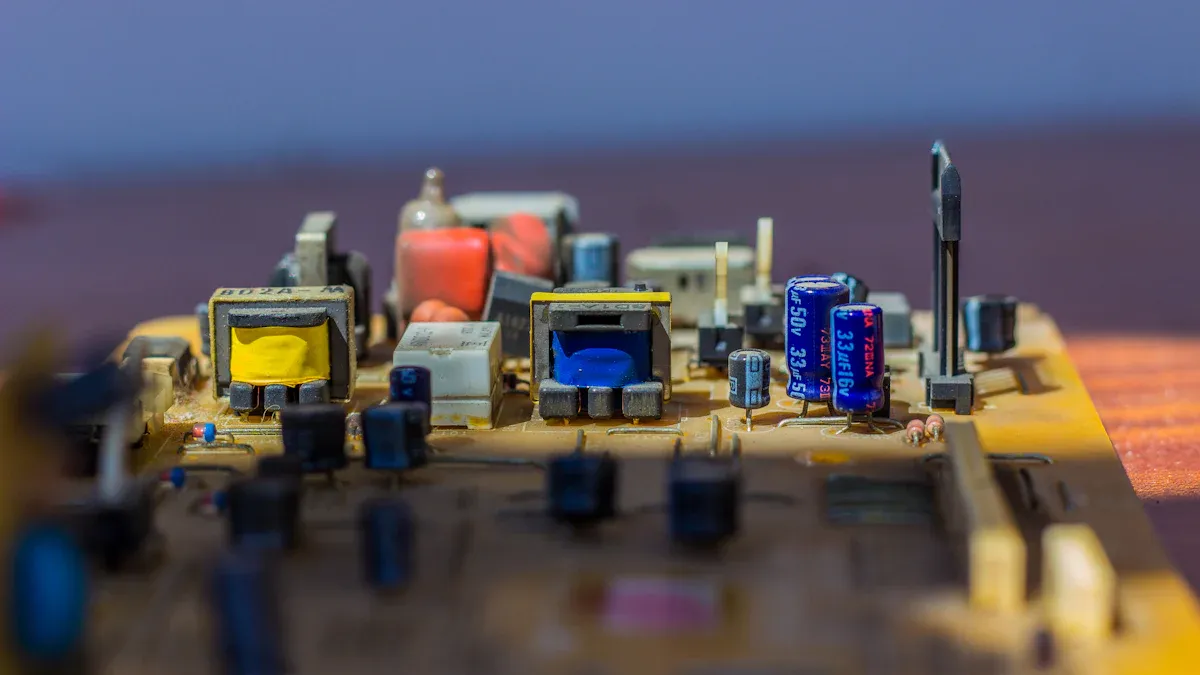
Integrated circuits play a central role in processing data for modern devices. They combine many electronic parts, such as transistors and resistors, on a single chip. This design allows for compact and reliable circuits that support high-speed data processing. Miniaturization helps devices achieve lower power consumption and smaller sizes. The following points show how integrated circuits enable fast and efficient processing:
-
Integrated circuits form the core of microprocessors, memory chips, and AI accelerators. These chips handle complex algorithms and large data flows with minimal delay.
-
Chiplets and modular architectures simplify manufacturing and improve performance in high-performance computing.
-
Edge AI chips process information locally, which increases speed and reduces the need for cloud connections.
-
Energy-efficient designs, such as RISC-V and neuromorphic chips, help devices achieve lower power consumption.
-
Mass production of integrated circuits ensures cost-effectiveness, reliability, and lower power consumption for modern computing and information technology.
Memory
Memory integrated circuits store and retrieve data quickly and reliably. Different types of memory chips offer various speeds and capacities. The table below compares the most common types of memory integrated circuits:
|
Memory Type |
Volatility |
Speed |
Capacity |
Typical Use Case |
|---|---|---|---|---|
|
DRAM (Dynamic RAM) |
Volatile |
Moderate speed |
High capacity |
Main system memory, temporary data storage |
|
SRAM (Static RAM) |
Volatile |
Very fast |
Lower capacity |
Cache memory, fast access storage |
|
ROM (Read-Only) |
Non-volatile |
Slow |
Fixed, permanent |
Firmware storage, permanent data |
|
Flash Memory |
Non-volatile |
Fast read/write |
High capacity |
Long-term storage (USB drives, SSDs) |
|
NOR Flash |
Non-volatile |
Random access, moderate |
Moderate capacity |
Embedded systems, firmware |
|
NAND Flash |
Non-volatile |
Faster write/erase |
Higher density |
Mass storage (memory cards, SSDs) |
|
EEPROM |
Non-volatile |
Byte-level erase/write |
Moderate |
Configuration data, frequent updates |
|
Cache Memory |
Volatile |
Ultra-fast |
Small capacity |
CPU cache to speed up data access |
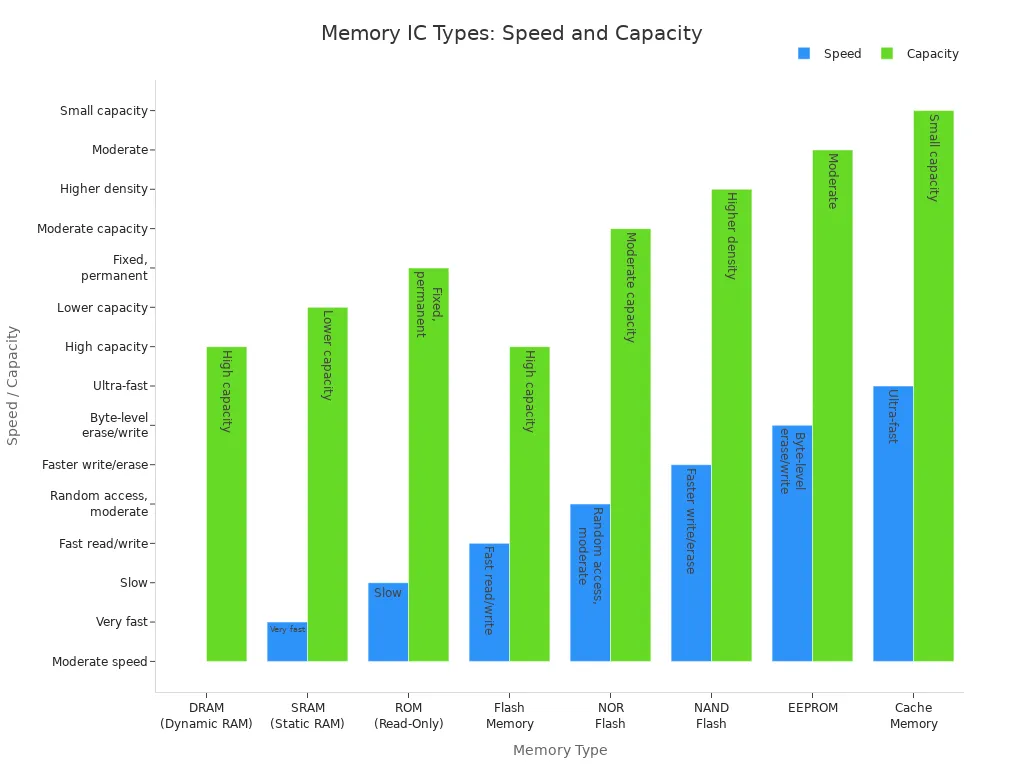
Memory integrated circuits help devices achieve lower power consumption by storing and accessing data efficiently. They support applications of integrated circuit in computers, smartphones, and other digital devices.
Power Management
Power management integrated circuits (PMICs) optimize energy use in portable electronics. These chips regulate voltage, control startup and shutdown, and manage battery charging. PMICs combine several functions, such as voltage regulation, sequencing, and protection, into one chip. This integration saves space and supports lower power consumption. PMICs protect devices from overvoltage, undervoltage, and overcurrent. They also manage battery charging and discharging, which extends battery life and ensures safety. Monitoring features provide real-time data on power use and battery status. PMICs use advanced techniques like pulse-frequency modulation and pulse-width modulation to further reduce energy loss. Devices such as smartphones, tablets, and wearables rely on PMICs to maintain lower power consumption and reliable operation.
Advantages
Miniaturization
Miniaturization has changed how people use electronic devices. Over the past 20 years, engineers have made circuits much smaller. This change lets companies build smartphones, wearables, and IoT gadgets that fit in a pocket or on a wrist. Smaller circuits allow more features in less space, which improves device performance and energy efficiency. For example, medical devices can now go inside the body, and cars use tiny circuits for safety and control. As circuits shrink, they support new uses in healthcare, automotive, and aerospace. Companies like Micron Technology and ROHM Co. keep investing in research to make circuits even smaller and better. Miniaturization also brings challenges, such as heat and reliability, but new designs like system-on-chip and 3D packaging help solve these problems. The trend toward smaller circuits continues to drive better performance and new technology.
Efficiency
Integrated circuits help electronic systems use less energy and work faster. Their compact design means signal paths are shorter, which reduces power loss and boosts performance. Circuits made with CMOS technology only use power when active, so devices save energy when idle. By putting many parts on one chip, circuits cut down on extra wiring and connections. This design lowers energy use and makes devices lighter. Circuits also have better noise immunity, which means fewer errors and less wasted energy. Devices like smartphones and tablets rely on these efficient circuits to last longer on a single charge and run complex tasks smoothly.
-
CMOS circuits improve power management by using energy only when needed.
-
Fewer connections in circuits mean less energy loss and higher performance.
Reliability
Reliability matters most in mission-critical applications, such as aerospace, medical, and automotive systems. Engineers use special metrics to check how well circuits perform over time. They measure failures per billion hours, called FIT, and use tests like High Temperature Operating Life to see how circuits handle stress. Standards such as IEC 61508 and ISO 26262 help engineers predict and compare circuit reliability. Circuits with more integration often show better reliability because they have fewer parts that can fail. Consistent testing and high standards make sure circuits work safely in important roles. Reliable circuits keep devices running smoothly and protect users from harm.
Note: High reliability in circuits supports safe operation in cars, planes, and hospitals, where failure is not an option.
Limitations
Heat
Heat remains a major challenge for integrated circuits. When current flows through components, connections, and wiring, energy loss creates heat. High currents and fast switching in circuits increase this effect. As packaging becomes smaller, heat density rises, making it harder to keep circuits cool. Engineers use several thermal management strategies. They design printed circuit boards (PCBs) with copper traces to spread heat. Heat sinks and thermal pads increase the surface area for heat to escape. Forced air cooling with fans or blowers helps move heat away from circuits. For very dense circuits, such as 3D ICs, advanced methods like flow boiling in microchannels keep temperatures safe. Good thermal management protects circuits from damage, prevents material breakdown, and extends device life.
Too much heat can cause circuits to fail early or work less reliably.
Complexity
Modern circuits have grown much more complex. Designers must manage many timing relationships within and between modules. This requires careful timing analysis and verification. As circuits become more advanced, physical design must balance speed, power use, and space. Testing also becomes harder. Engineers need to check many possible input scenarios to make sure circuits work as expected. They use advanced simulation and hardware emulation to verify large circuits. As circuits shrink, interconnect delay becomes a bigger problem. Physical design must address these delays to keep circuits fast and reliable.
Manufacturing
Building advanced circuits involves many challenges. Manufacturers must handle special materials like Ajinomoto Build-Up Film® and avoid waste. They need to keep film quality uniform during lamination to ensure circuits work well. Drilling tiny vias with high accuracy is important, especially as features shrink below 40 micrometers. Patterning fine circuit lines on uneven surfaces requires precise alignment. Copper-on-copper connections need careful control to prevent defects. Laser drilling and photolithography must balance speed and accuracy. Modern chip packaging often combines different types of circuits in one package, which adds to the difficulty. Managing heat and electrical performance is critical, as billions of transistors in circuits can create signal problems. Using new materials, such as low-k dielectrics, can also cause stress and reliability issues. These factors make manufacturing advanced circuits costly and complex.
Future Trends
Quantum Integration
Quantum integration is changing the way engineers design circuits. Researchers now use new materials and technologies to build circuits that work with quantum signals. These circuits use photonics, quantum light sources, and special detectors. The table below shows some important aspects of quantum integration:
|
Aspect |
Details |
|---|---|
|
Components |
Photonics Integrated Circuits, Quantum Light Sources, Detectors, Modulators, Waveguides |
|
Applications |
Quantum Computing, Quantum Communication, Quantum Sensing, Quantum Cryptography, Integrated Photonic Sensors |
|
Materials |
Silicon-Based, III-V Compound Semiconductors, Silicon Nitride, Glass, Hybrid Materials |
|
Technologies |
Photonic Integration, Silicon Photonics, Optical Waveguides, MEMS, Advanced Integration |
|
Market Drivers |
Government incentives, secure communication rules, demand in finance, defense, healthcare |
|
Regional Growth |
North America, Asia-Pacific with strong support |
|
Emerging Trends |
Hybrid quantum-classical integration, monolithic fabrication, strategic collaborations |
|
End-User Industries |
Telecommunications, Aerospace & Defense, Healthcare, IT, Consumer Electronics |
Engineers also explore cryogenic cooling and superconducting junctions for quantum circuits. They develop bio/organic circuits for sensing and focus on sustainable manufacturing. These advances help make quantum circuits more reliable and ready for real-world use.
Energy Optimization
Energy optimization is a key goal in future trends in integrated circuit technology. Power management ICs help devices use less energy and last longer. New materials like gallium nitride and graphene allow circuits to work at higher voltages and temperatures with better efficiency. 3D IC technology stacks layers to shorten signal paths and save power. Application-specific ICs remove extra functions, so they use less energy. Mixed-signal ICs in wearables and cars process data efficiently. The Power Management Integration Center creates new designs that improve power density and reliability. Researchers also use copper-to-copper bonding to combine gallium nitride with silicon, making circuits smaller and more efficient. These steps help electronics become more sustainable and energy-saving.
AI and IoT
Integrated circuits drive the growth of ai and the Internet of Things (IoT). They allow sensors, processors, and memory to fit into tiny devices. Advanced manufacturing, like 3D circuits, increases how much a chip can do. ICs for IoT must use little power and work in tough environments. In ai, circuits give the power needed for pattern recognition and real-time decisions. This is important for smart cars and edge computing. Companies such as Qualcomm and Nvidia design special ICs for ai and IoT. These circuits support sensing, computing, and connecting devices. The rise of ai and IoT means engineers must create many types of circuits for different uses. Artificial intelligence and machine learning need fast, efficient chips to handle large amounts of data. The market for ICs will keep growing as more devices use ai and IoT technology.
Note: Industry analysts expect the IC market to grow quickly because of demand in automotive, healthcare, and smart devices. Government support and new technology will help overcome challenges like high costs and design complexity.
Integrated circuits have changed daily life and technology since their invention in the late 1950s. They replaced bulky parts and made devices smaller, faster, and more affordable. Over the years, integrated circuits have found uses in fields like transportation, communication, and healthcare.
-
Engineers and technologists who keep up with new developments in integrated circuits can design better, more efficient devices.
-
Advances in these circuits drive progress in areas such as artificial intelligence and 5G networks.
Staying informed helps everyone understand how technology shapes the future.
FAQ
What is an integrated circuit used for?
Engineers use integrated circuits in many devices. These chips help computers, phones, cars, and medical tools work. Integrated circuits process data, store information, and manage power. They make technology smaller, faster, and more reliable.
How do integrated circuits help save energy?
Integrated circuits use special designs to lower power use. Shorter signal paths and smart power management reduce wasted energy. Devices like smartphones and tablets last longer because of these energy-saving circuits.
Can integrated circuits work in extreme environments?
Yes. Engineers design some integrated circuits for harsh conditions. These chips can handle high heat, cold, and strong vibrations. Aerospace and automotive industries use these special circuits for safety and reliability.
What is the difference between analog and digital integrated circuits?
Analog integrated circuits handle signals that change smoothly, like sound or temperature. Digital integrated circuits work with signals that switch between two values, 0 and 1. Each type serves different tasks in electronics.
Why do engineers keep making integrated circuits smaller?
Smaller integrated circuits fit more features into less space. This helps devices become lighter and more powerful. Miniaturization also lowers costs and improves performance. Engineers use new materials and designs to keep shrinking chip sizes.