Unlocking Better Performance with Electrical Noise Filters
An electrical noise filter boosts your device's performance. It blocks and diverts unwanted electrical interference from pow
An electrical noise filter boosts your device's performance. It blocks and diverts unwanted electrical interference from power and signal lines. This action ensures your electronics get clean, stable power and data. As a result, you gain improved reliability, greater accuracy, and a longer device lifespan. The growing demand for this protection is reflected in the market's strong growth.
Market Insight: The Rise of Clean Power The global market for EMC filtration shows significant expansion, highlighting its critical role in modern electronics.
| Market Segment | Value (2023) | Projected Value (2032) | CAGR (2024-2032) |
|---|---|---|---|
| Global EMC Filtration Market | USD 1,268.14 million | USD 2,004.71 million | 5.22% |
Key Takeaways
- Electrical noise filters improve device performance. They block unwanted electrical interference. This gives your electronics clean power and data.
- Electrical noise, also called EMI, can harm your devices. It causes glitches and can shorten their life. Common sources are motors and Wi-Fi routers.
- Filters work like a water filter for electricity. They let good power pass. They block or send away bad high-frequency noise.
- Filters use parts like inductors and capacitors. Inductors block noise. Capacitors send noise to the ground. This makes signals clear.
- Clean power makes audio clear and data reliable. It helps sensitive equipment work right. Filters also make your electronics last longer.
Understanding Electrical Noise and Its Impact

To appreciate how an electrical noise filter works, you first need to understand the problem it solves. Electrical noise is an invisible force that can disrupt your electronics, causing everything from minor glitches to complete system failure.
What is Electrical Noise?
Electrical noise is any unwanted electrical disturbance that degrades a circuit's performance. This phenomenon is often called electromagnetic interference (EMI). It occurs when one electronic device generates an electromagnetic field that affects another. You might also hear the term radio frequency interference (RFI), which is a specific type of EMI within the radio frequency spectrum. Think of noise as static on a power line or data cable, interfering with the clean signal your device needs to operate correctly.
Common Sources of EMI
You encounter sources of EMI every day in both your home and workplace. These sources constantly generate electrical disturbances that can affect nearby devices.
Common culprits include:
- Switched-mode power supplies (SMPS)
- Electric motors in appliances like blenders and fans
- Wireless devices, including Wi-Fi routers and Bluetooth speakers
- Microwave ovens and fluorescent lighting
- Industrial equipment like arc welders and large transformers
How Noise Degrades Device Performance
Your modern electronics rely on high-speed, low-voltage signals to function. These signals are highly vulnerable to corruption. Even a small amount of electrical noise can overwhelm a valid data signal, causing errors. This interference reduces the signal-to-noise ratio, making it difficult for your device to distinguish between good data and bad.
For example, a 100 mV noise spike on a temperature sensor's signal line can cause a 10-degree measurement error. This shows how noise directly leads to inaccurate and unreliable performance in sensitive equipment.
The Risk of Component Failure
Constant exposure to electrical noise puts stress on your device's internal components. This electrical stress can lead to premature aging and, eventually, failure. While a single noise event might just cause a temporary glitch, the cumulative effect of ongoing interference can shorten the lifespan of your electronics, turning a reliable device into an unpredictable one.
The Electrical Noise Filter Solution
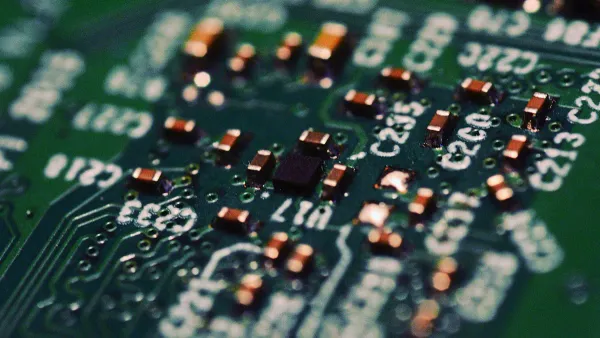
Think of an electrical noise filter like a high-tech water filter for your electronics. A water filter removes impurities to give you clean drinking water. Similarly, an electrical noise filter acts as a gatekeeper for your power lines. It allows the clean, low-frequency power your device needs to pass through while blocking or diverting the high-frequency noise that causes problems. This process is the key to unlocking better performance.
The Core Function of Noise Suppression
The main job of a filter is noise suppression. It cleans up the power before it ever reaches your device's sensitive components. These power line filters are essential for managing interference on both AC and DC power lines. Their function is straightforward but critical:
- They act as low-pass filters, letting low-frequency power signals pass easily.
- They block high-frequency noise, like radio frequency interference.
- They improve the efficiency and reliability of your power system.
- They ensure your equipment receives stable power for dependable performance.
By performing this noise suppression role, the filter protects your entire electronic circuit.
Differential vs. Common Mode Filtering
Electrical noise travels in two primary ways: differential mode and common mode. Your filter needs to handle both to be effective. Understanding the difference helps you see how a filter provides complete protection.
- Differential Mode Noise: This noise travels between two conductors in opposite directions. It is an unwanted signal that exists between the power and neutral lines.
- Common Mode Noise: This noise travels on both conductors in the same direction and with the same phase. It is an unwanted signal that exists on both the power and neutral lines relative to ground.
A well-designed filter uses different techniques to combat each type of noise.
| Feature | Differential Mode Filtering | Common Mode Filtering |
|---|---|---|
| Noise Path | Between two power conductors | On both conductors relative to ground |
| Current Flow | Opposite directions | Same direction |
| Primary Goal | Suppress noise between the lines | Suppress noise flowing to ground |
Key Components in a Filter Circuit
An EMI filter uses a combination of passive components to achieve noise reduction. The three main players in an electronic circuit are inductors, capacitors, and resistors. Each has a specific job.
Inductors (Chokes) act like roadblocks for high-frequency noise. An inductor's resistance (impedance) increases with frequency. This means it allows low-frequency power to pass through but blocks high-frequency noise from continuing down the line.
Capacitors work differently. They act as a shortcut or a drain for noise. You connect these components, often called bypass capacitors or decoupling capacitors, from the power line to ground. High-frequency noise sees these bypass capacitors as an easy path to ground and flows away from your device. The desired low-frequency power signal ignores the decoupling capacitors and continues to your device. Using bypass capacitors is a fundamental technique for ensuring circuit stability.
Industry Insight: Integrated Solutions Companies like Nova Technology Company (HK) Limited, a HiSilicon-designated solutions partner, specialize in developing advanced solutions that integrate these filtering components. They help ensure that products meet strict performance and electromagnetic compatibility standards by using the right combination of bypass capacitors and other filtering elements.
There are two special safety-rated types of these capacitors you should know about: X and Y capacitors. Both are types of bypass capacitors or decoupling capacitors, but they have different jobs and safety features. Using the correct decoupling capacitors is vital for a safe and effective electronic circuit.
| Characteristic | X-Capacitors (Bypass Capacitors) | Y-Capacitors (Decoupling Capacitors) |
|---|---|---|
| Connection | Between Line and Neutral | Between Line/Neutral and Ground |
| Function | Filters differential mode noise | Filters common mode noise |
| Failure Mode | Designed to fail short (blowing a fuse) | Designed to fail open (preventing shock) |
| Safety Role | Protects the device | Protects you, the user |
These components—especially bypass capacitors and decoupling capacitors—are the building blocks of effective power line filters. The strategic use of bypass capacitors and decoupling capacitors is what makes a filter work.
How Filters Improve Signal Integrity
Clean power directly leads to clean signals. Signal integrity refers to the quality of a signal, and a filter improves it in two major ways: increasing the signal-to-noise ratio and reducing jitter.
-
Higher Signal-to-Noise Ratio (SNR): By removing unwanted electrical noise, a filter makes the "good" signal much stronger and clearer compared to the background noise. This is like having a conversation in a quiet room instead of a loud factory. In audio devices, this means crystal-clear sound without hum or static. In medical or scientific equipment, it means you get precise, accurate readings you can trust.
-
Reduced Jitter: Jitter is a slight variation in the timing of a digital signal. Too much jitter can cause data errors, leading to dropped network connections or corrupted files. Power line filters help stabilize the voltage, which in turn helps timing circuits like Phase-Locked Loops (PLLs) maintain a steady clock signal. This re-timing of data effectively filters out jitter, ensuring your high-speed data transmission is stable and reliable.
Real-World Performance Enhancements
The theoretical benefits of noise filtering come to life in everyday use. The practical applications of noise filters deliver tangible improvements across many industries. You can see, hear, and measure the difference when your devices receive clean power.
Achieving Audio and Video Clarity
In audio and video, clarity is everything. Electrical noise often appears as an annoying hum in speakers or static in a video feed. Filters eliminate this interference at the source. They block the high-frequency noise that corrupts audio and video signals. This ensures you get crystal-clear sound and a sharp, stable picture. Professional recording studios rely on this technology for flawless productions.
"The ANACONDA PowerSnakes, have transformed our Sonoma system, used during the mastering process for the new 5.1 SACD mix of 'The Dark Side of The Moon'." — James Guthrie, Grammy Award-Winning Producer/Engineer (Pink Floyd)
Ensuring Data and Network Reliability
Your network equipment needs stable power for reliable data transfer. In industrial environments, heavy machinery like motors and welders creates significant EMI. This interference can corrupt data packets, causing network slowdowns or connection drops. By installing power line filters, you protect your network switches and routers from this noise. This simple step prevents data loss and ensures your connections remain fast and stable.
Guaranteeing Precision in Sensitive Equipment
Sensitive equipment demands absolute accuracy. Medical devices like ECG machines, for example, measure very small electrical signals from the human body. Noise from a standard 60 Hz power outlet can easily overwhelm these signals, leading to an incorrect diagnosis. Specialized power line filters remove this specific power line frequency. This action ensures that the readings are pure, precise, and trustworthy.
Extending the Lifespan of Electronics
Constant electrical noise acts like a low-level stress on your device's internal components. This stress can lead to premature aging and unexpected failure. Power line filters protect these sensitive parts, promoting better circuit stability and reducing wear and tear. This protection helps your electronics last longer. Furthermore, a quality electrical noise filter is often essential for a product to meet strict electromagnetic compatibility (EMC) regulations, ensuring it operates safely and reliably without interfering with other devices. For these advanced solutions, companies often turn to specialists like Nova Technology Company (HK) Limited, a HiSilicon-designated solutions partner, to ensure their products achieve peak performance and compliance.
Clean power and signals are fundamental to your device's performance. An electrical noise filter delivers this by blocking interference and protecting sensitive components. This simple action leads to greater reliability, improved accuracy, and a longer lifespan for your electronics. Investing in a filter is a direct way to protect your equipment and unlock its full potential.
The Future is Clearer 🔮 New technologies are making noise suppression even smarter. Future trends include:
- AI-powered adaptive noise cancellation
- Advanced filters for electric vehicles (EVs)
- Hybrid components for superior performance
FAQ
Do all my electronics need a noise filter?
Not every device requires one. Your simple electronics, like a desk lamp, are usually fine. However, sensitive or high-performance equipment benefits greatly. Devices like computers, audio systems, and medical instruments need clean power to function correctly. A filter protects their performance and lifespan.
Can a filter fix my already broken device?
No, a filter cannot repair a device that is already broken. It is a protective tool, not a repair solution. A filter prevents future damage from electrical noise. You should use it to keep your working electronics safe and reliable for a longer time.
How do I choose the right filter for my needs?
Selecting the right noise filter depends on your device and environment. You need to consider a few key factors:
- The voltage and current ratings of your device.
- The type of noise you need to block (common or differential mode).
- The physical size and connection type required.
Expert Tip 💡 For complex industrial or commercial products, consulting an expert helps ensure you meet performance and safety standards.