How Inductors Store and Release Energy in Modern Circuits
An inductor keeps energy in a magnetic field when current flows. When the current changes, the inductor lets out this energy.

An inductor keeps energy in a magnetic field when current flows. When the current changes, the inductor lets out this energy. This helps keep power steady in circuits. Many engineers use an inductor to cut down energy loss. It also helps devices work better. In power supplies, the inductor smooths out current ripples. It protects sensitive parts and helps with Power Storage. Picking the right inductor type and size is important. This lets devices work well and stay reliable in many real situations.
Key Takeaways
-
Inductors keep energy in a magnetic field when current flows. They let out this energy when the current changes. This helps circuits stay steady.
-
The magnetic field’s strength depends on coil turns, core material, and current size. These things change how much energy the inductor can hold.
-
Real inductors lose some energy as heat because of wire resistance and core effects. Engineers pick materials and designs to lower these losses.
-
Inductors are important in power supplies, filters, and circuit protection. They smooth out current, block noise, and stop sudden current changes.
-
Picking the right inductor size and type keeps devices safe and working well. This stops overheating and makes devices work better.
Inductor Basics
What Is an Inductor?
An inductor is a part that stores energy in a magnetic field. This happens when current moves through it. Most modern circuits use power inductors. These are made by wrapping copper wire into coils. The wire is covered with insulation. The coil goes around a core, often made of ferrite. Inductors help control current and voltage in devices. They are used in things like power supplies and signal filters. The main job of an inductor is to slow down sudden changes in current. This helps protect sensitive parts from voltage spikes.
Engineers pick inductors by looking at a few things. They check the nominal inductance, DC resistance, tolerance, and the highest current it can handle. Inductance shows how well the inductor stores energy in its magnetic field. The value depends on the number of coil turns, the core material, and the coil’s shape. Power inductors usually have a tolerance of about ±20%. Inductance can also change with frequency and temperature. This is especially true for ferrite core inductors.
Note: Inductors help smooth out ripple currents. They also filter out high-frequency noise in power supplies. This makes circuits work better and more stable.
Magnetic Field Creation
The way an inductor is built affects its magnetic field. Many things change how strong the field is:
-
More turns in the coil make the magnetic field stronger. More turns mean more amp-turns. This gives higher inductance and a stronger field.
-
Making the coil tight helps the magnetic flux linkage. This makes electromagnetic induction work better.
-
Using a core made from ferromagnetic or ferrimagnetic material, like ferrite, makes the magnetic field stronger. The core gets magnetized. This can make the inductance much higher than an air-core inductor.
-
The coil’s shape, the space between turns, and the type of core also matter. These things change the magnetic field and losses.
Electromagnetic induction happens when the current in the coil changes. This makes the magnetic field change too. A voltage appears across the inductor. This voltage tries to stop the current from changing. The strength of the field and the voltage depend on the number of turns and the core material. More turns make the inductance and voltage from induction higher.
Remember: Inductance goes up with the square of the number of turns. If you double the turns, the inductance gets four times bigger. This makes the magnetic field much stronger.
Inductor Power Storage

Energy Storage Physics
An inductor keeps energy by making a magnetic field. This happens when current moves through its coil. When you put voltage on the inductor, the current starts at zero. The current goes up slowly because the inductor fights quick changes. As the current gets bigger, the magnetic field gets stronger. Inductance is what makes the inductor push back against changes in current. This push back is called back emf. It slows down how fast the current can rise.
-
The magnetic field holds energy for a short time.
-
Energy keeps building up as the current goes up.
-
When the current stops growing, the magnetic field is at its strongest.
-
If the current drops, the magnetic field falls apart and gives the energy back to the circuit.
Tip: The inductor does not waste energy while storing it. It just keeps the energy in its magnetic field and returns it when needed.
This way of storing energy makes inductors very helpful for power storage. Devices like power supplies and switching regulators use this to keep energy moving smoothly.
Stored Energy Equation
How much energy an inductor stores depends on two things. These are the inductance and the current. The formula for energy in the magnetic field is:
W = 1/2 × L × I²
Where:
-
W is the stored energy (in joules)
-
L is the inductance (in henries)
-
I is the current (in amperes)
The table below shows how different inductance and current values change energy storage:
|
Inductance (L) |
Current (I) |
Energy Stored (W) |
Explanation |
|---|---|---|---|
|
3 A |
9 J |
A normal inductor with medium inductance and current stores 9 joules. |
|
|
0.01 H (10 mH) |
5 A |
0.125 J |
A small inductor in a switching regulator stores 0.125 joules. |
|
0.3 H |
10 A |
15 J |
An ignition coil with more current stores 15 joules. |
The formula shows that energy goes up fast as current gets bigger. If you double the current, the energy stored is four times more. This helps engineers make circuits that store and give out power well.
Current and Magnetic Field
The magnetic field’s strength in an inductor depends on the current. More current makes a stronger magnetic field. This means more energy is stored. When current goes up, the inductor 'charges' by making its magnetic field. When current goes down, the magnetic field falls and the inductor 'discharges.' It sends the stored energy back into the circuit.
-
The inductor fights changes in current by making a voltage that pushes back.
-
The voltage across the inductor depends on how fast the current changes.
-
The energy in the magnetic field is always ready to come out when the circuit needs it.
This lets inductors work as power storage in many electronic systems. They help keep energy ready during quick changes in load or supply. Inductors are important for keeping circuits steady and working well.
Storing and Releasing Energy
Current Increase and Storage
When you turn on a circuit, the inductor faces more current. The inductor does not let the current rise fast. It pushes back against the change. This push makes a voltage across the inductor. The voltage tries to slow down the current. As the current gets bigger, the inductor makes a magnetic field. This is how the inductor stores energy. The magnetic field keeps the energy until it is needed.
How much energy is stored depends on two things. These are the inductance and the current. More inductance or more current means more energy in the field. The inductor works like a short-term energy holder. It keeps the energy safe in its magnetic field. Changing electrical energy into magnetic energy is important for many circuits.
Tip: The inductor stores energy only when the current goes up. When the current stops changing, the energy in the field stays the same.
Current Decrease and Release
When the current drops, the inductor acts right away. It does not want the current to fall fast. The magnetic field around the inductor gets smaller. This shrinking field gives the stored energy back to the circuit. The inductor makes a voltage to keep the current moving. Sometimes this voltage is higher than the supply.
Now the energy changes back the other way. The magnetic field turns into electrical energy again. The inductor helps stop sudden drops in current. This keeps the circuit steady and protects weak parts. The cycle of storing and giving energy happens each time the current changes.
-
The inductor slows down quick drops in current.
-
The voltage across the inductor can jump up during release.
-
Changing energy helps keep power steady.
Real-World Analogies
It can help to think of inductors like things you see every day. An inductor is like a flywheel in a machine. When you spin a flywheel, it stores energy by turning. If you stop pushing, the flywheel keeps spinning and lets out its energy slowly. The inductor does the same thing, but with electrical and magnetic energy.
You can also think about water in a pipe. The inductor is like a heavy valve. If you try to make water flow faster, the valve pushes back. If you try to stop the water, the valve keeps it moving for a bit. This shows how the inductor stores and changes energy in a circuit.
Note: These examples help show why inductors are useful for storing and changing energy in electronics.
Energy Loss and Dissipation
Ideal vs. Real Inductors
Engineers look at both ideal and real inductors. An ideal inductor stores and gives back energy with no loss. It follows simple rules for current and voltage. Real inductors do not act the same way. They lose energy in a few ways:
-
Real inductors lose energy because the wire has resistance. This is called conduction loss.
-
At high frequencies, the wire loses more energy from the skin effect and proximity effect.
-
The core can lose energy when the magnetic field changes. These are called core losses.
-
Real inductors can get hot when used. Ideal inductors do not heat up.
-
The inductance value can change with current and frequency in real inductors.
Because of these things, real inductors cannot be perfectly efficient.
Power Loss Mechanisms
Inductors lose energy in a few main ways. Most losses come from the wire and the core. The wire has resistance, so some energy turns into heat. At high frequencies, the skin effect makes current flow on the wire’s surface. This raises resistance. The core can lose energy from hysteresis and eddy currents. These losses make the inductor less efficient.
Tip: Engineers pick special core materials and wire types to lower these losses and make inductors work better.
Efficiency and Safety
How well an inductor works affects the circuit and its safety. Many things matter:
-
Using low-loss core materials helps the inductor stay efficient.
-
If the core gets saturated, the inductor may not work right. This can cause safety problems.
-
High currents can make electromagnetic interference. This can bother other parts of the circuit.
-
Careful design and picking the right core material help the inductor work well and last longer.
Stored energy in inductors can also cause safety risks. The table below shows common risks and how to fix them:
|
Safety Risk |
Description |
Mitigation in Circuit Design |
|---|---|---|
|
Destructive arcing |
High voltage can happen if the inductor is disconnected fast. This can cause sparks or damage. |
Use discharge paths like diodes to safely let out energy. |
|
Eddy currents causing heat and stress |
Magnetic fields can make heat and stress in the inductor and nearby parts. |
Add support and cooling to handle heat and stress. |
|
Sparks from residual energy |
Leftover energy can cause sparks if the inductor is unplugged too soon. |
Make sure the inductor is fully de-energized before disconnecting. |
Note: Knowing about these losses and safety issues helps engineers make circuits that are safer and use energy better.
Inductor Applications
Power Supplies
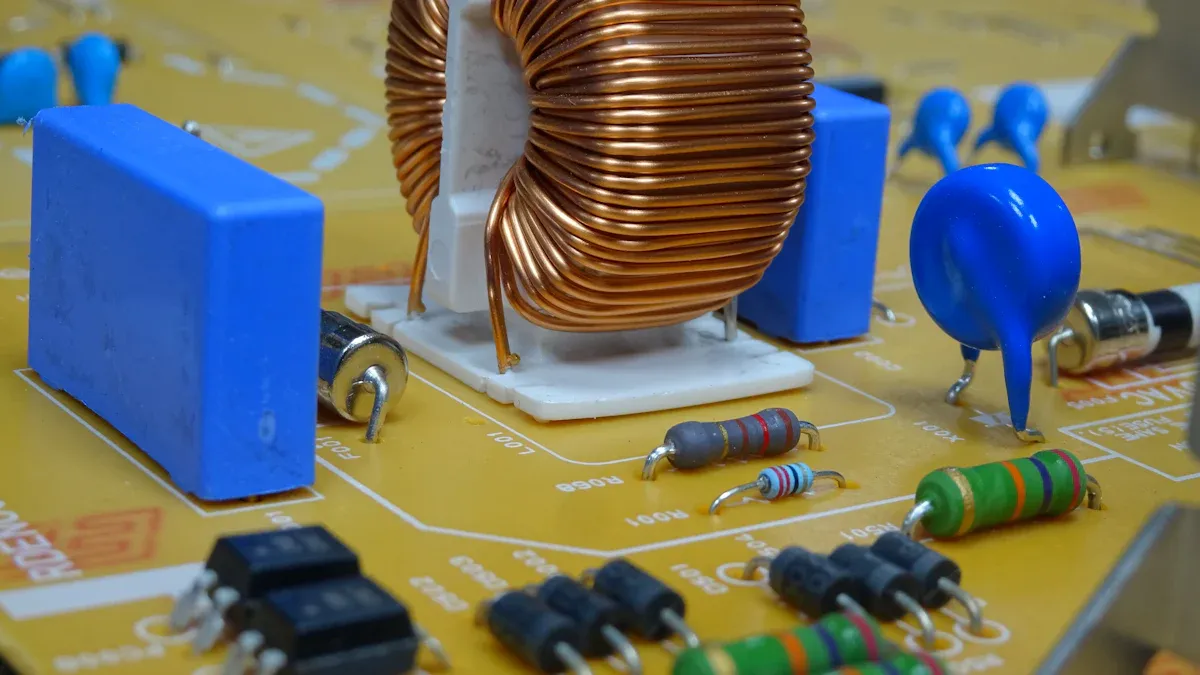
Inductors are very important in power supply circuits. They work with capacitors and integrated circuits to change DC voltage levels. In switching regulators, like step-up and step-down converters, the inductor helps smooth out the pulsing output. This makes a steady direct current for devices. Many modern power supplies use inductors to keep voltage stable. Without them, these circuits would not work as well. Engineers pick different core materials, such as ferrite or iron, for each job. New multilayer power inductors use better materials and new designs. These changes help raise power density and lower energy loss, especially at high frequencies.
Tip: Inductors in power supplies help protect sensitive electronics by lowering voltage spikes and electrical noise.
Filters and Signal Processing
Inductors are used in many filters and signal processing circuits. They help control which signals pass and which get blocked. Some common uses are:
-
Low-pass filters use inductors to block high-frequency signals and let low ones pass.
-
High-pass filters use inductors with capacitors to let high frequencies through and stop low ones.
-
Band-pass and band-stop filters use inductors to pick or block certain frequency bands.
-
Radio frequency filters use inductors to choose the right signals and block interference.
Inductive circuits in these filters help make sound better, cut noise, and make communication systems more reliable.
Inrush Current Limiting
Inductors also help limit inrush current when a device turns on. They resist sudden changes in current, which protects other parts from damage. The inductor slows the rise of current, keeping the peak lower. Engineers must pick the right inductor size so it limits inrush current but does not block normal current. Sometimes, a switching circuit goes around the inductor after the inrush period. This method works well for passive EMI reduction, but big inductors can be heavy and expensive in high-power systems.
|
Method |
Benefits |
Limitations |
|---|---|---|
|
Inductors |
Limits inrush; reduces EMI |
Large size for high power; possible resonance |
|
NTC Thermistors |
Cheap; simple |
Heats up; less efficient if cycled quickly |
|
Active Circuits |
Precise control; efficient |
Needs extra parts; more complex |
Inductor uses keep growing as new materials and designs make them smaller and more efficient.
Inductors keep energy in a magnetic field. They let out this energy when the current changes. Engineers need to look at things like current rating and frequency range. They also check if the inductor stays stable with temperature. This helps them avoid mistakes:
-
If you forget about voltage ratings or tolerance, the inductor can get too hot.
-
Not thinking about board space or layout can make signals weaker.
Picking the right inductor makes circuits work better and safer.
|
Innovation Area |
Benefit |
|---|---|
|
Devices get smaller and stronger |
|
|
EMI Mitigation |
Signals are clearer and more reliable |
Trying new inductor designs helps electronics save energy. It also helps new technology grow.
FAQ
What happens if an inductor gets too hot?
If an inductor gets too hot, it does not work as well. The wire’s insulation can break. This might cause a short circuit or hurt the circuit. Engineers use cooling and pick the right size to stop this from happening.
Can an inductor store energy forever?
An inductor cannot keep energy forever. When the current stops, the magnetic field goes away. The energy goes back into the circuit. Real inductors also lose some energy as heat over time.
Why do engineers use ferrite cores in inductors?
Ferrite cores help make inductance higher and cut energy loss. They work well when the frequency is high. Ferrite also helps block signals you do not want. This makes circuits work better and more reliably.
How does an inductor protect sensitive electronics?
An inductor slows down quick changes in current. This helps stop voltage spikes. Sensitive parts stay safe from harm. Inductors also block noise, so the circuit stays steady.