Key Advantages of 64 Pin Ceramic Packages for 2025 Electronics
The 64 pin ceramic package stands out in electronics due to its robust dip design and exceptional ceramic properties. Engine

The 64 pin ceramic package stands out in electronics due to its robust dip design and exceptional ceramic properties. Engineers value this package for high reliability and durability in demanding environments. The dual-column pin arrangement on both sides, typical of the ceramic dip, allows easy manual handling, making repairs and maintenance straightforward. Its ceramic construction provides superior heat resistance, which supports complex circuits in modern electronics.
| Characteristic | Description | Contribution to Electronics |
|---|---|---|
| Pins on both sides | Dual-column arrangement | Enables easy insertion and removal |
| Ceramic material | Sealed with low-melting-point glass | Delivers excellent thermal performance |
| Suitable for large-sized ICs | Accommodates more pins for complex circuits | Increases circuit integration |
| Dip design | Through-hole with larger pin pitch (2.54mm) | Enhances mechanical robustness |
Designers often choose the 64 pin ceramic dip for applications that demand high reliability, mechanical strength, and thermal stability.
Key Takeaways
- The 64 pin ceramic package offers excellent heat resistance and helps electronics run cooler and more reliably under high power.
- Its strong ceramic body protects devices from shocks, vibrations, and harsh environments, ensuring long-lasting durability.
- Hermetic sealing blocks moisture and dust, preventing damage and keeping sensitive circuits safe in tough conditions.
- The package supports clear, stable signals for high-frequency electronics, making it ideal for telecom and medical devices.
- Many industries like aerospace, automotive, and defense trust this package for critical electronics that must perform without fail.
Thermal Management
Heat Dissipation
Ceramic dip packages deliver outstanding thermal management in electronics. Their material composition allows heat to move away from high-performance electronic components much faster than in plastic alternatives. This property becomes essential in dip designs, where dense circuits generate significant heat. The table below compares the thermal conductivity of common packaging materials:
| Material Type | Thermal Conductivity (W/mK) | Notes |
|---|---|---|
| Neat Polymer Resins | 0.24 – 0.4 | Typical plastics used in electronic packaging |
| Polymer/Ceramic Composites | 4 – 9 | Depends on filler type and loading; ceramic-filled thermoset resins reach 6 – 9 W/mK |
| Plastic Composites (e.g., Nylon 11, polypropylene) | 4 – 6 | Filled to similar volume fractions but lower thermal conductivity than ceramic composites |
| Ceramic Fillers (AlN, BN, SiC, BeO, Diamond) | > 40 | Intrinsic thermal conductivity of ceramic fillers |
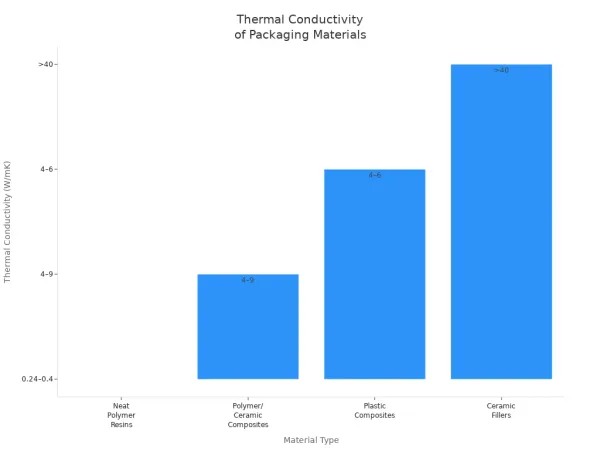
Ceramic materials in dip packages show thermal conductivities many times higher than plastics. This advantage means high-performance electronic components can operate at higher power without overheating. The dip structure, with its exposed pad design, acts as an efficient heat sink, moving heat away from the semiconductor die.
High-Temperature Performance
Ceramic dip packages maintain stable performance even in harsh environments. Their thermal stability ensures that electronics continue to function under high temperatures. This reliability supports high-frequency and high-power applications, such as those found in automotive, aerospace, and telecom systems.
- Devices using ceramic dip packages:
- Operate at higher power levels without overheating.
- Resist deformation or failure from thermal stress.
- Maintain signal integrity at high frequencies due to low dielectric loss.
- Deliver robust performance in demanding conditions.
Ceramic dip packages also match the coefficient of thermal expansion of semiconductor materials. This match reduces thermal stress and increases the lifespan of high-performance electronic components. Engineers choose ceramic dip packages for their superior thermal performance, ensuring electronics remain reliable and efficient in 2025 and beyond.
Mechanical Strength
Durability
Engineers trust the 64 pin ceramic dip package for its outstanding durability in electronics. The dip structure uses advanced ceramic materials like alumina, which resist cracking and deformation. This strength helps the dip package survive harsh handling during assembly and operation. In long-term tests, ceramic dip packages endured 100 cycles of heating and cooling between -65 °C and +125 °C. After these cycles, the packages showed no visible defects under 20× magnification. Gas leak rates stayed low, confirming the dip’s hermetic seal and long-lasting durability.
- The dip package supports high current loads up to 10 A without damage.
- Solderless mounting systems in ceramic dip designs add extra robustness against vibration and thermal stress.
- The dip package meets strict European space standards, proving its reliability in space missions.
A comparison of failure modes highlights the dip package’s advantage:
| Feature | Ceramic 64 Pin Package | Plastic Package |
|---|---|---|
| Material | Advanced ceramics (e.g., Al2O3, AlN) | Molded plastic resin |
| Mechanical Strength | High; resists cracking, deformation, and fractures | Lower; more prone to mechanical damage |
| Failure Modes | Cracks or fractures mitigated by material properties | More susceptible to cracks, deformation, and pin damage |
| Seal | Hermetic sealing protects against moisture | Non-hermetic, less protection |
| Resistance to Stress | Withstands shocks, vibrations, thermal cycling | Less durable under harsh conditions |
| Applications | Critical, harsh environments | General, cost-sensitive applications |
The dip package’s ceramic body and robust pin design ensure electronics remain reliable for years.
Shock and Moisture Protection
The 64 pin ceramic dip package offers strong protection against shock and moisture. Its hermetic seal keeps out water vapor and dust, which can damage sensitive electronics. The dip package withstands mechanical shocks and vibrations better than plastic alternatives. In marine, aerospace, and industrial settings, the dip package keeps electronics safe from sudden impacts and harsh weather.
- The dip’s ceramic shell blocks moisture, preventing corrosion and short circuits.
- The dip design resists pin damage during drops or rough handling.
- Electronics using the dip package maintain performance even in extreme environments.
Tip: For mission-critical electronics, the ceramic dip package provides unmatched durability and protection.
The dip package’s combination of ceramic strength and careful engineering makes it the top choice for demanding electronics in 2025.
Environmental Resistance
Hermetic Sealing
The 64 pin ceramic dip package stands out for its superior hermetic sealing. Engineers rely on this feature to protect sensitive dip electronics from moisture, gases, and contaminants. The ceramic-to-metal seal in the dip package creates a true vacuum-tight barrier. This seal prevents water vapor and dust from entering, which keeps the internal dip circuitry safe. Non-ceramic alternatives, such as organic polymers or epoxies, cannot match this level of protection. Over time, these materials allow moisture to seep in, which can cause corrosion or short circuits in electronics.
The dip package’s hermetic seal ensures long-term reliability, especially in aerospace and power electronics where failure is not an option.
The following table compares ceramic hermetic seals in dip packages to non-ceramic alternatives:
| Aspect | Ceramic Hermetic Seals (64 pin ceramic packages) | Non-Ceramic Alternatives (Organic Polymers, Epoxies) |
|---|---|---|
| Hermeticity | Provides true vacuum-tight, gas-tight seals with near-zero permeation | Non-hermetic; allow moisture and gas ingress over time |
| Moisture Barrier | Highest level of protection against moisture, gases, and contaminants | Permits moisture ingress leading to corrosion, short circuits |
| Mechanical & Thermal Stability | High thermal and mechanical stability suitable for harsh environments | Lower stability; degrade under high temperature and pressure |
| Application Suitability | Used in aerospace, power electronics, high-frequency devices | Limited to less demanding environments |
| Long-term Reliability | Ensures long-term reliability and safety in critical applications | Reliability issues over time due to moisture ingress |
Extreme Conditions
The dip package’s ceramic body allows it to perform in extreme conditions. Engineers choose the dip design for electronics that must survive high temperatures, rapid temperature changes, and strong vibrations. The ceramic material resists cracking and deformation, even when exposed to harsh environments. Dip packages maintain their seal and structure during thermal cycling, which is common in aerospace and automotive electronics.
- Dip packages protect electronics from sudden temperature spikes.
- The ceramic shell shields the dip circuitry from mechanical shocks.
- Dip packages keep out corrosive chemicals and salt spray in marine settings.
Electronics that use the 64 pin ceramic dip package continue to work in places where plastic or non-ceramic packages would fail. This makes the dip package a top choice for mission-critical electronics in 2025.
Electrical Reliability
Signal Integrity
Engineers rely on the 64 pin ceramic dip package to deliver strong signal integrity in electronics. The dip structure uses advanced ceramic materials that minimize electrical interference. This design supports high-frequency signals and reduces signal loss. The ceramic body acts as an effective barrier against electromagnetic noise. The dip package keeps signals clean and stable, even in environments with heavy electrical activity.
A comparison table highlights the signal integrity advantages:
| Feature | Ceramic DIP Package | Plastic Package |
|---|---|---|
| Signal Loss | Very low | Moderate to high |
| Electromagnetic Shield | Excellent | Limited |
| Frequency Support | Up to GHz range | Lower frequency range |
| Pin Contact Quality | Stable, corrosion-resistant | Prone to oxidation |
Engineers choose the dip package for electronics that require precise data transmission and minimal signal distortion.
Consistent Performance
The 64 pin ceramic dip package maintains consistent performance over time and under changing conditions. Multi-layer ceramic construction enhances durability and thermal capabilities. This structure enables efficient heat dissipation and operational stability. Hermetic sealing with glass-ceramic techniques prevents moisture from entering the dip package. This protection preserves component integrity in harsh environments.
The dip package’s mechanical robustness resists stress and vibration. Stable electrical connections remain intact for years. The larger surface area of the dip package promotes effective heat management. This feature prevents thermal overload and supports long-term reliability.
- Multi-layer ceramic design ensures stable performance in electronics.
- Hermetic sealing keeps moisture out, protecting dip components.
- Mechanical strength resists vibration and stress, maintaining dip connections.
- Larger dip surface area improves heat dissipation, supporting reliability.
These features make the 64 pin ceramic dip package ideal for aerospace, military, medical devices, and industrial controls. Electronics in these sectors demand consistent performance and reliability, even under extreme conditions.
64 Pin Ceramic Package in Modern Electronics
Ceramic Dual Inline Package Benefits
The ceramic dual inline package stands as a cornerstone in high-reliability sectors. Engineers select this package for its unmatched performance and robust protection. The dip structure, made from advanced ceramic materials, offers several key advantages:
- Hermetic sealing shields sensitive circuits from moisture, dust, and chemical corrosion. This feature proves essential in aerospace, defense, and medical applications.
- Superior thermal conductivity allows the dip to dissipate heat efficiently. Components inside the ceramic dual inline package maintain stable operation, even in high-power or compact electronics.
- Mechanical strength and durability help the dip resist cracking, warping, and physical stress. This reliability is critical in environments with constant vibration or shock, such as military vehicles or automotive systems.
- Environmental resistance ensures the dip package performs well in harsh conditions. The ceramic body blocks moisture and chemicals, making it a reliable option for industrial and automotive electronics.
- Electrical stability supports high-frequency and high-speed operation. The low dielectric constant of ceramic materials enables the dip to deliver excellent signal integrity, which is vital for telecommunications and medical devices.
Note: The ceramic dual inline package meets strict industry standards, including AEC-Q100 for automotive reliability. Manufacturers continue to expand production to meet growing demand in aerospace, military, automotive, medical, and telecom sectors.
A comparison table highlights why engineers prefer the ceramic dual inline package for high reliability:
| Feature | Ceramic Dual Inline Package | Plastic Package |
|---|---|---|
| Hermetic Sealing | Yes | No |
| Thermal Conductivity | High | Low |
| Mechanical Strength | Excellent | Moderate |
| Environmental Resistance | Superior | Limited |
| Electrical Performance | Stable at high frequencies | Variable |
| Reliability in Harsh Settings | Proven | Less reliable |
Real-World Applications
The 64 pin ceramic package plays a vital role in modern electronics across many industries. Each sector values the dip for its unique combination of performance, durability, and reliability.
- Aerospace and Defense: The ceramic dual inline package protects mission-critical electronics from extreme temperatures, vibration, and chemical exposure. Flight computers, navigation modules, and communication systems rely on the dip for uninterrupted performance.
- Automotive: Modern vehicles use the ceramic dip package in sensors, power amplifiers, and control modules. The dip withstands wide temperature swings, moisture, and constant vibration, meeting the strict standards required for automotive safety and reliability.
- Medical Devices: Pacemakers, diagnostic equipment, and implantable devices depend on the ceramic dual inline package for electrical stability and long-term performance. The dip’s hermetic seal prevents moisture ingress, ensuring patient safety.
- Telecommunications: Signal processors and amplifiers in telecom infrastructure use the ceramic dual inline package for high-frequency capability and stable operation. The dip maintains signal integrity, even in dense, high-speed networks.
- Industrial Automation: Robotics, control systems, and power electronics benefit from the dip’s heat resistance and mechanical strength. The ceramic package ensures reliable operation in factories and harsh industrial environments.
Manufacturers face challenges when producing the 64 pin ceramic package. Specialized machinery and testing equipment are necessary for high pin-count dip packages. The physical size of the dip increases with pin count, requiring more board space and careful PCB design. Despite higher material and assembly costs, engineers choose the ceramic dual inline package for applications where failure is not an option.
Tip: The ceramic dip package may cost more than plastic alternatives, but its superior performance and reliability justify the investment in high-reliability sectors.
The 64 pin ceramic package continues to shape the future of modern electronics. Its proven performance, robust construction, and ability to thrive in demanding environments make it the preferred choice for engineers designing next-generation systems.
The 64 pin ceramic dip package stands out for next-generation electronics. Engineers value the dip for its superior thermal performance, mechanical strength, and electrical reliability. The dip supports easy handling, soldering, and replacement. Many industries choose the dip for miniaturized, high-density designs. The dip offers excellent signal integrity and high temperature tolerance. Recent research highlights the dip’s role in prototyping and low-volume manufacturing. Industry leaders recommend modular dip production and advanced R&D. The dip enables future-proof solutions in automotive, medical, and telecom sectors. The dip remains a top choice for reliability and durability.
FAQ
What makes the dip package ideal for high-reliability electronics?
Engineers select the dip package for its strong ceramic body, hermetic sealing, and stable electrical performance. These features help electronics work reliably in aerospace, automotive, and medical devices.
How does the dip package protect against moisture and dust?
The dip package uses a ceramic-to-metal seal that blocks moisture and dust. This seal keeps sensitive circuits safe, even in harsh environments like factories or outdoor installations.
Can the dip package handle high temperatures?
The dip package resists heat due to its ceramic construction. Devices using the dip package operate safely at high temperatures, which is important for power electronics and industrial controls.
Where do manufacturers use the dip package most often?
Manufacturers use the dip package in aerospace, defense, automotive, medical, and telecom sectors. These industries need electronics that last and perform well under stress.
Is the dip package easy to install and replace?
The dip package features a dual-column pin design. Technicians can insert or remove the dip package easily during repairs or upgrades, saving time and reducing errors.