Analog Integrated Circuits and their Key Components for Signal Processing in Electronic Systems
Analog integrated circuits are very important in electronics. They work with signals that change all the time. These signals come from things like sound or temperature. The circuits process these signals as real voltages or currents.
Analog integrated circuits are very important in electronics. They work with signals that change all the time. These signals come from things like sound or temperature. The circuits process these signals as real voltages or currents. They do not change them into digital signals. An analog integrated circuit has parts like operational amplifiers and analog filters. These parts help make signals stronger, cleaner, or easier to use. This lets the circuit handle signals right away. Electronics can react fast to changes in signals. This is needed for things like audio equipment, sensors, and wireless communication. Digital integrated circuits need to change signals first. Analog circuits keep signals smooth and help with careful signal work. The main question is: what makes an analog integrated circuit good for signal processing? Which parts help it work so well?
Key Takeaways
-
Analog integrated circuits handle real-world signals smoothly. They do not change signals to digital form. This makes them important for audio, sensors, and communication devices.
-
Active components like transistors and operational amplifiers make signals stronger and change their shape. Passive parts like resistors and capacitors control current, voltage, and frequency.
-
Supporting elements like current sources and mirrors help circuits stay steady and correct. This lets circuits handle signals exactly right in complex electronics.
-
Analog circuits make signals louder and remove unwanted parts. This helps make sound clear, sensor readings better, and communication strong.
-
Designers deal with problems like noise, linearity, and temperature changes. They use smart layouts, feedback, and cooling to make analog circuits work well and last long.
Analog Integrated Circuits Overview
What Are Analog Integrated Circuits
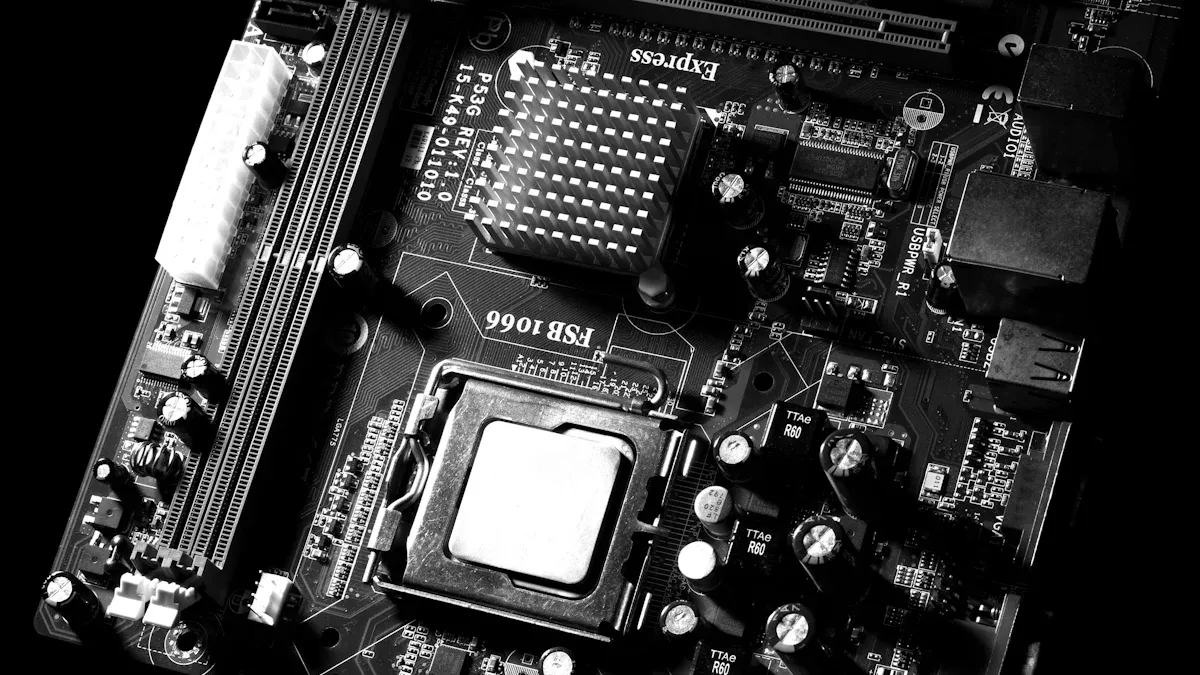
Analog integrated circuits are very important in electronics today. They work with analog signals that change smoothly. Engineers use them to handle signals from the real world, like sound or light. Each analog integrated circuit has many parts. These include transistors, resistors, and capacitors. All these parts work together. They help make signals stronger, cleaner, or easier to use.
Analog integrated circuits do many jobs. They can make signals bigger, clean them up, manage power, mix signals, change signals, and connect to sensors. The table below shows some main jobs and examples:
|
Primary Function |
Description |
Example Analog ICs |
|---|---|---|
|
Amplification |
Makes input signals bigger for things like audio or sensors |
Operational Amplifiers (Op-Amps) |
|
Signal Conditioning |
Gets signals ready for more work by cleaning or changing them |
Comparators, Active Filters |
|
Power Management |
Keeps voltage and current steady in devices |
Voltage Regulators |
|
Frequency Mixing |
Puts two signals together to make new ones, used in radios |
Frequency Mixers |
|
Signal Conversion |
Changes analog signals into digital ones |
Analog-to-Digital Converters (ADCs) |
|
Sensor Interfacing |
Connects to sensors to measure things like temperature or light |
Sensor Interface Circuits |
Analog electronics need these circuits to keep signals strong and clear. For example, operational amplifiers make weak microphone signals louder. Voltage regulators help keep power steady in devices.
Analog vs Digital ICs
Analog integrated circuits and digital integrated circuits do different things. Analog circuits work with signals that can have any value. This is good for things like music players and radios. Analog circuits let you make small changes to signals.
Digital integrated circuits only use 0s and 1s. They use logic to make choices and do math. Digital ICs are good at blocking noise and are very reliable. This is important for computers and other digital gadgets.
Some main differences are:
-
Analog integrated circuits work with signals that change smoothly.
-
Analog circuits let you control signals in small steps.
-
Digital integrated circuits use on and off signals, which helps with exact work.
-
Digital circuits are best for jobs that need clear answers.
Analog-to-digital converters help both types of circuits work together. They turn analog signals into digital data. This lets analog and digital circuits work as a team in modern electronics.
Key Components in Analog Integrated Circuits
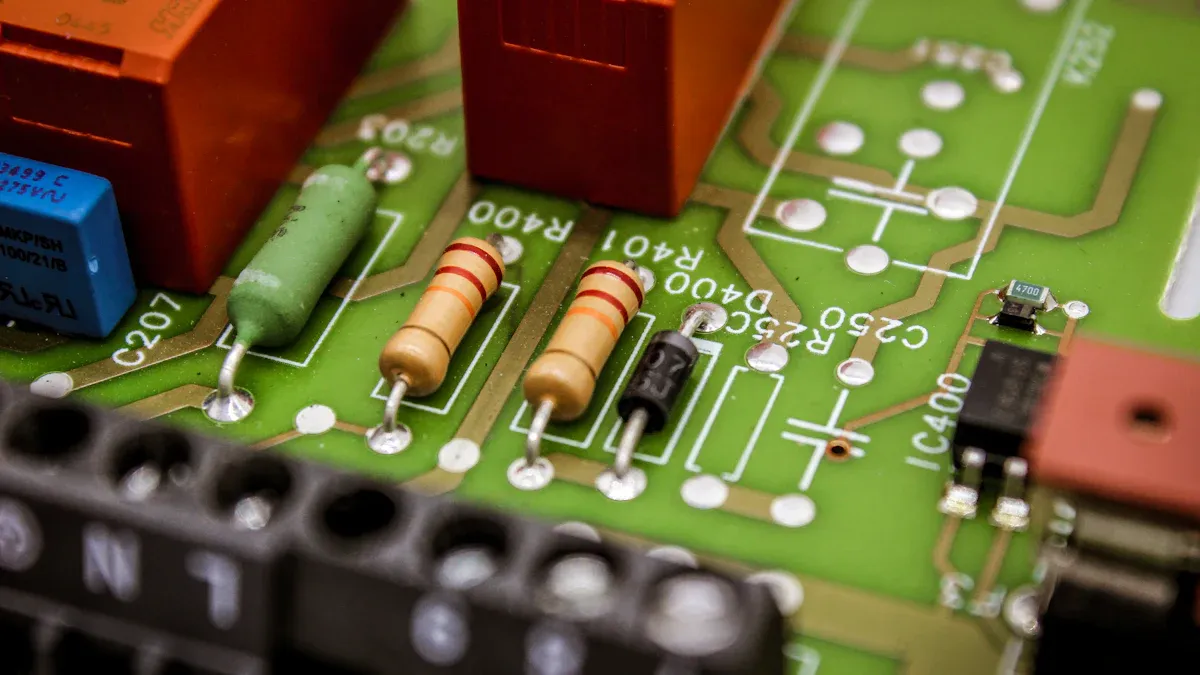
Analog integrated circuits use many important parts to work with real-world signals. These parts help make signals stronger, cleaner, and ready for use. Each part has a special job in the circuit. Knowing about these parts shows how analog circuits handle many kinds of signals in today’s electronics.
Active Components: Transistors and Op-Amps
Active components need power to do their jobs. They can make signals bigger or turn them on and off. Two main active components are transistors and operational amplifiers.
|
Component |
Description |
Roles in Signal Processing |
|---|---|---|
|
Semiconductor devices that form the building blocks of analog circuits. |
Signal amplification, electronic switching, logic operations, voltage regulation. |
|
|
Operational Amplifiers (Op-amps) |
High-gain voltage amplifiers with differential inputs and single-ended outputs. |
Signal amplification, filtering, mathematical operations, feedback control. |
Transistors come in different types like BJTs and FETs. They help make signals stronger, switch signals, and control voltage. Transistors are the main parts in amplifiers and voltage regulators.
Operational amplifiers, called op-amps, are special amplifiers found in almost every analog integrated circuit. They make weak signals stronger, remove noise, and do math like adding or integrating. Op-amps use negative feedback to control how much they amplify and to be more accurate. This makes them useful in many circuits like amplifiers, filters, and voltage regulators.
How well these active parts work depends on some features. For example, open-loop gain, input impedance, and output impedance matter for amplifiers. High input impedance keeps the signal good, and low output impedance helps the amplifier power other parts. Frequency response and noise also affect how the circuit works. Negative feedback helps keep the amplifier steady and less likely to make mistakes.
|
Characteristic |
Effect on Analog Integrated Circuits |
|---|---|
|
Open-loop gain |
Enables stable closed-loop gain and consistent circuit behavior. |
|
Input impedance |
High input impedance preserves signal integrity. |
|
Output impedance |
Low output impedance allows effective voltage buffering and current driving. |
|
Frequency response |
Limits the frequency range for maintaining gain, affecting stability and distortion. |
|
Noise |
Intrinsic noise affects signal quality, especially in high-gain circuits. |
|
Negative feedback |
Stabilizes gain, reduces dependence on internal variations, and improves accuracy. |
Passive Components: Resistors, Capacitors, Inductors
Passive components do not need power to work. They cannot make signals bigger, but they help shape and control signals. The three main passive components are resistors, capacitors, and inductors.
-
Resistors control how much current flows. They can split voltage, limit current, and help measure current. Resistors set the right working point for amplifiers and voltage regulators.
-
Capacitors store and release electric charge. They stop direct current but let alternating current go through. Capacitors help filter signals, set frequency, and smooth out voltage.
-
Inductors store energy in magnetic fields. They let direct current pass but block more alternating current as the frequency goes up. Inductors help filter signals and change the timing of signals.
Note: The size and accuracy of resistors, capacitors, and inductors change how well the circuit works. For example, resistor accuracy changes how voltage is split and how current is limited. Capacitor size sets the filter’s cutoff frequency. Inductor size changes how well it filters and makes signals repeat. Picking the right size and accuracy is important for good circuits.
These passive parts help control current, voltage, frequency, and timing. They work with active parts to make analog circuits steady and correct.
Supporting Elements: Current Sources, Mirrors, Multipliers
Analog integrated circuits also use other parts to work better and stay steady. These include current sources, current mirrors, and multipliers.
|
Supporting Element |
Specific Function |
|---|---|
|
Current Sources |
Provide stable bias currents essential for consistent operation of analog circuits. |
|
Current Mirrors |
Replicate or mirror currents to maintain circuit functionality and enable higher-level circuit design. |
|
Multipliers |
Perform nonlinear analog multiplication, crucial for applications like neuromorphic systems and gain control. |
Current sources give a steady current to different parts of the circuit. This helps amplifiers and voltage regulators work right. Current mirrors copy current from one place to another. They keep the current steady even if the voltage changes. Some designs, like the Wilson current mirror, make the current even more stable and less likely to change with temperature.
Multipliers do analog multiplication. They are needed in circuits that control gain or work with hard signals, like in radio or neuromorphic systems. These parts often use current-mode designs and current mirrors to get exact results.
Tip: Using strong current sources and careful layout helps current mirrors work better. Adding temperature fixes and better mirror designs makes analog integrated circuits more stable.
All these key parts—active, passive, and supporting—work together in analog electronics. Active parts make signals bigger and process them. Passive parts shape and filter signals. Supporting parts give steady currents and help with special jobs. Working together, these parts let analog circuits handle many signals in modern electronics, like in audio amplifiers, voltage regulators, and sensor interfaces.
Analog Electronics for Signal Processing
Signal Amplification and Filtering
Analog electronics help make signals stronger and cleaner. Amplifiers, like operational amplifiers, boost weak signals from microphones or sensors. These amplifiers give a lot of gain and keep the signal clear. Audio amplifiers help music sound good with little noise or distortion. Active filtering uses amplifiers to take away unwanted sounds. This makes audio and communication systems clearer. Analog circuits work with signals that change smoothly. This helps avoid mistakes that can happen in digital systems. But analog electronics can also make noise louder. So, it is important to design them carefully and manage noise.
|
Aspect |
Explanation |
Application/Effectiveness |
|---|---|---|
|
Operational Amplifiers |
Give high gain and help make signals better. |
Very important for making sound louder and clearer. |
|
Continuous Signal Processing |
Stops errors that can happen in digital systems. |
Gives very clear and true outputs. |
|
Uses shielding, grounding, and special layouts to stop noise. |
Keeps signals clean and stops distortion in sensitive circuits. |
|
|
Active Filtering |
Uses amplifiers to make filters work better and more stable. |
Makes audio and phone systems sound better by improving filter quality. |
Analog Front-End Systems
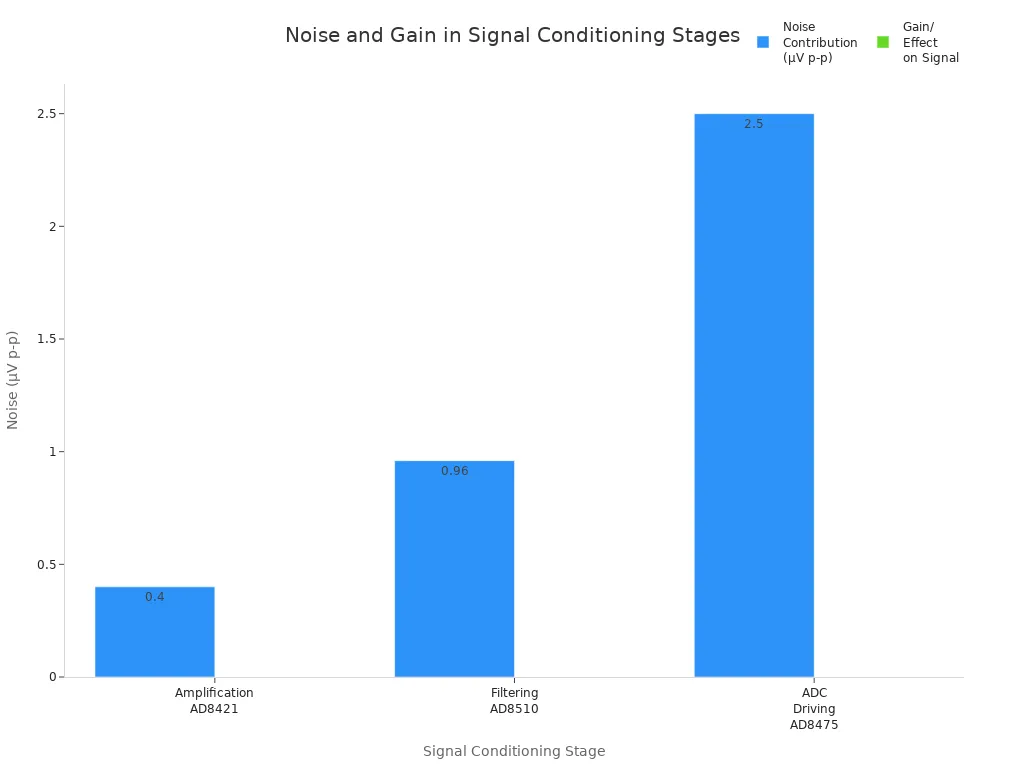
Analog front-end systems connect sensors to microcontrollers. These systems get signals from sensors and get them ready for digital work. The front-end makes weak signals stronger and removes noise. It can also change the signal type, like turning current into voltage. This helps the analog-to-digital converter work right. Analog front-end systems use amplifiers and filters that fit the sensor. They make sure the signal is strong and clean before it goes to the converter. These systems often need tuning and can work with many sensors. They also help stop mistakes from sensors changing over time.
Real-World Applications
Analog electronics are used in many real things. In audio systems, amplifiers make music and voices louder and clearer. Sensor technology uses analog circuits to read signals from things like temperature or light sensors. Communication systems use analog electronics for mixing, filtering, and changing signals. Cars use analog circuits for engine control and reading sensor data. Medical devices, like ECG monitors and hearing aids, use analog electronics to process signals correctly. These examples show how analog electronics help modern electronics work well and give good results.
Analog IC Design Challenges
Noise and Linearity
Noise and linearity are big problems in analog IC design. Noise can come from many places in a circuit. There is thermal noise, flicker noise, and shot noise. These noises make it hard to find small signals. They can also make signals less clear. Substrate noise can move through the silicon and hurt sensitive parts. Noise can get in from amplifiers, voltage regulators, sensors, or even the board layout. Good design uses smart layouts, filters, and careful part choices to keep noise low.
Linearity means the output signal is just like the input. If a circuit is not linear, the signal shape can change. Designers pick amplifiers and filters that stay very linear. This helps keep signals correct. They use voltage-feedback amplifiers and instrumentation amplifiers for this. Signal conditioning, like filtering and making signals bigger, also helps keep signals true before the next step.
|
Aspect |
How Designers Address It |
|---|---|
|
Component Selection |
Pick parts with low noise and strong linearity. |
|
Layout Optimization |
Put parts in good spots to lower noise and help signals. |
|
Feedback Networks |
Use feedback to control gain and stop distortion. |
Power and Temperature Stability
Power use and temperature changes are important in analog IC design. Too much heat can break parts or change how they work. Voltage regulators and other analog parts must work well at many temperatures. Designers use heat sinks, thermal vias, and special materials to move heat away. They also use computer tools to find hot spots and make cooling better. Real-time thermal checks help keep circuits safe from getting too hot. Good power control and temperature fixes help analog circuits work well, even in tough places.
Tip: Planning for heat control early in design helps stop problems later.
Innovation and Trends
Analog IC design keeps getting better as new needs show up. Designers now use machine learning and AI to help make and improve circuits. New types of circuits, like current-mode and sub-threshold, help save power and work better. Hybrid analog-digital circuits mix both types for stronger results. Companies use new materials and 3D chip building to make chips faster and more reliable. AI helps make and watch over analog electronics to save energy and make them smarter. These new ideas help analog ICs work better in many things, like healthcare, cars, and factories.
Analog circuits are very important for working with real signals. They help electronics notice and measure changes around them. Mixed-signal chips have sensors, amplifiers, and converters with digital parts. This makes devices smarter and helps them use less energy. Many fields, like cars and phones, need these circuits for quick and correct signal work. New trends are using less power, making things smaller, and better ways to put parts together. The future is good because people want faster and more trusted signal processing.
FAQ
What is the main job of an analog integrated circuit?
An analog integrated circuit works with signals that change smoothly. It can make signals stronger or get rid of unwanted noise. It also gets signals ready for other parts in a device.
Why do engineers use both active and passive components?
Engineers use active components to make signals bigger or control them. Passive components help shape signals, filter them, or store energy. Both types work together to handle real signals in electronics.
How do analog circuits handle noise?
Designers use shields, smart layouts, and special filters to lower noise. These things help keep signals clear and correct in analog circuits.
Where can someone find analog integrated circuits in daily life?
-
Audio devices (like speakers)
-
Medical equipment (such as heart monitors)
-
Cars (engine sensors)
-
Phones (microphones and speakers)
-
Home appliances (temperature controls)
Analog ICs help these things work with real signals.