7 Critical Factors That Determine Custom PCB Assembly Quality and Reliability
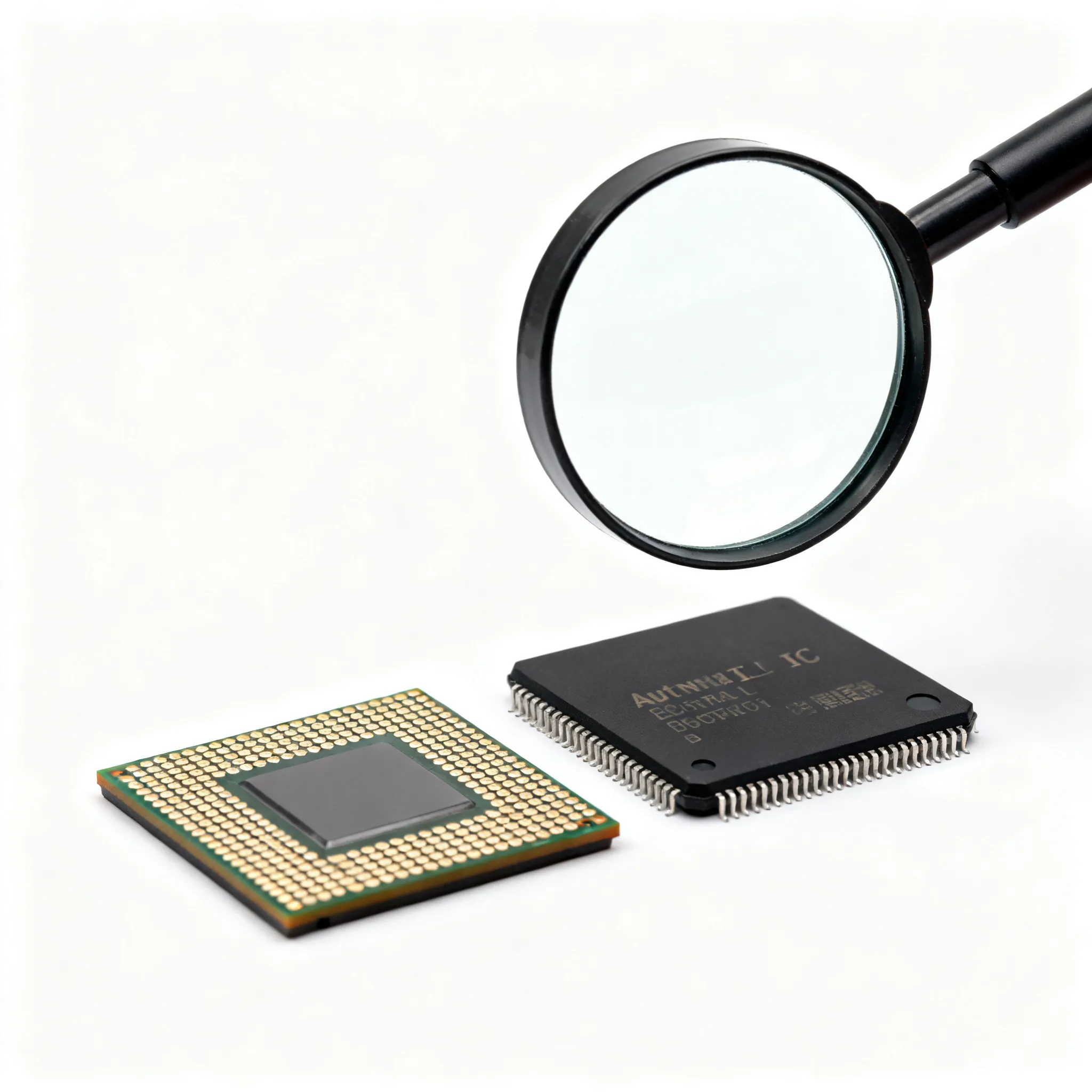
The seven critical factors that influence custom pcb assembly quality and reliability include technical expertise, quality and certifications, manufacturing capabilities, component sourcing, design factors, quality control and testing, and timeline and communication.
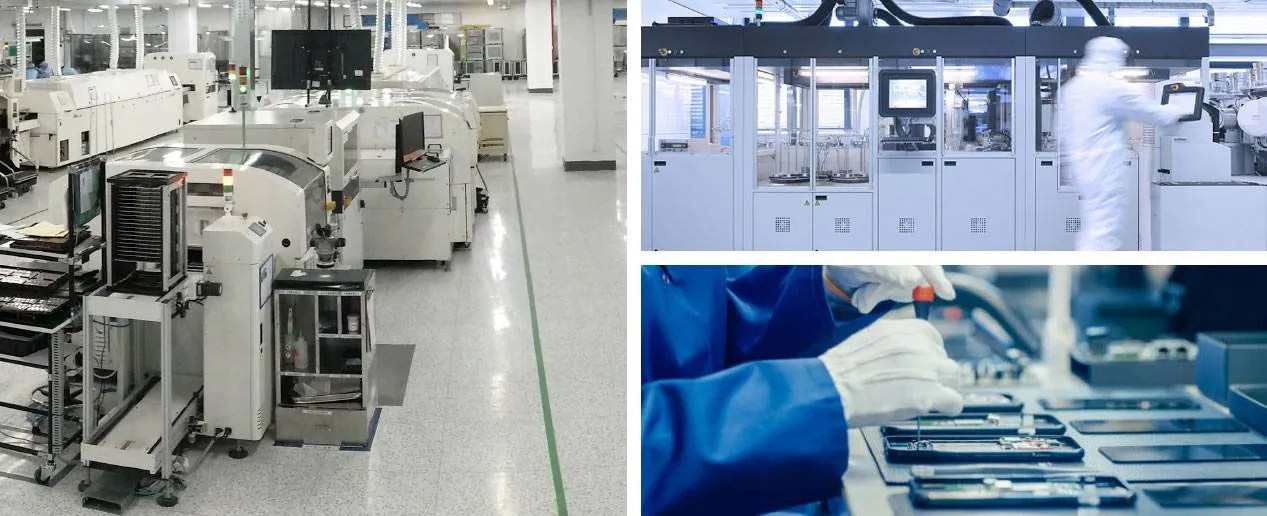
The seven critical factors that influence custom pcb assembly quality and reliability include technical expertise, quality and certifications, manufacturing capabilities, component sourcing, design factors, quality control and testing, and timeline and communication.
Each critical factor plays a direct role in ensuring pcb assembly meets performance goals.
Technical expertise drives process accuracy. Quality and certifications set the foundation for reliable pcb assembly. Manufacturing capabilities affect consistency. Component sourcing impacts pcb compatibility. Design factors shape thermal management and trace integrity. Quality control and testing verify assembly success. Timeline and communication keep pcb assembly projects on track.
This blog gives actionable advice to address each of these critical factors.
Key Takeaways
-
Skilled personnel and strong technical expertise ensure accurate and efficient PCB assembly, reducing defects and delays.
-
Strict quality standards and certifications, like ISO 9001 and IPC-A-600, guarantee reliable components and consistent manufacturing processes.
-
Advanced manufacturing technologies and consistent processes improve production speed, reduce errors, and increase product reliability.
-
Careful component sourcing and supplier vetting prevent counterfeit parts and ensure compatibility, supporting long-term PCB performance.
-
Clear communication and well-planned project timelines keep PCB assembly projects on track and foster trust between partners.
Technical Expertise
Skilled Personnel
A pcb assembly company relies on skilled personnel to deliver high-quality results. Trained engineers and technicians use their expertise to handle complex pcb designs and assembly processes. They understand the importance of accuracy in every step, from soldering to inspection. Skilled teams can quickly identify and solve problems, which reduces delays and defects. Many leading companies invest in ongoing training to keep their staff updated on the latest technologies and industry standards.
The impact of technical expertise becomes clear when looking at real-world outcomes. The table below highlights how different companies have used expertise to improve pcb assembly:
|
Case Study |
Company Focus |
Technical Expertise Applied |
Metrics Demonstrated |
Outcome Highlights |
|---|---|---|---|---|
|
Streamlining Production with Advanced Automation |
Company A |
Integration of robotic assembly, automated pick-and-place, conveyor systems |
Reduction in assembly time, improved placement accuracy, increased productivity |
Faster time-to-market, reduced costs, higher customer satisfaction |
|
Enhancing Quality Control with AI-Powered Inspection |
Company B |
AI algorithms for real-time defect detection and feedback |
Significant defect rate reduction, improved product reliability |
Higher quality PCBAs, enhanced customer satisfaction |
|
Sustainable Practices in PCBA Manufacturing |
Company C |
Use of eco-friendly materials, energy-efficient techniques, waste reduction |
Reduced environmental footprint, adoption of lead-free solder |
Increased market share, brand loyalty, positive reputation |
|
Collaborative Design for Manufacturability (DFM) |
Company D |
Early involvement of manufacturing expertise in design |
Minimized rework, optimized designs for manufacturability |
Streamlined production, reduced time-to-market, cost savings |
|
Continuous Improvement Through Data Analytics |
Company E |
Data collection and analysis for process optimization |
Reduced cycle times, lower defect rates, enhanced efficiency |
Competitive agility, customer satisfaction, long-term success |
Experience and Reputation
A pcb assembly company with years of experience stands out in the industry. Experience brings deep knowledge of pcb technologies and assembly methods. Reputation grows as companies deliver reliable results and meet customer needs. The following points show why experience and reputation matter:
-
A pcb assembly company with a long history shows reliability and trustworthiness.
-
Advanced manufacturing capabilities, such as Surface Mount Technology and Automated Optical Inspection, come from years of expertise.
-
Industry-specific experience helps companies meet strict standards in fields like automotive, medical, and aerospace.
-
Companies with many years in business refine their processes and build strong track records.
-
A large customer portfolio and positive testimonials prove a pcb assembly company can deliver on time and within budget.
-
KINGBROTHER, for example, has over 28 years of experience and serves more than 18,000 customers, showing the value of expertise and reputation in pcb assembly.
A pcb assembly company that invests in skilled personnel and builds a strong reputation ensures better outcomes for every pcb project.
Quality and Certifications
Quality Standards
ERAI Membership and Component Sourcing
A pcb assembly company that values quality joins organizations like ERAI. NOVA PBCA, as an ERAI member, uses strict screening and traceability for electronic components. This process prevents counterfeit parts and supports reliability in every pcba project. The partner network ensures robust component sourcing channels. Each partner follows high-quality standards, which means every component meets strict requirements before entering the assembly line.
-
Increased copper plating thickness in holes (25 μm instead of the industry standard 20 μm) reduces cracking and improves durability.
-
Stricter purity and contamination controls lower the risk of contamination-related failures.
-
Use of internationally recognized base laminates with CAF resistance boosts material reliability.
-
Comprehensive quality assurance testing includes:
-
Automated Optical Inspection (AOI) for early defect detection.
-
X-ray inspection for hidden internal defects.
-
In-Circuit Testing (ICT) for electrical performance.
-
Functional and environmental stress testing for durability.
-
Collaboration with Fortune 500 Engineers
NOVA PBCA works closely with engineers from Fortune 500 companies. These collaborations raise the bar for quality and reliability. The partner engineers help set high-quality standards from design to production. Their experience ensures that every pcba meets strict industry standards and passes all required tests. This teamwork leads to better assembly outcomes and fewer defects.
Certifications
Long-term Partnerships with Certified Factories
NOVA PBCA partners with pcba and pcb factories that have over 10 years of collaboration. Each partner factory holds certifications such as ISO 9001, IPC-A-600, and UL. These certifications prove that the partner follows high-quality standards and strict quality management systems. The long-term relationships guarantee consistent quality in every assembly.
Industry Recognition and Client Endorsements
Industry recognition comes from successful projects with well-known enterprises. Fortune 500 clients endorse NOVA PBCA for its commitment to quality and reliability. These endorsements show that the pcb assembly company meets global standards and delivers high-quality pcba products. The partner network’s dedication to quality builds trust and supports long-term success.
Manufacturing Capabilities
Technology and Equipment
Advanced technology and equipment form the backbone of reliable pcb assembly. Companies with strong technical capabilities invest in automation, robotics, and precision machinery. Automation technologies such as pick-and-place machines, AOI, and soldering robots increase speed, precision, and consistency. These tools also help reduce costs and improve quality. Additive manufacturing, like 3D printing, allows for rapid prototyping and flexible designs. Advanced materials, including high-frequency laminates and thermal interface materials, boost signal integrity and durability.
The impact of these investments appears clearly in industry case studies:
|
Industry Sector |
Improvement Metrics |
Description |
|---|---|---|
|
Automotive Electronics |
Advanced automotive-grade assembly and rigorous testing improved quality and compliance. |
|
|
20% improvement in production efficiency |
||
|
Medical Device Startup |
Improved product reliability via DFM input |
Cleanroom assembly and flexible scaling from prototype to full production. |
|
Flexible production scaling |
||
|
Industrial IoT |
40% reduction in time-to-market |
Expert component selection and advanced manufacturing execution system enhanced performance. |
|
Enhanced product traceability |
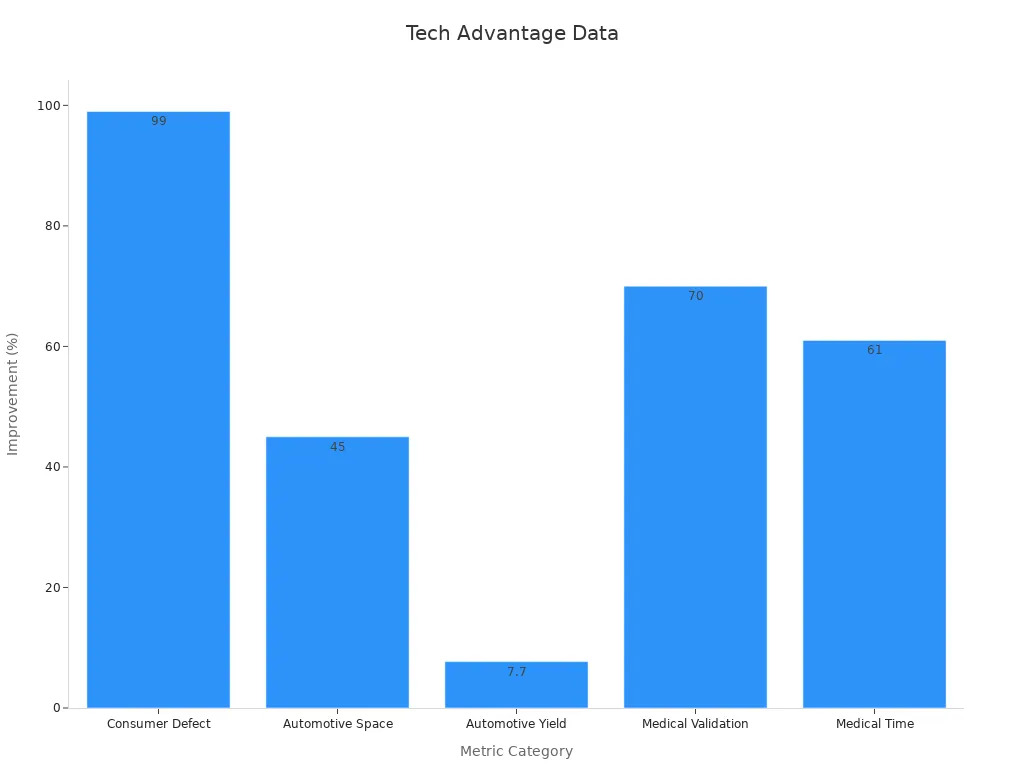
Companies that adopt automated lines see production capacity increase by up to 8.5 times and defect rates drop by 99%. In automotive electronics, first-pass yield rises from 92% to 99.7%, and warranty claims fall by 83%. These improvements reflect the value of technical capabilities in pcb assembly.
The rise of AI in pcb inspection also drives better results. Before 2004, no pcb inspection used AI. By 2022, over half of all pcb inspection methods applied advanced AI models. This shift leads to higher defect detection accuracy and supports the industry’s goal of zero defects.
Process Consistency
Consistent processes ensure every pcb assembly meets strict quality standards. Companies use automated optical inspection, in-circuit testing, and x-ray inspection to catch defects early. Environmental stress screening and visual checks add extra layers of protection. Statistical process control and Six Sigma methods help monitor and improve production.
Industry benchmarks show that effective quality control can push yield rates up to 95%. On-time delivery rates reach 98%, showing reliable processes. Production efficiency improves by 30%, and costs drop by up to 20%. These results prove that process consistency leads to higher reliability and customer satisfaction.
Key metrics for process consistency include:
-
First Pass Yield (FPY): Measures products passing inspection on the first try.
-
Defect Rate: Tracks the percentage of failed products.
-
Return Rate: Shows how often customers return products.
-
Failure Rate: Measures how often products fail in use.
-
Reliability Metrics (MTBF, MTTR): Assess product reliability and repair times.
-
Cost of Quality (COQ): Tracks costs related to quality management.
-
Process Capability Index (Cp/Cpk): Measures process stability.
A focus on process consistency, supported by strong technical capabilities, ensures every pcb assembly meets the highest standards for quality and reliability.
Component Sourcing
Compatibility and Availability
Component sourcing shapes the success of every pcba project. Engineers must select parts that match the design and function of the pcb. Compatibility ensures that each component fits the electrical and mechanical requirements of the assembly. When teams choose parts that do not match, the risk of failure increases. Availability also plays a key role. If a part is hard to find or discontinued, production can stop or slow down.
Ultra Librarian recommends sourcing only from trusted distributors and using real-time data to check availability. This approach helps teams avoid shortages and quality issues. Automation and digital tools now help engineers track inventory and select the best parts for printed circuit boards. These trends improve efficiency and reduce the risk of delays.
A strong sourcing process includes several best practices:
-
Rigorous Bill of Materials (BOM) validation prevents errors that cause delays or faulty assemblies.
-
Quality checks on incoming parts catch defects and counterfeits before they reach the assembly line.
-
Proactive obsolescence management identifies end-of-life parts early, so teams can plan replacements and avoid redesigns.
-
Centralized sourcing through trusted vendors streamlines quality control and communication.
-
Geographic diversification of suppliers reduces risks from global disruptions.
These steps help ensure that every pcba meets quality standards and stays on schedule.
Supplier Vetting
Supplier vetting protects the reliability of pcba assemblies. Teams must check each supplier’s track record and quality systems before placing orders. Certified supply chains help prevent counterfeit parts from entering the assembly process. In industries like aerospace and defense, strict standards such as IPC-A-610E Class 3 require zero tolerance for failure.
A thorough vetting process includes:
-
Approving only those suppliers who meet strict criteria and reviewing them regularly.
-
Using traceability systems to track parts from supplier to final pcba.
-
Keeping detailed records to support quality assurance and compliance.
Manufacturers’ certifications, such as ISO, show that suppliers can meet high standards. These steps ensure that each component in the assembly is authentic and reliable. Validating authenticity and performance is especially important for pcba used in harsh environments.
By following these practices, companies improve the durability and reliability of their pcb assemblies. Verified Market Research uses statistical analysis to link strong sourcing and supplier vetting to better market growth and quality outcomes. These methods help teams deliver high-quality pcba and maintain trust with customers.
Design Factors
Thermal Management
Thermal management stands as a critical part of PCB design. Engineers must plan for heat dissipation to prevent component failure and ensure long-term reliability. Studies show that embedding power semiconductors into PCBs reduces parasitic inductances and improves heat dissipation. These improvements lower conduction and switching losses, which increases system efficiency. Quantitative metrics, such as stray inductances below 1 nH and thermal resistances in the range of 20 to 30 mm²K/W, demonstrate how proper thermal management directly boosts PCB performance. Effective thermal solutions include heat sinks, thermal vias, and copper pours. Each solution supports the safe operation of high-power or densely packed boards.
Tip: Always review thermal simulation results during the design phase to catch hot spots early.
Trace Width and Spacing
Trace width and spacing influence both electrical performance and safety. The right trace width carries the required current without overheating. Proper spacing prevents arcing, crosstalk, and signal loss. Industry standards like IPC-2221 and IEC 60601-1 provide clear guidelines for spacing based on voltage, signal type, and board structure. The table below summarizes recommended trace spacing:
|
Category |
Parameter/Condition |
Recommended Trace Spacing (relative to trace width) |
|---|---|---|
|
Voltage-based spacing |
< 50V |
2x trace width |
|
50-150V |
3x-4x trace width |
|
|
150-300V |
5x-8x trace width |
|
|
> 300V |
10x+ trace width |
|
|
Signal type spacing |
High-frequency signals |
> 4x trace width |
|
Sensitive components |
> 2x-3x trace width |
|
|
Crosstalk prevention |
Digital signals > 50MHz |
> 4x trace width |
|
RF/microwave traces |
> 5x trace width |
|
|
Sensitive analog signals |
> 3x trace width |
|
|
Thermal considerations |
High current traces |
3x-4x trace width |
|
Power traces |
4x-5x trace width |
|
|
Differential pairs spacing |
Between differential pair traces |
0.1x-0.3x trace width |
|
Manufacturability |
>6 layer board |
Minimum 5 mils spacing |
|
2-6 layer board |
Minimum 6 mils spacing |
|
|
Double-sided board |
Minimum 8 mils spacing |
|
|
Thick copper boards |
> 10 mils spacing |
|
|
Safety standards |
IEC 60601-1 patient connections |
Minimum 2.5 mm (0.1 inch) clearance |
|
Power supply to high voltage |
Minimum 4 mm (0.16 inch) clearance |
Technical reports confirm that following these spacing rules ensures electrical safety, signal integrity, and compliance with regulations. Careful trace planning also supports future customization options.
Layer Stack-Up
Layer stack-up affects signal integrity, EMI, and thermal performance. Engineers use multiple layers to separate power, ground, and signal paths. Well-planned stack-ups, such as placing continuous ground planes next to signal layers, maintain consistent impedance and reduce electromagnetic interference. Splitting ground planes can cause level shifts and increase EMI, which reduces reliability. High-speed boards benefit from continuous ground planes, which improve signal return paths and lower loop inductance.
-
Proper stack-up maintains impedance and reduces EMI.
-
Continuous ground planes support high-speed signal integrity.
-
Typical four-layer boards place ground and power planes inside, with signals outside.
-
Design rules for copper clearance and thermal reliefs are managed in CAD tools.
-
Statistical data shows that good stack-up design improves durability and thermal dissipation.
Customization in PCB design often starts with the right stack-up, which allows engineers to meet unique project needs and performance goals.
Quality Control and Testing

Inspection Methods
Quality control measures in PCB assembly depend on robust inspection and testing capabilities. Companies use a combination of manual and automated inspection to catch defects early. Manual visual inspection identifies component placement errors, missing parts, and contamination. Automated Optical Inspection (AOI) uses high-resolution cameras to detect solder defects and misalignments quickly. X-ray inspection examines hidden solder joints and internal structures, revealing voids and other defects that surface inspection cannot find. In-circuit testing (ICT) probes specific points to verify component presence and electrical functionality. Flying probe testing offers flexible coverage for prototypes and small batches, detecting open circuits and shorts without custom fixtures.
|
Inspection/Testing Method |
Quality Metrics / Criteria |
Reliability Validation Role |
|---|---|---|
|
Automated Optical Inspection (AOI) |
Pass/fail detection of solder defects, open connections, cold joints |
Detects assembly defects automatically, improving defect detection speed and accuracy |
|
Electrical Tests |
Continuity, Hi-pot, In-circuit testing, ROSE, TDR |
Ensures electrical integrity, isolation, component functionality, and signal integrity |
|
Stress Tests |
Vibration, Thermal shock, HALT/HASS, Electrical stress tests |
Validates long-term reliability under environmental and electrical stresses |
|
Accelerated Life Testing (ALT) |
Simulation of long-term usage under extreme conditions |
Predicts lifespan and failure modes, critical for reliability forecasting |
|
IPC Standards (IPC-6011, IPC-6012D, IPC-6013D) |
Dimensional tolerances, qualification criteria |
Provide minimum manufacturing and reliability standards to ensure consistent product quality |
|
Functional Testing |
Pass/fail functional verification of design intent |
Confirms assembled PCB meets intended operational requirements |
AOI, X-ray, and flying probe inspection work together to improve defect detection and overall quality assurance processes. These methods support compliance with quality control standards and industry regulations.
Testing for Reliability
Testing ensures that every PCB assembly meets strict reliability and quality requirements. Solder float testing evaluates thermal stability by exposing the board to molten solder, revealing risks like warping or delamination. Peel tests measure the adhesive strength of copper traces, preventing electrical failures. Accelerated Life Testing (ALT) simulates years of use in a short time, identifying failure modes and predicting product lifespan.
Comprehensive pcb testing reduces field failure rates and supports long-term reliability. For example, after implementing advanced testing processes, one manufacturer saw failure rates drop from 2.1% to 0.3%, saving $378,000 annually. Thermal cycling, vibration, and humidity tests further ensure that PCBs withstand real-world conditions. These quality assurance processes help companies deliver products that meet the highest standards for quality and reliability.
Tip: Consistent inspection and testing throughout production help prevent defects from reaching customers and protect brand reputation.
Timeline and Communication
Project Timelines
Meeting project timelines is essential for every successful PCB assembly project. A reliable pcb assembly partner understands that delays can disrupt product launches and increase costs. They set clear milestones and track progress at each stage. Project managers work with the pcb assembly partner to define realistic schedules and identify potential risks early. They use project management tools to monitor tasks and deadlines. This approach helps teams avoid last-minute surprises and ensures delivery assurance.
A strong pcb assembly partner always balances speed with quality. Rushing the process can lead to mistakes and rework. The best partners plan for each phase, from component sourcing to final inspection. They communicate any changes in schedule immediately. This level of communication and transparency builds trust and keeps everyone aligned.
Tip: Request a detailed project timeline from your pcb assembly partner before starting production. Review it together and agree on checkpoints for progress updates.
Communication with PCB Assembly Partner
Effective communication with a pcb assembly partner drives project success. Research shows that strong communication channels between project managers and partners improve cost control, time management, and stakeholder satisfaction. Poor communication increases risks and costs. A pcb assembly partner who values communication and transparency will share updates, flag issues, and respond quickly to questions.
Key practices for working with a pcb assembly partner include:
-
Regular meetings to review project status and address concerns.
-
Clear documentation of requirements, changes, and approvals.
-
Use of digital tools for real-time updates and file sharing.
-
Defined points of contact for fast decision-making.
-
Open feedback channels to resolve problems early.
Case studies highlight that leadership communication styles matter. Partners who encourage upward and downward communication foster collaboration and better outcomes. Selecting the right communication tools for each project stage also improves efficiency. Continuous communication with stakeholders ensures that goals stay aligned and expectations are managed.
A pcb assembly partner who prioritizes communication and transparency creates a culture of teamwork. This approach reduces misunderstandings and supports long-term relationships. Teams that communicate well with their pcb assembly partner achieve higher quality results and meet delivery targets.
All seven factors must work together for optimal PCB assembly results. Neglecting even one can lead to costly failures. Teams should use a practical checklist to evaluate readiness and manage projects. The table below highlights key areas to review:
|
Category |
Key Checklist Items and Metrics |
|---|---|
|
Documentation |
Fast retrieval, clear changes, current reviews |
|
Quality Systems |
CAPA effectiveness, root cause analysis, closure time |
|
Personnel |
Training records, skill matrices, technical knowledge |
|
Facility & Equipment |
Cleanliness, maintenance, calibration logs |
|
Material Management |
Status, storage, traceability, review cycles |
|
Supplier Management |
Qualifications, audits, change management |
|
Risk Management |
Risk assessments, mitigation, trending |
Regular reviews and improvements help teams maintain high standards and deliver reliable PCB assemblies.
FAQ
What certifications should a reliable PCB assembly partner have?
A reliable partner holds certifications like ISO 9001, IPC-A-610, and UL. These show strong quality management and industry compliance. Always check for current certificates before starting a project.
How does component sourcing affect PCB reliability?
Component sourcing impacts reliability by ensuring only authentic, high-quality parts enter production. Trusted suppliers and strict vetting prevent counterfeits and reduce failure risks.
Why is process consistency important in PCB assembly?
Process consistency ensures every board meets the same quality standards. Automated inspections and regular testing help catch defects early. Consistent processes lead to fewer errors and higher reliability.
What role does communication play in PCB assembly projects?
Clear communication keeps projects on schedule and prevents misunderstandings. Regular updates and fast responses help teams solve problems quickly. Good communication builds trust between partners.
How can teams verify the quality of a PCB assembly company?
Teams can review certifications, client testimonials, and case studies. Visiting the facility or requesting sample boards also helps verify quality. Reliable companies share quality metrics and inspection reports.