Curious About Circuits? Learn How to Discharge a Capacitor
You discharge a capacitor by creating a safe path for its stored energy to flow out. This is typically done through a resist

You discharge a capacitor by creating a safe path for its stored energy to flow out. This is typically done through a resistor. This process is fundamental to how many electrical circuits work. The controlled discharge of a capacitor is not just a safety rule; it powers effects you see every day. This simple circuit action creates timed delays and pulses of energy.
You can see the capacitor discharge principle in many devices:
- Intermittent wiper systems in cars use it to set the time between wipes.
- Camera flashes produce a quick burst of light from the capacitor's stored energy.
- Flashing lights on toys and novelty jewelry use a capacitor discharge to blink.
Understanding how to discharge a capacitor is a key skill. It ensures your safety precautions are effective and helps you grasp how these circuits function.
Key Takeaways
- Always use a resistor to discharge a capacitor. This makes the process safe and controlled.
- Disconnect all power first. Then, connect a suitable resistor across the capacitor's terminals.
- Wait for the capacitor to discharge. Use a multimeter to check if the voltage is near zero.
- Never use a screwdriver or your hands to discharge a capacitor. This can cause serious injury or damage.
- Treat every capacitor as charged. Always follow safety steps before touching it.
How to Discharge a Capacitor Safely
Knowing how to discharge a capacitor correctly is one of the most important safety skills in electronics. The goal is to release the stored energy slowly and predictably. Following proper discharge procedures protects you and your equipment from harm. This guide provides the essential manual discharge techniques you need.
Why You Must Use a Resistor
You must use a resistor to discharge a capacitor. A resistor limits the flow of electricity. Without one, the capacitor's stored energy would rush out almost instantly. This creates a dangerous short circuit, which can cause sparks, loud bangs, and damage to the capacitor or other components. A resistor makes the discharge a controlled and safe event.
Proper discharge resistor selection is critical. You must choose a resistor with a suitable power (wattage) rating. If a large capacitor releases its energy through an underrated resistor, the resistor can get extremely hot.
⚠️ Warning: An undersized resistor can overheat, melt its internal wires, or burn out completely. This failure can happen in seconds. Always use a high-wattage power resistor (e.g., 10W or higher) for the discharge process to handle the initial energy surge.
Using a resistor is the key to a safe discharge. It slows down the release of energy, turning a potentially violent event into a quiet and manageable one.
Step-by-Step Discharge Guide
Follow these discharge procedures carefully every time you need to discharge a capacitor. Do not take shortcuts. Your safety depends on a methodical approach.
- Disconnect All Power: Unplug the device from the wall outlet. If it is battery-powered, remove the battery. This is the first and most critical step. Never attempt to discharge a capacitor in a powered circuit.
- Identify the Capacitor Terminals: Locate the capacitor you need to discharge. You will see two leads or terminals. On electrolytic capacitors, the negative (cathode) lead is usually marked with a stripe and a "-" symbol.
- Connect a Bleeder Resistor: Securely connect a suitable resistor across the two terminals. You can create a simple discharge tool by soldering a high-wattage resistor (e.g., 1kΩ, 10W) to insulated probes or alligator clips. Connect one probe to each terminal. This begins the discharge process.
- Wait for the Discharge Time: The capacitor needs time to discharge through the resistor. The total discharge time depends on the resistor and capacitor values. A few minutes is often enough time for most common capacitors, but larger ones may require more time.
💡 Tip: For smaller capacitors, you can use insulated pliers to hold the component while you work. Always wear safety glasses during these discharge procedures to protect your eyes from any potential sparks or debris.
Following this guide on how to discharge a capacitor will help ensure a safe outcome.
Verifying with a Multimeter
Waiting is not enough. You must verify that the capacitor is fully discharged. This is a mandatory final check.
To confirm a successful discharge, use a multimeter set to measure DC Voltage (VDC).
- Carefully touch the multimeter's red probe to the positive terminal of the capacitor.
- Touch the black probe to the negative terminal.
- Observe the reading on the multimeter's screen.
The voltage should be at or very near 0 volts. If you still see a significant voltage, the discharge is not complete. Leave the resistor connected for a longer discharge time and measure again. Repeat this until you confirm the capacitor is safe.
✅ Note: Only when your multimeter reads close to zero is it safe to handle the capacitor or work on the circuit. This final verification is the only way to be certain the stored energy is gone and you can safely discharge a capacitor.
Learning how to discharge a capacitor this way makes your work with electronics much safer. The complete discharge ensures all risks are minimized.
Understanding Capacitor Discharge
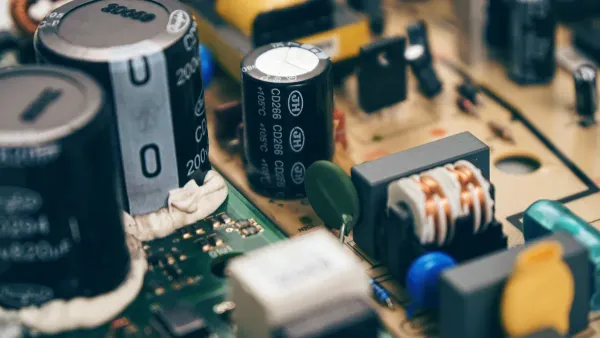
After you learn how to safely discharge a capacitor, you can explore the science behind it. The controlled release of a capacitor's stored energy is a key principle in electronics. Understanding these discharge characteristics helps you design and troubleshoot any circuit.
The Capacitor as a Power Source
A charged capacitor acts like a small, temporary battery. Both devices store electrical energy. A capacitor, however, releases its energy much faster. You can see this principle in action in many devices.
- Camera Flashes: A capacitor provides a quick, powerful burst of energy for the bright flash.
- Car Audio Systems: Large capacitors supply extra power to amplifiers for deep bass notes.
- Memory Retention: Some devices use a capacitor to run clock circuits or hold memory for a short time when the main power is off.
A key difference is how their voltage behaves during discharge. A battery maintains a steady voltage, while a capacitor's voltage drops as it releases its charge. This predictable drop is one of its most useful discharge characteristics.
The RC Time Constant
The speed of a capacitor discharge depends on two things: its capacitance (C) and the resistance (R) of the circuit. You calculate the RC time constant (τ) by multiplying these two values: τ = R * C. This time constant, measured in seconds, defines the discharge time. A larger resistor or capacitor results in a longer, safer discharge time. This is one of the most important discharge characteristics to understand.
The discharge follows a predictable curve. After a specific amount of time, a certain percentage of the charge is gone.
| Time Elapsed | Voltage Remaining |
|---|---|
| 1 Time Constant (1τ) | 36.8% |
| 3 Time Constants (3τ) | 5.0% |
| 5 Time Constants (5τ) | 0.7% |
After five time constants, the capacitor is considered safely discharged. Understanding these discharge characteristics is crucial for designing timing circuits. Companies like Nova Technology Company (HK) Limited, a HiSilicon-designated (authorized) solutions partner, apply these principles to create advanced electronic solutions.
The Capacitor Discharge Formula
You can predict the voltage of a discharging capacitor at any moment using the capacitor discharge formula. The capacitor discharge formula shows how the voltage drops over time. The capacitor discharge formula is: V(t) = V₀e^(-t/RC).
Here is what each part of the capacitor discharge formula means:
- V(t) is the voltage at a specific time.
- V₀ is the initial voltage when the discharge begins.
- e is a mathematical constant.
- t is the amount of time that has passed.
- RC is the time constant of the circuit.
This capacitor discharge formula is essential for engineers. It allows them to precisely control the discharge time for any circuit. The capacitor discharge formula helps you understand the discharge characteristics and how to discharge a capacitor effectively.
Critical Capacitor Safety Precautions
You must always prioritize safety when working with circuits. A charged capacitor holds a surprising amount of energy. Following proper safety precautions is not optional; it is essential to prevent serious injury and equipment damage. Understanding the risks helps you appreciate the importance of these rules.
The Danger of Short Circuits
Never use a screwdriver or a piece of wire to discharge a capacitor. This action creates a short circuit. A short circuit provides a path with almost no resistance for the electricity to flow. The stored energy in the capacitor releases almost instantly. This rapid discharge can damage both the capacitor and the tool you are using.
The sudden release of energy from a large capacitor can cause:
- A loud bang and a bright, dangerous arc flash.
- The screwdriver tip to melt or vaporize.
- The capacitor to rupture or explode.
When a capacitor short circuits, it generates intense internal heat. This can cause the capacitor to smoke, ignite, and become a fire hazard. For aluminum electrolytic capacitors, a short circuit can generate gas from the electrolyte. The internal pressure builds until it ruptures the casing, expelling conductive fluid. This fluid can land on other parts of the circuit board, causing more short circuits and damage.
⚠️ Extreme Danger: Large DC filter capacitors, like those in high-voltage power supplies, can store enough energy to cause severe injury or even be fatal. A controlled discharge through a resistor is the only safe method.
Essential High-Voltage Safety Measures
Working with high-voltage circuits requires strict safety measures. Always assume a capacitor is charged until you prove otherwise with a multimeter. Before you begin any manual discharge techniques, you must establish a safe working environment.
Follow these essential safety measures:
-
Lockout/Tagout (LOTO) Procedures: You must disconnect the equipment from all power sources before working on it. OSHA regulations require a formal LOTO process to prevent accidental re-energization.
- Notify: Inform all affected personnel that you are shutting down the equipment.
- Shut Down: Turn off the equipment using its normal controls.
- Isolate: Disconnect the equipment from its energy source. This can mean unplugging it, opening a circuit breaker, or removing a fuse.
- Lock and Tag: Apply a lock and a tag to the isolating device (like the plug or breaker). The tag warns others not to operate the device.
- Release Stored Energy: This is where you safely discharge a capacitor. You must release any stored energy that could be a danger.
- Verify: Use a multimeter to test the circuit and confirm it is fully de-energized.
-
Use Personal Protective Equipment (PPE): Your gear is your first line of defense. When working near high-voltage circuits, you must wear the correct PPE.
- Insulating Gloves: Wear rubber gloves rated for the voltage you are working with. Leather protectors should be worn over the rubber gloves to prevent punctures.
- Safety Glasses: Always wear safety glasses or goggles to protect your eyes from arc flashes or flying debris.
- Insulating Sleeves: If your arms might come close to other energized parts, you must wear insulating sleeves.
-
Follow the "One-Hand Rule": When you test or work on a high-voltage circuit, keep one hand in your pocket or behind your back. This simple habit is a critical safety practice. It prevents you from accidentally creating a current path across your chest and through your heart, which is the most dangerous route for an electrical shock.
Why You Must Not Discharge a Capacitor by Hand
You must never touch the two terminals of a charged capacitor at the same time. Your body can conduct electricity. Touching the terminals allows the capacitor to discharge through you. While the human body has some natural resistance, it is not enough to protect you from a powerful discharge.
The skin provides most of your body's resistance. Dry skin can have a resistance of over 100,000 ohms. However, the internal tissues of your body have a very low resistance of around 300 ohms. Your skin also acts like a capacitor. A sudden voltage change, like touching a charged terminal, can allow a high initial current to bypass the skin's resistance.
Even a small amount of current passing through the body can have severe effects.

The greatest danger from an electrical shock is ventricular fibrillation. This happens when the electric current disrupts the heart's natural rhythm. The heart quivers ineffectively instead of pumping blood. A current as low as 100 milliamperes (mA) can trigger this fatal condition.
| Current (mA) | Effect on the Human Body |
|---|---|
| 1 mA | Faint tingling sensation. |
| 10–20 mA | Muscle contraction; you may not be able to let go. |
| 100–300 mA | Ventricular fibrillation is likely; this is often fatal. |
| 300+ mA | Severe burns and tissue damage begin. |
A capacitor can easily deliver a current far greater than 100 mA. The risk is too high. Always use the proper tools and procedures to discharge a capacitor safely.
You now know how to discharge a capacitor safely. Always discharge a capacitor with a resistor. Verify the discharge with a multimeter to confirm a complete discharge. The RC time constant controls the discharge time. This concept is vital for circuit design, helping to smooth power and manage the discharge time in a circuit. The time it takes for a full discharge is the discharge time.
⚠️ Final Warning: Always treat every capacitor as charged. A controlled discharge is the only safe discharge for any circuit. Never use a tool to short-circuit a capacitor; this is not a safe discharge and is a dangerous discharge method for any circuit.
FAQ
Can I reuse a resistor after discharging a capacitor?
Yes, you can reuse a high-wattage resistor for discharging. You should inspect it for any signs of damage or overheating first. A good quality power resistor will last for many uses if you use it correctly.
Why can't I just use a screwdriver?
You must not use a screwdriver because it creates a dangerous short circuit. The sudden energy release can create a loud bang, an arc flash, and damage the capacitor. It can also melt the tip of your screwdriver.
Do capacitors discharge on their own?
Capacitors do lose their charge over time through a process called self-discharge. However, this can take hours, days, or even weeks. You should never assume a capacitor is empty. Always discharge it manually for safety.
What happens if my resistor is too small?
An undersized resistor cannot handle the initial surge of energy. It will get very hot and can burn out, melt, or even catch fire. This creates a safety hazard and fails to discharge the capacitor properly.
✅ Always check: Use a resistor with a high power rating (e.g., 10W or more) to ensure a safe and controlled discharge.