Understanding the 105 Capacitor Value A Simple Guide
A capacitor marked with the number '105' has a specific capacitance value. This code means the component has a capacitance o
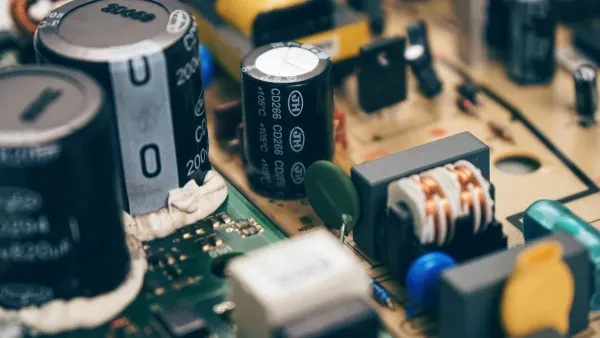
A capacitor marked with the number '105' has a specific capacitance value. This code means the component has a capacitance of 1 microfarad (1 µF). The three-digit number on a 105 capacitor is a simple code. It reveals the component's value once you understand the secret behind it. The capacitor value 105 is very common in electronic circuits. Hobbyists and technicians often find the 105 capacitor in their projects, making it essential to recognize.
Key Takeaways
- A '105' capacitor means it has a value of 1 microfarad (1 µF). The first two numbers ('10') are the base, and the third number ('5') tells you to add five zeros, making it 1,000,000 picofarads.
- Always check a capacitor's voltage rating. Using a capacitor with a voltage rating that is too low can cause it to fail or even explode. A higher voltage rating is always safe.
- The letter after '105' shows its tolerance. For example, '105K' means the capacitor's actual value can be 10% more or less than 1 µF.
- The 1 µF capacitor is very useful. It helps keep power steady for computer chips, blocks unwanted DC voltage in audio circuits, and helps create timers and filters.
Decoding the Capacitor Value 105
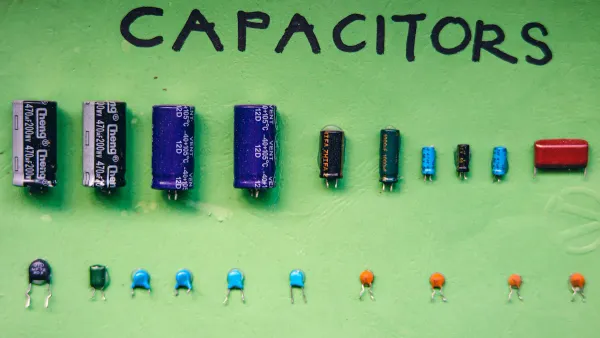
The numbers printed on a capacitor are not random. They follow a standardized system that makes identifying the component's properties straightforward. This system is especially common for non-polarized components like ceramic capacitors. Understanding this code is the first step to mastering component identification.
The Three-Digit Coding System
The three-digit code is a shorthand method for expressing a capacitor's value. This marking standard helps engineers and hobbyists quickly read components without needing complex equipment. The system is defined by official standards bodies to ensure consistency across the electronics industry.
- American Standard: EIA RS-19 (Electronic Industries Alliance)
- European Standard: IEC-60384 (International Electrotechnical Commission)
Historically, older components like paper or polyester film capacitors used a color-coding system. This method, however, had drawbacks. Colors could fade over time, get obscured by dirt, or be difficult for people with colorblindness to read. The modern alphanumeric system, including the three-digit code, offers greater precision and is easier to read on tiny components.
The First Two Digits: '10'
In the three-digit system, the first two numbers are the "significant digits." They form the base number for the capacitance value.
Note: For a 105 capacitor, the significant digits are '10'. These digits establish a baseline measurement of 10 before any multiplier is applied. This rule is consistent for all capacitors using this coding scheme.
For example, in a capacitor marked '473', the significant digits are '47'. In our case, the '10' on a 105 capacitor gives us the first part of our calculation.
The Multiplier Digit: '5'
The third digit in the code is the multiplier. It tells you how many zeros to add to the end of the significant digits. This number represents a power of 10.
For a 105 capacitor, the multiplier is '5'. This means you should add five zeros after the significant digits ('10').
10 (Significant Digits) + 00000 (Five Zeros from the Multiplier) = 1,000,000
This simple formula is the key to decoding the capacitor value 105 and many other common capacitor values.
Calculating the Final Value in Picofarads
The three-digit code always gives the final capacitance value in a base unit called picofarads (pF). A picofarad is a very small unit of capacitance, equal to one trillionth of a farad (10⁻¹² F).
Let's put it all together for our 105 capacitor:
- Significant Digits: 10
- Multiplier: 5 (which means add 5 zeros)
- Result: 1,000,000
So, a 105 capacitor has a capacitance value of 1,000,000 pF.
Because working with such large numbers can be inconvenient, technicians often convert this value to larger units like nanofarads (nF) or microfarads (µF).
- 1,000 pF = 1 nF
- 1,000 nF = 1 µF
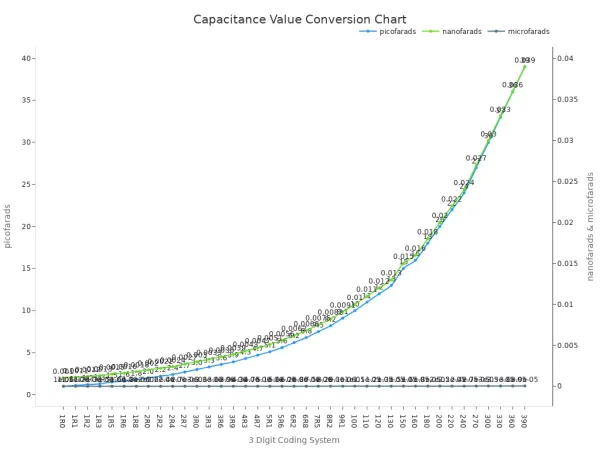
Therefore, 1,000,000 pF is equal to 1,000 nF, which is equal to 1 µF. The capacitor value 105 is one of the most common values you will encounter, making this conversion essential to know. The chart below shows how different codes convert to their respective capacitance values.
Reading Beyond the 105 Code
Knowing that '105' means 1 µF is a great start. However, other markings on a capacitor's body are just as important for building a safe and reliable circuit. These markings tell you about the capacitor's voltage limit, its precision, and how to install it correctly.
Understanding Voltage Ratings
The voltage rating indicates the maximum continuous voltage a capacitor can handle safely. This value is often printed directly on the component, for example, as 50V. For 1µF ceramic capacitors, standard ratings can range from 16V up to 1kV. Using a capacitor with the correct voltage rating is critical for circuit safety.
Warning: Exceeding a capacitor's voltage limit, even for a short time, can cause serious problems.
- It drastically reduces the component's lifespan.
- It can cause the capacitor to fail and create a short circuit.
- Technicians often use capacitors rated for at least twice the circuit's expected voltage to ensure longevity and prevent failure.
What Capacitor Tolerance Means
A letter code often follows the three-digit value. This letter represents the capacitor's tolerance, which is how much its actual capacitance can vary from its rated value. A 105 capacitor might have a letter like 'K' or 'M' printed on it.
| Letter Code | Tolerance | Meaning for a 1 µF Capacitor |
|---|---|---|
| J | ±5% | The actual value is between 0.95 µF and 1.05 µF. |
| K | ±10% | The actual value is between 0.90 µF and 1.10 µF. |
| M | ±20% | The actual value is between 0.80 µF and 1.20 µF. |
Low-tolerance capacitors (±5% or less) are essential for precision applications like timing circuits and audio filters, where a small change can affect performance. High-tolerance capacitors (±20%) are perfectly acceptable for tasks like power supply filtering, where the exact value is not critical.
The Importance of Polarity
Some capacitors are polarized, meaning they must be installed in a specific direction. While many ceramic capacitors are non-polarized, other types like aluminum electrolytic and tantalum capacitors are. These components have a positive (+) and a negative (-) lead.
Identifying the polarity is key:
- Electrolytic Capacitors: Look for a stripe with minus symbols (-) marking the negative lead. The negative lead is also typically shorter.
- Tantalum Capacitors: A line or notch usually marks the positive end.
Installing a polarized capacitor backward is dangerous. A reverse connection causes the internal dielectric layer to break down. This failure generates hydrogen gas, leading to overheating, leakage, and even an explosion. 💣 Always double-check the polarity before soldering.
Common Uses for a 105 Capacitor
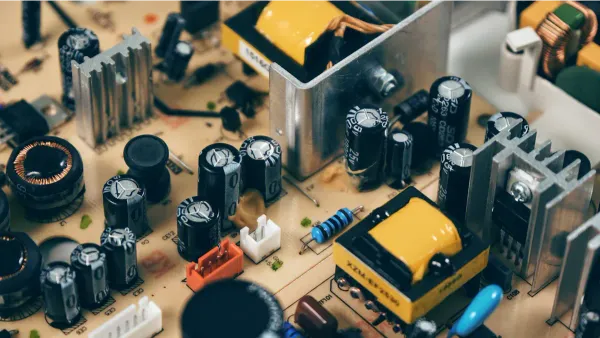
The 1 µF capacitor is a workhorse in electronics, found in countless circuits from simple hobby projects to complex commercial devices. As electronics shrink, manufacturers like Murata and Nichicon are producing smaller, high-performance capacitors. This trend allows partners like Nova Technology Company (HK) Limited, a HiSilicon-designated solutions provider, to develop more compact and powerful systems. The versatility of the 1 µF capacitor makes it essential for four key applications.
Power Supply Decoupling
Integrated circuits (ICs) need a steady, clean power source to function correctly. A decoupling capacitor acts like a tiny, local power reserve placed right next to an IC's power pin.
It provides a stable and clean power supply to sensitive components. When the IC suddenly needs a burst of current, the capacitor supplies it instantly, preventing the voltage from dropping. This process stabilizes the power supply and reduces electrical noise.
Signal Coupling Circuits
In many circuits, it is necessary to connect two different stages without letting their DC voltages interfere with each other. A coupling capacitor solves this problem.
- It acts as an open circuit to DC voltage, effectively blocking it.
- It allows AC signals, like audio or radio frequencies, to pass through.
This function is essential in audio amplifiers, where the capacitor passes the music signal from one amplification stage to the next while keeping the DC operating points separate.
Timers and Oscillators
Many circuits rely on precise timing to operate. A 105 capacitor is often paired with a resistor to create a time-delay circuit. In a classic 555 timer IC, the time it takes for the capacitor to charge and discharge through the resistor determines the output frequency. This simple RC (Resistor-Capacitor) combination is the heart of many flashing lights, sound generators, and other oscillator circuits.
Audio and Signal Filtering
Capacitors can filter out unwanted frequencies from a signal. When combined with a resistor, they form a simple RC filter. A low-pass filter allows low-frequency signals to pass while blocking high-frequency noise. The point where the filter starts working is called the cutoff frequency, calculated with a simple formula:
f_c = 1 / (2πRC)
Here, R is the resistance and C is the capacitance. This technique is widely used to clean up audio signals or stabilize sensor readings.
The capacitor value 105 simply means 1 microfarad (1 µF). This value comes from the code: '10' followed by five zeros, resulting in 1,000,000 picofarads. A 105 capacitor is a versatile component found in many applications.
- It stabilizes power for microcontrollers.
- It sets the frequency in timing circuits.
Understanding the full capacitance value, including voltage and tolerance, empowers builders to choose the right parts. Mastering small details about a 105 capacitor is a key step toward becoming a skilled electronics hobbyist. This knowledge makes decoding the capacitor value 105 an easy task.
FAQ
What if a capacitor only has '105' and no other letters?
Manufacturers often print '105' without a tolerance letter. This usually means the capacitor has a standard tolerance of ±20%. This is the most common tolerance for general-purpose applications, so the letter 'M' is sometimes omitted to save space on the component.
Can I use a 105 capacitor with a higher voltage rating?
Yes. Technicians can safely use a capacitor with a higher voltage rating than the circuit requires. For example, a 50V capacitor works perfectly in a 12V circuit. A person must never use a capacitor with a voltage rating that is too low. ⚡
Are all 105 capacitors the same size?
No. The physical size of a 105 capacitor varies. The size depends on its type (ceramic, tantalum) and its voltage rating. Capacitors with higher voltage ratings are typically larger. This extra size helps them handle the increased electrical pressure without failing.
What does the 'K' after 105 mean?
The letter 'K' on a capacitor indicates its tolerance. A capacitor marked 105K has a tolerance of ±10%. This means its actual capacitance is within 10% of its rated 1 µF value. Its true value is between 0.90 µF and 1.10 µF.