The Evolution of Integrated Circuits: From Basic Definition to Modern Applications in Electronic Design
Circuits: From Basic Definition to Modern Applications in Electronic Design The Evolution of Integrated Circuits: From Basic Definition to Modern Applications in Electronic Design Image Source: pexels Integrated circuits, commonly referred to as ICs, have transformed the landscape of electronic device design and manufacturing.
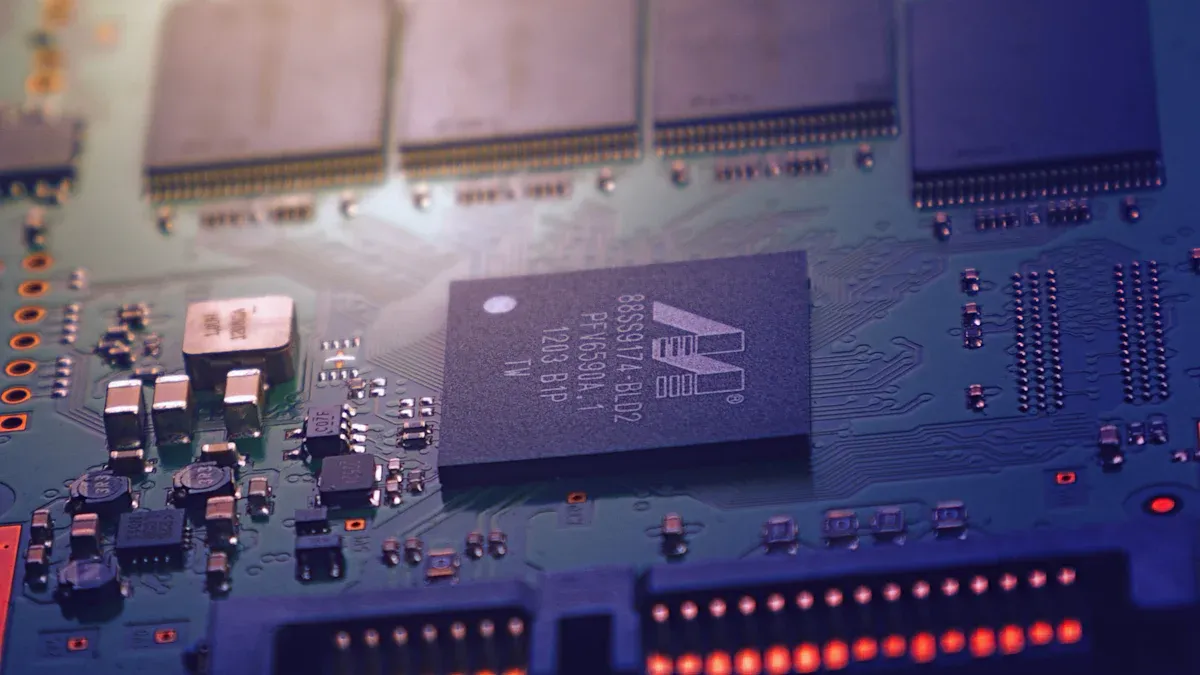
Integrated circuits, commonly referred to as ICs, have transformed the landscape of electronic device design and manufacturing. The ic integrated circuit definition encompasses compact electronic systems that integrate multiple components, such as transistors and resistors, into a single chip, allowing devices to execute complex functions with remarkable efficiency. Their pivotal role in modern electronics drives advancements in cutting-edge technologies like artificial intelligence, IoT, and 5G networks, spurring innovation across various industries.
The global market value underscores their critical importance. By 2031, integrated circuits are anticipated to achieve a valuation of USD 1689.86 billion, with a CAGR of 13%. From automotive systems to consumer electronics, the applications of integrated circuits continue to redefine the future of technology and design.
Key Takeaways
-
Integrated circuits (ICs) put many electronic parts into one chip. This makes devices work better and faster.
-
The transistor, invented in 1947, helped create modern ICs. It made electronics smaller and more dependable.
-
Moore's Law says chips get twice as many transistors every two years. This keeps technology improving quickly.
-
ICs are important in many fields like electronics, cars, and factories. They help make devices smarter and more useful.
-
Smaller gadgets, like smartphones and smartwatches, are possible because of ICs. They pack a lot of power into tiny spaces.
-
New ideas like 3D ICs and brain-like computing will make future devices even faster and better.
-
Better materials, like gallium carbide and graphene, are making ICs stronger and more eco-friendly.
-
Quantum circuits might be the next big thing. They could solve hard problems much faster than today’s computers.
Historical Development of Integrated Circuits
The Invention of the Transistor
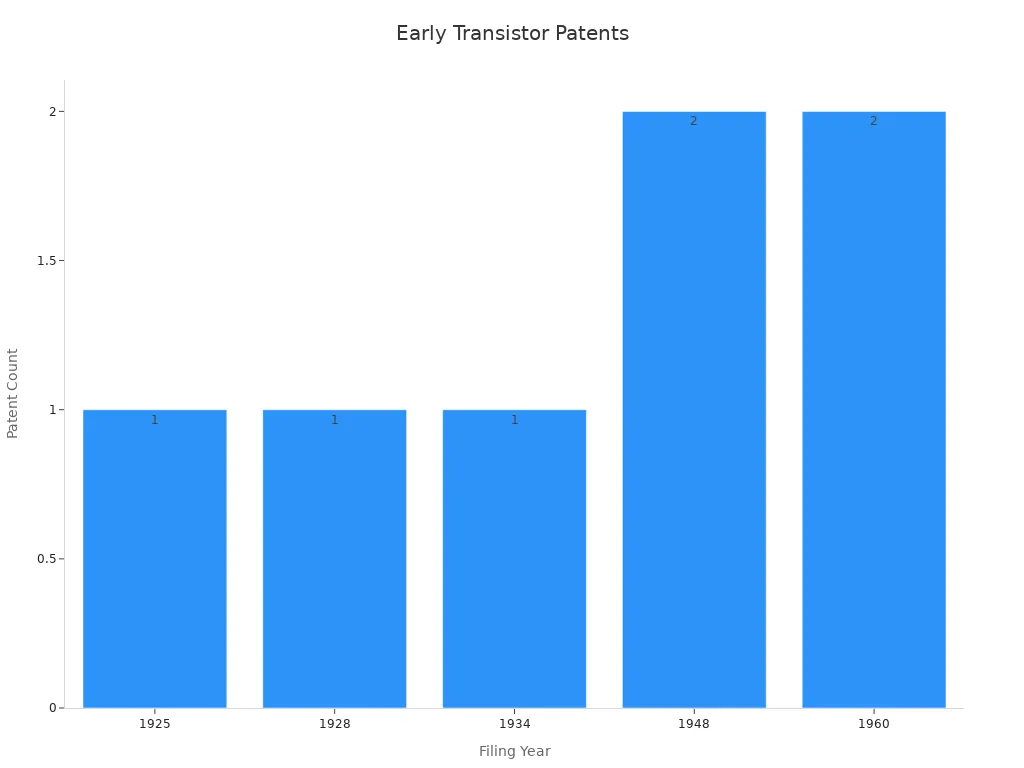
The invention of the transistor revolutionized electronics. You can trace its origins back to 1947, when William Shockley, Walter Brattain, and John Bardeen developed the first working transistor at Bell Labs. This breakthrough replaced bulky vacuum tubes, enabling smaller and more efficient devices. Early patents, such as Julius Edgar Lilienfeld’s designs in the 1920s and later patents by Shockley and Bardeen, laid the foundation for modern semiconductor technology.
|
Patent Number |
Inventor |
Description |
Filing Date |
|---|---|---|---|
|
US 1745175 |
Julius Edgar Lilienfeld |
Method and apparatus for controlling electric current |
1925-10-22 |
|
US 1900018 |
Julius Edgar Lilienfeld |
Device for controlling electric current |
1928-03-28 |
|
GB 439457 |
Oskar Heil |
Improvements in electrical amplifiers |
1934-03-02 |
|
US 2524035 |
John Bardeen et al. |
Three-electrode circuit element utilizing semiconductive materials |
1948-02-26 |
|
US 2569347 |
William Shockley |
Circuit element utilizing semiconductive material |
1948-06-26 |
The transistor’s impact extended beyond its technical innovation. It paved the way for integrated circuits, which would later transform industries like computing, telecommunications, and consumer electronics.
The Birth of Integrated Circuits
The birth of integrated circuits marked a turning point in electronic design. In 1958, Jack Kilby at Texas Instruments created the first working integrated circuit, combining multiple components onto a single silicon chip. This invention addressed the growing need for miniaturization and efficiency in electronics. Shortly after, Robert Noyce at Fairchild Semiconductor refined the concept by introducing planar manufacturing techniques, which made mass production feasible.
The first integrated circuit purchase order consisted of 64 logic elements, priced at $1,000 each. By 1962, Texas Instruments began producing these circuits, delivering samples to institutions like MIT. NASA’s Apollo Program became a major consumer, using approximately 5,000 standard logic ICs in each computer. During this period, the price of integrated circuits dropped significantly, from $1,000 to $20–30, making them accessible for broader applications.
Key Milestones in Integrated Circuit Development
The development of integrated circuits has seen remarkable milestones over the decades. You can observe this evolution through historical production data:
|
Year/Period |
Development/Innovation |
Description |
|---|---|---|
|
1904 |
Invention of Vacuum Tube |
Sir John Ambrose Fleming invented the first vacuum tube, enabling one-way current flow. |
|
1947 |
Invention of Transistor |
William Shockley, Walter Brattain, and John Bardeen invented the transistor, leading to smaller and more efficient devices. |
|
1950s-1960s |
Transition to Integrated Circuits |
The development of integrated circuits allowed for the miniaturization of electronic components. |
|
Recent |
3D ICs, Neuromorphic Computing, Silicon Photonics, Quantum ICs |
Innovations that enhance performance and functionality in modern electronics. |
Economic trends also highlight the impact of integrated circuits. Between 1974 and 1996, memory chip prices decreased by a factor of 27,270, averaging a decline of 40.9% per year. Logic chip prices from 1985 to 1996 dropped by a factor of 1,938, with an average annual decline of 54.1%. The introduction of IBM’s personal computer in 1981 further accelerated the demand for integrated circuits, solidifying their role in modern technology.
These milestones demonstrate how integrated circuits evolved from simple innovations to complex systems that drive today’s technological advancements.
Moore's Law and Its Impact on Integrated Circuits
Moore's Law has shaped the evolution of integrated circuits for decades. You may have heard of this principle, which Gordon Moore, co-founder of Intel, introduced in 1965. He observed that the number of transistors on a microchip doubles approximately every two years, while the cost per transistor decreases. This prediction has become a guiding principle for the semiconductor industry, driving innovation and technological progress.
The Growth of Transistor Counts
The consistent doubling of transistors has led to remarkable advancements in computing power. For example, early microchips in the 1970s contained only a few thousand transistors. Today, modern processors house billions of transistors on a single chip. This exponential growth has enabled devices to perform complex tasks faster and more efficiently.
|
Year |
Transistor Count |
Size of Transistors |
|---|---|---|
|
1954 |
N/A |
5 nanometers |
|
2004 |
N/A |
1 atom |
|
2021 |
N/A |
3 nanometers |
The shrinking size of transistors has also played a crucial role. You can see how the size has decreased from 5 nanometers in 1954 to just 3 nanometers in 2021. This miniaturization allows manufacturers to fit more transistors onto a chip, boosting performance without increasing physical size.
Performance and Productivity
Moore's Law doesn't just impact transistor counts. It also drives improvements in performance and productivity. For instance:
-
The number of transistors on microprocessor chips doubles roughly every 18 months, leading to consistent performance gains.
-
The average size of a silicon atom in semiconductor chips has decreased significantly, showcasing advancements in technology.
-
Over 40% of global productivity increases are attributed to advancements in semiconductor performance and cost.
These trends highlight how Moore's Law has influenced not only the design of integrated circuits but also the broader economy. You benefit from faster, more affordable devices, whether you're using a smartphone, a laptop, or even a smart home system.
Challenges and Future Outlook
While Moore's Law has driven progress for decades, maintaining this pace has become increasingly challenging. As transistors approach atomic scales, engineers face physical and technical limitations. However, the industry continues to innovate. Techniques like 3D stacking and new materials such as graphene offer promising solutions. These advancements ensure that Moore's Law remains relevant, even as traditional scaling slows.
Moore's Law has profoundly impacted integrated circuits, shaping the devices you use every day. Its influence extends beyond technology, driving economic growth and enabling groundbreaking innovations. As the industry evolves, you can expect even more exciting developments in the years to come.
Technical Evolution of Integrated Circuits
Manufacturing Process of Integrated Circuits
The manufacturing process of integrated circuits is a marvel of modern engineering. It begins with a silicon wafer, which serves as the foundation for building the chip. You might find it fascinating that each wafer contains around 260 individual dies, with an average yield rate of 93%. This means only about 18 dies per wafer are defective, showcasing the efficiency of the semiconductor industry.
To achieve such precision, manufacturers rely on advanced process control techniques. These methods help identify and eliminate defects at various stages of production. Continuous refinement of these processes ensures that even as integrated circuits become more complex, yield rates remain high. For instance, when producing 200 wafers monthly, the resulting output supports the growing demand for cutting-edge technology in computer processors and microchips.
The integration of new strategies, such as 3D stacking and extreme ultraviolet lithography, further enhances the manufacturing process. These innovations allow the semiconductor industry to keep pace with the demands of very large-scale integration (VLSI) and ultra large-scale integration (ULSI) technologies.
Components of an Integrated Circuit
An integrated circuit is a compact powerhouse of technology. It contains billions of transistors, resistors, capacitors, and diodes, all interconnected to perform specific functions. Modern ICs require between six to ten wiring layers to connect these components. Each layer consists of copper tracks as narrow as 10 to 20 nanometers, separated by insulating silicon dioxide. Tiny tungsten-filled vias provide vertical connectivity between layers.
These components work together to create the functionality you see in devices like smartphones, laptops, and computer processors. The intricate design of these circuits ensures that they can handle complex tasks efficiently, whether in a microprocessor or a system-on-chip.
Types of Integrated Circuits
Integrated circuits come in various types, each designed for specific applications.
Digital Integrated Circuits
Digital ICs process binary data, making them essential for devices like microprocessors and memory chips. They form the backbone of modern computing, enabling everything from simple calculators to advanced computer processors.
Analog Integrated Circuits
Analog ICs handle continuous signals, such as sound or temperature. You’ll find them in devices like amplifiers, sensors, and communication systems. These circuits are crucial for converting real-world data into a format that digital systems can process.
Mixed-Signal Integrated Circuits
Mixed-signal ICs combine digital and analog functionalities on a single chip. They are vital for applications like smartphones, where both types of signals need to coexist. This integration reduces the size and cost of devices while enhancing their performance.
The evolution of integrated circuits, from their manufacturing processes to their diverse types, highlights the incredible advancements in semiconductor technology. These innovations continue to shape the future of electronics, enabling smarter, faster, and more efficient devices.
Applications of Integrated Circuits
Consumer Electronics
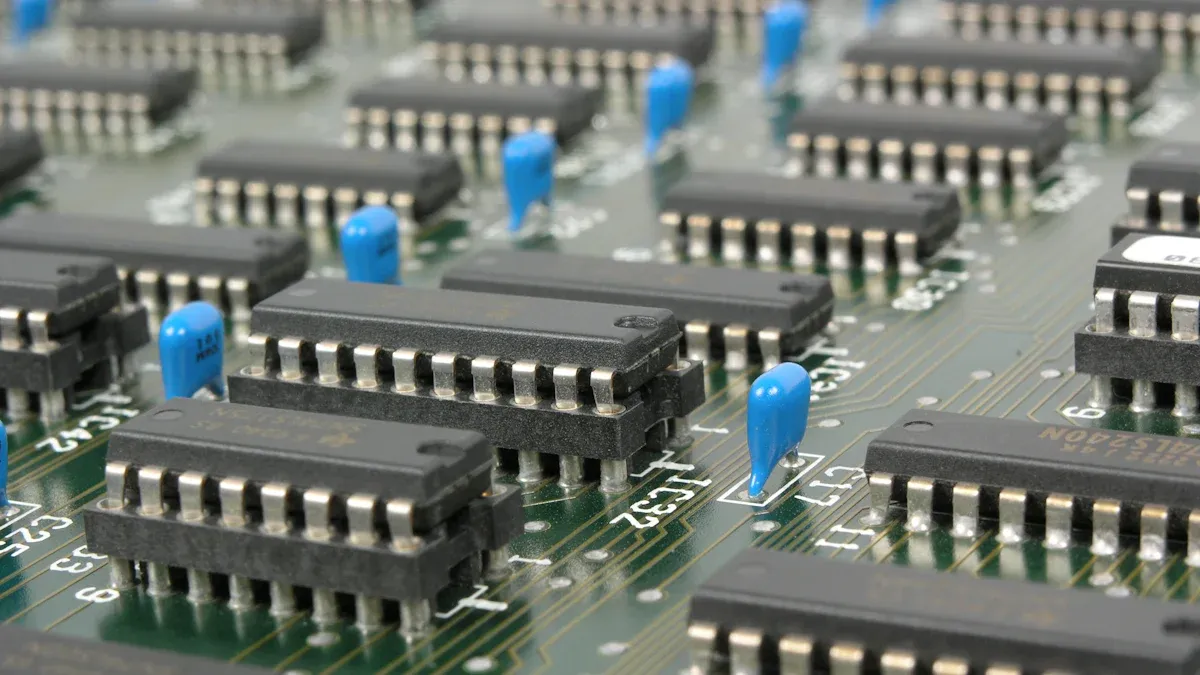
Integrated circuits play a vital role in the design and functionality of modern electronic devices. You encounter them daily in smartphones, tablets, smart TVs, and wearables. These devices rely on ICs to deliver advanced features like high-speed processing, seamless connectivity, and energy efficiency. For example, the microprocessors in your smartphone enable multitasking, while the sensors in smartwatches monitor your health in real time.
The consumer electronics segment dominates the integrated circuit market. This growth stems from the increasing demand for devices with enhanced performance and innovative features. As manufacturers continue to push boundaries, ICs enable smaller, faster, and more efficient designs. Whether you're streaming videos on a smart TV or navigating apps on a tablet, integrated circuits ensure smooth operation and reliability.
Automotive Industry
Integrated circuits have transformed the automotive industry, making vehicles smarter and safer. You see their impact in systems like advanced driver assistance systems (ADAS), infotainment platforms, and electric vehicle power management. These circuits handle complex tasks, such as monitoring road conditions, controlling battery usage, and enhancing connectivity between vehicle components.
The automotive IC market is growing rapidly.
-
The market size was estimated at 54.47 billion USD in 2024.
-
By 2025, it is projected to reach 59.65 billion USD, with further growth to 134.90 billion USD by 2034.
-
This growth reflects a compound annual growth rate (CAGR) of approximately 9.49%.
The shift toward electric and autonomous vehicles drives this expansion. As vehicles become more electrified and connected, the demand for high-performance ICs rises. You benefit from features like collision avoidance, lane-keeping assistance, and efficient energy consumption, all powered by integrated circuits.
Industrial Automation
Integrated circuits are the backbone of industrial automation. They enable machines and systems to operate with precision and efficiency. You find ICs in programmable logic controllers (PLCs), sensors, and robotics, which are essential for automating manufacturing processes. These circuits process data, control machinery, and ensure seamless communication between components.
Industrial automation relies on ICs to improve productivity and reduce operational costs. For instance, sensors equipped with ICs monitor temperature, pressure, and motion in real time. Robotics powered by ICs perform tasks with accuracy, reducing human error and increasing output. Whether you're observing automated assembly lines or advanced packaging systems, integrated circuits drive innovation in industrial design.
Internet of Things (IoT)
Integrated circuits are the backbone of IoT devices, enabling seamless connectivity and efficient data processing. These circuits power sensors, microcontrollers, and communication modules, which are essential for IoT systems to function effectively. You experience their impact in smart homes, wearable devices, and industrial IoT applications.
IoT devices rely on integrated circuits to process vast amounts of data in real time. For instance, smart thermostats use ICs to analyze temperature patterns and adjust settings automatically. Similarly, fitness trackers monitor your activity and health metrics using IC-powered sensors. These circuits ensure that IoT devices remain compact, energy-efficient, and capable of handling complex tasks.
The market for integrated circuits in IoT devices is growing rapidly.
-
The market size is projected to increase from USD 1,150.85 Million in 2023 to over USD 3,385.89 Million by 2031.
-
The compound annual growth rate (CAGR) is estimated at 14.4% during this period.
This growth reflects the increasing adoption of IoT across industries. Whether you're automating your home or optimizing industrial processes, integrated circuits play a crucial role in making IoT technology accessible and reliable.
Defense and Aerospace
Integrated circuits are indispensable in defense and aerospace applications. They enable advanced systems like radar, satellite communication, and unmanned aerial vehicles (UAVs). You benefit from their precision and reliability in critical operations, such as missile guidance and surveillance.
These circuits enhance the performance of defense and aerospace systems by providing faster processing speeds and greater energy efficiency. For example, radar systems use ICs to analyze signals and detect objects with high accuracy. Satellites rely on ICs for communication and navigation, ensuring uninterrupted service even in challenging environments.
The market for integrated circuits in defense and aerospace is expanding steadily.
|
Year |
Market Size (USD) |
Growth Rate (CAGR) |
Notable Investment/Contract |
|---|---|---|---|
|
2023 |
- |
- |
|
|
2032 |
13.79 Billion |
7.8% |
$162 million grant to Microchip Technology Inc. |
|
2024 |
- |
- |
CAD$95 million for SkyRanger R70 UAS for Ukraine |
|
2024 |
- |
- |
Northrop Grumman's ballistic missile target vehicle |
These figures highlight the growing demand for ICs in defense and aerospace. Investments in cutting-edge technologies, such as UAVs and ballistic missile systems, demonstrate the critical role of integrated circuits in ensuring national security and advancing space exploration.
Impact of Integrated Circuits on Electronic Design
Miniaturization of Devices
The miniaturization of electronic devices has revolutionized the way you interact with technology. Integrated circuits play a pivotal role in this transformation by integrating multiple components, such as transistors and resistors, onto a single chip. This advancement allows manufacturers to reduce the size, weight, and power consumption of devices without compromising functionality. For example, modern smartphones, which fit comfortably in your hand, contain billions of transistor nodes packed into tiny integrated circuits.
This technology enables the creation of compact and lightweight devices, making it possible for you to carry powerful processors in your pocket. The integration of components onto smaller chips also enhances the miniaturisation of electronic devices, paving the way for innovations like wearable electronics and portable medical equipment. These advancements highlight how integrated circuits drive the miniaturization of electronics, ensuring that devices become more efficient and user-friendly.
Enhanced Performance and Efficiency
Integrated circuits significantly enhance the performance and efficiency of electronic systems. By optimizing the layout and design of components, these circuits enable faster processing speeds and improved energy efficiency. For instance, modern processors achieve remarkable performance gains due to advancements in integrated circuit technology.
|
Metric |
Traditional Method |
Deep Learning Method |
Improvement Rate |
|---|---|---|---|
|
Layout Optimization Time |
100 hours |
10 hours |
90% |
|
Accuracy (MAE) |
Baseline |
94% decrease |
N/A |
|
Delay Prediction (RMSE) |
Baseline |
25% lower |
N/A |
|
Design Quality (Power) |
Baseline |
400% improvement |
N/A |
|
Design Quality (Area) |
Baseline |
50% improvement |
N/A |
|
Design Quality (Performance) |
Baseline |
100% improvement |
N/A |
|
Scalability (MSE) |
Baseline |
75% reduction |
N/A |
These improvements translate to real-world benefits for you. Devices powered by integrated circuits consume less energy, operate more efficiently, and deliver higher performance. Whether you're using a laptop for work or a gaming console for entertainment, integrated circuits ensure that your devices perform seamlessly.
Cost Reduction in Manufacturing
Integrated circuits also contribute to significant cost reductions in manufacturing. The semiconductor industry achieves annual cost savings of 5–10% through continuous process optimizations. These savings result from advancements in lithography techniques, wafer utilization, and AI-driven defect detection.
-
Production efficiency improves by reducing waste and enhancing yield rates.
-
High-precision manufacturing techniques lower the cost of producing processors and other components.
-
AI-driven tools streamline defect detection, minimizing errors and reducing material costs.
For you, these cost savings mean more affordable electronic devices with advanced features. Manufacturers can produce high-quality products at lower prices, making cutting-edge technology accessible to a broader audience. Integrated circuits not only enhance the performance of electronics but also make them more economical for everyday use.
Enabling Complex System Designs
Integrated circuits have revolutionized the way you approach complex system designs. By combining billions of components onto a single chip, these circuits allow you to create intricate systems that were once impossible to achieve. Whether you're working on a smartphone, a medical device, or an advanced robotic system, integrated circuits provide the foundation for innovation.
One of the most significant advantages of integrated circuits is their ability to simplify the design process. Instead of assembling individual components, you can use pre-designed chips that integrate multiple functions. For example, a system-on-chip (SoC) combines a processor, memory, and input/output interfaces into one compact unit. This integration reduces the time and effort required to develop sophisticated electronic systems.
Integrated circuits also enable seamless communication between different parts of a system. You can connect sensors, processors, and actuators through these circuits to create a cohesive network. For instance, in a smart home system, integrated circuits allow devices like thermostats, cameras, and lights to work together. This interconnectedness enhances functionality and improves user experience.
Another benefit of integrated circuits is their scalability. You can use them to design systems that range from small-scale gadgets to large-scale industrial applications. For example, microcontrollers power simple devices like digital watches, while field-programmable gate arrays (FPGAs) handle complex tasks in data centers. This versatility makes integrated circuits indispensable in modern electronic design.
The reliability of integrated circuits further supports complex system designs. These circuits undergo rigorous testing during manufacturing to ensure they meet high-quality standards. As a result, you can trust them to perform consistently in critical applications, such as medical equipment or aerospace systems.
Integrated circuits also pave the way for innovation by enabling advanced technologies. For example, artificial intelligence and machine learning rely on specialized chips to process vast amounts of data. These circuits make it possible for you to develop intelligent systems that can learn, adapt, and improve over time.
Future Trends in Integrated Circuit Technology
3D Integrated Circuits
3D integrated circuits represent a significant leap in electronic design. Unlike traditional chips, which arrange components on a single plane, 3D ICs stack multiple layers of circuits vertically. This design reduces the physical footprint while enhancing performance. You benefit from faster data transfer rates and lower power consumption because the stacked layers shorten the distance signals travel.
The demand for 3D ICs is growing rapidly due to their applications in data centers, artificial intelligence, and high-performance computing. These circuits enable compact designs for devices like smartphones and wearables. For example, 3D ICs allow manufacturers to integrate memory and processors into a single chip, improving efficiency and speed. This innovation ensures that your devices remain powerful yet compact, meeting the increasing demands of modern electronics.
Neuromorphic Computing
Neuromorphic computing mimics the structure and function of the human brain. Integrated circuits designed for this purpose use artificial neurons and synapses to process information. This approach enables machines to learn and adapt, making them ideal for tasks like pattern recognition and decision-making.
You can see the impact of neuromorphic computing in applications like autonomous vehicles and robotics. These systems rely on neuromorphic chips to process sensory data in real time, allowing them to navigate complex environments. For instance, a self-driving car uses neuromorphic ICs to analyze road conditions and make split-second decisions. This technology also reduces energy consumption, making it more sustainable for large-scale applications.
The potential of neuromorphic computing extends beyond current uses. Researchers are exploring its role in advancing artificial intelligence and machine learning. By replicating the brain's efficiency, neuromorphic ICs could revolutionize how machines interact with the world, bringing you closer to a future where technology seamlessly integrates into daily life.
Quantum Integrated Circuits
Quantum integrated circuits are at the forefront of technological innovation. These circuits harness the principles of quantum mechanics to perform computations far beyond the capabilities of classical systems. Unlike traditional ICs, which use binary bits, quantum ICs operate with quantum bits (qubits). This allows them to process vast amounts of data simultaneously, solving problems that would take classical computers years to complete.
Recent experiments highlight the progress in this field. Researchers have successfully integrated classical machine learning algorithms with quantum data to solve complex problems. For example, tests on superconducting quantum hardware with 127 qubits demonstrated the potential to handle systems with up to 44 qubits. These advancements show how quantum ICs can expand the range of solvable problems, even with the challenges posed by current noise levels in quantum computers.
The applications of quantum ICs are vast. They hold promise for fields like cryptography, drug discovery, and artificial intelligence. For instance, quantum ICs could revolutionize secure communication by enabling unbreakable encryption methods. As this technology matures, you can expect breakthroughs that redefine the limits of computing and electronics.
|
Forecast Category |
Description |
|---|---|
|
Overall Market Growth |
The Photonic Integrated Circuit market is projected to exceed US$22 billion by 2034. |
|
Data Center Forecast Methodology |
Methodologies for forecasting data center populations and AI accelerator units. |
|
PIC Transceivers for AI |
Forecasts on units and market for PIC transceivers used in AI applications. |
|
Quantum PIC Market |
Forecasts related to the quantum PIC market. |
|
PIC-based LiDAR Market |
Forecasts for the PIC-based LiDAR market. |
Quantum integrated circuits represent a transformative step in electronics. They promise to unlock new possibilities in computing, ensuring that future technologies meet the growing demands of a data-driven world.
Advances in Semiconductor Materials
Advances in semiconductor materials have revolutionized the performance and capabilities of integrated circuits. These materials enhance the efficiency, speed, and durability of electronic devices, enabling breakthroughs in technology. You benefit from these innovations in everyday gadgets, industrial systems, and cutting-edge applications like artificial intelligence.
Modern semiconductor materials offer remarkable properties that surpass traditional silicon. Gallium Carbide (GaC) stands out for its versatility. It features band gaps ranging from 0.449 eV to 3.340 eV, depending on its phase. This wide range allows GaC to exhibit ultraviolet properties, making it ideal for high-frequency applications. Its migration capabilities outperform Gallium Nitride (GaN), ensuring better reliability in demanding environments. You’ll find GaC in devices that require high power efficiency and thermal stability, such as electric vehicles and solar inverters.
Graphene, another groundbreaking material, has transformed the landscape of semiconductors. Semiconducting epi-graphene boasts a band gap of 0.6 eV and room temperature mobilities exceeding 5,000 cm² V⁻¹ s⁻¹. These mobilities are ten times higher than silicon and twenty times higher than other two-dimensional semiconductors. This exceptional performance makes graphene ideal for applications requiring rapid data processing and minimal energy consumption. You experience its impact in high-speed processors, flexible displays, and advanced sensors.
The adoption of these materials has also driven the miniaturization of integrated circuits. Their superior electrical properties allow manufacturers to design smaller chips without compromising functionality. This innovation enables compact electronic devices, such as smartphones and wearables, to deliver powerful performance. You benefit from faster processing speeds, longer battery life, and enhanced user experiences.
Semiconductor materials like GaC and graphene also pave the way for sustainable technology. Their energy-efficient properties reduce power consumption, lowering the environmental impact of electronic systems. For instance, integrated circuits made with these materials optimize energy use in data centers, reducing operational costs and carbon footprints. This shift toward greener technology ensures that you can enjoy advanced electronics while supporting environmental conservation.
The continuous evolution of semiconductor materials promises exciting possibilities for the future. Researchers are exploring new compounds and fabrication techniques to further enhance the capabilities of integrated circuits. As these advancements unfold, you can expect electronic devices to become even faster, smarter, and more efficient.
Integrated circuits have revolutionized electronics, shaping the devices you use daily. Their journey began with the transistor in 1947, enabling smaller and more reliable systems. In 1958, the first integrated circuit combined components onto a single chip, reducing size and cost. The 1970s brought microprocessors, powering personal computers. Moore's Law predicted continuous innovation, while System-on-Chip designs enhanced efficiency. Technologies like VLSI and ULSI now support billions of transistors, driving advancements in computing and consumer electronics. As 3D ICs, neuromorphic computing, and quantum circuits emerge, you can expect even smarter, faster, and more sustainable devices in the future.
FAQ
What is an integrated circuit (IC)?
An integrated circuit (IC) is a small chip that combines multiple electronic components, such as transistors and resistors, into a single unit. It performs complex functions efficiently and is essential for modern electronic devices like smartphones, computers, and IoT systems.
How do integrated circuits differ from traditional circuits?
Traditional circuits use separate components connected by wires, while integrated circuits combine these components onto a single chip. This integration reduces size, improves performance, and lowers manufacturing costs, making ICs ideal for compact and efficient electronic devices.
Why are integrated circuits important in modern technology?
Integrated circuits power nearly all modern electronics. They enable faster processing, energy efficiency, and miniaturization. Without ICs, devices like smartphones, laptops, and medical equipment would be bulkier, slower, and less reliable.
What are the main types of integrated circuits?
Integrated circuits fall into three main categories:
-
Digital ICs: Process binary data for computing tasks.
-
Analog ICs: Handle continuous signals like sound or temperature.
-
Mixed-Signal ICs: Combine digital and analog functions for versatile applications.
How does Moore’s Law relate to integrated circuits?
Moore’s Law predicts that the number of transistors on a chip doubles approximately every two years. This trend drives advancements in IC technology, enabling faster, smaller, and more efficient devices over time.
What industries benefit most from integrated circuits?
Industries like consumer electronics, automotive, industrial automation, IoT, and aerospace rely heavily on ICs. These circuits enhance performance, reduce costs, and enable innovations like smart devices, autonomous vehicles, and advanced robotics.
What is the future of integrated circuit technology?
The future includes advancements like 3D ICs, neuromorphic computing, and quantum ICs. These innovations promise faster processing, better energy efficiency, and new applications in artificial intelligence, data centers, and secure communication.
Can integrated circuits be recycled?
Yes, integrated circuits can be recycled. Specialized facilities extract valuable materials like gold, copper, and silicon from old chips. Recycling reduces electronic waste and supports sustainable practices in the electronics industry.