Beginner’s Guide to the Codigo de Colores de Resistencias
You might wonder how to quickly figure out the value of a tiny resistor. The resistor color code uses colored bands to show

You might wonder how to quickly figure out the value of a tiny resistor. The resistor color code uses colored bands to show resistance, tolerance, and sometimes temperature coefficient. This method makes it easy for you to spot the right part, even on crowded circuit boards.
| Benefit | Description |
|---|---|
| Quick Identification | You can spot resistor values fast during assembly and troubleshooting. |
| Repair Efficiency | Makes fixing circuit boards much faster and simpler for you. |
| Optimal Performance | Accurate markings help your projects run smoothly and reliably. |
With a good guide, reading the codigo de colores de resistencias feels simple. Try using a resistor color code guide to avoid mistakes and build your confidence.
Key Takeaways
- Understanding the resistor color code helps you quickly identify resistor values, making assembly and troubleshooting easier.
- Always read the color bands from the end closest to the edge to avoid miscalculating resistor values.
- Using a resistor color code chart or online calculator can save time and reduce errors in your electronics projects.
Resistor Color Code Basics
What Is the Resistor Color Code
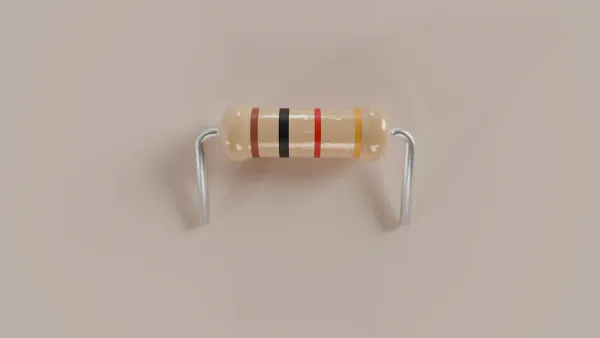
You see small colored bands on resistors, but what do they mean? The resistor color code system uses these bands to show you the value of resistance, tolerance, and sometimes even more. This system started in the 1920s when the International Electrotechnical Commission (IEC) wanted to make things easier for people working with electronics. Over time, the system became a global standard, thanks to groups like the IEC and ISO.
Here’s a quick look at the standard colors and their values:
| Color | Value |
|---|---|
| Black | 0 |
| Brown | 1 |
| Red | 2 |
| Orange | 3 |
| Yellow | 4 |
| Green | 5 |
| Blue | 6 |
| Violet | 7 |
| Grey | 8 |
| White | 9 |
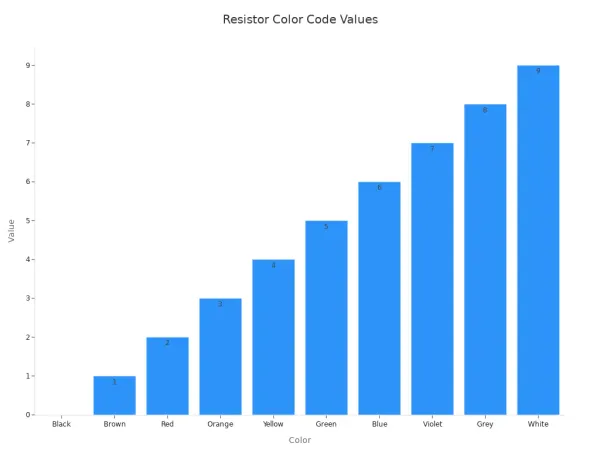
You use this chart to match each color band to a number. The resistor color code system makes it possible for you to read values without any special tools.
Why It Matters
You might wonder why the resistor color code system is so important. When you build or fix electronic circuits, you need to pick the right resistor every time. If you misread the bands, you could use the wrong value. This mistake can cause overheating, circuit failure, or even damage to other parts.
Tip: Always double-check the color bands before you place a resistor in your project. This habit helps you avoid common errors.
The resistor color code system became popular because it works everywhere. Here’s how it spread:
- The system started in the United States in the 1920s.
- The IEC adopted it in the 1940s.
- By the mid-1900s, it became the standard for electronics worldwide.
You can trust the resistor color code system to help you work faster and more accurately in electronics.
Codigo de Colores de Resistencias Explained
Color Bands Overview
When you look at resistors, you notice colored stripes running around the body. These stripes are called resistor color bands. They help you figure out the value and tolerance of each resistor without any special tools. The codigo de colores de resistencias uses a simple system that works for most electronic components you find in circuits.
You will see different types of resistors, each with a different number of color bands. Here’s a quick guide:
| Resistor Type | Number of Bands | Band Functionality |
|---|---|---|
| 4-band | 4 | 2 digits, multiplier, tolerance |
| 5-band | 5 | 3 digits, multiplier, tolerance |
| 6-band | 6 | 3 digits, multiplier, tolerance, temp. coefficient |
- A 4-band resistor has two color bands for digits, one for the multiplier, and one for tolerance.
- A 5-band resistor includes three color bands for digits, one for the multiplier, and one for tolerance.
- A 6-band resistor adds a sixth band for temperature coefficient.
Most manufacturers use this color-coding system for through-hole resistors. You will spot the codigo de colores de resistencias on almost every circuit board.
Band Positions
The position of each band on a resistor tells you something important. The first two or three bands show the significant digits. The next band is the multiplier, which tells you how many zeros to add. The last band (or bands) shows the tolerance and sometimes the temperature coefficient.
| Band Position | Significance | Example Color | Value |
|---|---|---|---|
| 1st | Significant figure | Green | 5 |
| 2nd | Significant figure | Orange | 3 |
| 3rd | Multiplier | Red | x100 |
| 4th | Tolerance | Gold | ±5% |
| 5th | Tolerance | Silver | ±10% |
| 6th | Temp. Coefficient | Brown | 1% |
You always read resistor color bands from the end closest to the edge. This way, you get the correct value every time. The codigo de colores de resistencias makes it easy to check resistor values, even if you have a big pile of parts. If you see gold or silver, you know you are looking at the tolerance band. No color means 20% tolerance.
Tip: Always double-check the order of the resistor color bands. Mixing up the bands can give you the wrong value and cause problems in your electronic projects. The codigo de colores de resistencias helps you avoid these mistakes and keeps your circuits running smoothly.
How to Read Resistor Color Code

Learning how to read resistor color code is a skill you will use all the time in electronics. You can find resistors with 4, 5, or even 6 color bands. Each type has its own way to show you the value, tolerance, and sometimes temperature stability. Let’s break down each type so you can read resistor color code with confidence.
4-Band Resistors
You will see 4-band resistors in many basic circuits. The 4-band color code is the most common. Here’s how to read resistor color code for these resistors:
- Hold the resistor so the band closest to the edge is on your left.
- Look at the first band. This is the first digit.
- Check the second band. This is the second digit.
- The third band is the multiplier. Multiply the two digits by this value.
- The fourth band shows the tolerance. This tells you how much the actual value might change.
Let’s look at a real example. Imagine you have a resistor with these colors: yellow, violet, red, and gold.
| Band Color | Value | Multiplier | Tolerance |
|---|---|---|---|
| Yellow | 4 | ||
| Violet | 7 | ||
| Red | 100 | ||
| Gold | ±5% |
You read resistor color code by putting the first two digits together (4 and 7), then multiplying by 100. That gives you 4,700 ohms, or 4.7kΩ, with a tolerance of ±5%. If you want to know how to read resistor color code for any 4 band resistor, just follow these steps every time.
Tip: Always start from the side with the bands closer together. This helps you avoid reading the code backward.
5-Band Resistors
You will find 5-band resistors in more precise circuits. These resistors give you an extra digit for better accuracy. Here’s how to read resistor color code for a 5 band resistor:
- Hold the resistor with the narrow band group on your left.
- The first three bands are digits. Write them down in order.
- The fourth band is the multiplier. Multiply the three digits by this value.
- The fifth band shows the tolerance.
Let’s try an example. Suppose you see these colors: brown, green, black, orange, and brown.
| Band Color | Value | Multiplier | Tolerance |
|---|---|---|---|
| Brown | 1 | ||
| Green | 5 | ||
| Black | 0 | ||
| Orange | 1,000 | ||
| Brown | ±1% |
You read resistor color code by combining the first three digits (1, 5, 0) to get 150. Multiply by 1,000. The answer is 150,000 ohms, or 150kΩ, with a tolerance of ±1%. When you work with 5-band resistors, you get more accurate values for your circuits.
Note: 5-band resistors are common in precision electronics, like measuring devices or audio equipment.
6-Band Resistors
If you need even more accuracy, you will see 6-band resistors. These resistors add a sixth band for temperature coefficient. This tells you how much the resistance changes with temperature. Here’s how to read resistor color code for a 6-band resistor:
- Hold the resistor with the group of bands on your left.
- The first three bands are digits. Write them down.
- The fourth band is the multiplier.
- The fifth band is the tolerance.
- The sixth band is the temperature coefficient.
Let’s look at an example. Imagine you see blue, grey, black, red, brown, and brown.
| Band Color | Value | Multiplier | Tolerance | Temp. Coefficient |
|---|---|---|---|---|
| Blue | 6 | |||
| Grey | 8 | |||
| Black | 0 | |||
| Red | 100 | |||
| Brown | ±1% | |||
| Brown | 100 ppm/K |
You read resistor color code by combining the first three digits (6, 8, 0) to get 680. Multiply by 100. The answer is 68,000 ohms, or 68kΩ, with a tolerance of ±1%. The last band, brown, means the temperature coefficient is 100 ppm/K. This means the resistor value changes very little with temperature.
- 6-band resistors are great for high-precision circuits.
- Lower ppm/K values mean better stability when temperatures change.
- You need these resistors for circuits that must stay accurate, even if the environment gets hot or cold.
The temperature coefficient band in 6-band resistors helps your circuits stay stable when temperatures change. If you use a resistor with a low ppm/K value, your circuit will work better in different environments. For example, a 10.3kΩ resistor with a 100 ppm/K coefficient will only change a small amount as the temperature shifts.
| Temperature Coefficient (ppm/K) | Resistance Change Example (10.3kΩ) |
|---|---|
| 100 | 10.274kΩ to 10.326kΩ |
Remember: Always check the temperature coefficient if your project needs high accuracy.
Now you know how to read resistor color code for 4-band resistors, 5-band resistors, and 6-band resistors. Practice with real resistors to get faster and more confident. When you can read resistor color code quickly, you will save time and avoid mistakes in your electronics projects.
Reading Resistor Color Codes: Common Mistakes
Band Order Errors
When you start reading resistor color codes, you might mix up the order of the bands. This mistake can lead to the wrong resistor value in your circuit. Always count the number of bands first. Some resistors have four, five, or six bands. If you assume the wrong number, you could end up identifying resistor values incorrectly. Make sure you start reading from the end where the bands are closer together. Many people forget to apply the multiplier band, which can throw off your calculation. Sometimes, you might swap the tolerance and multiplier bands by accident. Double-check their positions before you use the resistor.
Tip: Use a resistor color code chart to compare the band order and avoid these mix-ups.
Color Confusion
Colors on resistors can look very similar, especially on small parts. You might confuse brown with red, blue with violet, or orange with red. Poor lighting makes this even harder. Always read resistor color bands under good light. If the colors look faded or almost white, it gets tricky to tell them apart. Some people have trouble seeing certain colors. If you do, try using an app for color blindness or a multimeter to measure the resistor value directly. A resistor color code chart helps you match colors to numbers and avoid mistakes.
Troubleshooting Tips
If you get stuck identifying resistor values, follow these steps:
- Orient the resistor so the bands are on the left side.
- Read the first two or three bands for the main digits.
- Use the third band as the multiplier to get the full resistor value.
- Check the last band for tolerance.
A resistor color code chart is your best friend here. If you still feel unsure, measure the resistor with a multimeter. This tool gives you the exact value, so you can double-check your work. Using these steps helps you avoid errors when reading resistor color codes and keeps your electronic projects running smoothly. You will get better at identifying resistor values with practice and the right tools. Keep a resistor color code chart nearby for quick reference, and you will master common resistor color codes in no time.
Resistor Color Code Guide & Tools
Quick Reference Chart
You do not need to memorize every color and number. A quick reference chart helps you check resistor values fast. You can print this chart or keep it on your phone for easy access during your projects.
| Color | Digit | Multiplier | Tolerance | Temp. Coefficient (ppm/K) |
|---|---|---|---|---|
| Black | 0 | x1 | 250 | |
| Brown | 1 | x10 | ±1% | 100 |
| Red | 2 | x100 | ±2% | 50 |
| Orange | 3 | x1,000 | 15 | |
| Yellow | 4 | x10,000 | 25 | |
| Green | 5 | x100,000 | ±0.5% | |
| Blue | 6 | x1,000,000 | ±0.25% | 10 |
| Violet | 7 | x10,000,000 | ±0.1% | 5 |
| Grey | 8 | x100,000,000 | ±0.05% | |
| White | 9 | x1,000,000,000 | ||
| Gold | x0.1 | ±5% | ||
| Silver | x0.01 | ±10% | ||
| None | ±20% |
Tip: Keep this chart nearby when you work with resistors. It saves you time and helps you avoid mistakes.
Online Calculators
You can use an online resistor color code calculator to make your life easier. These tools let you pick the colors you see on your resistor. The calculator then shows you the resistance value, tolerance, and sometimes the temperature coefficient. You get instant results, which means you do not have to do the math yourself.
Here is why beginners love these calculators:
- They simplify the process of reading color bands.
- You get instant answers, so you work faster.
- They help you avoid mistakes that can happen when you read colors by hand.
Many calculators let you select each band color. You see the value right away. Some even support 5-band resistors for more precise projects. Check out this table to see what features you might find:
| Feature | Description |
|---|---|
| Type of Calculator | 5-Band Resistor Color Code Calculator |
| Accuracy | Gives better accuracy with tolerances from ±0.05% to ±2%. |
| Resistance Range | Calculates values from 10 ohms to 10M ohms. |
| Application | Great for precision instruments and professional electronics projects. |
| User Interaction | You pick colors for each band to see resistance and tolerance instantly. |
Note: Online calculators help you learn the steps, too. You can follow along and see how each color changes the value.
Here’s how you can read resistor color codes with confidence:
- Learn what each color means for numbers, multipliers, and tolerance.
- Spot if you have a 4-band or 5-band resistor for the right precision.
- Figure out what your circuit needs and use the right formula.
- Check a resistor chart for the closest match.
When you practice often, you get faster and more accurate. You start to spot resistor values easily. You build and fix circuits with more confidence. Keep a guide nearby, and you’ll master resistor color codes in no time!
FAQ
How do you know which end to start reading the color code sequence on a resistor?
You start with the band closest to the edge. This helps you read the color code sequence in the right direction and get the correct resistance value.
Can you use the same method for 3-band resistors and 4-band resistors?
You use a similar method, but 3-band resistors only show two digits and a multiplier. You still find the resistance value by reading the band colors.
What happens if you misread a band and get the wrong resistance value?
If you misread a band, you might use the wrong resistance value in your circuit. This can cause problems with resistance and affect how your electronic components work.