49E Hall Effect Sensor makes smart devices smarter
Imagine a smart home lock that never fails, or a wearable device that lasts longer between charges. The 49e hall effect sens
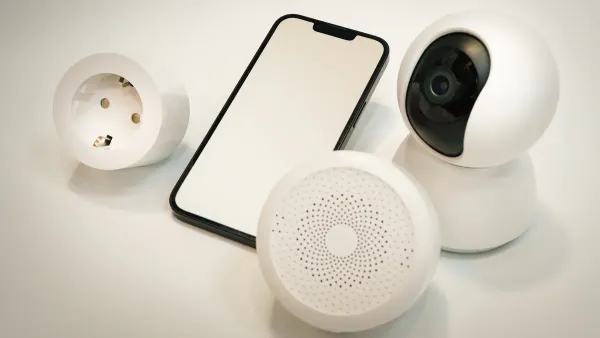
Imagine a smart home lock that never fails, or a wearable device that lasts longer between charges. The 49e hall effect sensor brings these ideas to life with its precise, contactless magnetic field detection. Engineers rely on this sensor for its fast response time, low power consumption, and wide operating voltage. The 49e hall effect sensor fits easily into automotive navigation, industrial automation, and smart consumer electronics. Its analog output and high sensitivity allow devices to perform reliably in demanding environments. The hall effect sensor transforms everyday technology into smarter, more efficient solutions.
Key Takeaways
- The 49E Hall Effect Sensor detects magnetic fields without contact, making devices more reliable and longer-lasting.
- Its linear analog output allows precise measurement of magnetic field strength and direction, helping smart devices track position and speed accurately.
- The sensor is durable and works well in tough environments, resisting dust, water, vibration, and extreme temperatures.
- Easy to integrate, the sensor fits low-power smart devices and connects smoothly with popular microcontrollers like Arduino.
- Used widely in smart homes, automotive, industrial, and healthcare devices, the 49E sensor improves automation, safety, and efficiency.
What is the 49E Hall Effect Sensor?
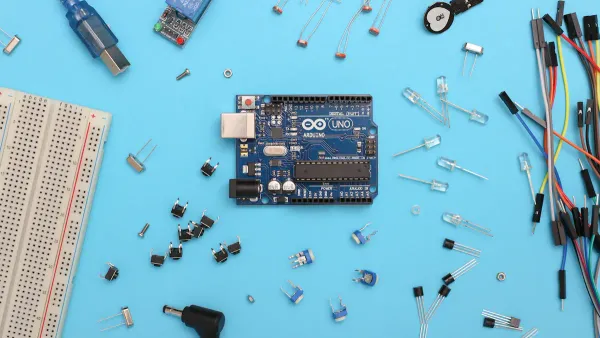
The 49e hall effect sensor stands out as a key component in many smart devices. This hall effect sensor detects magnetic fields and converts them into an analog voltage. Engineers choose this sensor for its high sensitivity and reliable performance in a wide range of environments.
Linear Output
The hall effect sensor produces a linear output. This means the voltage changes smoothly as the magnetic field strength changes. When no magnetic field is present, the output voltage sits at about half the supply voltage. As a magnet approaches, the voltage rises or falls depending on the pole. This linear behavior allows devices to measure not just the presence of a magnet, but also its distance and strength.
Devices that need precise position tracking or speed measurement benefit from this linear output. The sensor’s high sensitivity, around 1.9 mV per Gauss, ensures even small changes in the magnetic field get detected.
| Specification/Feature | Details |
|---|---|
| Output Type | Analog voltage proportional to magnetic field strength |
| Output Behavior | Rests at ~1/2 Vcc; ramps linearly with field strength and polarity |
| Sensitivity | ~1.9 mV/Gauss (±0.2 mV/Gauss) |
| Maximum Detectable Magnetic Field | ±1200 Gauss |
| Operating Voltage Range | 2.3 V to 10 V (works with 3.3V and 5V systems) |
Magnetic Field Detection
The hall effect sensor detects both North and South magnetic poles. It can sense fields up to ±1200 Gauss, which covers most practical applications. The sensor’s output voltage increases for one pole and decreases for the other. This feature helps devices determine not only the presence but also the direction of a magnetic field.
| Parameter | Value | Notes |
|---|---|---|
| Output Voltage (No Field) | ~2.5 V (at 5 V supply) | Half supply voltage |
| Output Voltage (South Pole Max) | ~4.2 V | Rises with field strength |
| Output Voltage (North Pole Max) | ~1.0 V | Falls with field strength |
| Maximum Detectable Field | ±1200 Gauss |
The hall effect sensor’s ability to detect small changes in magnetic fields makes it ideal for smart locks, motor controls, and other smart devices. Its high sensitivity and linear output give engineers the flexibility to design smarter, more responsive products.
Hall Effect Sensor Advantages
Non-Contact Sensing
The hall effect sensor operates without any physical contact. Devices equipped with this sensor detect magnetic fields through nonferrous materials, such as plastic or aluminum. This contactless operation eliminates mechanical wear and fatigue, which often limit the lifespan of traditional switches. Engineers value this feature because it leads to wear-free performance and reduces the need for maintenance. The sensor’s high sensitivity allows it to respond to even small changes in the magnetic field, making it ideal for applications that require precise detection. Many smart devices, from smart locks to industrial controls, benefit from this technology. The ability to sense through barriers also reduces mechanical complexity and saves space inside devices.
Contactless sensing means fewer moving parts, less maintenance, and longer device life. This advantage makes the hall effect sensor a top choice for modern smart devices.
Durability and Reliability
Solid-state hall sensors stand out for their durability. Unlike reed switches, which use mechanical contacts sealed in glass tubes, the hall effect sensor uses semiconductor materials. Reed switches can suffer from slow switching speeds, contact bounce, and wear due to repeated use. In contrast, the hall effect sensor avoids these problems because it has no moving parts. This design leads to a longer operational lifespan and better resistance to shock, vibration, dust, and water. Devices that use these sensors work reliably in harsh environments, such as automotive or industrial settings. The sensor’s robust construction ensures stable performance over time, even in high-cycle applications.
- Hall effect sensors provide longer operational life than mechanical switches.
- They resist environmental factors like dust, water, and vibration.
- Their solid-state design improves precision and reliability.
- These sensors are economical and suitable for a wide range of industries.
Easy Integration
The hall effect sensor offers features that simplify integration into smart devices. Its compact TO-92 package with three leads makes soldering and PCB mounting straightforward. The sensor’s standardized design supports both hobbyists and professionals, allowing easy use in commercial products and IoT systems. Compliance with international certifications, such as RoHS and CE, removes regulatory barriers for device manufacturers. The sensor operates over a wide voltage range and uses low supply current, fitting well into low-power circuits common in smart devices. Its analog voltage output connects easily to both analog and digital processing units.
| Feature | Description |
|---|---|
| Package Type | TO-92 package with radial leads for easy through-hole mounting and soldering |
| Operating Voltage | 2.7V to 6.5V, compatible with most low-power smart device circuits |
| Supply Current | Low (max 10mA), ideal for power-sensitive applications |
| Output Type | Analog voltage output for simple interfacing with microcontrollers and processors |
| Operating Temperature | -40°C to 85°C, ensuring reliable operation in various environments |
The hall effect sensor’s small size and user-friendly design help engineers create compact, efficient, and reliable smart devices. Its ability to sense magnetic fields with high sensitivity, combined with easy integration, makes it a preferred choice for many applications.
49E Hall Effect Sensor Applications
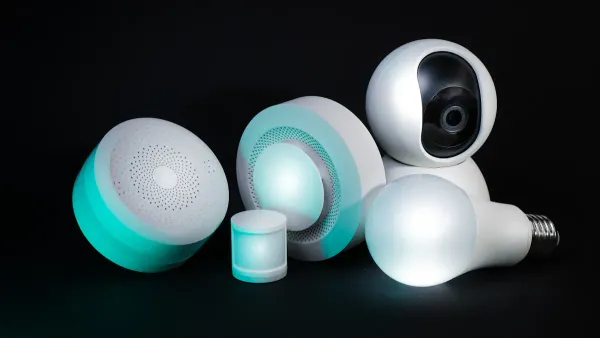
The 49e hall effect sensor powers a wide range of smart device applications. Its ability to detect motion, position, and changes in magnetic field strength makes it a top choice for engineers across industries. The sensor adapts to both permanent magnets and electromagnets, which expands its use in advanced programmable systems and hybrid magnetic environments. Its linear output and high sensitivity enable accurate position tracking and speed detection, supporting closed-loop control in robotics and smart devices.
Consumer Devices
Manufacturers use the hall effect sensor in many everyday products. Smart locks rely on the sensor for secure, contactless position sensing. Touchless cabinet lights turn on or off when a door moves, thanks to the sensor’s ability to detect magnetic fields through non-metallic surfaces. Automated window sensors use the hall effect sensor to monitor open and closed positions, improving home security and energy efficiency. In computers and printers, the sensor tracks moving parts, such as print heads and disk drives, ensuring precise operation.
The hall effect sensor’s immunity to dust and electrical noise makes it ideal for consumer electronics that require long-term reliability.
Common Consumer Applications:
- Smart locks and security systems
- Touchless lighting controls
- Automated window and door sensors
- Keyboards and pushbutton switches
- Disk drives and printers
Automotive
Automotive engineers depend on the hall effect sensor for its non-contact operation and high accuracy. The sensor measures current in electric vehicles, manages battery systems, and controls motors. It provides electrical isolation, which improves safety and efficiency compared to traditional resistive sensors. The hall effect sensor operates reliably in harsh automotive environments, withstanding extreme temperatures and electromagnetic interference. Its compact design fits into space-constrained modules, supporting the trend toward smarter, more integrated vehicle systems.
Key Automotive Uses:
- Ignition and timing systems
- Speed controls and tachometer pickups
- Battery management and current sensing
- Motor commutation in brushless DC motors
- Advanced driver-assistance systems (ADAS)
| Feature | Benefit in Automotive Systems |
|---|---|
| Non-contact sensing | Reduces wear, increases reliability |
| Electrical isolation | Enhances safety in high-voltage systems |
| Wide temperature range | Operates from -40°C to 150°C |
| EMI immunity | Reliable in complex electronic environments |
Industrial
The hall effect sensor plays a vital role in industrial automation and monitoring. It replaces mechanical limit switches, providing wear-free operation in machine tools and assembly lines. The sensor detects gear tooth movement, enabling precise speed measurement and position tracking in conveyor systems. Its adaptability to both permanent magnets and electromagnets allows use in programmable magnetic interfaces and control systems. The sensor’s robust design resists contaminants and electrical noise, making it suitable for rugged industrial environments.
Industrial Applications:
- Mechanical limit switches and alignment controls
- Gear tooth and proximity sensors
- Rotary encoders and linear potentiometers
- Motion detectors and position sensors
- Current limit switches and selector switches
The hall effect sensor’s reliability and cost-effectiveness make it a preferred solution for monitoring mechanical and electrical systems in factories.
Healthcare
Medical device designers use the hall effect sensor for its precision and safety. The sensor tracks the position of moving parts in infusion pumps, ventilators, and imaging equipment. Its non-contact operation reduces the risk of contamination, supporting strict hygiene standards in healthcare settings. The sensor’s high sensitivity enables accurate feedback in robotic surgical tools and patient monitoring devices. Its immunity to electrical noise ensures stable performance in sensitive medical electronics.
Healthcare Device Examples:
- Position tracking in infusion pumps
- Motor control in ventilators
- Magnetic field detection in imaging systems
- Safety interlocks in medical equipment
The 49e hall effect sensor’s versatility and adaptability drive innovation in smart devices across consumer, automotive, industrial, and healthcare sectors. Its ability to work with both permanent magnets and electromagnets, combined with precise linear detection, supports a new generation of intelligent, maintenance-free products.
Use Cases
Smart Home
Home automation systems rely on the 49E Hall Effect Sensor for accurate position tracking and wear-free operation. Engineers replace traditional reed switches with this sensor to create smart locks that last longer and require less maintenance. Cabinet lights activate automatically when a door opens, using the sensor to detect magnetic fields through wood or plastic. Window sensors use the 49E to monitor open and closed positions, improving security and energy efficiency.
The sensor’s compatibility with platforms like Arduino allows hobbyists and professionals to build custom smart home projects. Users connect the sensor to microcontrollers for real-time feedback and automation.
Common Smart Home Applications:
- Smart locks
- Touchless cabinet lighting
- Automated window sensors
Automation
Industrial automation benefits from the 49E Hall Effect Sensor’s precise linear output. Engineers use the sensor to track moving parts in conveyor systems and robotic arms. The sensor detects gear teeth and provides accurate speed measurements. Machines operate more efficiently because the sensor eliminates mechanical wear and reduces downtime.
A table below shows typical automation uses:
| Application | Benefit |
|---|---|
| Conveyor tracking | Accurate position data |
| Motor control | Reliable speed sensing |
| Robotic arms | Precise movement |
Automation systems integrate the 49E sensor with programmable logic controllers and microcontrollers. This integration supports advanced features like predictive maintenance and remote monitoring.
Safety Systems
Safety systems require reliable sensors to protect people and equipment. The 49E Hall Effect Sensor detects door positions in emergency exits and monitors safety interlocks in machinery. Engineers choose this sensor for its solid-state design, which resists shock and vibration. Devices use the sensor to provide instant feedback when a door opens or a machine reaches a critical position.
The sensor’s analog output connects easily to alarm systems and control panels, ensuring fast response in emergencies.
Key Safety Applications:
- Emergency exit monitoring
- Machine safety interlocks
- Security system triggers
The 49E Hall Effect Sensor’s versatility and compatibility with popular platforms make it a valuable tool for smart homes, automation, and safety systems. Engineers and makers use this sensor to create intelligent devices that work reliably and require less maintenance.
Integration Tips
Voltage Compatibility
Engineers often select the 49E Hall Effect Sensor for its broad voltage compatibility. The sensor operates reliably between 2.3V and 5.3V, making it suitable for most microcontrollers, including Arduino and Raspberry Pi. This flexibility allows designers to use the sensor in both 3.3V and 5V logic systems without extra components. The sensor module typically provides both analog and digital outputs, which connect easily to microcontroller input pins.
| Compatibility Aspect | Details |
|---|---|
| Operating Voltage Range | 2.3V to 5.3V, matches common MCU logic |
| Output Pins | Analog (AOUT) and Digital (DOUT) |
| Module Components | LM393 comparator, adjustable sensitivity |
| Connection Interface | 4-pin jumper cable, pre-soldered pins |
| Power and Ground | Match MCU supply and ground |
| Signal Interfacing | Direct connection to MCU I/O pins |
Tip: Always match the sensor’s power and ground to the microcontroller’s supply to prevent erratic readings.
Design Considerations
Designers value the 49E sensor for its compact size and cost-effectiveness. Hall Effect sensors like the 49E offer a strong balance of affordability, reliability, and low power consumption. While advanced sensors such as TMR and GMR provide higher sensitivity, they come with higher costs and complexity. The 49E remains a preferred choice in smart devices where cost and simplicity matter most.
To maximize performance and reliability, engineers should:
- Maintain supply voltage between 2.7V and 6.5V for stable operation.
- Keep input current below 10mA to avoid sensor overload.
- Use through-hole mounting for better mechanical stability.
- Protect the sensor with plastic housing to manage heat and block dust.
- Design signal circuits for the sensor’s output range (1 to 1.75V).
- Ensure the device operates within -40°C to 85°C for long-term reliability.
- Choose RoHS-compliant, lead-free parts for safety and longevity.
For optimal sensor placement, engineers should calibrate the sensor at known positions, verify magnet polarity, and adjust calibration constants for accuracy. Using a test jig or encoder helps fine-tune placement and ensures precise readings. Proper spacing between the sensor and magnet improves signal quality and device performance.
Note: Careful calibration and thoughtful placement help smart devices achieve the best results with the 49E Hall Effect Sensor.
The 49E Hall Effect Sensor plays a key role in making smart devices smarter, more adaptable, and maintenance-free.
- It converts magnetic field changes into electrical signals, enabling precise navigation, position sensing, and current measurement.
- Its low power use, compact size, and non-contact sensing support longer device life and easy integration.
- The sensor’s versatility appears in automotive, consumer, and industrial systems.
As smart technology advances, the 49E will remain vital. Trends like edge computing, miniaturization, and Industry 4.0 will drive new uses, keeping Hall Effect Sensors at the heart of innovation.
FAQ
What makes the 49E Hall Effect Sensor different from mechanical switches?
The 49E Hall Effect Sensor uses solid-state technology. It does not have moving parts. Devices with this sensor last longer and work more reliably. Mechanical switches wear out over time. The sensor also detects magnetic fields without direct contact.
Can the 49E Hall Effect Sensor work with microcontrollers like Arduino?
Engineers connect the 49E Hall Effect Sensor to microcontrollers such as Arduino. The sensor provides analog output. Users read this output with the microcontroller’s input pins. The sensor operates at common voltage levels, making integration simple for many smart device projects.
Where do engineers use the 49E Hall Effect Sensor for current sensing?
Automotive and industrial systems use the 49E Hall Effect Sensor for current sensing. The sensor detects magnetic fields around wires carrying current. This method provides electrical isolation and improves safety. Engineers prefer this sensor for monitoring and controlling electrical systems.
How does the 49E Hall Effect Sensor improve smart home devices?
Smart home devices use the 49E Hall Effect Sensor for position tracking and automation. The sensor detects when doors or windows open or close. It helps create touchless lighting and secure locks. Devices work longer and need less maintenance because the sensor does not wear out.
Is the 49E Hall Effect Sensor safe for use in healthcare equipment?
Medical devices use the 49E Hall Effect Sensor for position tracking and safety interlocks. The sensor’s non-contact design reduces contamination risk. It works reliably in sensitive environments. Engineers choose this sensor for its precision and durability in healthcare applications.