Exploring the Role of Microcontrollers Today
A microcontroller acts as a small computer on a single chip. You use microcontrollers in many everyday devices, fr
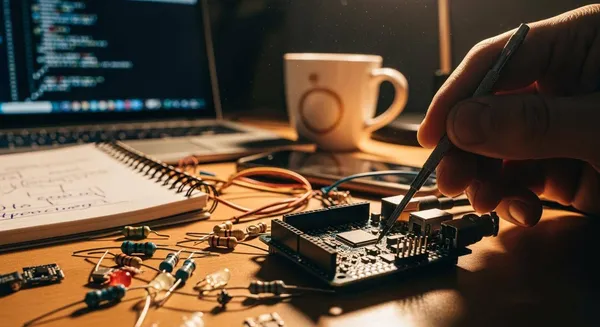
A microcontroller acts as a small computer on a single chip. You use microcontrollers in many everyday devices, from washing machines to smart thermostats. This chip controls dedicated tasks and operates without a complex operating system. When you ask what is a microcontroller, you discover it manages input and output for specific functions with speed and reliability.
Key Takeaways
- Microcontrollers are compact chips that act as the brain for many devices, controlling specific tasks efficiently.
- They are essential in embedded systems, found in everyday items like washing machines, smart thermostats, and medical equipment.
- Choosing the right microcontroller involves defining project needs, checking compatibility, and considering power efficiency.
- Microcontrollers offer benefits like low power consumption and simplified software architecture, making them ideal for dedicated tasks.
- Start learning about microcontrollers with beginner-friendly platforms like Arduino or ESP32 to build your skills.
What Is a Microcontroller?
Definition & Purpose
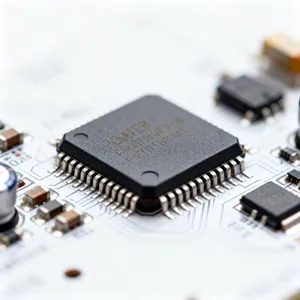
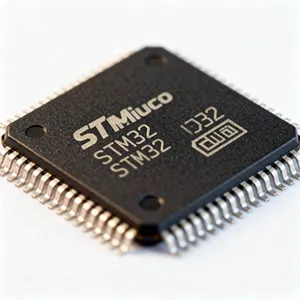
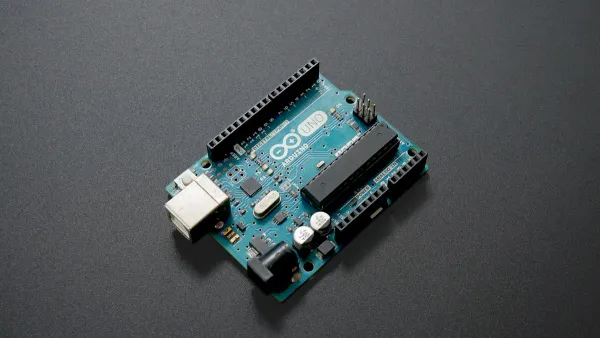
When you ask what is a microcontroller, you start with its basic structure. A microcontroller is a compact integrated circuit that acts as the brain for many electronic devices. You find it on a single chip, where it combines several important parts. These parts include a central processing unit (CPU), memory, and input/output circuits. Each part works together to control a specific task.
A microcontroller unit (MCU) is a compact integrated circuit designed to control a specific function in an embedded system, essential for precise, low-power, and real-time control.
You can see the main functions that set microcontrollers apart from other computing devices in the table below:
| Function Type | Description |
|---|---|
| Input circuits | Accept voltage levels to determine input states (H or L). |
| Arithmetic circuits | Perform calculations such as addition, subtraction, and logical operations. |
| Memory circuits | Include ROM and RAM for storing program code and data, with RAM being volatile. |
| Control circuits | Make decisions based on calculations and control program flow through branching. |
| Output circuits | Send signals to control external devices based on processed data. |
When you explore what is a microcontroller, you notice that it does not need a complex operating system. It runs simple programs that let it react quickly to changes in its environment. You use microcontrollers in devices that need to perform one or a few dedicated tasks, such as turning on a light, measuring temperature, or controlling a motor.
Embedded Systems Role
You find microcontrollers at the heart of almost every embedded system. An embedded system uses a microcontroller to manage a specific function inside a larger device. For example, when you use a digital watch, an MP3 player, or a home appliance, you rely on a microcontroller to keep everything running smoothly.
Here are some common places where you see microcontrollers in action:
- Consumer electronics
- Automotive systems
- Medical equipment
- Industrial applications
- Home appliances
- Telecommunication
- Commercial applications
- Aerospace
- Military applications
In the automotive world, microcontrollers play a key role. You see them manage fuel injection systems, which improve engine performance by controlling fuel distribution based on real-time sensor data. They process signals from rain sensors to automate wiper systems. Microcontrollers also control climate systems, adjusting temperature and airflow for comfort and energy savings.
When you ask what is a microcontroller, you discover that it is the reason many modern devices can work automatically and efficiently. You depend on microcontrollers for everything from factory robots to traffic light controllers. They make sure each device responds quickly and accurately to the world around it.
MCU Components & Operation
CPU, Memory, Peripherals
When you look inside an mcu, you find three main parts: the central processing unit (CPU), memory, and peripherals. Each part works together to help the microcontroller complete its tasks quickly and reliably.
Here is a table that shows the main components and their roles:
| Component | Description |
|---|---|
| Central Processing Unit | The core component responsible for executing instructions and controlling operations. |
| Memory | Includes volatile RAM for temporary data and non-volatile flash memory for storing firmware. |
| Peripherals | Auxiliary components like I/O interfaces, timers, ADCs, and communication protocols. |
The CPU acts as the brain of the mcu. It fetches instructions from memory, decodes them, and then carries out the commands. You rely on the CPU to process data and make decisions based on the program stored in the microcontroller.
Memory in an mcu comes in different types. You use RAM (Random Access Memory) for temporary data storage. RAM is volatile, so it loses its data when you turn off the power. Flash memory and EEPROM are non-volatile, which means they keep data even when the power is off. Flash memory stores the main program and constant data, while EEPROM holds important settings that must stay safe during power cycles.
Here is a quick overview of the types of memory you find in a microcontroller:
- RAM: Volatile memory for temporary data.
- Flash Memory: Non-volatile memory for storing programs and constant data.
- EEPROM: Non-volatile memory for data that must persist across power cycles.
Peripherals are the extra features that make an mcu useful for real-world tasks. You find input and output peripherals, timers, analog-to-digital converters (ADCs), and communication interfaces. These peripherals let the microcontroller connect to sensors, motors, displays, and other devices.
You can see how the architecture of a microcontroller differs from a general-purpose processor in the table below:
| Feature | Microcontroller | Microprocessor |
|---|---|---|
| Integration | All components on a single chip | Requires external components |
| Functionality | Self-contained system with CPU, memory, peripherals | CPU with supporting chips for memory and I/O |
| External Components | None required | Requires external circuits for operation |
This high level of integration makes an mcu compact, efficient, and ideal for embedded systems.
Input/Output Control
You use an mcu to manage input and output operations in many devices. The CPU fetches instructions from memory, processes data, and sends control signals to peripherals. This process allows the microcontroller to interact with the outside world.
Here is how an mcu handles input and output:
- The CPU fetches instructions from program memory, decodes them, and processes the data.
- Memory stores both the program code and temporary data during execution.
- Input and output interfaces receive signals from sensors and send commands to actuators.
You see microcontrollers at work in industrial automation. They monitor variables like temperature, pressure, and flow rates. They regulate motor speed and direction, making machines run smoothly and efficiently. In robotics, an mcu processes data from sensors to control precise movements. You also find microcontrollers enabling communication between different machines and systems.
Tip: Using dedicated peripherals in an mcu boosts performance and saves power. The CPU can enter low-power states while peripherals handle routine tasks, which extends battery life in portable devices.
Microcontrollers offer several benefits for dedicated task management:
| Benefit | Description |
|---|---|
| Performance and Determinism | Dedicated peripherals ensure precise timing and data transmission without CPU intervention, enhancing system stability. |
| Power Efficiency | Microcontrollers can operate peripherals autonomously, allowing the CPU to enter low-power states, significantly extending battery life. |
| Simplified Software Architecture | Using dedicated peripherals reduces the complexity of software development, allowing engineers to focus on higher-level tasks rather than low-level I/O management. |
| Scalability and Interoperability | Dedicated peripherals provide standardized interfaces, making it easier to add new components without rewriting core code, thus enhancing system scalability and integration. |
You depend on the mcu to perform dedicated tasks with speed and accuracy. This makes the microcontroller a key part of modern electronics, from home appliances to advanced industrial systems.
Microcontroller Features & Uses
Key Features
You can find several features that make a microcontroller perfect for controlling physical devices. These features help you manage tasks with speed and accuracy. Here are the main features you should know:
- Central Processing Unit (CPU): Runs instructions and controls device operations.
- Memory (RAM and ROM): Stores programs and data for quick access.
- Input/Output Peripherals: Connects to sensors, switches, and displays.
- Converters: Uses Analog-to-Digital Converters (ADC) to read signals from the real world.
- Timers & Counters: Handles timing and counting events for precise control.
- Communication Interfaces: Links with other devices using protocols like UART, SPI, or I2C.
- Clock Source: Keeps everything in sync with accurate timing signals.
- Power Management: Reduces energy use, which is important for battery-powered devices.
You see that each feature supports a specific function. For example, the ADC lets you measure temperature or light, while timers help you control motors or lights at exact intervals.
Microcontroller features can change depending on the product. The table below compares wearables and smart home devices:
| Feature | Wearables | Smart Home Devices |
|---|---|---|
| Power Consumption | Ultra-low power | Moderate to high |
| Processing Capabilities | Limited, optimized for efficiency | Higher, supports real-time control |
| Communication Interfaces | Bluetooth, integrated | Wi-Fi, Zigbee, and more |
| Design | Compact, energy-efficient | Larger, may have many modules |
Applications
You use microcontrollers in many devices around you. In your home, you find them in:
- Washing machines
- Microwaves
- Refrigerators
- Air conditioners
- Smart switches
- Thermostats
- Security cameras
- Smart locks
- Televisions
- Remote controls
In robotics, you rely on a microcontroller to control movement and process sensor data. Industrial automation uses them to monitor machines and manage production lines. You also see them in electric vehicles, where they handle battery systems and charging. Medical devices use microcontrollers for portable diagnostic tools because they need low power and high reliability.
You may hear about a general-purpose microcontroller. This type works in many different products, from smart thermostats to sensor nodes in the Internet of Things (IoT).
Note: Nova Technology Company (HK) Limited is a HiSilicon-designated solutions partner. The company specializes in integrated circuit (IC) design, chip-level solutions, and system integration for advanced microcontroller applications. You can trust Nova Technology Company (HK) Limited for professional support in semiconductor projects, especially when you need reliable and efficient MCU solutions for smart devices and industrial systems.
You see that an mcu gives you the power to create smarter, more efficient products in every industry.
Microcontroller Types & Selection
Popular MCU Families
You can choose from several popular microcontroller families, each with unique strengths. ARM Cortex-M microcontrollers stand out for their high processing power and energy efficiency. You often find them in demanding applications, such as advanced robotics or smart home hubs, where both speed and low power matter. PIC microcontrollers offer high reliability and a wide range of built-in peripherals. You might select a PIC device for projects that need robust operation, like industrial controllers or automotive systems. AVR microcontrollers are easy to program and use little power, making them a favorite for beginners and hobbyists. However, they have limited memory and can cost more per unit.
| Microcontroller Family | Performance Characteristics | Application Suitability |
|---|---|---|
| AVR | Easy programming, low power, high performance, limited memory, higher cost | Hobbyist projects, learning platforms |
| PIC | Reliable, rich peripherals, low cost, higher power use, harder to program | Industrial, automotive, robust systems |
| ARM Cortex-M | High performance, energy efficient, complex architecture, higher cost | Demanding, high-speed applications |
Tip: You should match the microcontroller family to your project’s needs. For example, use ARM Cortex-M for smart devices that need fast processing and low energy use.
Choosing an MCU
Selecting the right microcontroller requires careful planning. Start by defining your project’s requirements. List the functions you want, the speed you need, and the number of input/output pins. Next, check hardware and software compatibility. Make sure the microcontroller supports the interfaces and programming tools you plan to use.
Here are key steps to guide your selection:
- Define your project’s functions, performance, and I/O needs.
- Check hardware and software compatibility.
- Choose the right architecture and bit size.
- Evaluate memory needs for both flash and RAM.
- Balance cost and power efficiency.
- Look for special features like built-in peripherals.
- Consider community support and available development tools.
- Plan for future expansion or upgrades.
Power consumption plays a big role, especially for battery-powered devices. Low-power microcontrollers help you extend battery life in IoT sensors, smart home gadgets, and medical devices. Automotive and healthcare industries rely on energy-efficient MCUs to improve reliability and usability.
Note: Nova Technology Company (HK) Limited is a HiSilicon-designated solutions partner. The company specializes in chip-level solutions, system integration, and advanced IC design. You can rely on their expertise for professional support in semiconductor projects, especially when you need reliable MCU solutions for smart devices and industrial systems.
You should always consider processing power, memory, and network connectivity. Strong community support can help you solve problems faster and speed up development. By following these steps, you can select the best microcontroller for your project’s success.
Microcontroller vs. Microprocessor
Core Differences
You often hear about microcontrollers and microprocessors, but they serve different roles in electronics. A microcontroller acts as a self-contained system. You find the CPU, memory, and input/output peripherals all on one chip. This design makes microcontrollers compact and efficient for dedicated tasks. In contrast, a microprocessor is mainly a CPU. You need to add external memory and peripherals to build a complete system around it.
Here is a table that highlights the main differences:
| Feature | Microcontroller | Microprocessor |
|---|---|---|
| Integration | All components on a single chip | CPU with external supporting chips |
| Self-contained | Yes | No |
| Required Components | No external circuits needed | Requires external memory and peripherals |
| Functionality | Basic functionality of a computer | Central Processing Unit (CPU) only |
| Memory Architecture | Built-in flash and RAM, limited capacity | Uses external RAM and storage, larger capacity |
| Power Consumption | Lower power consumption | Higher power consumption |
| Cost | Generally lower cost | Typically higher cost |
You use microcontrollers for simple, dedicated tasks. Their built-in memory and peripherals make them cost-effective and reliable. Microprocessors, on the other hand, handle complex computing jobs. They need more components, which increases cost and power use.
Tip: Choose a microcontroller when you want a compact, energy-efficient solution for a specific function. Pick a microprocessor if you need high processing power and flexibility.
Use Case Comparison
You see microcontrollers in many household devices. For example, they manage cooking times in microwaves, control wash cycles in washing machines, and regulate temperature in air conditioners. These tasks require quick responses and low power use.
Microprocessors power devices that need advanced computing. You find them in laptops, desktop computers, and servers. These systems run complex software, handle large amounts of data, and support multitasking.
Here is a quick comparison of typical applications:
-
Microcontroller Applications:
- Microwaves: Manage cooking times and user inputs.
- Washing Machines: Control wash cycles and water levels.
- Air Conditioners: Regulate temperature and fan speeds.
- Smart thermostats, remote controls, and fitness trackers.
-
Microprocessor Applications:
- Laptops: Run operating systems and multiple programs.
- Servers: Process and store large amounts of data.
- Desktop Computers: Perform a variety of computing functions.
You should select a microcontroller for dedicated, low-power tasks. If your project needs advanced computing and flexibility, a microprocessor is the better choice. This understanding helps you pick the right chip for your next design.
You see microcontrollers shaping modern technology every day. They power smart homes, wearables, and industrial systems by processing data and enabling devices to make decisions on their own. Their compact design and cost-effectiveness let you build efficient, connected products.
- Microcontrollers help devices communicate and work smarter.
- They support real-time control in IoT, medical, and automotive fields.
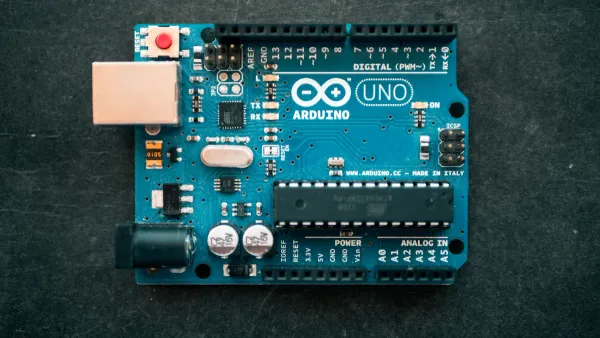
- You can start learning with beginner-friendly boards like Arduino or ESP32.
Explore resources like Microcontroller Resources or join communities such as Reddit r/electronics to deepen your knowledge.
FAQ
What is the easiest way to start learning about microcontrollers?
You can begin with beginner-friendly boards like Arduino or ESP32. These platforms offer simple tutorials and large online communities. You will find many resources that help you write your first program and connect basic sensors.
Can you program a microcontroller with only basic coding skills?
Yes! You can use simple languages like C or Arduino’s version of C++. Many development environments provide drag-and-drop tools. You do not need advanced coding knowledge to get started.
How do microcontrollers connect to sensors and devices?
Microcontrollers use input/output pins to connect with sensors, motors, and displays. You can use digital or analog signals. Communication protocols like I2C, SPI, or UART help you link multiple devices.
What is the difference between 8-bit and 32-bit microcontrollers?
An 8-bit microcontroller processes 8 bits of data at a time. A 32-bit microcontroller handles 32 bits, which means faster performance and more memory. You should choose based on your project’s speed and complexity needs.
Where can you use microcontrollers in real life?
You find microcontrollers in smart home devices, medical equipment, cars, and robots. They control lights, measure temperature, and automate tasks. You use them every day, often without realizing it.