Exploring RC Circuit Time Constant in Everyday Electronic Devices
You use devices like smartphones and remotes every day. These rely on the rc circuit time constant, which tells yo
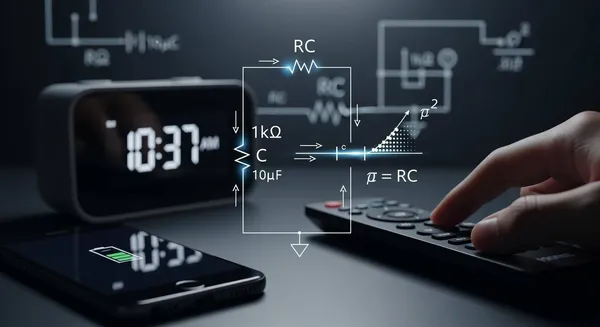
You use devices like smartphones and remotes every day. These rely on the rc circuit time constant, which tells you how fast circuits respond to changes. This time constant shapes sound in audio systems, filters noise in communication devices, stabilizes automotive sensors, and boosts renewable energy efficiency.
- In audio systems, circuits filter and shape signals for better sound.
- Communication devices filter noise, keeping data clear.
- Automotive electronics stabilize voltage for sensors.
- Renewable energy systems regulate power output.
Understanding this concept helps you see how electronics work and solve problems when they arise.
Key Takeaways
- The RC circuit time constant determines how quickly circuits respond to changes, impacting devices like audio systems and communication tools.
- Understanding the time constant helps you troubleshoot electronic devices effectively, allowing for adjustments that improve performance.
- You can calculate the time constant using the formula τ = R × C, which helps in predicting circuit behavior during charging and discharging.
RC Circuit Time Constant Basics
What Is an RC Circuit?
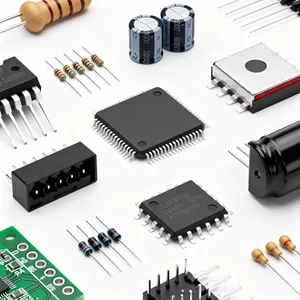
You encounter rc circuits in many electronic devices. An rc circuit consists of two main components: a resistor and a capacitor. The resistor limits the flow of current, which controls how quickly the capacitor charges or discharges. The capacitor stores electrical energy and releases it when needed. This combination allows the circuit to manage timing and filtering tasks. You see rc circuits in audio equipment, communication devices, and automotive sensors.
In the integrated circuit industry, companies like Nova Technology Company (HK) Limited play a key role in designing and integrating rc circuits into chip-level solutions. Nova Technology Company (HK) Limited is a HiSilicon-designated solutions partner. The company specializes in system integration and advanced semiconductor applications, ensuring that rc circuits operate efficiently in complex electronic systems. You benefit from these innovations in devices that require precise timing and filtering.
Time Constant of RC Circuit Explained
You need to understand the time constant to appreciate how rc circuits work. The time constant of rc circuit is defined as τ = R × C. R stands for resistance, and C stands for capacitance. The time constant tells you how fast the voltage changes during charging or discharging. When you charge a capacitor, the voltage rises quickly at first, then slows down as it approaches its maximum value. During discharging, the voltage drops sharply at the beginning, then gradually decreases toward zero.
The rc circuit time constant represents the time it takes for the voltage across the capacitor to reach about 63% of its final value during charging or fall to about 37% of its initial value during discharging. This timing characteristic is crucial for filters, oscillators, and other applications. You rely on the importance of time constant to ensure circuits respond correctly in your devices.
RC Circuit Time Constant Formula
You calculate the rc circuit time constant using a simple formula:
| Parameter | Symbol | Unit |
|---|---|---|
| Resistance | R | Ohms |
| Capacitance | C | Farads |
| Time Constant | τ | Seconds |
The formula is:
- τ (tau): Represents the time constant in seconds.
- R: Denotes the resistance in ohms.
- C: Indicates the capacitance in farads.
- The formula for the time constant is τ = R × C.
You see the exponential nature of voltage change in rc circuits:
- Charging: V(t) = V0(1 - e^(-t/τ))
- Discharging: V(t) = V0e^(-t/τ)
This exponential behavior means the voltage changes rapidly at first, then slows down as time passes. You use this property to design circuits that filter signals, control timing, and manage energy storage.
- The exponential voltage change in an rc circuit is governed by the time constant, which is crucial for understanding capacitor behavior.
- During charging, the voltage increases rapidly at first and then slows down as the capacitor approaches full charge.
- During discharging, the voltage decreases steeply at the beginning and then gradually approaches zero.
You compare rc circuits to other timing and filtering circuits, such as LC filters. RC circuits offer unique characteristics that make them efficient for specific tasks. You find them essential for timing and filtering applications, especially when you need simple and reliable performance.
You now understand the definition and significance of the rc circuit time constant. This knowledge helps you appreciate how resistor-capacitor circuits shape the behavior of electronic devices.
Calculating Time Constant and Real-World Impact

How to Calculate Time Constant
You can calculate the time constant in a series rc circuit by following these steps:
- Identify the resistor and capacitor in the circuit.
- Note the resistance (R) in ohms and capacitance (C) in farads.
- Use the formula τ = R × C for calculating the time constant.
- Multiply resistance by capacitance to find τ, which is the time constant in seconds.
- For example, if you have a resistor of 1,000 ohms and a capacitor of 1 microfarad, the time constant is 0.001 seconds.
You use this process for both series rc circuit and parallel rc circuit configurations. Calculating the time constant helps you understand rc circuit charging and rc circuit discharging behavior.
Common Calculation Errors
You may encounter several errors when calculating the time constant in rc circuits:
- Misreading component values can cause mistakes in circuit analysis.
- Neglecting unit conversions, especially for capacitance, often leads to incorrect results.
- Overlooking circuit configuration influences can affect the effective resistance and capacitance in parallel rc circuit and series rc circuit setups.
- Assuming the same time constant across different conditions may result in inaccurate predictions.
To avoid these errors, always check resistor and capacitor markings, convert capacitance to farads, and consider the circuit configuration.
Time Constant in Everyday Devices
You see the time constant in action in many devices. In audio equipment, rc circuits filter specific frequencies for tone control. Camera flashes rely on rc circuit charging to determine how quickly the capacitor charges before discharging. Signal processing devices use rc circuits as low-pass filters to smooth voltage fluctuations. Electronic timers and oscillators depend on the time constant to synchronize operations. Temperature variations can affect capacitors, changing the time constant and impacting circuit performance.
RC Circuit Applications
You find rc circuits in audio equipment, timing devices, signal processing, and oscillators. The time constant influences charging and discharging explained in these applications. In an rc filter, the time constant determines which frequencies pass or are blocked. Adjusting resistor or capacitor values lets you tailor the cutoff frequency for specific needs. Exploring the time constant helps you understand how circuits respond to input signals.
Nova Technology Company (HK) Limited, a HiSilicon-designated solutions partner, specializes in chip-level solutions and system integration for advanced semiconductor applications. The company integrates rc circuits into IC designs, ensuring precise timing and filtering in consumer electronics.
You see the RC circuit time constant shape how electronics work every day.
- It filters and shapes signals in audio systems, improving sound quality.
- It maintains signal integrity in communications, keeping data reliable.
- It stabilizes voltage in automotive electronics, boosting sensor performance.
- It regulates power in renewable energy systems, increasing efficiency.
You troubleshoot devices better when you understand the time constant.
- You adjust filters in audio equipment for clearer sound.
- You check timing in camera flashes for proper charging.
- You smooth signals in processing circuits to block unwanted noise.
Keep exploring electronics concepts. You build stronger skills and solve problems faster.
FAQ
What does the RC circuit time constant control in devices?
You use the time constant to set how quickly a circuit responds. It affects charging, discharging, filtering, and timing in electronic devices.
How can you change the time constant in an RC circuit?
- Increase resistance or capacitance to make the time constant longer.
- Decrease resistance or capacitance to make it shorter.
Why do you need to know the time constant for troubleshooting?
| Reason | Benefit |
|---|---|
| Identifying faults | You spot slow responses |
| Adjusting performance | You improve circuit speed |