A Complete Guide to CBB61 Capacitor Applications and Ratings
A CBB61 capacitor helps AC motors start and work well. You can find cbb61 capacitors in ceiling fans, air conditioners, washing machines, and other machines with motors.

A CBB61 capacitor helps AC motors start and work well. You can find cbb61 capacitors in ceiling fans, air conditioners, washing machines, and other machines with motors. These capacitors use polypropylene film and resin to make them safe and last longer. Many cbb61 models follow CE, UL, RoHS, and CQC rules. The table below shows where you often see cbb61 capacitors being used:
|
Application Area |
Description |
|---|---|
|
Ceiling Fans |
Used to help single-phase AC motors start and run at 50/60Hz. |
|
Electric Fans |
Make motors work better and use less energy. |
|
Washing Machines |
Help single-phase motors start and run every time. |
|
Air Conditioners |
Help motors start and run in AC units. |
|
Other Appliances |
Used for starting and stopping single-phase asynchronous motors. |
You might wonder how to read cbb61 capacitor ratings, how to pick the right one, or how to change a broken capacitor. This guide will help you learn all about cbb61 capacitors and how they are used.
Key Takeaways
-
CBB61 capacitors help AC motors start and run well in things like ceiling fans, air conditioners, and washing machines. - These capacitors do not have a positive or negative side, so you can install them easily and safely without worrying about which way they go. - Always use a new capacitor with the same capacitance and voltage as the old one to keep your machine safe and working right. - Check capacitors often for problems like bulging, leaking, or motor trouble, and change them quickly to stop damage. - Taking care of capacitors by keeping them cool and clean helps them last longer and keeps your appliances working.
CBB61 Capacitors Overview
What Is a CBB61 Capacitor
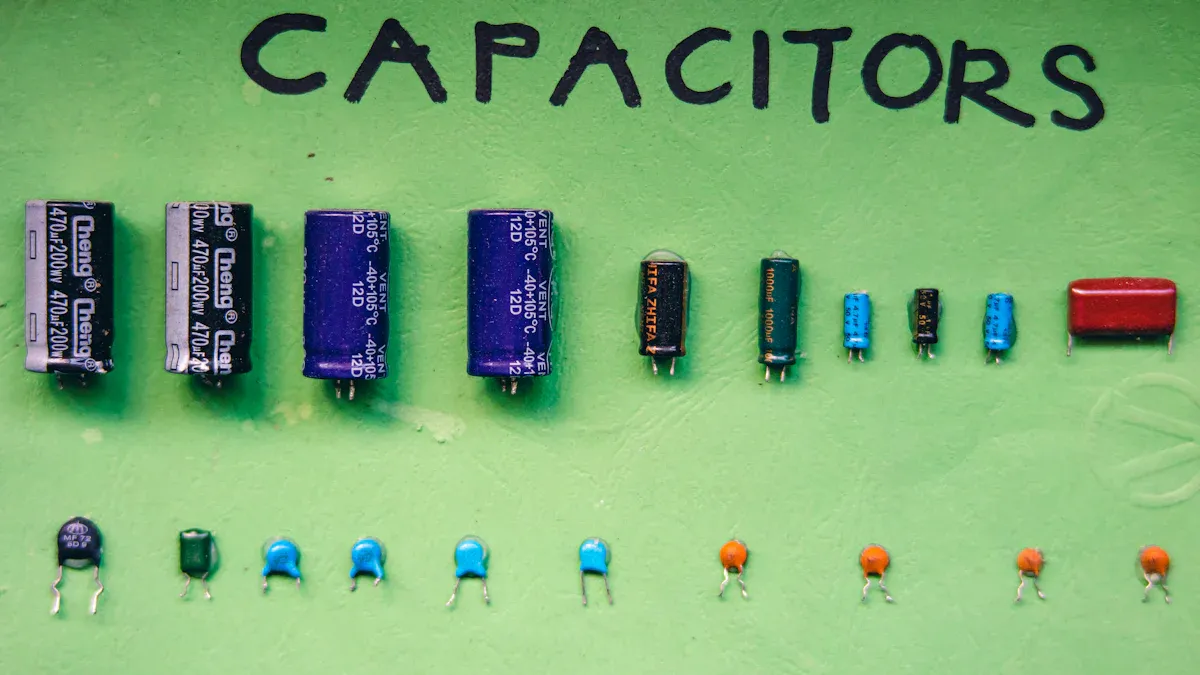
Cbb61 capacitors are found in many devices with AC motors. They help motors start and keep running smoothly. You can use them in ceiling fans and air conditioners. They also work in other energy storage uses. Cbb61 capacitors are good for both starting and running circuits. You do not have to worry about which way you put them in. This makes installing them easier and safer.
Here is a table that shows the main electrical characteristics of cbb61 capacitors compared to other film capacitors:
|
Characteristic |
Description/Value |
|---|---|
|
Capacitance Range |
1 to 15 µF |
|
Rated Voltage |
250 to 450 VAC (50/60 Hz) |
|
Capacitance Tolerance |
±5% |
|
Construction |
Metalized polypropylene film |
|
Winding Structure |
Non-inductive |
|
Equivalent Series Resistance |
Low |
|
Temperature Rise |
Low |
|
Self-Healing |
Excellent |
|
Safety Features |
Flame retardant, explosion protection (S3 type) |
|
Application |
Motor start and run, fans, ventilators |
|
Polarity |
Non-polarized |
|
Performance |
Stable, high reliability |
Construction and Features
Cbb61 capacitors use a special plastic film as the main part. The electrodes are made from zinc and aluminum. The film is rolled up and put in a strong case. Many cbb61 capacitors use tough plastic shells and a safe resin. These things make the capacitor safe and strong. You get low energy loss and high resistance to electricity. They can fix themselves if there is a small problem inside. The design helps the cbb61 capacitor stay cool and last a long time. It works well even when things get hot or rough. This makes it a good pick for energy storage and motor circuits.
-
The film is rolled up and sealed in a case.
-
Flame-retardant resin keeps it safe.
-
The design gives steady performance and a long life.
Non-Polarized Design
Cbb61 capacitors do not have a positive or negative side. You can connect them any way you want. This makes putting them in very easy and helps you avoid mistakes. The non-polarized design lets the capacitor work with AC signals safely. You get steady and safe use in motor start and run circuits. This design also helps your devices work better, especially in fan motors and other energy storage uses.
Tip: When you use a cbb61 capacitor, you do not need to check for polarity. This saves time and helps prevent wiring errors.
CBB61 Capacitors Applications
CBB61 capacitors are very important in many machines with motors. You can see them in homes and factories. They help motors start, run well, and last longer. Ceiling fans, ventilators, air conditioners, and pumps all use these capacitors. Many other machines also need them. Here are some common ways people use cbb61 capacitors.
Ceiling Fans and Ventilators
Almost every ceiling fan and ventilator has a cbb61 capacitor. The capacitor helps the fan motor start and spin at the right speed. When you turn on your fan, the cbb61 capacitor gives the motor a boost. It helps the fan run quietly and use less power. Ventilators use these capacitors to keep air moving in rooms. Cbb61 capacitors work well even if the power changes or it gets hot.
Tip: If your ceiling fan stops or makes noise, check the cbb61 capacitor.
Air Conditioners and Pumps
CBB61 capacitors are needed in air conditioners and water pumps. They help single-phase motors start and run without trouble. You can see their ratings in this table:
|
Parameter |
Range/Values |
|---|---|
|
Capacitance |
1μF to 35μF |
|
Voltage Ratings |
250VAC, 370VAC, 440VAC, 450VAC |
These numbers show cbb61 capacitors can handle different power needs. You can use them in small or big air conditioners. Pumps use these capacitors to keep water moving in homes and gardens. The strong design lets cbb61 capacitors work in hot and wet places.
Other Appliances
You can find cbb61 capacitors in many other machines at home or work. These include washing machines, extractor hoods, heaters, dehumidifiers, mahjong machines, and smash paper machines. In these machines, the cbb61 capacitor helps the motor start and run well. It also protects the machine from power surges and helps it last longer.
|
Parameter |
Details |
|---|---|
|
Common Appliances |
Ceiling fans, extractor hoods, heaters, dehumidifiers, mahjong machines, smash paper machines |
|
Rated Voltage |
110VAC to 600VAC (50/60Hz) |
|
Capacitance Range |
0.1 µF to 80 µF |
|
Capacitance Tolerance |
±5% or ±10% |
|
Operating Temperature |
-40℃ to +105℃ |
|
Construction |
Metallized polypropylene film, epoxy filling, PVC wires |
|
Safety Certifications |
CQC, UL, CUL, VDE, TUV |
|
Application Function |
Used in single-phase motor systems to help motors start and run well |
|
Environmental Robustness |
Made to handle power changes and tough conditions |
CBB61 capacitors help save energy and make machines last longer. Their strong build lets them work in hard places. You can buy these capacitors from suppliers like mouser. They have many choices for what you need. Picking a cbb61 capacitor helps your machines work safely and well.
Capacitor Ratings
When you know the ratings on CBB61 capacitors, you can pick the right one for your machine. Each rating tells you something about how the capacitor works and what it can handle. If you match these ratings to your machine, your device will stay safe and work well. Let’s look at what each rating means.
Capacitance
Capacitance shows how much electric charge the capacitor can hold. You will see this number in microfarads (µF) on the CBB61 capacitor. Most home machines like ceiling fans, air conditioners, and washing machines use capacitors with 1 µF to 10 µF. Some special CBB61 capacitors can go up to 15 µF or more.
If you use a capacitor with less capacitance than needed, your motor might not start or run right. If you use one with a little more capacitance (up to 20% more), your motor may still work, but it is best to use the same value as before.
Note: Always look at your old capacitor’s label before you buy a new one from mouser or another store.
Voltage
The voltage rating tells you the highest voltage the capacitor can handle safely. For CBB61 capacitors, this is usually between 250V AC and 450V AC at 50/60Hz. You must pick a capacitor with a voltage rating that is the same or higher than your machine needs. If you use a capacitor with too low a voltage rating, it can break, leak, or even catch fire.
-
The voltage rating keeps your capacitor safe from too much electricity.
-
CBB61 capacitors use strong materials like metalized polypropylene film and flame-retardant resin to stay safe.
-
Makers test these capacitors at double their rated voltage for a few seconds to make sure they are safe.
If you shop at mouser, you can choose by voltage rating to find the right part.
Tolerance
Tolerance shows how much the real capacitance can be different from the number on the capacitor. Most CBB61 capacitors have a tolerance of ±5% or ±10%. This means the real value can be a little higher or lower than the label says. For example, a 10 µF capacitor with ±5% tolerance could be between 9.5 µF and 10.5 µF.
A small tolerance (like ±5%) gives you steadier motor performance. If you use a capacitor with a bigger tolerance, your machine may not work as smoothly.
Temperature Range
The temperature range tells you the lowest and highest temperatures where the capacitor can work safely. Most CBB61 capacitors are made for -40°C to +85°C. If you use the capacitor in this range, it will last longer and work better. If you use it outside this range, it may stop working early or lose its self-healing ability.
Tip: Always check the temperature rating on the capacitor before you put it in a hot or cold place. Mouser shows this information for each product.
Size and Terminals
The size and terminal type of the capacitor matter for how you put it in. You need to make sure the capacitor fits in your machine and that the terminals match the wires or connectors.
|
Factor |
Description |
Installation Impact |
|---|---|---|
|
Physical Size |
The length, width, and height of the capacitor |
Must fit in the space given in your machine. Stops damage or loose fitting. |
|
Terminal Type |
Blade connectors, screws, or wire leads |
Must match your machine’s wires for a safe and easy connection. |
If you shop at mouser, you can pick the right size and terminal type for your needs.
Why Matching Ratings Matters
If you use the wrong capacitor ratings, your machine may not work or could get damaged. Using a capacitor with less capacitance can make motors run badly or not at all. Using a capacitor with a lower voltage rating can make it fail fast and may even be dangerous. Always match or go above the original ratings for safe and good use.
Remember: Check all ratings—capacitance, voltage, tolerance, temperature, size, and terminals—before you buy a new one from mouser or any other store.
Selection Guide
Picking the right CBB61 capacitor keeps your machines safe. It also helps them work well. You need to follow some easy steps to choose the best one. This guide will show you each step and help you not make mistakes.
Identify Application Needs
First, look at the device or motor you want to fix. Every machine needs a certain kind of capacitor. Ceiling fans, air conditioners, and pumps all use different types. Check the user manual or look at your old capacitor’s label. This tells you what ratings and type you need.
-
Write down your appliance’s model and details.
-
Find out if you need a start or run capacitor.
-
Look for the old capacitance and voltage numbers.
Tip: If you cannot find the label, check the wiring diagram or ask the maker.
Match Capacitance and Voltage
Matching capacitance and voltage is very important. If you use the wrong values, your motor may not work right.
-
The capacitance (in microfarads, µF) should be the same as the old one. A small difference, up to ±20%, is usually okay. But matching it exactly is best.
-
The voltage rating must be the same or higher than before. Never use a lower voltage rating.
-
Always use AC-rated capacitors for AC motors. DC-rated ones can break or even explode in AC machines.
CBB61 capacitors help keep the current steady. They make motors work better. When you match the values, your machine works longer and better. This also saves you money on repairs.
Note: If you shop at mouser, you can pick capacitors by capacitance and voltage.
Consider Temperature and Size
Temperature and size are important for safety and fit. If you ignore these, the capacitor may not last or fit right.
-
Pick a capacitor with a temperature rating that matches or is higher than your motor’s top temperature. Higher ratings give more safety.
-
Make sure the size and shape fit in your machine.
-
The capacitor should be mounted tightly so it does not move.
If your machine gets hot or is used in tough places, pick a CBB61 with a higher temperature rating. Mouser shows temperature and size for each capacitor.
Quality and Sourcing
Quality is important when picking a CBB61 capacitor. Bad capacitors can break fast and hurt your machine. Look for strong safety marks and good materials.
|
Aspect |
Details |
|---|---|
|
CQC, UL, VDE, TUV, CE |
|
|
Approval Standards |
GB/T3667, UL810, EN60252-1 |
|
Testing Voltage |
2×UN (VAC)/3s (CQC, VDE, TUV); 1.5×UN (VAC)/3s (UL) |
|
Insulation Resistance |
≥5000 MΩ (100VDC, 3s) |
|
Material & Features |
High-pressure and high-temperature resistant materials; flexible installation |
When you buy from mouser, you can check for these marks and rules. This helps you not get fake or bad capacitors. Many sellers on mouser have CBB61 capacitors that meet world standards.
Tip: Always buy from trusted brands and sellers. This helps you get safe and long-lasting parts.
Risks of Using Incorrect Capacitance or Voltage
Using the wrong capacitor can cause big problems:
-
If the capacitance is too low, the motor may not start or run well.
-
If the capacitance is too high, the motor can get too hot or wear out fast.
-
A voltage rating that is too low can make the capacitor break, leak, or even catch fire.
-
Using a DC-rated capacitor in an AC machine can make it explode.
You keep your machines and yourself safe by following these steps. Always check the ratings before you buy from mouser or any other store.
Remember: Picking the right capacitor keeps your machines safe and working for a long time.
Testing a CBB61 Capacitor
Signs of Failure
You can tell if a cbb61 capacitor is bad by watching your appliance. If your ceiling fan or air conditioner will not start, the capacitor might be the problem. Sometimes, the motor makes a humming sound. The appliance may turn off by itself or only work sometimes. You might see the capacitor case bulging or leaking oil. This means the top looks puffy or oil is coming out. If the motor runs slow or the airflow is weak, the capacitor could be bad.
-
Humming noise comes from the motor
-
Appliance turns off and on by itself
-
Capacitor case looks swollen or leaks oil
-
Motor runs slow or does not work well
"My air conditioner's run capacitor is leaking oil - what does this mean?"
The expert answer: "The capacitor is broken and needs to be replaced."
A bad capacitor can make the motor get too hot or shake. It can also lower the voltage and hurt how well the motor works. If you see these signs, test the capacitor and change it if needed.
Testing Methods
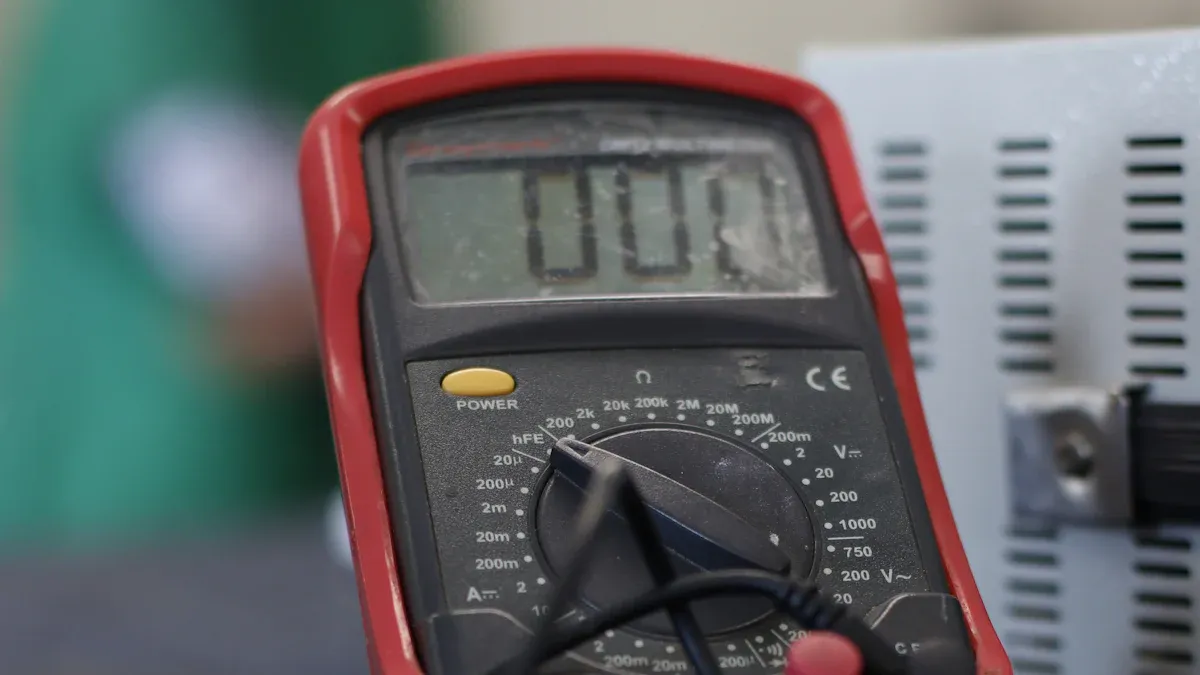
You can test a cbb61 capacitor in a few safe ways. Always turn off the power before you start. The most common way is with a multimeter. First, make sure the capacitor is discharged. Set the analog multimeter to a high resistance setting. Put the leads on the capacitor’s terminals. A good capacitor will show the resistance going up. If it stays low, it is shorted. If it does not move, it is open.
You can also use a digital multimeter with a capacitance setting. Take the capacitor out of the circuit and discharge it. Measure the value and check if it matches the label. If the number is much lower or zero, the capacitor is bad.
Other ways to test are:
-
Look for bulges, leaks, or cracks.
-
Use the continuity setting on a multimeter.
-
Measure the time constant with a resistor and voltage source.
-
Test insulation resistance with a high-voltage meter (over 1000MΩ is good).
-
Use the sparking method (only for experts).
Testing a cbb61 capacitor helps you find problems early. If you buy from mouser, you can get capacitors with clear ratings for easy testing.
Safe Replacement
When you change a cbb61 capacitor, always be safe. Turn off the power at the breaker. Wear gloves and safety glasses. Discharge the old capacitor with a resistor or tool. Use a multimeter to make sure it is fully discharged.
Follow these steps to install:
-
Cut the wires to remove the bad capacitor.
-
Connect the new capacitor, matching wire colors to the manual.
-
Use wire nuts and tape to keep connections safe.
-
Turn the power back on and test the appliance.
Make sure the new capacitor from mouser has the same voltage and microfarad numbers as the old one. Do not connect the capacitor to just the neutral wire. If you are not sure, ask a professional for help. You can test and replace a cbb61 capacitor to keep your appliance working well.
CBB61 Capacitor Maintenance
Preventive Tips
You can help your CBB61 capacitors last longer by doing a few easy things. Always pick a capacitor with the right voltage for your fan or appliance. This stops too much power from hurting the inside parts. Make sure air can move around the capacitor. Good airflow keeps it cool and stops it from getting too hot. Store extra capacitors in a dry spot, away from dampness and very hot or cold places. This keeps them safe until you need to use them.
Check your capacitors often to see if they look damaged or rusty. Dust and water can harm them, so wipe the area clean. Look at the wires to see if they are worn out. Bad wires can cause short circuits and make the capacitor stop working early. If your fan makes weird sounds or moves strangely, check the capacitor right away.
Here are some simple steps to help you:
-
Clean the fan blades and case to stop dust from piling up. Dust can block air and make heat, which can make capacitors wear out faster.
-
Keep the fan speed the same. Quick changes can put stress on the capacitor.
-
Do not use dimmer switches that are not made for ceiling fans. These can change the voltage and hurt the capacitor.
-
Make sure the fan has good airflow.
-
Check for strange sounds, slow spinning, or signs of getting too hot.
Tip: If you buy from mouser, you can find capacitors with clear ratings and safety features. This makes it easier and safer to replace a cbb61 capacitor.
Longevity Factors
Many things can change how long your CBB61 capacitors last. High heat and wet air can make them wear out faster. Try to keep your appliances in a cool, dry place if you can. Using the right voltage is very important. If you use more voltage than the capacitor can handle, it might break or even be unsafe. Always match the capacitor’s voltage to what your motor needs.
The quality of the parts also matters. Capacitors from trusted brands like mouser usually last longer because they use better materials. Checking for damage and cleaning often helps you find problems early. This stops sudden breakdowns and keeps your machines working well.
-
Do not let the voltage go higher than the rated voltage.
-
Keep the capacitor at its rated voltage for best results.
-
High insulation resistance means less leaking and more safety.
-
Capacitors with self-healing can fix small problems inside, so they last longer.
-
Always match the capacitor’s specs to your motor for steady and long use.
If you follow these tips, you will not have to replace a cbb61 capacitor as often. You will have more time to enjoy your appliances. Mouser has many choices, so you can always find the right capacitor for what you need.
Now you understand how CBB61 capacitors help your appliances. These parts help motors start and keep working longer. Good capacitors from mouser protect your devices from power issues. Always pick the right ratings to stay safe. Check your capacitors often and change bad ones fast. This stops slow fans, buzzing, or too much heat. Taking care of capacitors keeps them strong and your appliances working well. If you see swelling or leaks, get a new capacitor from mouser. Use this guide when you need help or want your appliances to last.
FAQ
What are the most common applications for CBB61 capacitors?
CBB61 capacitors are used in ceiling fans and air conditioners. You also find them in pumps and washing machines. They help store energy in many machines. People use them in motor run circuits at home and in factories.
How do you safely test a CBB61 capacitor?
First, make sure the power is off. Discharge the capacitor before you touch it. Use a multimeter to check the capacitance. If the number is much lower than it should be, the capacitor is probably bad. Always follow safety rules when testing a CBB61 capacitor.
What are the symptoms of a faulty CBB61 capacitor?
If your fan or motor will not start, the capacitor might be bad. Sometimes you hear a humming sound or see the capacitor bulging. Weak airflow or slow spinning can also mean the capacitor is faulty. Replace it if needed to keep your appliance working.
How do you select the right CBB61 capacitor for your device?
Look at your old capacitor’s ratings first. Match the capacitance and voltage numbers. Make sure the new one fits in your device. Picking the right capacitor helps your motor work safely. The correct CBB61 capacitor keeps your machine running well.
What are the basic installation steps for replacing a CBB61 capacitor?
Turn off the power before you start. Take out the old capacitor from your device. Connect the new capacitor, matching the wires. Secure it so it does not move. Turn the power back on and test your device. Always use a CBB61 capacitor with the right ratings from a trusted place like mouser.