What Makes Solder Flux Essential for Electronics
You need solder flux to create reliable electronic connections. Solder flux acts as a chemical compound that prepa
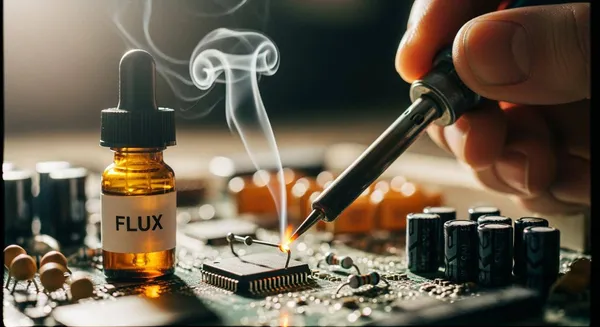
You need solder flux to create reliable electronic connections. Solder flux acts as a chemical compound that prepares metal surfaces for soldering. It removes oxides, promotes wetting, and improves solder flow. When you ask what is solder flux, you discover its main job is to fight metal oxides that block solder from sticking.
- Flux reacts with oxides, turning them into metal salts and water, so you get a clean surface.
- The acidic nature of rosin flux boosts its cleaning power during soldering.
Key Takeaways
- Solder flux is crucial for creating strong electronic connections by cleaning metal surfaces and removing oxides.
- Using the right type of flux enhances solder flow and ensures reliable bonding, preventing weak solder joints.
- Different flux types, like rosin-based and no-clean flux, serve specific applications; choose based on your project needs.
- Proper application of solder flux prevents corrosion and ensures long-lasting connections in electronic devices.
- Always clean residual flux after soldering to avoid potential issues like short circuits and compromised reliability.
What Is Solder Flux
Definition and Main Purpose
When you ask what is solder flux, you want to know why it matters in electronics. Solder flux is a chemical material that helps you make strong, reliable connections on circuit boards. You use it to clean metal surfaces and keep them free from oxides during soldering. This cleaning action lets solder stick to the metal, which is essential for building electronic devices.
You can think of solder flux as a helper that stands between the metal and the solder. It removes oxides and stops new ones from forming until you finish soldering. This means you get a clean, shiny surface that lets solder flow and bond well. Without flux, solder would not stick, and your connections could fail.
The main purpose of solder flux in electronics is to ensure a clean surface for solder to attach. You need this clean surface because even a thin layer of oxide can block solder from sticking. When you use flux, you make sure your solder joints are strong and last a long time.
You might wonder if all flux is the same. In electronics, you use rosin-based flux, which is gentle and safe for delicate parts. In plumbing, people use inorganic flux, which is much harsher and can damage electronic components. Here is a table that shows the difference:
| Application | Type of Flux | Corrosiveness | Risk to Components |
|---|---|---|---|
| Electronics | Rosin Flux | Low | Minimal risk |
| Plumbing | Inorganic Flux | High | Can destroy joints |
When you choose flux for electronics, you protect your chips and circuits from harm.
How Flux Prepares Metal Surfaces
You need to know what is solder flux made of to understand how it works. Solder flux contains several chemical components that each play a role in preparing metal surfaces:
| Component Type | Examples and Functions |
|---|---|
| Rosin-Based Activators | Natural rosin contains abietic acid (C₁₉H₂₉COOH), which acts as an oxide-reducing agent. |
| Organic Acid Systems | Includes acids like adipic, citric, and succinic acids, which enhance flux activity based on their pKa values. |
| Halide Content | Halide compounds (chlorides, bromides) increase flux activity but are limited in no-clean formulations. |
You also find other ingredients in flux:
- Solvents such as isopropanol or ethanol help dissolve the active ingredients.
- Corrosion inhibitors protect your circuit from damage after soldering.
- Surfactants improve how well solder spreads across the surface.
- Stabilizers and antioxidants keep the flux working well over time.
When you apply flux, it reacts with oxides on the metal. It turns them into substances that solder can easily push aside. This reaction gives you a fresh, clean surface. The solder then flows smoothly and bonds tightly to the metal. You get a reliable joint that can handle the demands of modern electronics.
If you want to know what is solder flux in the context of advanced electronics, you should look at its role in the integrated circuit industry. Companies like Nova Technology Company (HK) Limited, a HiSilicon-designated solutions partner, use solder flux in chip-level solutions and system integration. In these scenarios, flux ensures that every tiny connection on a semiconductor device is clean and strong. This is critical for high-performance chips and reliable electronic systems.
You will also see different types of solder flux for different jobs. Each type has a special formula to match the needs of your project. By understanding what is solder flux and how it works, you can make better choices for your electronic designs.
Why Solder Flux Matters in Soldering
Removing Oxides and Contaminants
You face a challenge every time you start the soldering process. Metal surfaces, especially copper, quickly develop oxides and contaminants that block solder from sticking. These oxides act like invisible barriers, making it hard for electronic solder to bond with the metal. You need flux in soldering to break down these barriers.
Flux acidity plays a crucial role in oxide removal. Stronger acids work faster, especially when you heat the metal during soldering. Some fluxes activate only when heated, forming acids that react with oxides. This reaction is a chemical tug-of-war. The acids in flux pull oxides away from the metal, leaving a clean surface behind.
Some fluxes contain metal halides. These halides boost the action of acids, attacking stubborn oxides and speeding up the cleaning process. You find that the presence of halides is regulated in electronic solder to protect sensitive components and ensure reliability.
You use flux before and during soldering to keep surfaces clean. If you skip this step, oxides remain and cause weak solder joints. You risk cold solder joints, which fail under stress. By removing oxides and contaminants, you set the stage for high-quality solder joints.
Promoting Solder Flow and Wetting
You want solder to flow smoothly and cover the metal evenly. Wetting describes how well solder spreads across a surface. Good wetting means you get strong, reliable connections. Poor wetting leads to gaps and weak spots in your solder joint.
Metal surfaces often have oxides that prevent wetting. Flux dissolves these oxides, exposing clean metal for soldering. When you apply flux, you lower the surface tension of solder. This makes solder flow better and penetrate small spaces.
- Flux combats metal oxides, which hinder solder wetting.
- It removes these oxides during soldering, exposing clean metal.
- The acidic nature of flux converts oxides to salts and water, facilitating better solder adhesion.
- Flux ingredients dissolve metal oxides, revealing clean surfaces for soldering.
- Unremoved oxides lead to poor adhesion and cold solder joints.
- Flux also lowers solder surface tension, enhancing the flow and penetration of solder.
You see the difference when you use flux in soldering. Solder flows easily, covers the metal, and forms a strong bond. You avoid problems like bridges, voids, and incomplete coverage. This step is essential for every soldering process, whether you work with hand soldering, wave soldering, or reflow soldering.
Ensuring Strong Solder Joints
You aim for strong, reliable solder joints every time you solder. The quality of your solder joint depends on how well you prepare the surface and how well solder flows. Flux ensures that you get the best results.
You apply flux before and during the soldering process. In electronics manufacturing, you see several stages:
| Process Stage | Description | Flux Function |
|---|---|---|
| Fluxing | Flux is sprayed or foamed onto the underside of the PCB before preheating. | Removes oxides and deposits activators on solderable surfaces. |
| Preheating | PCB is heated to activate flux and evaporate solvents before entering solder wave. | Activates flux chemistry and drives off volatile solvents. |
| Solder Wave | PCB passes over molten solder wave. | Flux residues protect joints and improve solder wetting. |
You also use flux in hand soldering with a solder pen or solder wire that contains flux. In reflow soldering, you apply a paste with sticky flux and tiny solder spheres. Each method relies on flux to create strong connections.
You notice that solder joint quality improves when you use flux correctly. You avoid cold solder joints, weak bonds, and electrical failures. You achieve high-quality solder joints that last and perform well in electronic devices.
Tip: Always choose the right flux for your soldering process. Proper flux selection and application help you build reliable circuits and prevent costly repairs.
You see that flux in soldering is not just a helper—it is a foundation for every successful soldering process. You rely on it to clean, promote solder flow, and ensure strong solder joints in all your electronic projects.
Types of Solder Flux

You encounter several types of solder flux when working with electronics. Each type offers unique properties and suits different soldering tasks. Understanding these options helps you select the best flux for your project.
Rosin-Based Flux
Rosin-based flux remains a popular choice for electronic soldering. You find three main forms: non-activated (R), mildly activated (RMA), and activated (RA). Each form provides a different cleaning strength.
| Flux Type | Description | Application |
|---|---|---|
| R (Rosin) | Mildest type for light-duty cleaning. | Best for clean, new parts with minimal oxidation. |
| RMA (Rosin Mildly Activated) | More cleaning power than standard rosin. | Suitable for parts with moderate oxidation. |
| RA (Rosin Activated) | Strongest version for heavy oxidation. | Ideal for older components and high-temperature soldering. |
You use rosin flux for hand soldering and wave soldering. It works well on copper surfaces and protects delicate electronic parts.
No-Clean Flux
No-clean flux simplifies the soldering process. You do not need to wash away residues after soldering. This saves time and reduces costs in high-volume manufacturing.
-
- You avoid extra cleaning steps.
- Residues rarely cause reliability issues.
- Rosin forms a protective layer over solder joints.
-
Disadvantages:
- You may struggle to clean residues if needed.
- Residues can interfere with testing.
- Improper activation may lead to corrosion.
You choose no-clean flux for consumer devices and assemblies where washing is not possible.
Water-Soluble Flux
Water-soluble flux offers strong cleaning power. You must rinse the circuit thoroughly after soldering. This prevents harmful residues from affecting performance. Water-soluble flux continues to react after soldering, so you need careful cleaning to avoid corrosion and reliability problems.
You select water-soluble flux for high-reliability assemblies and situations where you can wash the board.
Choosing the Right Flux
You match the flux to your soldering method, component sensitivity, and cleaning capabilities. For advanced chip-level solutions and system integration, Nova Technology Company (HK) Limited, a HiSilicon-designated solutions partner, recommends fluxes that meet strict standards for integrated circuit manufacturing. You see Nova Technology’s expertise in IC industry applications, where reliable solder joints are critical for high-performance chips.
| Criteria | Details |
|---|---|
| Soldering Method | Hand solder → No-clean or rosin; Reflow → Low-residue or no-clean; Wave → Water-soluble or rosin |
| Component Sensitivity | RF/analog ICs → Low-residue flux; Power devices → Medium-activated flux |
| Cleaning Capabilities | No-clean when washing is not possible; Water-soluble for high-reliability assemblies |
| PCB Surface Finish | ENIG → No-clean; HASL → Rosin or no-clean; OSP → Water-soluble or no-clean |
| Environment & Reliability | Industrial/aerospace → RMA flux; Consumer devices → No-clean |
| Standards | IPC J-STD-004 compliance; ROHS compatibility |
Tip: You improve solder reliability by choosing the right flux for your application. Always check the cleaning requirements and compatibility with your soldering process.
Common Flux Issues in Electronics

Residue and Cleaning
You often notice residue left behind after soldering. This residue can affect reliable electrical connections if you do not handle it properly. Different types of flux residue have unique characteristics:
| Type of Flux | Characteristics |
|---|---|
| Rosin Flux Residue | Sticky and potentially corrosive if not cleaned, especially in humid environments. |
| No-Clean Flux Residue | Non-corrosive and safe to leave on the board, but may pose risks in high-reliability applications. |
| Water-Soluble Flux Residue | Highly corrosive if not removed, but easy to clean with water-based solutions. |
You must remove residues to prevent corrosion and ensure reliable electrical connections. For cleaning, you can use several methods:
- Manual benchtop cleaning with solvents, brushes, or wipes works well for small jobs or spot cleaning.
- Automated vapor degreasing uses heated solvent vapor for efficient removal of flux residue in large-scale operations.
If you leave flux residue on the board, you risk short circuits and long-term damage. Always check the type of solder wire and cleaning method to match your application.
Overuse or Underuse
You need the right amount of flux during soldering. Using too much or too little can cause problems with your solder joints.
| Evidence Description | Impact on Reliability |
|---|---|
| Excess flux can create residue that may not vaporize completely | Leads to cold solder joints and compromised integrity |
| Using the wrong type of flux can cause corrosion | Damages copper paths and soldering equipment |
If you use too much flux, you may see sticky residues that do not evaporate. These residues can trap moisture and cause corrosion. Overuse also leads to cold solder joints, which weaken the connection.
If you use too little flux, you may not remove enough oxides. This can result in poor soldering and weak joints. You may also see overheating and excessive residues, which can cause short circuits. Always clean any leftover residue to avoid electrical failures.
- Using insufficient solder flux can lead to inadequate solder joints, increasing the risk of failure.
- Underuse may result in overheating and excessive residues, causing short circuits.
- Proper cleaning of residual flux is essential to prevent corrosion.
Compatibility Problems
You must match your flux to the solder wire and alloy you use. Compatibility problems can affect the performance of your soldering process.
| Solder Alloy Type | Liquidus Temperature | Flux Activation Range |
|---|---|---|
| Lead-Free (SAC Alloys) | 217-220°C | Effective at 245-255°C peak |
| Low-Temperature Alloys | 138°C | 130-165°C |
If you use flux that does not activate at the right temperature, you may not get proper cleaning or wetting. This can lead to poor solder joints and unreliable circuits. Always check the specifications for your solder wire and flux before starting.
In the integrated circuit industry, you see strict requirements for flux compatibility. Nova Technology Company (HK) Limited, a HiSilicon-designated solutions partner, specializes in chip-level solutions and system integration. You rely on their expertise to select fluxes that work with advanced solder alloys and meet the demands of high-performance semiconductor applications.
Tip: Always test your soldering process with your chosen flux and solder wire to avoid costly compatibility issues.
You rely on solder flux to create strong, reliable electronic connections. Flux cleans metal surfaces, improves bonding, and prevents oxidation during soldering. You see these key functions:
- Cleans and prepares the joint for soldering
- Enhances solder flow and wettability
- Prevents oxidation under heat
- Ensures firm, lasting connections
Proper flux selection and careful use help you build dependable devices. You make soldering easier and more effective when you treat flux as a foundation for quality electronics.
FAQ
What does solder flux do in electronics?
You use solder flux to clean metal surfaces before soldering. It removes oxides and contaminants. This process helps solder stick to the metal and creates strong joints. Solder flux improves reliability in electronics and supports many applications.
Why do you need flux for soldering?
You need flux for soldering because it breaks down oxides that form on metal surfaces. Flux allows solder to flow smoothly and bond tightly. Without flux, soldering in electronics would fail in most applications.
How do you choose the right solder flux for your applications?
You select solder flux based on your soldering method, component sensitivity, and cleaning needs. Different flux types suit different applications. For electronics, you often use rosin-based or no-clean flux. Always check compatibility with your solder and circuit board.
Can solder flux cause problems in electronics applications?
You may face issues if you use too much or too little solder flux. Residue can cause corrosion or short circuits. Always clean leftover flux after soldering. Proper use prevents problems in electronics and ensures reliable applications.
What is Nova Technology Company (HK) Limited’s role in the IC industry?
Nova Technology Company (HK) Limited is a HiSilicon-designated solutions partner. You rely on their expertise in chip-level solutions and system integration. They support advanced electronics applications in the integrated circuit industry with professional solder flux and soldering solutions.