Simple Examples of What's Inside Integrated Circuits
When you look inside integrated circuits, it is like seeing a tiny city. Each ic has transistors, resistors, and capacitors.
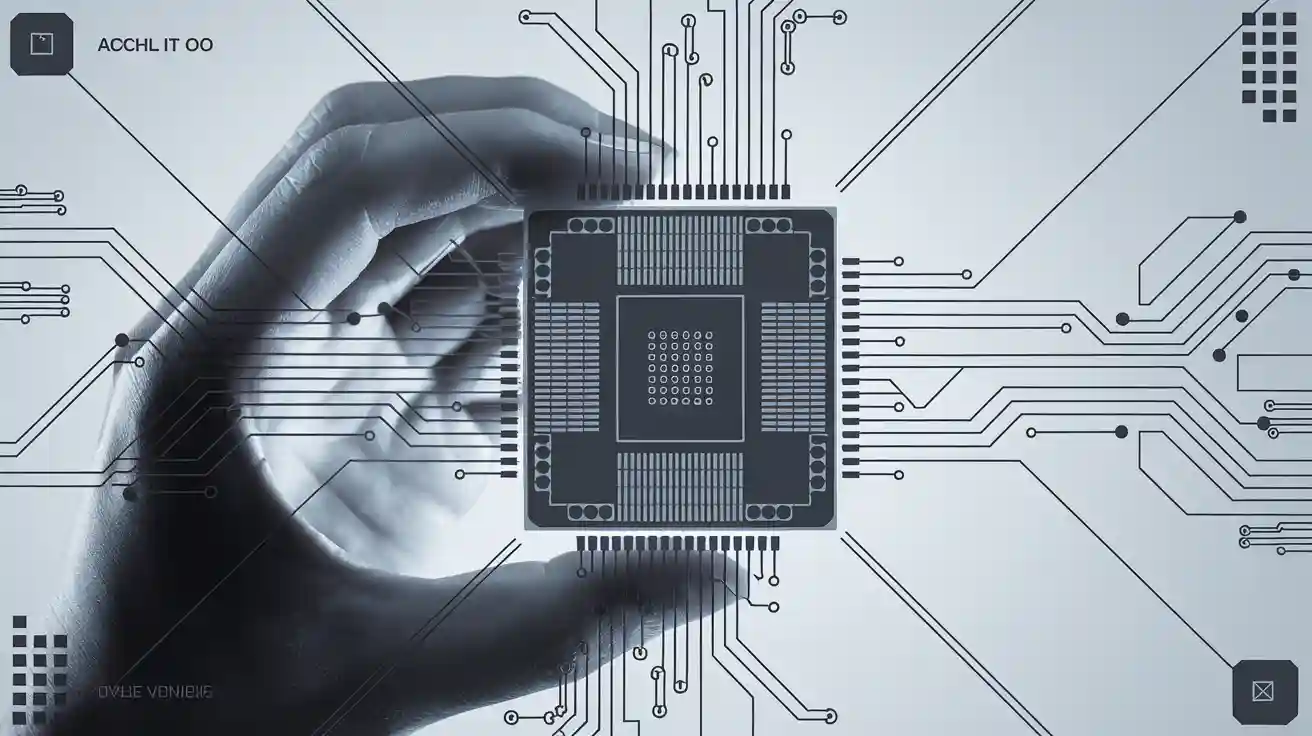
When you look inside integrated circuits, it is like seeing a tiny city. Each ic has transistors, resistors, and capacitors. These parts work together to control electricity. You can think of an ic as a toolbox with smart helpers. These parts help integrated circuits power things like your phone and cars. More people want integrated circuits every year. The chart below shows how fast the market is growing.

Key Takeaways
-
Integrated circuits are small chips. They have parts like transistors, resistors, capacitors, and diodes. These parts work together to control electricity. They help power many devices.
-
Silicon wafers are thin and strong. They are the base for building tiny parts. Engineers use special tools to make these parts. They work in very clean rooms. This helps the circuits work well.
-
Transistors work like switches. They control electric signals. This makes devices faster and smarter. They also use less power and space.
-
Resistors, capacitors, and diodes help control electricity flow. They store energy and protect circuits. This helps devices work well and last longer.
-
Integrated circuits are in many things we use every day. They are in phones, cars, and home appliances. They make these things smaller, faster, and more reliable for today’s technology.
Inside the IC
Silicon Base
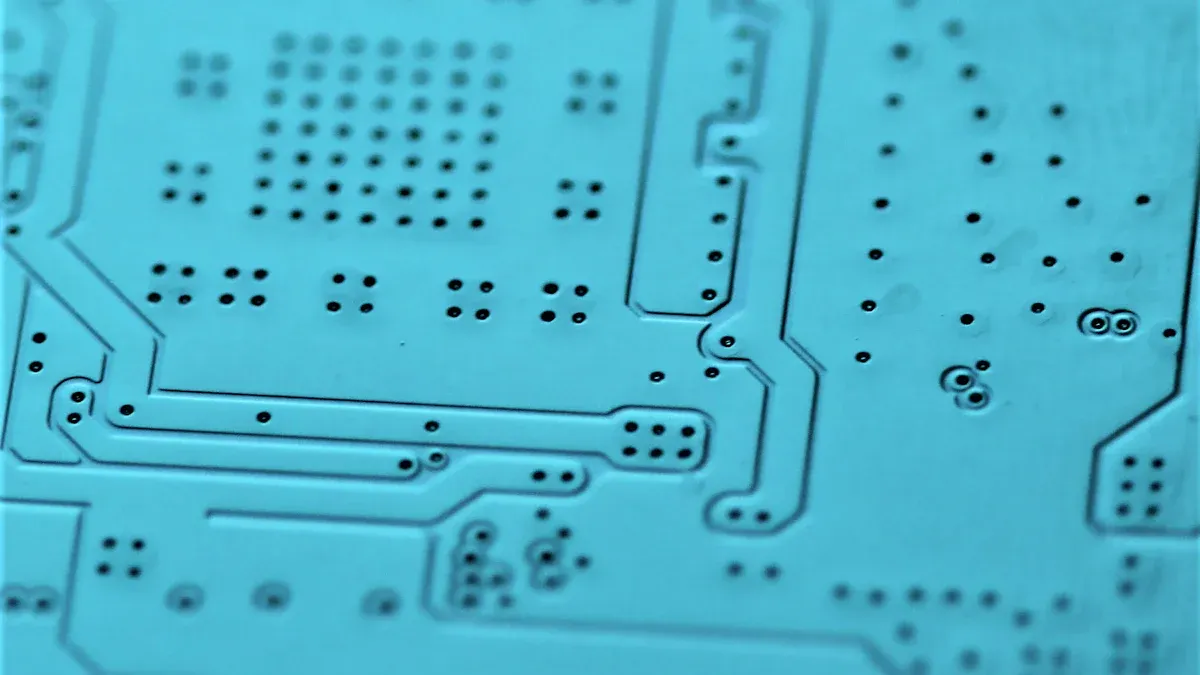
If you look inside an ic, you will see a thin piece of silicon. This silicon is like the ground floor of a busy city. Engineers pick silicon wafers because they are strong and easy to use. These wafers are thin discs that hold all the small parts of ics. You can imagine each wafer as a big tray with many tiny ics in rows.
-
Silicon wafers are the main base for building integrated circuits.
-
Each wafer has many small circuit units called dies before they are cut into chips.
-
Engineers use steps like doping, etching, and layering to shape circuits on the wafer.
-
Cleanrooms protect wafers from dust, since even a tiny bit can ruin an ic.
-
The silicon base lets you fit thousands or millions of parts in a tiny space.
Silicon is used a lot because it is strong, cheap, and easy to shape. The planar ic design made it possible to put all the parts on one flat surface. This changed electronics in a big way.
|
Feature |
Traditional Silicon Wafers |
SOI (Silicon-On-Insulator) Wafers |
|---|---|---|
|
Speed |
Lower |
|
|
Power Consumption |
Higher |
|
|
Radiation Resistance |
Lower |
Improved |
|
Cost |
Lower |
Higher |
New wafers like SOI make ics faster and more efficient. They use less power and work better in hard places, like space.
Embedded Components
The real magic happens when tiny parts are added to the silicon base. Engineers use special tools to put transistors, resistors, and capacitors on the wafer. They use steps like lithography and etching to make patterns smaller than a grain of sand. These patterns are like the roads and buildings in your ic city.
-
Making things smaller lets you carry powerful devices in your pocket.
-
Smaller circuits mean faster speeds and less energy use.
-
System-on-Chip (SoC) technology puts many functions, like memory and processing, onto one ic.
-
3D stacking lets engineers build up instead of out, saving space.
Some chips are only a few millimeters wide but have billions of transistors. This is possible because ics put all their parts onto the silicon base. Engineers test these chips to make sure every part works. They use special microscopes to check the tiny details.
Tip: Next time you use your phone or computer, remember that millions of tiny parts work together inside the ic.
Main Components in Integrated Circuits
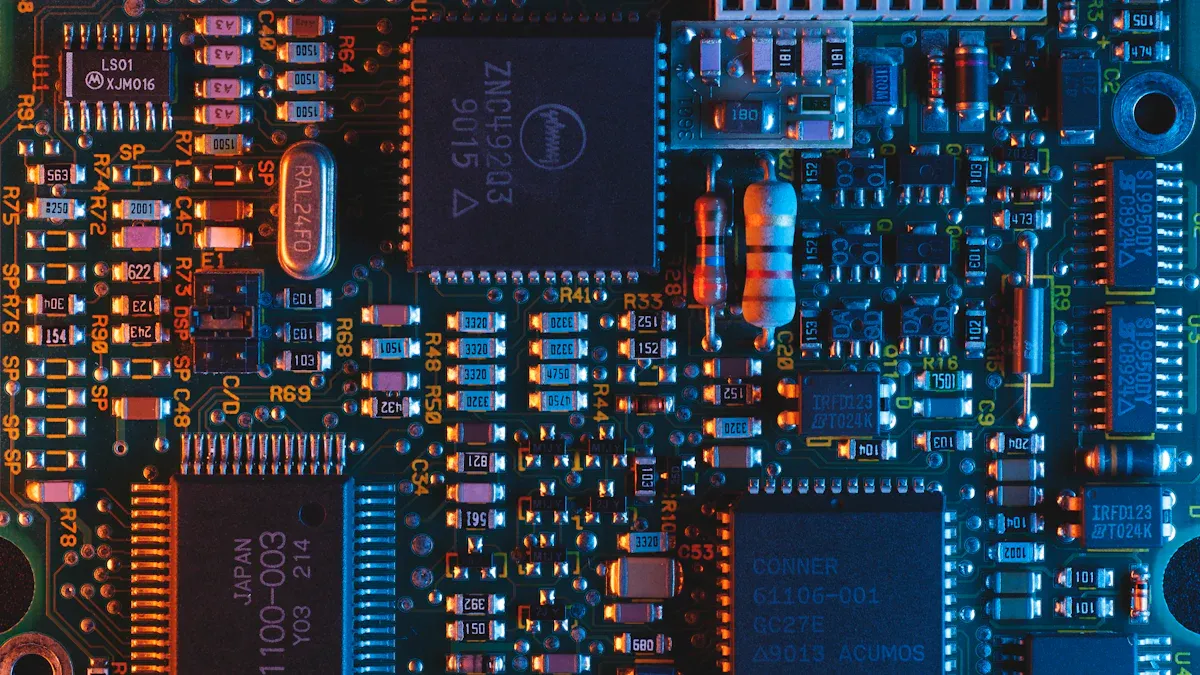
When you look inside ics, you see some main parts. These small parts work together to make devices smart and quick. Let’s see what each part does and why it is important.
Transistors
A transistor works like a tiny switch or gate. It can turn electricity on or off. It can also control how much current moves. Think of a transistor as a faucet for electricity. When you turn the handle, water flows or stops. In ics, transistors do this for electric signals.
Transistors are the most important part of ics. They help your phone, computer, and microwave think and make choices. Moore’s law says the number of transistors in ics doubles every two years. This means your devices get faster and smarter but not bigger. Modern ics can fit billions of transistors on a chip as small as your fingernail. That’s why you can play games, watch videos, and chat with friends at the same time.
Here’s a simple table about why transistors are special in ics:
|
Feature |
What It Means for ICs |
|---|---|
|
Speed |
Fast switching for quick processing |
|
Efficiency |
Uses less power, so devices last longer |
|
Size |
Super small, so more fit in less space |
|
Reliability |
Fewer breakdowns, longer device life |
Tip: Every time you open an app or send a text, millions of transistors inside your device help make it work.
Resistors
A resistor is like a speed bump for electricity. It slows down the flow of current. This makes sure the right amount gets to each part. Imagine a resistor as a thin part of a water pipe. Only some water can go through at once.
In ics, resistors help control voltage and protect other parts from too much current. They keep everything working well. Engineers care about resistor tolerance, which means how much the resistance can change over time. For example, in space, resistors must stay within 0.5% of their value for up to 10 years. That’s very exact! To make resistors more reliable, designers split them into tiny fingers and mix them together. This helps keep the circuit steady and correct.
-
Resistors in ics make sure signals are not too strong or too weak.
-
They help set timing for things like clocks and timers.
-
Good resistor design helps your devices work better and last longer.
Capacitors
A capacitor stores and releases energy, like a tiny battery. Picture a water balloon: you fill it up, then squeeze it to let water out. A capacitor does this with electricity.
In ics, capacitors help keep voltage changes smooth and signals steady. They also help filter out noise, so your music sounds clear and calls do not drop. Engineers use tests and models to make sure capacitors in ics are reliable. They run checks to see how long a capacitor will last and how well it works in different situations. If the capacitor’s value changes too much, the whole circuit might not work right. That’s why reliability is very important.
-
Capacitors help your device start up fast and run well.
-
They keep power steady, even when you open a new app or play a game.
-
Reliable capacitors mean fewer problems and longer battery life.
Diodes
A diode acts like a one-way street for electricity. It lets current go one way but blocks it the other way. Think of a diode as a gate that only opens for cars going the right way.
In ics, diodes protect circuits from damage and help control signals. They make sure electricity goes where it should and stops where it shouldn’t. New diodes, like nanoscale field effect diodes, use very little power and work very fast. Some can switch on and off 20 million times per second and use less energy than before. Engineers also test diodes for voltage drop, speed, and how well they handle heat. This makes sure they work well in all kinds of devices, from computers to cars.
|
Parameter |
Why It Matters in ICs |
|---|---|
|
Lower drop means less wasted energy |
|
|
Switching Speed |
Faster speed means quicker device response |
|
Reliability |
Stable performance in different environments |
Note: Diodes in ics help keep your electronics safe and working well, even when things get hot or signals change quickly.
Types of ICs and Where You Find Them
You see these main parts in all types of ics. Some ics handle digital signals, like microcontrollers and processors. Others work with analog signals, like amplifiers and voltage regulators. Many new chips have both, making them mixed-signal ics. Memory ics store your photos and apps, while microcontrollers run your smart home gadgets. Here’s a table to show where you might find these parts:
|
Main Component |
Found In These Common ICs |
Example Devices |
|---|---|---|
|
Transistors |
Microprocessors, memory ics, logic gates |
Phones, computers, game consoles |
|
Resistors |
Analog ics, digital ics, mixed-signal ics |
Radios, TVs, smart watches |
|
Capacitors |
Power management ics, filters, timers |
Laptops, tablets, cameras |
|
Diodes |
Power ics, signal processing ics |
Chargers, sensors, car electronics |
You use devices with these parts every day. The magic of integrated circuits comes from how these tiny parts work together to make your favorite gadgets possible.
Functional Blocks in ICs
When you look inside ics, you see more than small parts. You also find special blocks that help devices think and remember. These blocks make ics strong and useful. You use them every day in things like microprocessors and microcontrollers. They are also in communication systems.
Logic Gates
Logic gates make decisions inside ics. They take simple signals and choose what happens next. Think of them as tiny traffic lights for electricity. Logic gates help microprocessors solve problems and run apps. They even help you play games.
Different logic gates work at different speeds. Here is a table with some common logic families:
|
Logic Family |
Description |
|---|---|
|
CMOS |
Uses special transistors for high speed and low power. |
|
Tunnel Diode Logic (TDL) |
Works faster than regular diodes. |
|
Current-mode Logic (CML) |
Uses steady current for super-fast switching and strong noise resistance. |
|
Quantum-dot Cellular Automata (QCA) |
Uses quantum dots for very fast logic without transistors. |
You can find logic gates in all kinds of ics. They are in microcontrollers and advanced microprocessors. Logic gates are important in microprocessors and communication systems.
Memory Cells
Memory cells help ics remember things. Each cell stores a tiny bit of information. It is like a light switch that stays on or off. When you save a photo or open an app, memory cells do the work. Microcontrollers and microprocessors use memory cells to store data and instructions.
You see memory cells in many ics. They help your phone remember contacts and your computer keep files. Memory cells also let your games and videos load fast.
Tip: If there were no memory cells, your devices would forget everything when you turn them off!
Timers and Counters
Timers and counters help ics keep track of time and count things. You use them when you set an alarm or play music. Timers make sure microcontrollers and microprocessors do things at the right time.
There are two main types of counters: synchronous and asynchronous. Here is a table to compare them:
|
Performance Metric |
Synchronous Counters |
Asynchronous Counters |
|---|---|---|
|
Speed |
Fast and all parts update together |
Slower, updates ripple through |
|
Accuracy |
Very accurate, has error correction |
Less accurate at high speeds |
|
Reliability |
Great for fast, precise counting |
Less reliable for quick tasks |
Synchronous counters are best when you need speed and accuracy. Asynchronous counters use less power and are good for simple jobs.
These functional blocks make ics more reliable and easier to design. Engineers use tested blocks to save time and money. They also add safety features to keep your devices safe and working well everywhere.
How ICs Work Together
Circuit Connections
If you look inside an integrated circuit, you will see many tiny wires and paths. These paths connect all the parts like transistors, resistors, and capacitors. The connections help the parts work together as a team. You can think of these paths as roads in a city. They let signals move from one place to another.
Engineers plan these paths very carefully. They use special steps to make sure each connection is strong. If something goes wrong, the circuit can find the problem fast. It can switch to a safe mode in less than two seconds. This is very important for cars and other things where safety is needed. Here is a table that shows how quickly different problems are found and fixed:
|
Failure Category |
Failure Symptom Description |
Display Effect |
Average Reaction Time to Safe Mode |
|---|---|---|---|
|
System Fail |
LVDS Clock Frequency Failure |
Black Screen |
|
|
OSC Fail |
Internal Oscillator Failure |
White Screen |
~1.41 seconds |
|
Pin Fail |
FAIL_DET Pin Failure |
White Screen |
~0.43 seconds |
|
DMAP Fail |
Output PLL/FIFO Transfer Failure |
Blurred Screen |
~0.82 seconds |
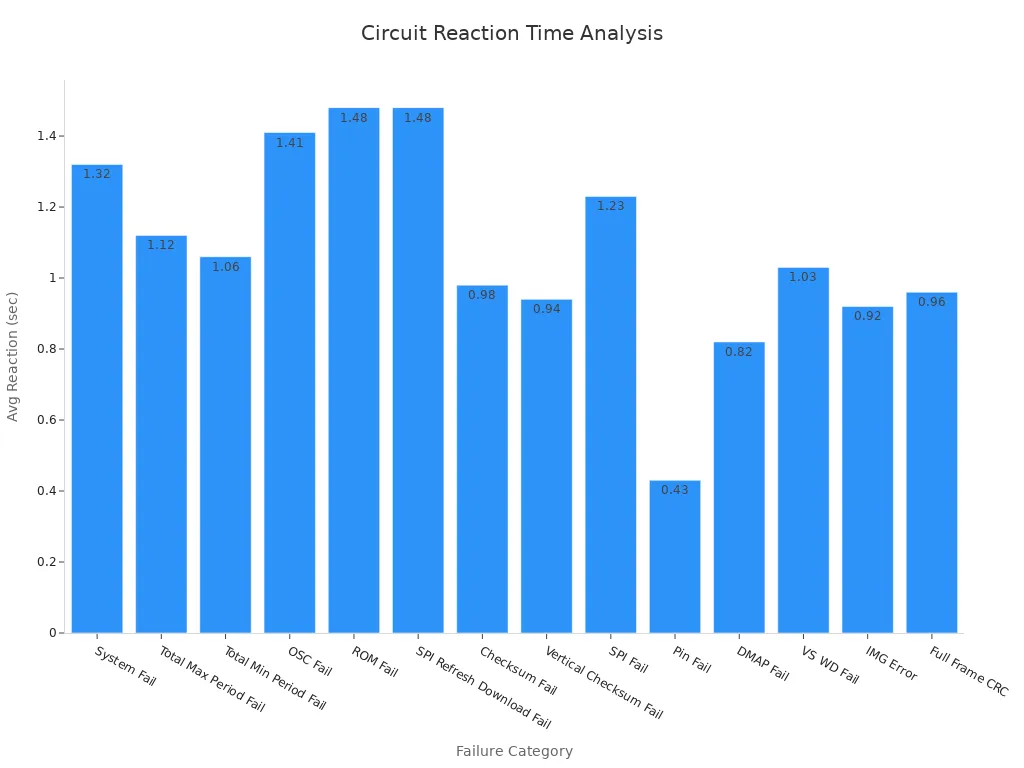
You can see that these circuits fix problems very quickly. This helps keep your devices safe and working well.
Note: Engineers use many steps to check every connection. They use tiny tools to fix or add new paths if needed.
Signal Flow
Signals are like messages moving through the circuit. When you press a button or touch a screen, you send a signal. The circuit moves the signal along the right path. Each part does its job at the right time.
Digital circuits use a clock to keep everything in order. The clock is like a leader making sure all parts work together. Synchronous clocking keeps signals in step so nothing gets mixed up. This helps things run smoothly and stops timing problems.
Some advanced circuits use special tricks to keep signals together. For example, photonic circuits use waves and phase shifts to guide light signals. This helps the circuit make fast choices and switch tasks quickly.
You might wonder how integrated circuits work so well with so many parts. The answer is teamwork. Each part reacts to signals right away. The whole system works in a way you can count on. This makes your phone, computer, and car dashboard fast and reliable.
-
Engineers use new materials and designs to keep signals clear.
-
Circuits can now bend and fit into many devices, like smartwatches and flexible screens.
-
Careful planning and testing help every signal get where it needs to go.
Tip: When you use a gadget, remember that thousands of signals are racing through tiny paths inside, all working together to make things happen.
Examples of IC Applications
Everyday Devices
You use integrated circuits all the time, even if you do not see them. Your phone, smartwatch, and washing machine need these tiny chips to work. Microcontrollers are like the brains in many gadgets. They control things like your microwave’s timer and your car’s dashboard. They also help your smart thermostat. Microprocessors are stronger and run your computer and tablet.
Here are some places where ICs work for you:
-
Smartphones and tablets (there are over 7.2 billion!)
-
Smart TVs and streaming devices
-
Fitness trackers and IoT wearables
-
Home appliances like fridges and washing machines
-
Cars with cool safety and fun features
Manufacturers check ICs to make sure they last a long time. They use special tests for heat, power surges, and even cosmic rays. These tests help stop mistakes and keep your electronics working well. You get smaller, cheaper, and more energy-saving devices because of ICs.
Did you know? The semiconductor industry is growing very fast. Experts think the market will reach $1 trillion a year by the end of this decade. This is because of new tech like AI and electric cars.
Digital Circuits
Digital circuits use ICs to handle information fast and correctly. Microprocessors do hard jobs in computers, game consoles, and servers. Microcontrollers do simple jobs in toys, remotes, and smart home devices. These chips have millions or billions of transistors, so they are strong and save energy.
Look at some important things about digital ICs:
|
Feature |
Why It Matters |
|---|---|
|
Puts more jobs into smaller chips |
|
|
Low Power Use |
Saves battery in portable devices |
|
Fast Processing |
Runs games, videos, and apps easily |
|
Reliability |
Works in hot, cold, or busy places |
|
Flexibility |
Can be programmed for many jobs |
You see digital ICs in laptops and medical devices. The digital IC market is growing fast, and consumer electronics are a big part. New things like 5G, IoT, and smart cars need better and faster chips. Logic ICs help devices make choices and will soon be almost half the market.
If you look around, you will find many ic applications. These chips help make your world smarter, safer, and more connected every day.
Inside an integrated circuit, you find transistors, resistors, capacitors, and diodes. Each one does something important. Some switch signals. Others store energy. When these parts work together, the chip is fast and reliable. It also uses very little power. ICs can do hard jobs like image recognition. They help your devices work well every day.
If you learn these basics, you will understand electronics better. More smart chips are needed each year for things like 5G, AI, and IoT. Every time you use technology, you help shape the future! 🚀
FAQ
What does an integrated circuit do?
An integrated circuit controls how electricity moves in your device. It helps your phone, computer, or car work by making quick decisions and running different tasks.
Why are ICs so small?
Engineers make ICs tiny so you can fit more power into less space. Small chips mean your gadgets can be lighter, faster, and use less energy.
Can you see the parts inside an IC?
You cannot see the parts with your eyes. The pieces are much smaller than a grain of sand. Engineers use special microscopes to look at them.
How long do ICs last?
Most ICs last many years. Good design and testing help them work well in phones, cars, and even space. You usually do not need to worry about them breaking.
Are all ICs the same?
No, ICs come in many types. Some handle sound, others store memory, and some run apps. You find different ICs in almost every electronic device you use.