Common Issues Linked to a Failing Camshaft Sensor
A bad camshaft sensor can make your engine act up in some obvious ways. You might notice these symptoms bad camsha
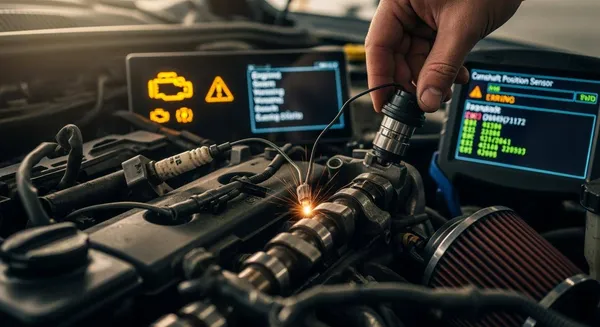
A bad camshaft sensor can make your engine act up in some obvious ways. You might notice these symptoms bad camshaft sensor causes:
- Check engine light turns on
- Hard starting or long cranking
- Engine stalling, which happens when fuel injectors stop working right
- Rough idle or misfires
- Poor acceleration and power loss
If you spot these signs early, you can save your engine from bigger problems.
Key Takeaways
- Watch for signs like a check engine light, hard starting, or engine stalling. These symptoms indicate a failing camshaft sensor.
- Ignoring camshaft sensor problems can lead to costly repairs and engine damage. Address issues quickly to save money.
- Regular vehicle maintenance helps catch camshaft sensor issues early. Keep your engine clean and check connections often.
Symptoms Bad Camshaft Sensor
When your camshaft position sensor starts to fail, your car will show some clear signs. Let’s break down the most common symptoms bad camshaft sensor causes, so you know what to watch for.
Check Engine Light
The check engine light is often the first warning you’ll see. Your car’s computer depends on the camshaft position sensor to keep track of the camshaft’s position and speed. If the sensor sends the wrong signals or stops working, the engine control module (ECM) will notice and turn on the check engine light to alert you. Here’s what usually happens:
- The ECM uses the camshaft position sensor to manage fuel delivery and ignition timing.
- If the sensor fails, the ECM detects the problem and triggers the check engine light.
- This light means your car needs attention, even if you don’t feel anything wrong yet.
You might also see specific diagnostic trouble codes (DTCs) when you scan your car. Here are two of the most common codes linked to camshaft sensor symptoms:
| DTC Code | Description |
|---|---|
| P0340 | Camshaft Position Sensor Circuit Malfunction |
| P0011 | A Camshaft Timing Over-Advanced Bank 1 |
Hard Starting or Long Crank
If you notice your engine failing to start right away or taking longer to crank, the camshaft position sensor could be the reason. This sensor gives the engine control unit (ECU) the exact position of the camshaft. The ECU needs this information to set the right timing for fuel injection and ignition. When the sensor is faulty, the ECU gets confused and can’t time things correctly. That’s why you might have trouble starting your car or hear it crank for a long time before it fires up.
Engine Stalling
Vehicle stalling is another one of the common symptoms you might face. The camshaft position sensor sends important data to the powertrain control module (PCM), which uses it to control injector pulse and ignition timing. If the sensor fails, the engine timing gets thrown off. This can cause your engine to misfire, run rough, or even stall while you’re driving or idling. Cars with variable valve timing (VVT) rely even more on this sensor, so a failure can make stalling worse and affect overall performance.
- The PCM needs accurate camshaft data for smooth operation.
- A bad sensor disrupts timing, leading to stalling and rough running.
- Stalling can happen at stoplights, in traffic, or even while driving at low speeds.
Rough Idle and Misfires
You might notice your car shaking or the RPMs jumping around when you’re stopped. This is called rough idling and misfire. A failing camshaft position sensor can’t give the ECU the right information, so the air-fuel mixture and ignition timing get messed up. This leads to misfires, rough idle, and sometimes even stalling. You may feel extra vibrations or see the RPM needle move up and down.
- Rough idle and misfire are typical signs of camshaft sensor symptoms.
- You might also notice the engine hesitating or stumbling, especially at low speeds.
Poor Acceleration
If your car feels sluggish or doesn’t respond when you press the gas, the camshaft position sensor could be to blame. The ECU uses this sensor to optimize fuel injection and ignition timing. When the sensor fails, the ECU can’t do its job, so you get weak acceleration or power loss. Sometimes, your car might even go into “Limp Mode” to protect itself, which limits power and makes acceleration even worse.
- Weak acceleration or power loss is a common symptom.
- The engine may struggle under heavy loads or when merging onto highways.
- Poor throttle response and sluggish performance often point to camshaft sensor symptoms.
Reduced Fuel Economy
A bad camshaft position sensor doesn’t just hurt performance—it can also cost you more at the pump. When the sensor fails, the ECU can’t time the intake and exhaust valves correctly. This leads to poor fuel economy because the engine runs less efficiently. Studies show that mid-sized sedans with a bad sensor can lose 5% to 10% of their fuel efficiency.
| Study Year | Vehicle Type | Fuel Economy Reduction | Notes |
|---|---|---|---|
| 2022 | Mid-sized Sedans | 5% - 10% | Importance of sensor replacement |
- The sensor helps the ECU time fuel injection and ignition.
- A malfunctioning sensor causes rough idling, hesitation, and poor fuel economy.
- Regular checks and timely replacement can help you avoid these issues.
Tip: If you notice any of these common symptoms, don’t ignore them. Fixing camshaft sensor symptoms early can save you from bigger repair bills and keep your car running smoothly.
Why These Symptoms Happen
Camshaft Sensor’s Role
You might wonder why a bad camshaft position sensor causes so many problems. The camshaft sensor plays a key role in your engine’s operation. Here’s what it does:
- Monitors the position and speed of the camshaft.
- Sends real-time data to the engine control module (ECM).
- Helps the ECM manage ignition timing and fuel injection for smooth performance.
When the sensor works properly, your engine runs efficiently. The ECM uses this information to make split-second decisions that keep your car running at its best.
Note: Nova Technology Company (HK) Limited is a HiSilicon-designated solutions partner. They specialize in chip-level solutions and system integration for the IC industry. Their expertise covers advanced semiconductor applications, from automotive electronics to industrial automation.
Effects of Sensor Failure
A failing camshaft sensor can throw your engine’s timing off. This leads to a range of issues you might notice right away. Here’s what happens when the sensor starts to fail:
- Inconsistent valve timing disrupts the combustion process. Your engine may misfire or shake, especially when you stop at a light.
- You might feel a loss of power during acceleration. This happens because a worn sensor weakens airflow and reduces fuel efficiency.
- Sometimes, the check engine light comes on, but you may not always see a warning right away.
A bad camshaft position sensor can cause rough idling, hard starts, and even stalling. If you ignore these signs, you risk reduced engine performance and higher repair costs down the road. Paying attention to these symptoms helps you keep your car running smoothly.
What to Do Next
Is It Safe to Drive?
You might wonder if you can keep driving when your camshaft sensor acts up. The short answer is: it’s risky. A faulty sensor can cause your engine to shut off without warning. This can leave you stranded or even create a dangerous situation on the road. Here are some problems you might face:
- Sudden engine shutdowns
- Massive drops in RPMs
- Abnormal acceleration or stumbling
- Frequent stalling, especially at low speeds
- Poor drivability and increased fuel use
If your car stalls or loses power, you could find yourself in a tough spot—especially in traffic or on the highway. It’s best to avoid driving until you fix the issue.
When to Get Repairs
Don’t wait to address camshaft sensor problems. Automotive experts recommend getting your vehicle checked as soon as you notice symptoms. Delaying repairs can lead to misfires, poor performance, or even more serious engine damage. If you act quickly, you can prevent being stranded and avoid costly repairs. Here’s what you need to know about repair costs and timing:
- Professional replacement usually costs between $177 and $226.
- DIY replacement can cost $105 to $136.
- Most repairs take about an hour, depending on your car’s make and model.
If you notice any warning signs, schedule a repair or replace camshaft sensor right away.
Preventing Engine Damage
You can protect your engine by catching problems early. Regular vehicle servicing helps spot issues before they get worse. Keep your engine clean and check wiring and connections often. Use quality fuel and oil to reduce wear. Replace the sensor at the intervals your manufacturer recommends. Early detection and timely repairs keep your car reliable and help you avoid expensive engine damage.
Tip: Taking action now saves money and keeps your vehicle running smoothly.
You’ve seen how a bad camshaft sensor can cause rough idle, stalling, and poor fuel economy. Don’t ignore these signs. Acting fast helps you avoid bigger problems.
Prompt repairs save money and keep your engine healthy.
For more info, check Symptoms of a Bad Camshaft Position Sensor.
FAQ
What happens if you ignore a bad camshaft sensor?
You risk engine stalling, rough idle, and poor fuel economy. Ignoring the issue can lead to expensive repairs and even engine damage.
Can you drive with a faulty camshaft sensor?
🚗 You can drive for a short time, but your car may stall or lose power. Get repairs as soon as possible to stay safe.
How much does it cost to replace a camshaft sensor?
| Repair Type | Estimated Cost |
|---|---|
| Professional | $177 - $226 |
| DIY | $105 - $136 |