Beyond the Box Unpacking the Capacitor Bank's True Role
Capacitor banks are essential components for improving power quality and efficiency in any modern power distribution system.

Capacitor banks are essential components for improving power quality and efficiency in any modern power distribution system. Their primary purpose is power factor correction, a critical task for maintaining system-wide power quality. A capacitor bank generates reactive power locally to offset inefficient loads like motors. A poor power factor creates waste, leading to utility penalties that can exceed 20% of a monthly bill.
Think of it like a beer. Real power is the liquid you want, while reactive power is the foam. A capacitator bank works to minimize the foam, making capacitor banks a key tool for efficiency.
Key Takeaways
- Capacitor banks fix power factor problems. They make electrical systems work better and save money.
- These banks reduce wasted energy. They also free up power capacity in existing equipment.
- Capacitor banks help keep voltage stable. This protects machines from damage.
- They are important for new energy sources. This includes solar and wind power.
- Modern capacitor banks can adjust power in real-time. This helps make the power grid smarter.
The Core Role of a Capacitor Bank: Power Factor Correction
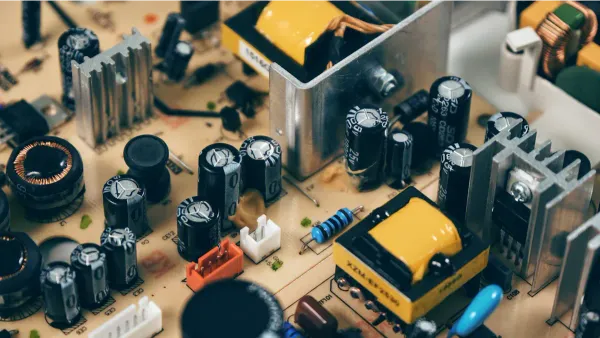
The primary function of capacitor banks is power factor correction. This process is fundamental to maintaining the health and efficiency of any electrical system. It directly addresses the problems created by reactive power, ensuring the power distribution network operates at its peak capability.
Understanding Reactive Power and Its Costs
Many industrial loads, like AC motors and transformers, are inductive. They require reactive power to create the magnetic fields necessary for their operation. This reactive power does not perform useful work, but it places a significant burden on the electrical system. The ratio of useful power (kW) to total apparent power (kVA) is called the power factor. A low power factor indicates a high demand for reactive power.
Inductive loads are a major cause of poor power factor, especially under light load conditions. The table below shows typical power factor ratings for common equipment.
| Load Type | Condition | Power Factor Range |
|---|---|---|
| AC Motor | Rated Load | 0.85 - 0.9 |
| AC Motor | No Load | 0.2 - 0.3 |
| Power Transformer (Primary) | Full Load | 3% - 5% lower |
| Power Transformer (Primary) | Light Load (Load < 60%) | Drops significantly |
A low power factor forces the system to carry higher current to deliver the same amount of useful power. This excess current leads to significant consequences:
- Energy Waste: Higher current increases heat losses in cables and transformers, known as I²R losses. This wasted energy translates directly into higher operational costs.
- Financial Penalties: Utility companies must build their infrastructure to handle the total apparent power (kVA). They often penalize customers with a power factor below a certain threshold, typically 0.90. These charges compensate the utility for the cost of their oversized equipment and can add thousands of dollars to a monthly bill.
How a Capacitator Bank Provides Reactive Power
A capacitor bank acts as a local generator of reactive power. Capacitors store electrical energy within an electric field. They continuously cycle between storing energy from the circuit and returning it. This exchange provides the reactive power demanded by inductive loads directly at the source of the demand.
Capacitors and inductors work in opposition. When an inductor is drawing energy to build its magnetic field, a capacitor is releasing stored energy back into the circuit. This opposing action allows a capacitor to supply the reactive power an inductor needs, effectively canceling out the reactive demand from the utility's perspective.
This process is a form of reactive power compensation. By installing capacitor banks in parallel with inductive loads, they supply a "leading" current that counteracts the "lagging" current drawn by motors and transformers. This neutralization of the reactive component brings the system's overall power factor closer to the ideal value of 1.0. As a result, the total current drawn from the utility decreases, which improves power quality and system efficiency.
This technique is vital in many industrial settings. Facilities with heavy machinery depend on capacitor banks for stable and efficient operation in applications such as:
- Rock crushing plants
- Arc-welding operations
- Plastic injection molding
- Crane and hoist systems
In each case, capacitor banks ensure that the electrical system can handle demanding loads without suffering from poor power quality or incurring costly utility penalties.
Boosting Efficiency and Unlocking System Capacity
Beyond correcting the power factor to avoid utility penalties, capacitor banks deliver two powerful financial and operational benefits. They actively boost system efficiency by cutting energy waste. They also unlock hidden capacity within your existing electrical infrastructure, potentially delaying or eliminating the need for expensive upgrades.
Reducing Energy Loss and Waste
Every conductor in an electrical system, from long cable runs to transformer windings, has resistance. When current flows through this resistance, it generates heat. This energy loss, known as I²R loss, serves no useful purpose and contributes directly to higher electricity bills. Since these losses are proportional to the square of the current (I), even a small reduction in current yields a significant decrease in wasted energy.
A capacitator bank reduces the total current flowing from the utility by supplying reactive power locally. This directly lowers I²R losses throughout the power distribution network.
- Lower Current: Correcting the power factor reduces the total current required to deliver the same amount of useful power.
- Reduced Heat: This lower current flow significantly decreases the heat generated in transformers, switchgear, and cables.
- Longer Equipment Life: Cooler operating temperatures reduce stress on equipment insulation and components, extending their operational lifespan and improving reliability.
For example, a large industrial campus with a 5.5 MW demand calculated that its low power factor was causing 35 kW of I²R losses. By correcting this, the facility could recover over 120 MWH of energy annually—a direct and measurable reduction in waste. Improving the power factor from 0.7 to 0.95 can slash these energy losses by as much as 45%.
Releasing Hidden Equipment Capacity
Transformers and cables are rated in kilovolt-amperes (kVA), which represents their total capacity to handle both real power (kW) and reactive power (kVAR). When a system has a poor power factor, a large portion of that kVA capacity is wasted on supplying non-productive reactive power. This leaves less room for the real power that runs your operations.
A capacitor bank effectively frees up this occupied capacity. By neutralizing reactive power at the load, it reduces the total kVA demand on your equipment. This "releases" capacity that was previously hidden, allowing your existing infrastructure to support more machinery and productive loads.
Think of it this way: A transformer is like a delivery truck. Reactive power is like bulky packing peanuts that take up space but have no value. Real power is the actual packages you need to deliver. A capacitor bank removes the packing peanuts, making more room in the truck for valuable packages.
This unlocked capacity is substantial. Improving the power factor from 0.70 to 0.95 can release 27% of your system's capacity. This means a fully loaded 1,000 kVA transformer could support an additional 270 kVA of productive load without being overloaded. This improvement in power quality allows facilities to:
- Add new production lines or machinery without investing in new transformers or larger cables.
- Avoid overloading existing equipment as the facility expands.
- Improve voltage stability for sensitive electronic equipment.
The benefits of installing capacitor banks are clear and quantifiable, leading to enhanced efficiency and significant cost savings.
| Metric | Improvement/Effect |
|---|---|
| Active Power Losses | Reduced by 30% |
| System Efficiency | Increased by 5% |
| Cost Savings | Estimated at $15,000 per year |
| Load Carrying Capability | Increased by 12% |
| Equipment Lifespan | Extended by 10% |
| Transformer Loading | Reduced by 10% |
| Return on Investment | Achieved within 2 years |
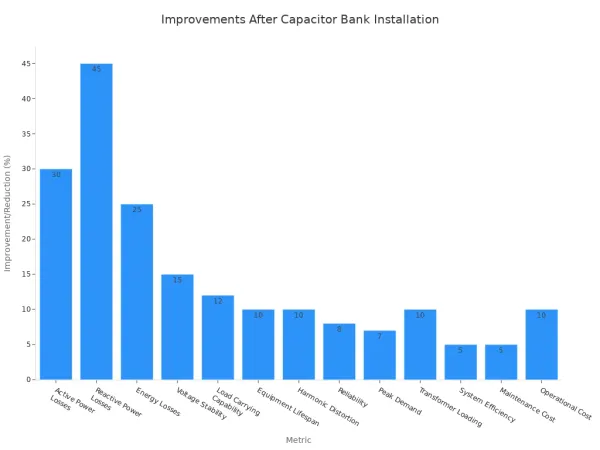
Ultimately, this strategic investment turns a passive electrical system into a more robust and efficient asset, paving the way for growth without the high cost of infrastructure expansion.
A Pillar of Grid Voltage Stability
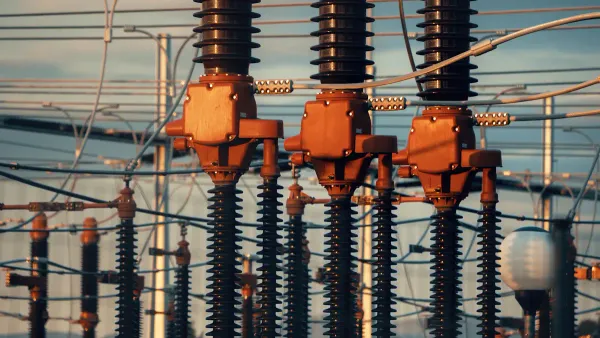
Capacitor banks play a crucial role beyond power factor correction. They are a cornerstone of voltage stability in modern power distribution networks. They actively counter voltage drop, a persistent issue that can degrade power quality and damage equipment.
The Problem of System Voltage Drop
Voltage drop is the gradual decrease of electrical pressure along a power line. This phenomenon occurs as current flows through the resistance of cables and network components. Several factors increase voltage drop:
- Longer cable runs
- Smaller wire gauges (sizes)
- High current draw from equipment
This drop is a natural part of AC power distribution. However, excessive voltage drop creates serious problems. Industry standards like ANSI C84.1 define acceptable voltage ranges for equipment to function correctly. When voltage falls below these ranges, it leads to significant operational issues.
- Equipment Damage: Motors in appliances can overheat, stall, or fail prematurely.
- Reduced Efficiency: Devices work harder to compensate for low voltage, consuming more energy and increasing utility bills.
- Operational Downtime: Unstable power can cause machine malfunctions and production stoppages.
Providing Critical Voltage Support
A capacitor bank provides a direct solution to voltage drop. It acts as a local source of reactive power, injecting it into the circuit close to the load. This action produces a localized voltage boost that counteracts the drop along the power line.
The technical mechanism is straightforward. By supplying reactive power locally, the capacitator bank reduces the total current flowing from the substation through long feeders. Less current means less voltage drop. This improves voltage regulation and ensures equipment receives the stable voltage it needs to operate efficiently.
This function is especially critical in certain applications:
- Long Rural Feeders: Capacitor banks are installed at the end of long power lines to boost voltage for customers far from the substation.
- Underground Systems: Pad-mounted units provide voltage support in distributed underground networks.
- Industrial Plants: They protect sensitive motors and electronics from performance issues caused by voltage sag.
Ultimately, capacitor banks ensure that the entire system maintains proper voltage levels, enhancing reliability and protecting valuable assets.
The Modern Role of Capacitor Banks in the Grid
The role of capacitor banks is evolving with the power grid itself. They are no longer just static components but have become dynamic tools essential for integrating renewable energy and building a smarter, more responsive electrical infrastructure.
Supporting Renewable Energy Integration
The integration of renewable energy sources like solar and wind presents unique challenges to grid stability. Their intermittent nature creates unpredictable power generation, leading to several issues:
- Voltage and Frequency Fluctuations: The variable output from renewables can cause voltage levels to swing, disrupting sensitive electronics.
- Harmonic Distortion: Power converters used in solar and wind systems can inject "dirty" power into the grid, causing equipment to overheat.
- Reduced System Inertia: Renewable sources lack the physical inertia of traditional generators, making the grid more vulnerable to frequency changes.
Capacitor banks are a cost-effective solution to these problems. They are deployed within large-scale solar plants and wind farms to provide critical reactive power. This function stabilizes voltage and corrects the power factor, ensuring the renewable facility delivers clean, stable power and meets strict utility interconnection requirements for power quality.
Enabling a Smarter, More Responsive Grid
Modern power distribution networks require components that can think and react. This is where switched capacitor banks excel. Unlike fixed units that are always on, a switched capacitator bank uses controllers and sensors to adjust its reactive power output in real-time based on changing load conditions.
These modern units operate dynamically. They are a key part of an Advanced Distribution Management System (ADMS), which acts as the brain of the smart grid. Within the ADMS, a Volt/VAR Optimization (VVO) application coordinates devices like capacitor banks to flatten voltage profiles and reduce energy losses across the entire network.
This intelligent control allows utilities to optimize grid performance continuously. It ensures the system remains stable, efficient, and compliant, even with fluctuating loads and the bidirectional power flow from sources like a rooftop solar energy storage system. Companies like Nova Technology Company (HK) Limited, a HiSilicon-designated solutions partner, are involved in providing these advanced solutions that make a smarter grid possible.
Capacitor banks are active tools that improve modern power distribution. They correct the power factor, boost system efficiency, and provide critical voltage support. These components are not passive boxes; they are essential for maintaining high power quality and unlocking system capacity. As the grid evolves, the importance of capacitor banks grows, making them indispensable for integrating renewable energy and building smarter, more reliable electrical networks.
| Market Outlook | Key Statistics |
|---|---|
| Market Size (2024) | USD 3.8 Billion |
| Market Forecast (2033) | USD 5.6 Billion |
| Growth Rate (CAGR) | 4.02% |
FAQ
What is the main job of a capacitor bank?
A capacitor bank's main job is power factor correction. It generates reactive power locally for inductive loads like motors. This action improves system efficiency. It also reduces the total current drawn from the utility, which lowers energy waste and prevents financial penalties.
How do capacitor banks save facilities money?
Capacitor banks offer two key financial benefits.
- They improve the power factor, helping facilities avoid costly penalties from utility companies.
- They reduce I²R energy losses in cables and transformers, which lowers monthly electricity bills and provides a clear return on investment.
Can a capacitor bank damage equipment?
Properly sized and installed capacitor banks are safe and beneficial. However, an oversized unit can cause over-voltage, which may damage sensitive electronics. A professional assessment is crucial to ensure the capacitor bank matches the facility's specific load requirements for safe, effective operation.
Are capacitor banks useful for solar or wind farms?
Yes, they are essential. Renewable energy sources can cause voltage fluctuations. Capacitor banks provide reactive power to stabilize voltage and improve power quality. This ensures the renewable facility meets strict grid connection standards and delivers stable, reliable power to the network.