Variable Resistor Uses in 2025's Top Tech
Variable resistors are indispensable in 2025's top technology. They create immersive haptic feedback in gaming controllers,
Variable resistors are indispensable in 2025's top technology. They create immersive haptic feedback in gaming controllers, fine-tune ambient lighting in smart homes, and calibrate sensors in advanced health wearables. These applications depend on variable resistors for dynamic, user-driven adjustments.
A variable resistor is an electronic component that provides real-time control over the flow of electricity, acting as a bridge between user input and device function.
Key Takeaways
- Variable resistors are important parts of many new technologies. They help make devices work better.
- These resistors let users control things like game feedback, smart home lights, and medical device settings. They change how electricity flows.
- Different types of variable resistors exist. Potentiometers adjust voltage, and rheostats control current. Thermistors sense temperature, and photoresistors react to light.
- Digital variable resistors are replacing older analog ones. They offer more precise control and last longer because they have no moving parts.
- Variable resistors will keep changing. They will help create even smarter and more responsive devices in the future.
Key Variable Resistor Applications in Tech
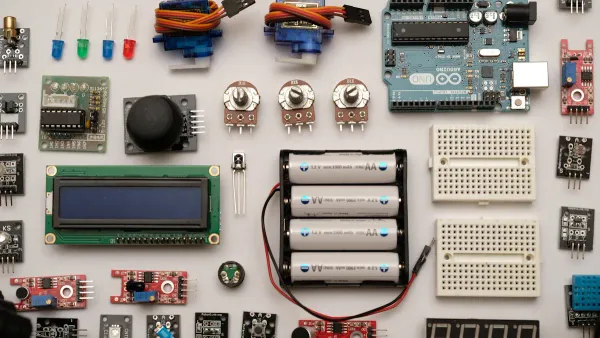
Variable resistors are the hidden engines of personalization and control in modern electronics. They translate a user's physical action or an environmental change into an electrical signal. This signal then directs a device's function. This core capability makes them essential across many of 2025's most innovative fields.
Human-Machine Interfaces (HMI)
Human-Machine Interfaces (HMIs) are the points of interaction between people and technology. Variable resistors make these interactions feel intuitive and responsive. In gaming, they create immersive experiences that go far beyond simple button presses.
The PlayStation 5’s DualSense controller is a prime example. Its adaptive triggers use variable resistors to change the tension a player feels. This technology mimics the resistance of pulling a bowstring or pressing a gas pedal in a game. The controller adjusts resistance based on in-game scenarios, offering a more natural feel. This feature allows for precise control by varying pressure sensitivity. This single variable resistor application deepens player immersion and redefines gameplay mechanics. Future advancements promise even more nuanced feedback, including:
- Variable pressure sensations
- Texture simulations
- Directional feedback
- Temperature variations
Beyond gaming, variable resistors are critical in automotive infotainment systems. Classic rotary knob potentiometers allow drivers to adjust volume or tune settings. Internally, other potentiometers help engineers calibrate and regulate system performance, ensuring the user interface operates smoothly and reliably.
Smart Home and IoT Automation
Smart homes rely on automation and efficiency. Variable resistors are key components that help homeowners save energy and customize their environment. Lighting is one of the most common applications.
Smart lighting dimmer switches use a variable resistor to control the flow of electricity to a bulb. Reducing the electrical current lowers the light output and conserves energy. This simple adjustment has a significant impact on power consumption.
Dimming LED bulbs to 50% brightness can save over 50% of energy compared to running them at full power. Smart dimmers enhance these savings with scheduling and remote control, automating adjustments based on the time of day or room occupancy.
In climate control, a special type of variable resistor called a thermistor is used. Smart thermostats contain thermistors to sense the room's temperature. A thermistor's electrical resistance changes in response to temperature variations. The thermostat's microcontroller reads this resistance, converts it into an accurate temperature reading, and adjusts the heating or cooling system accordingly.
Medical and Wearable Devices
Precision is non-negotiable in the medical field. Variable resistors provide the fine-tuning necessary for accurate diagnostics and monitoring. Health wearables, such as blood pressure monitors and fitness trackers, use them to calibrate sensors. This calibration ensures that the data collected from the body is reliable and precise.
Inside advanced medical equipment, specialized variable resistors are essential for stability and accuracy. Different types are chosen for specific jobs:
| Resistor Type | Primary Use in Medical Tech |
|---|---|
| Trimpots | Fine-tuning and calibrating circuits during manufacturing. |
| Cermet Resistors | Ensuring stability and durability in precision instruments. |
| Multi-Turn Potentiometers | Offering extremely fine resistance adjustments in sensitive tools. |
These components allow engineers to set exact values for circuits in everything from diagnostic machines to communication devices, where precise signal control is critical for patient safety and effective treatment.
Robotics and Autonomous Systems
Robots need to move with precision and grace. Variable resistors, especially potentiometers, act as the nervous system for robotic joints. They provide feedback that enables smooth and accurate positioning.
A potentiometer attached to a robotic arm's joint converts its physical movement into a measurable analog electrical signal. This signal tells the robot's control system the exact angle of the joint. The system uses this real-time feedback to make continuous adjustments, allowing for fluid motion tracking rather than simple on-off commands. This capability is vital for tasks requiring delicate manipulation.
In larger industrial settings, variable resistors are used to fine-tune automated systems. Trimmer resistors help calibrate sensors on factory machines for accurate readings. This ensures that automated processes remain stable and precise. Companies in this advanced field, such as Nova Technology Company (HK) Limited, a HiSilicon-designated (authorized) solutions partner, work on developing these sophisticated control systems for modern robotics.
How a Variable Resistor Works
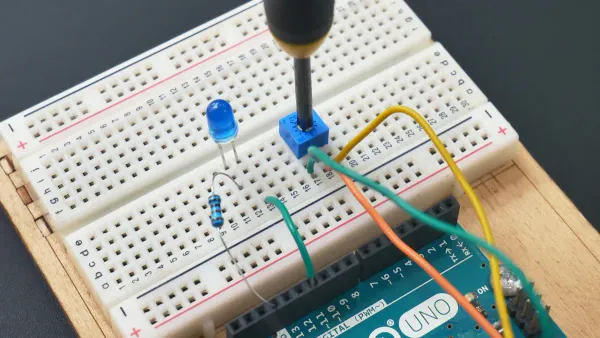
Variable resistors are fundamental components that give users and systems the power to make adjustments. Their operation is based on a simple yet powerful principle. Understanding this principle reveals how so many modern devices offer dynamic control.
The Core Principle of Control
The core function of a variable resistor is to change its electrical resistance. This change controls the amount of electrical current flowing through a circuit or a part of a circuit. A simple analogy helps explain this concept.
Think of a variable resistor like a water faucet. Turning the handle changes how much the valve opens or closes. A wide-open valve allows a large volume of water to flow freely. This is like a state of low resistance. Closing the valve restricts the water flow to a trickle. This is like a state of high resistance. A variable resistor gives a circuit the same kind of adjustable control over electricity.
By adjusting the resistance, these components can increase or decrease voltage and current. This action translates a physical adjustment, like turning a knob, into a precise electrical command.
Common Types of Variable Resistors
There are several common types of variable resistors. Each type is designed for specific tasks. The main types of variable resistors used in modern electronics include the potentiometer, the rheostat, and various sensors.
A potentiometer is one of the most common variable resistors. It has three terminals and is typically used to control voltage. A rheostat is another type of variable resistor, but it has two terminals and is designed to control current. A rheostat is often used in high-power applications like controlling motor speed or dimming large light arrays. The table below highlights key differences between a potentiometer and a rheostat.
| Feature | Rheostat | Potentiometer |
|---|---|---|
| Primary Use | Controlling current | Adjusting voltage |
| Power Handling | High | Low to moderate |
| Resistance Range | Typically lower resistance | Wider range available |
| Adjustment Type | Coarse | Fine/precise |
Other variable resistors change their resistance based on environmental conditions.
- Thermistors are temperature-sensitive variable resistors. Their resistance changes predictably with temperature, making them perfect for digital thermometers and climate control systems.
- A photoresistor, or light-dependent resistor (LDR), is another useful component. The resistance of a photoresistor decreases when light intensity increases. This property makes a photoresistor ideal for automatic streetlights and camera light meters. The function of a photoresistor allows devices to react to ambient light. The unique behavior of a photoresistor enables many light-sensing applications.
These different types of variable resistors give engineers a versatile toolkit for building interactive and responsive electronic systems. The photoresistor is a key part of this toolkit.
The Potentiometer: A Closer Look
The potentiometer is a versatile component found in countless devices. It works by using a sliding contact, or wiper, that moves along a resistive element. The position of the wiper determines the output resistance. A potentiometer is often used as a voltage divider to provide a variable voltage output.
To wire a potentiometer as a voltage divider, all three of its pins are used. This setup creates a variable voltage output that is proportional to the wiper's position.
- Connect one outer pin to the ground (GND).
- Connect the other outer pin to the input voltage (Vcc).
- Use the middle pin as the variable voltage output.
As the wiper moves, the output voltage changes smoothly from 0V to the full input voltage. This function is what allows a potentiometer to act as a volume knob or a tuning control. The materials used to build a potentiometer or rheostat determine their performance and durability.
| Component | Primary Materials Used |
|---|---|
| Potentiometer | Carbon composition, cermet, conductive plastic, or resistive wire (like nichrome) on a ceramic or plastic base. |
| Rheostat | Resistive wire (nichrome, constantan) wound around a ceramic core to handle higher power and heat. |
The simple yet effective design of these variable resistors makes them essential for creating the user-friendly controls we rely on every day.
The Evolution of Control and Calibration
The journey of the variable resistor mirrors the evolution of electronics itself. From simple mechanical knobs to intelligent, self-adjusting circuits, these components have consistently adapted. Their history shows a clear path from basic analog control to sophisticated digital integration.
Classic Analog Controls
For decades, analog variable resistors were the primary method for user interaction with electronics. A classic example is the volume control knob on a radio receiver. Turning the knob physically moved a wiper across a resistive track, changing the resistance to adjust the audio level. This simple, direct control defined the user experience for generations of devices.
| Potentiometer Type | Time Period | Iconic Consumer Electronics |
|---|---|---|
| Wire-Wound Potentiometer | 1930s–1950s | Vacuum-tube radios |
| Carbon Film Potentiometer | 1950s–1970s | Radios, TVs, household electronics |
These mechanical components were effective, but they were subject to physical wear and tear over time.
The Shift to Digital Potentiometers
Modern electronics demand greater precision and reliability. This led to the development of the digital potentiometer. These components, also known as resistive digital-to-analog converters, mimic the function of an analog potentiometer but are controlled by digital signals from a microcontroller. This shift brings major benefits:
- Precision: Digital versions offer higher accuracy and can be calibrated for extremely fine adjustments.
- Reliability: They have no moving parts, so they do not suffer from mechanical wear. They are also more resistant to temperature changes.
- Miniaturization: Their small size allows for higher component density on circuit boards, which is crucial for compact devices.
Microcontrollers communicate with digital variable resistors using protocols like I2C or SPI. This allows software to precisely set resistance levels, enabling automated calibration and control.
Future-Proofing with Smart Integration
The evolution of variable resistors continues with smart integration. Researchers are combining artificial intelligence (AI) with advanced variable resistors, like memristors, to create self-calibrating systems. These circuits can automatically adjust their own accuracy based on environmental factors, such as available power from a small solar cell. This innovation is vital for self-powered AI at the edge.
💡 Trend Watch: Manufacturers are investing in new materials to create smaller, more durable variable resistors. Innovations include high-temperature materials, flexible substrates, and embedded sensors that enable real-time data collection for predictive analytics.
This ongoing development ensures that the humble variable resistor will remain a key component in the advanced technologies of tomorrow.
From simple knobs to advanced circuits, variable resistors are the unsung heroes of modern technology. They enable the interactive and customizable experiences we expect. The fundamental role of variable resistors is providing user control, sensor calibration, and system adjustment. This makes the variable resistor essential in 2025's top tech. As our world becomes more connected, these foundational variable resistors will continue to adapt and remain indispensable.
FAQ
What is the main job of a variable resistor?
A variable resistor's main job is to control the flow of electricity. It acts like a dimmer switch or a volume knob. This function allows users or systems to make real-time adjustments to a device.
Are potentiometers and rheostats the same thing?
No, they are different. A potentiometer usually controls voltage and has three connections. A rheostat controls current, handles more power, and uses two connections. They serve distinct purposes in electronic circuits.
Why are digital potentiometers better than old analog ones?
Digital potentiometers offer greater precision and reliability. They have no moving parts, so they do not wear out. Their small size is also perfect for modern compact devices like smartphones and wearables.
How do variable resistors help smart homes save energy?
They enable smart dimmers to reduce power sent to light bulbs, saving electricity. Thermistors, a special type, help smart thermostats accurately read room temperature. This allows heating and cooling systems to run more efficiently.