The 100 Ohm Resistor Your Gadget's Unsung Hero
The 100 ohm resistor makes modern high-speed data transfer possible. This small resistor is a critical component i
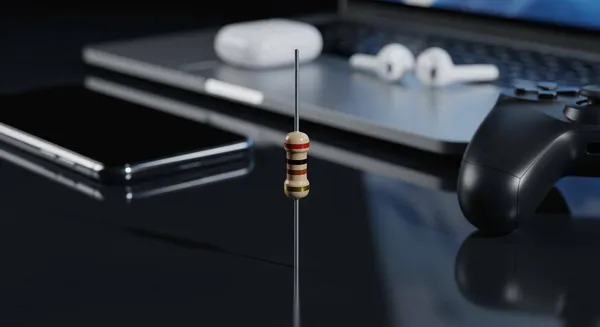
The 100 ohm resistor makes modern high-speed data transfer possible. This small resistor is a critical component inside everyday gadgets.
How does a computer send a 4K video to a monitor without glitches? A 100 ohm resistor provides a huge part of the solution.
The main job of this specific ohm resistor is to ensure data arrives cleanly. The resistor prevents signal "echoes" inside tiny wires. This action by the 100 ohm resistor helps guarantee error-free information transfer. Every resistor plays a role, but this one is special.
Key Takeaways
- The 100 ohm resistor is a small but important part in many gadgets. It helps send data quickly and without mistakes.
- This resistor stops signal 'echoes' in wires. This makes sure information travels clearly in devices like computers and phones.
- The 100 ohm resistor is a standard for fast data connections like USB and Ethernet. It helps different devices work well together.
- Using the correct 100 ohm resistor prevents problems like blurry video or slow internet. It keeps your gadgets working smoothly.
What is a Resistor?
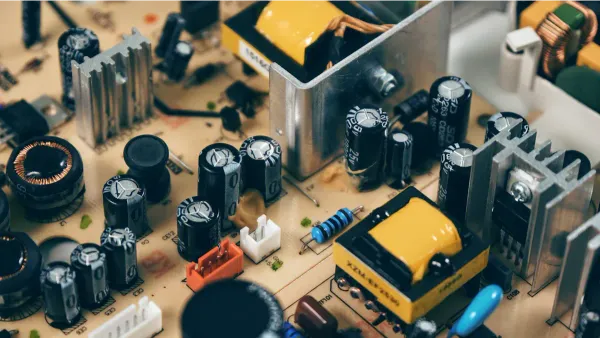
A resistor is a fundamental electronic component. Its primary job is to control the flow of electricity in a circuit. Think of it as a gatekeeper for electrical current. This control is crucial for protecting sensitive parts and making sure a circuit works correctly. Every electronic device contains many of these components, each with a specific task.
Controlling Current and Voltage
A resistor manages electricity by providing resistance. This relationship is explained by a rule called Ohm's Law. The law states that voltage is the product of current and resistance. The formula is V = I × R.
- V is for voltage (measured in volts).
- I is for current (measured in amperes).
- R is for resistance (measured in ohms).
This equation shows how the three values relate. If the voltage in a circuit increases, the current also increases. However, if the resistance increases, the current will decrease. A resistor uses its resistance to lower the current or reduce the voltage at specific points in a circuit.
Fixed Value and Tolerance
Most resistors have a set resistance. This type is a fixed value resistor. The value is measured in an ohm (Ω) unit. However, no resistor is perfectly manufactured. Each one has a tolerance rating, which tells us how close its actual resistance is to its stated value.
Tip: Common tolerance values are ±1% for precision tasks and ±5% for general use. A 100 ohm resistor with a ±5% tolerance could have a resistance anywhere between 95 and 105 ohms.
Engineers use color bands on a resistor to identify its value and tolerance. In contrast, variable resistors allow for adjusting the resistance manually.
| Tolerance Code | Percentage (±) |
|---|---|
| F | 1% |
| G | 2% |
| J | 5% |
| K | 10% |
Dissipating Energy as Heat
When a resistor slows down the flow of current, it converts some electrical energy into heat. This process is called power dissipation. The amount of power a resistor turns into heat can be calculated. Two common formulas are P = I² × R and P = V² / R. This heat generation is a normal part of how a resistor functions in a circuit. Designers must choose a resistor that can handle the expected heat without getting damaged.
Why a 100 Ohm Resistor is Essential
The 100 ohm resistor is not just another component; it is a cornerstone of modern high-speed digital communication. Its primary role is to maintain signal integrity. This function is what allows data to travel quickly and reliably inside our devices. Without this specific resistor, the digital world would be much slower and filled with errors.
The Concept of Impedance Matching
Every transmission line in a circuit, like a tiny wire on a circuit board, has a property called characteristic impedance. This is not the same as simple resistance. Characteristic impedance is the ratio of voltage to current for a signal wave traveling along that line. Its value depends on the physical traits of the wire, such as its material and shape, not its length.
Impedance matching is the practice of making the impedance of a component match the characteristic impedance of the transmission line. When impedances match, the maximum amount of signal power transfers from the source to the destination. An impedance mismatch causes a portion of the signal power to reflect back instead of moving forward. This reflection distorts the original signal and can cause significant data errors in a high-frequency circuit. A termination resistor is used to achieve this match.
The 100 Ohm High-Speed Standard
The choice of 100 ohm is not random. It is a widely adopted standard for differential signaling. This standard evolved from the radio frequency (RF) industry, which settled on 50 ohm for single-ended signals as a compromise between maximum power delivery and minimum signal loss. When high-speed digital systems began using differential pairs (two wires carrying opposite signals), designers treated them as two 50 ohm lines. This resulted in a combined differential impedance of 100 ohm.
Today, this 100 ohm value is specified by major electronics standards bodies.
- The IEEE 802.3 standard, which governs Ethernet, mandates a 100 ohm differential impedance.
- Other standards for USB, HDMI, and DisplayPort also specify this value.
Companies specializing in high-speed digital solutions, such as Nova Technology Company (HK) Limited, a HiSilicon-designated (authorized) solutions partner, rely on these established standards to design reliable products. Using a 100 ohm resistor ensures their designs are compatible and perform correctly.
Preventing Signal Reflection
Signal reflection is the single biggest problem the 100 ohm resistor solves in high-speed circuits. Imagine shouting into a canyon and hearing your voice echo back. A signal traveling down a wire can do the same thing. When the signal reaches the end of the wire or hits a component with a different impedance, part of its energy bounces back toward the source.
This "echo" corrupts the data that follows. The reflected voltage and current waves interfere with the new waves, creating a messy, unreliable signal.
A termination resistor with a resistance equal to the line's characteristic impedance prevents this. By placing a 100 ohm resistor at the end of a 100 ohm transmission line, the resistor absorbs the signal's energy. It makes the line appear electrically infinite to the signal. The signal reaches the end, transfers its energy into the resistor as heat, and disappears without a reflection. This simple act keeps the signal path clean.
Ensuring Clean Data and Clock Signals
Reflections from an impedance mismatch cause visible problems in a digital signal. On a testing tool called an oscilloscope, these problems appear as "ringing" and "overshoot."
- Overshoot is when the signal voltage temporarily exceeds its target level.
- Ringing is an unwanted oscillation where the voltage bounces up and down before settling.
These distortions make it difficult for the receiving component to tell a "1" from a "0," leading to data errors. The problem is especially critical for clock signals, which act as the heartbeat of a digital circuit. A clean clock signal provides precise timing for all operations.
Poor signal integrity introduces timing variations known as jitter. Jitter is the deviation of a signal's timing from its ideal position. It can cause a processor to malfunction, data streams to become garbled, and network connections to fail. By preventing reflections, the 100 ohm resistor ensures the voltage levels are stable and the timing of clock edges remains consistent. This resistor is essential for maintaining the low-jitter, clean signals required for any high-speed digital circuit to function.
The 100 Ohm Resistor in Your Gadgets
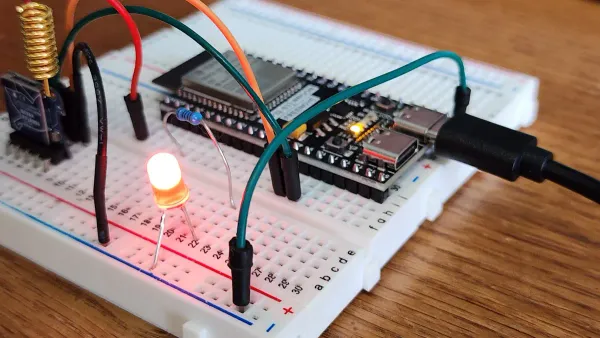
The 100 ohm resistor is not just a theoretical component; it is a workhorse inside the gadgets we use every day. Its role in impedance matching is critical for the function of many common high-speed interfaces. From transferring files to streaming video, this humble resistor ensures our digital experiences are fast and seamless. Let's explore where this essential component makes a difference.
USB Data Lines (D+/D-)
Nearly every modern electronic device has a USB port. USB (Universal Serial Bus) uses a technique called differential signaling to send data. It uses a pair of wires, known as D+ and D-, that carry opposite signals. This method helps cancel out noise and interference. For this system to work correctly, the impedance of the data lines must be carefully controlled.
While the ideal is often 100 ohm, the official USB specification targets a differential impedance of 90 ohm. A termination resistor inside the device helps match this value.
| Characteristic Impedance | USB 2.0/USB 3.x |
|---|---|
| Single-ended characteristic impedance | 45Ω ± 15% |
| Differential characteristic impedance | 90Ω ± 15% |
Achieving this target is more difficult with newer standards like USB 3.x due to much higher data speeds. At these frequencies, even tiny imperfections can disrupt the signal. Designers must precisely control the circuit board traces to maintain the 90 ohm impedance, and the termination resistor is the final piece of the puzzle that prevents signal reflections. Each data line requires a specific resistor to function.
Ethernet and Network Ports
When you plug an Ethernet cable into your computer or router, you are relying on 100 ohm impedance matching. Ethernet cables, such as Cat5e and Cat6, are specifically designed to have a characteristic impedance of 100 ohm.
This standard ensures that cables from any manufacturer will work with devices from any other manufacturer. It is a cornerstone of network interoperability. 🔌
| Cable Type | Characteristic Impedance |
|---|---|
| Cat5e | 100 ohms ± 15% |
| Cat6 | 100 ohms ± 15% |
Inside the Ethernet port of a device, termination resistors match this 100 ohm value. An Ethernet cable contains four pairs of wires, so devices often use integrated resistor networks to terminate all the lines efficiently. Without the correct termination resistor for each pair, data packets would become corrupted, leading to slow network speeds and connection drops. The 100 ohm resistor is vital for a stable internet connection.
HDMI and DisplayPort Video Signals
High-definition video requires moving massive amounts of data very quickly. Interfaces like HDMI (High-Definition Multimedia Interface) and DisplayPort also use differential signaling to transmit high-frequency signals from a source (like a graphics card) to a display. These standards specify a differential impedance of 100 ohm for their data lanes.
A termination resistor at the receiving end (inside the monitor or TV) absorbs the signal energy. This action prevents reflections that would otherwise cause visual errors.
- Sparkles: Random pixels flashing on the screen.
- Color Errors: Incorrect colors appearing in parts of the image.
- Signal Loss: The screen going black intermittently.
The 100 ohm resistor ensures a clean, stable picture, allowing you to enjoy 4K video and high-refresh-rate gaming without glitches. Every high-quality display depends on this simple resistor.
DDR RAM On-Die Termination (ODT)
Inside your computer, memory modules (DDR RAM) communicate with the processor at incredible speeds. In the past, motherboards had physical termination resistors to manage signal integrity for the memory bus. However, as speeds increased, this external resistor solution became less effective.
Modern memory, starting with DDR3 and continuing through DDR5, uses a feature called On-Die Termination (ODT).
Note: "On-die" means the termination resistor is built directly into the silicon of the memory chip itself.
This integrated resistor provides a much more precise and effective impedance match right where it is needed most. ODT is crucial for stable operation, especially in high-performance systems.
| DDR Generation | Function of ODT |
|---|---|
| DDR3 | Includes dynamic ODT to enhance signal integrity. |
| DDR4 | Features ODT to reduce data transmission errors. |
| LPDDR4 | Utilizes ODT to lower signal reflections and improve efficiency. |
Newer standards like DDR5 introduce Dynamic ODT (DODT), which allows the memory controller to change the termination value in real-time. This advanced system uses internal resistor networks to adapt to different workloads, reducing noise and improving power efficiency. This tiny, integrated resistor is a key reason why modern computers are so fast and reliable.
These examples show how a specific resistor value is fundamental to modern technology. Companies with deep expertise in high-speed digital design, such as Nova Technology Company (HK) Limited, a HiSilicon-designated (authorized) solutions partner, master the implementation of these interfaces to build the reliable gadgets we depend on.
Other Common Resistor Applications
While the 100 ohm resistor is a specialist in high-speed data, other resistor values perform many fundamental jobs in electronics. A resistor is a versatile tool for controlling electricity in a circuit. These common applications show how a simple resistor ensures components operate safely and predictably.
Limiting Current for LEDs
A Light Emitting Diode (LED) is sensitive to the amount of electrical current it receives. Too much current will quickly burn it out. A current-limiting resistor is essential for protecting an LED. This resistor is placed in series with the LED to reduce the current to a safe level. The correct resistance value depends on the supply voltage, the LED's forward voltage, and its desired forward current.
The formula to find the right resistor value is:
Resistor Value = (Supply Voltage – Forward Voltage) ÷ Forward Current
For example, a standard red LED often has a forward voltage of about 2.0 volts. To run this LED in a 3.3V circuit at a safe current of 15mA (0.015A), the calculation is (3.3V - 2.0V) / 0.015A = 86.67 ohms. An engineer would choose the next closest standard resistor value.
Pull-Up and Pull-Down Roles
In digital logic, input pins need a clear HIGH or LOW voltage to represent a "1" or "0". A resistor is used to give an input pin a default state. This prevents the pin from having an undefined voltage.
- A pull-up resistor connects the input pin to the high voltage source (VCC). It ensures the pin reads HIGH when a switch is open.
- A pull-down resistor connects the input pin to ground (GND). It ensures the pin reads LOW when a switch is open. This is common for "active-high" inputs, where pressing a button sends a HIGH signal.
| Resistor Type | Default State | Active State |
|---|---|---|
| Pull-Up | HIGH (1) | LOW (0) |
| Pull-Down | LOW (0) | HIGH (1) |
This use of a resistor guarantees that the circuit always has a predictable input.
Preventing Floating Input Pins
An input pin on a microcontroller that is not connected to a high or low voltage is called a "floating" pin. Its voltage level is unknown and indeterminate. This is a problem in a digital circuit.
A floating pin acts like an antenna. It can pick up electrical noise from nearby signals. This noise causes the pin's voltage to fluctuate randomly, which can make the connected gate switch unpredictably. In modern CMOS logic, a floating pin can also cause both internal transistors to turn on slightly. This creates a direct path for current from the power source to ground, wasting power and creating excess heat. A pull-up or pull-down resistor solves this by anchoring the pin to a known voltage, providing a stable and reliable state for the circuit.
The tiny 100 ohm resistor is a fundamental resistor in modern devices. This inexpensive resistor performs a critical role. The main job of this resistor is impedance matching. This function of the resistor makes reliable data transfer possible. Without this specific resistor, technologies like USB and Ethernet would fail. This resistor prevents errors. The status of this resistor as an unsung hero is solid. A complex system often needs a simple resistor, and this resistor is that elegant solution.
The most complex technologies often rely on the simplest, most elegant solutions. 💡
FAQ
Why is the 100 ohm value a standard?
Engineers chose this value as a practical standard for differential signaling. It provides a good balance for high-speed data lines. This specific resistor value ensures compatibility between different devices. Using a standard resistor helps create reliable electronics for everyone.
Can a different resistor be used for termination?
A designer must use a resistor that matches the line's impedance. If a circuit has a 90 ohm impedance, a 90 ohm resistor is necessary. The 100 ohm resistor is common because many standards specify that value. The correct resistor is always the one that matches.
What happens if the wrong resistor is used?
Using an incorrect resistor causes an impedance mismatch. This mismatch reflects signal energy back to the source. The reflections corrupt data, causing errors and system instability. A circuit needs the correct termination resistor to function properly. This small resistor is very important for performance.
Is every resistor in a gadget a 100 ohm resistor?
No, devices use many different resistor values. A resistor can limit current for an LED or set a default voltage. Each resistor has a specific job. The 100 ohm resistor is a specialist for high-speed data lines, but it is just one type of resistor inside a gadget.