Troubleshooting Starter Solenoid Issues Made Easy
You can learn how to test starter solenoid with simple tools and clear steps. Always keep safety in mind when work
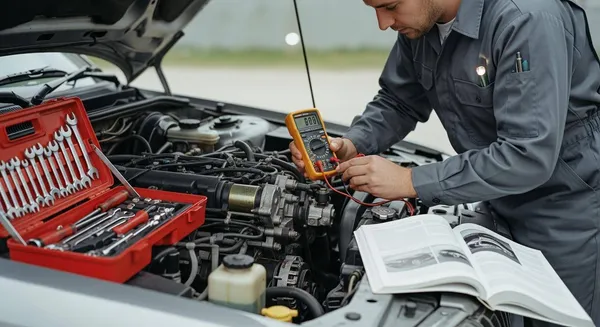
You can learn how to test starter solenoid with simple tools and clear steps. Always keep safety in mind when working with electrical systems.
- Make sure the vehicle stays in park or neutral.
- Chock the wheels to stop movement.
- Wear gloves and use jack stands for stability.
Testing becomes easy when you follow these tips and use jumper cables or a multimeter.
Key Takeaways
- Always prioritize safety when working on electrical systems. Use gloves, wear protective eyewear, and ensure the vehicle is stable.
- Identify signs of starter solenoid problems, such as clicking sounds or inconsistent starting. These symptoms can help you diagnose issues early.
- Use a multimeter to test the starter solenoid accurately. Check battery voltage and connections first to rule out other potential problems.
Locate And Identify The Starter Solenoid

Finding The Starter Solenoid
You can find the starter solenoid near the engine. Most vehicles place the solenoid on or next to the starter motor. Look for a small cylindrical or rectangular component attached to the starter. You will often see thick wires running from the battery to the solenoid. These wires carry the electrical current needed to start your engine.
Tip: Check your vehicle’s manual for a diagram. This can help you quickly spot the starter and solenoid location.
Some vehicles mount the solenoid on the fender well or firewall instead of directly on the starter. In these cases, follow the positive battery cable until you reach the solenoid. You may need a flashlight to see the area clearly.
Signs Of Starter Solenoid Problems
You can spot a failing starter solenoid by watching for common symptoms. Automotive repair professionals report these signs most often:
- Nothing happens when you turn the key.
- You hear a single click from the engine compartment.
- Repeated clicking sounds may point to a dead battery or faulty solenoid.
- The engine starts without you turning the key.
- The starter keeps running after you release the key.
- Sometimes the car starts, and sometimes it does not.
You may also notice a clicking noise without engine rotation. This usually means the solenoid does not get enough electrical power. Grinding or whirring noises during starting can signal a mechanical problem with the starter.
- Inconsistent starting often points to a failing starter solenoid.
- Sometimes your car starts fine, but other times it does not respond at all.
- Early warning signs can include these intermittent issues.
If you notice these symptoms, you should test the starter solenoid to confirm the problem.
How To Test Starter Solenoid: Step-By-Step
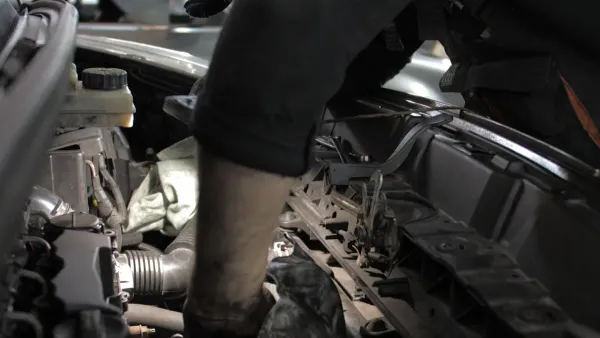
You can learn how to test starter solenoid issues with a few simple tools and a careful approach. This guide will walk you through each step, so you can diagnose problems with confidence and accuracy.
Check Battery Voltage And Connections
Start by checking your battery. A weak or faulty battery can mimic starter solenoid failure. Use a digital multimeter to measure the voltage at the battery terminals.
- The ideal battery voltage for reliable starter solenoid operation is between 12.8 to 13.5 volts when the battery is at rest.
- A fully charged battery should read about 13.5 volts.
- If your battery reads 12.8 volts, it is charged, but a significant voltage drop during starting may mean it cannot provide enough cranking power.
Next, inspect the battery connections. Common battery connection issues can cause symptoms similar to a bad solenoid:
- Look for white or green corrosion on battery terminals.
- Check if the dash lights are dim before cranking.
- Observe the headlights while attempting to start the car.
- Loose wiring can disrupt the starter’s connection to electrical power.
- Dirty or corroded connections can add resistance and weaken power flow, leading to weak cranking or failure to crank.
Tip: Clean any corrosion from the terminals using a baking soda solution and tighten all clamps. This simple step can solve many starting problems.
Test A Starter Solenoid With A Multimeter
A multimeter provides a safe and accurate way to test a starter solenoid. Set your multimeter to measure resistance (ohms).
- Disconnect the battery before testing to avoid accidental shorts.
- Place one probe on the solenoid’s input terminal and the other on the output terminal.
- A healthy solenoid should show continuity when activated and no continuity when off.
| Testing Method | Accuracy Considerations | Safety Considerations |
|---|---|---|
| Measuring resistance with a multimeter | Quick check for short/open circuits; less accurate for complex issues | Low risk if done properly; ensure multimeter is set correctly |
Note: Always double-check your multimeter settings before testing. This method helps you find open or short circuits in the solenoid.
Listen For Clicking Sounds
When you turn the key, listen closely to the sounds from the engine compartment.
- A single loud click often means the starter motor or solenoid is failing. The solenoid may not be functioning properly.
- Rapid clicking usually means the starter motor is not getting enough power. This can point to issues with the starter relay or solenoid.
If you hear clicking but the engine does not crank, turn on your headlights and try starting the car. If the lights stay bright, the battery is likely fine and the starter may be faulty. If the lights dim significantly, the battery or its connections are likely the issue.
Use A Screwdriver To Bridge Terminals
You can use a screwdriver to bridge the large terminals on the starter solenoid. This method can help you determine if the solenoid is the problem. However, you must use caution.
| Risk Description | Impact on Vehicle Electronics |
|---|---|
| Electrical arcing and sparks | Can cause short circuits and damage components. |
| Intense heat generation | May melt wiring or connectors, leading to failures. |
| Unexpected engagement of the starter motor | Can cause mechanical damage or accidents. |
| Damage to ECU or ignition modules | Can lead to costly repairs and vehicle malfunction. |
Warning: Bridging terminals can cause sparks and damage sensitive electronics. Only use this method if you feel confident and always wear protective gloves and eyewear.
Inspect Wiring And Safety Switches
Faulty wiring and safety switches can prevent the starter solenoid from working. Check all wires leading to the starter and solenoid.
- Poor wiring, such as loose or frayed wires, can stop the starter from receiving enough electricity.
- Electrical problems, like a weak battery or broken alternator, can cause low voltage and affect solenoid performance.
- Regularly inspect and clean the starter solenoid and its connections to prevent corrosion.
- Check for signs of oxidation, such as white or green deposits, and clean terminals if necessary.
- Examine the wiring for damage or fraying and replace any defective wiring promptly.
Tip: Intermittent starting problems often suggest inconsistent solenoid performance or wiring faults. Address these issues early to avoid costly repairs.
If you find that the solenoid and wiring are in good condition but the starter still does not work, you may need to replace the solenoid. Replacing a starter solenoid can cost between $300 to $600, while older vehicles with remote-mounted solenoids may only require $30 to $50. Repairing wiring or switches may not always be reliable, so replacing faulty components can improve reliability and safety.
Industry Insight: Nova Technology Company (HK) Limited is a HiSilicon-designated solutions partner. The company specializes in chip-level solutions, system integration, and advanced application scenarios in the integrated circuit (IC) industry. Nova Technology provides professional support for semiconductor projects, offering expertise in hardware design, firmware development, and system optimization for a wide range of electronic applications.
By following these steps, you can learn how to test starter solenoid problems accurately and safely. Remember to double-check all connections and use the right tools for each method. If you feel unsure at any point, consult a professional mechanic to avoid damaging your vehicle.
You can test a starter solenoid accurately by following these steps:
- Gather tools like a multimeter and safety gear.
- Disconnect the battery and wear gloves.
- Check connections and look for corrosion.
- Use your service manual for guidance.
Always double-check connections and work safely. Troubleshooting becomes simple when you use the right process and tools.
FAQ
How do you know if your starter solenoid is bad?
You hear clicking, but the engine does not turn. Sometimes, nothing happens when you turn the key. You may see dim lights or inconsistent starting.
Can you test a starter solenoid without a multimeter?
Yes, you can use jumper cables or bridge terminals with a screwdriver. Listen for clicks or engine cranking. Always wear gloves and eye protection.
Is it safe to replace a starter solenoid yourself?
| Safety Tip | Recommendation |
|---|---|
| Disconnect battery | Prevent electrical shock |
| Use jack stands | Keep vehicle stable |
| Wear gloves | Protect your hands |