How to Identify and Read Resistor Codes in 2025
You learn how to read a resistor by checking its markings and understanding the codes. Accurate identification matters becau

You learn how to read a resistor by checking its markings and understanding the codes. Accurate identification matters because modern resistors use tighter tolerances and smaller sizes.
| Resistor Type | Description |
|---|---|
| 4-band | Two value digits, a multiplier, and a tolerance band |
| 5-band | Three value digits, a multiplier, and a tolerance band for higher precision |
| 6-band | Similar to 5-band but includes an additional temperature coefficient band |
Key Takeaways
- Identify resistor types by their band count. Use 4-band for standard, 5-band for higher precision, and 6-band for temperature coefficients.
- Read resistor values by orienting them correctly. Start with the tolerance band on the right and read from left to right.
- Use a color code chart for quick reference. This helps decode resistor values accurately and avoid mistakes.
How to Read a Resistor

Resistor Types Overview
You will find several types of resistors in electronics. Each type uses a different method for identification. Here is a quick overview:
| Resistor Type | Identification Method |
|---|---|
| Fixed Resistors | Color codes |
| Variable Resistors | Potentiometer adjustment |
| Specialized Resistors | Specific markings or codes |
Most consumer electronics in 2025 use these resistor types:
| Resistor Type | Description | Applications | Advantages |
|---|---|---|---|
| Carbon Film Resistors | Thin carbon layer on ceramic. | General electronics, audio equipment. | Cost-effective, widely available. |
| Metal Film Resistors | Thin metal layer for precision. | High-frequency, precision circuits. | Low noise, high stability, ±1% tolerance. |
| Wirewound Resistors | Wire wound around a core. | Power, precision, high-power circuits. | High power rating, good heat dissipation. |
| Ceramic Resistors | Made from ceramic for high temperature. | Power supplies, high-power uses. | High thermal stability, durable. |
| Variable Resistors (Potentiometers) | Adjustable resistance. | Volume controls, adjustable power supplies. | Versatile, adjustable. |
You may also see these special types:
- Carbon composition resistors: Good for vintage electronics and high energy pulses.
- Wire wound resistors: Used in high power circuits.
- Metal film and carbon film resistors: Used in high-fidelity and precision circuits.
- Potentiometers, rheostats, and trimmers: Used for adjusting resistance in circuits.
Reading a Resistor: Step-by-Step
You can learn how to read a resistor by following a few simple steps. Most fixed resistors use colored bands to show their value. Here are the steps for reading resistors with color bands:
-
Orient the Resistor Correctly
Hold the resistor so the tolerance band (often gold or silver) is on the right. The bands closer together should be on the left. This helps you read resistor band colors in the correct order. -
Read the Significant Digits
Look at the first two (for 4-band) or three (for 5-band and 6-band) colored bands. These bands give you the main digits of the resistor value. -
Apply the Multiplier
The next band is the multiplier. Use the color ring to find the correct multiplier from the resistor color code chart. -
Check the Tolerance
The last band shows the tolerance. Gold means ±5%, silver means ±10%. Some resistors have a sixth band for temperature coefficient.
Tip: Always read resistors under good lighting. Some colors look similar, like red and orange or green and blue. If you are unsure, use a multimeter to check the value.
Resistor Color Code
The resistor color code is a global standard. It uses colored bands to show numbers, multipliers, and tolerance. Here is a quick-reference resistor color code chart:
| Color | Digit | Multiplier | Tolerance (%) |
|---|---|---|---|
| Black | 0 | 1 | |
| Brown | 1 | 10 | 1 |
| Red | 2 | 100 | 2 |
| Orange | 3 | 1,000 | |
| Yellow | 4 | 10,000 | |
| Green | 5 | 100,000 | 0.5 |
| Blue | 6 | 1,000,000 | 0.25 |
| Violet | 7 | 10,000,000 | 0.1 |
| Gray | 8 | 100,000,000 | |
| White | 9 | 1,000,000,000 | |
| Gold | 0.1 | 5 | |
| Silver | 0.01 | 10 | |
| (none) | 20 |
You can use this chart to decode color coded resistors quickly.
Read Resistor Band Colors
You will see 4-band, 5-band, and 6-band resistors. Each uses a different method to show the resistor value. Here are examples for each:
4-Band Resistor Color Code Example
Suppose you see these colored bands: Red, Violet, Yellow, Gold.
- First band (Red): 2
- Second band (Violet): 7
- Third band (Yellow): Multiplier 10,000
- Fourth band (Gold): Tolerance ±5%
Calculation: (2 7) × 10,000 = 270,000 Ω (or 270 kΩ) ±5%
5-Band Resistor Color Code Example
Suppose you see: Brown, Green, Black, Orange, Brown.
- First band (Brown): 1
- Second band (Green): 5
- Third band (Black): 0
- Fourth band (Orange): Multiplier 1,000
- Fifth band (Brown): Tolerance ±1%
Calculation: (1 5 0) × 1,000 = 150,000 Ω (or 150 kΩ) ±1%
6-Band Resistor Color Code Example
Suppose you see: Blue, Gray, Black, Red, Brown, Red.
- First band (Blue): 6
- Second band (Gray): 8
- Third band (Black): 0
- Fourth band (Red): Multiplier 100
- Fifth band (Brown): Tolerance ±1%
- Sixth band (Red): Temperature coefficient 50 ppm/°C
Calculation: (6 8 0) × 100 = 68,000 Ω (or 68 kΩ) ±1%, 50 ppm/°C
Note: The color ring for tolerance is always on the far right. Always read resistor band colors from left to right, starting with the grouped bands.
Practical Tips for Reading Color Coded Bands
- Make sure the metallic tolerance band is on the right.
- Read the bands from left to right.
- Use a resistor color code chart for quick reference.
- Double-check colors under good lighting.
- Use a 4 band resistor color code calculator if you need extra help.
Quick-Reference Resistor Color Code Chart
| Color | Digit | Multiplier | Tolerance (%) |
|---|---|---|---|
| Black | 0 | 1 | |
| Brown | 1 | 10 | 1 |
| Red | 2 | 100 | 2 |
| Orange | 3 | 1,000 | |
| Yellow | 4 | 10,000 | |
| Green | 5 | 100,000 | 0.5 |
| Blue | 6 | 1,000,000 | 0.25 |
| Violet | 7 | 10,000,000 | 0.1 |
| Gray | 8 | 100,000,000 | |
| White | 9 | 1,000,000,000 | |
| Gold | 0.1 | 5 | |
| Silver | 0.01 | 10 | |
| (none) | 20 |
You can print or save this resistor color code chart for fast lookup.
📝 Remember: The steps for reading resistors always start with correct alignment. Use the color ring and color coded bands to find the resistor value. Practice with real resistors to get faster and more accurate.
Read Resistors: SMD Codes
SMD Code Types
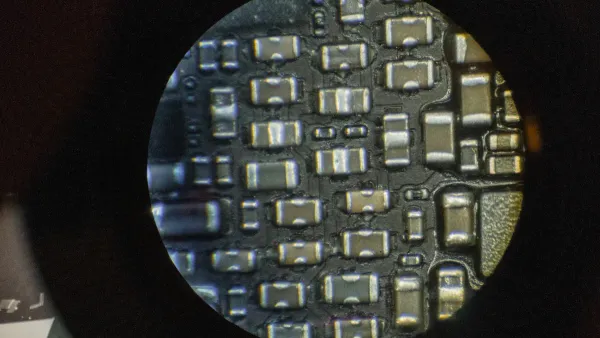
Surface-mount device (SMD) resistors use printed codes instead of color bands. You will see several code systems in electronics manufacturing in 2025. Each system helps you identify the resistance value quickly.
| Code Type | Structure | Typical Use |
|---|---|---|
| 3-digit code | XXY (XX = digits, Y = multiplier) | General-purpose resistors |
| 4-digit code | XXXY (XXX = digits, Y = multiplier) | Higher-value resistors |
| R notation | XRX or XRX.X | Low resistance values <10 Ω |
| EIA-96 code | 2-digit + letter multiplier | 1% precision resistors (E96 series) |
You will often find these systems:
- Three-digit SMD resistor coding system
- Four-digit SMD resistor coding system
- EIA-96 SMD resistor coding system
The three-digit code uses two digits for the base value and one digit for the multiplier. The four-digit code expands this to three digits for the base value and one for the multiplier. The EIA-96 code uses a two-digit number and a letter for the multiplier, which is common for high-precision resistors.
Reading SMD Resistors
You can read SMD resistor codes by following a simple process. Each code type has its own method.
-
Identify the SMD resistor code.
Look for a three-digit, four-digit, or EIA-96 code printed on the resistor. -
Read a three-digit code.
The first two digits show the significant figures. The third digit is the multiplier. For example, "223" means 22 × 1,000 = 22,000 ohms. -
Read a four-digit code.
The first three digits are the significant figures. The last digit is the multiplier. For example, "4992" means 499 × 100 = 49,900 ohms. -
Check for R notation.
If you see an "R" in the code, it marks the decimal point. For example, "1R1" means 1.1 ohms. -
Decode EIA-96 codes.
EIA-96 codes use a two-digit number and a letter. The number matches a value in the E96 table. The letter shows the multiplier. For example, "47C" means you look up "47" in the E96 table and multiply by the value for "C".
💡 Tip: Always check the code carefully. Use a magnifying glass if the print is small. Double-check with a reference chart or calculator.
Here are some practical examples:
| Resistor Code | Resistance Value |
|---|---|
| 1R10 | 1.10 ohms |
| 473 | 47 × 1,000 = 47,000 ohms |
| 2R2 | 2.2 ohms |
| 4992 | 499 × 100 = 49,900 ohms |
| 0 | Jumper (0 ohms) |
You can use this quick-reference SMD code table:
| Code System | Description | Example | Calculation |
|---|---|---|---|
| 3-digit | First two digits are base value, third is multiplier | 684 | 68 × 10,000 = 680,000 Ω |
| 4-digit | First three digits are base value, last is multiplier | 4992 | 499 × 100 = 49,900 Ω |
| EIA-96 | Two digits + letter for multiplier | 47C | Lookup "47" in E96 table, multiply by "C" |
📝 Note: For values below 10 ohms, you will see "R" in the code. For example, "4R7" means 4.7 ohms.
Common Mistakes
You may face some challenges when reading SMD resistor codes. Mistakes can cause problems in your circuit.
| Mistake | Solution |
|---|---|
| Misidentification of Colors | Use good lighting and a magnifying glass to see the code clearly. |
| Incorrect Order of Reading | Start from the edge or the side opposite the tolerance band. |
| Confusion Between Similar Colors | Practice reading codes or use digital tools to check. |
| Impact of Color Blindness | Use apps for color recognition or measure with a multimeter. |
If you misread an SMD resistor code, you may use the wrong resistance value. This can cause your circuit to malfunction or work inefficiently. Sometimes, it may even damage components.
⚠️ Warning: Always double-check SMD codes before placing resistors in your circuit. Mistakes can lead to performance issues or damage.
You can avoid most mistakes by practicing, using reference charts, and checking your work with a multimeter. This helps you build reliable and efficient electronic circuits.
You can read any resistor by following these steps:
- Identify the number of bands or code type.
- Read the digits and multiplier.
- Use mnemonics like “B.B. ROY of Great Britain has a Very Good Wife” for color order.
- Check reference charts for accuracy.
| Feature | Description |
|---|---|
| Resistor Values | Quick guide to standard values and color codes |
| Color Code System | Decoding examples for markings |
Practice often to build confidence and ensure reliable circuits.
FAQ
How do you tell the difference between a 4-band and a 5-band resistor?
You count the colored bands. Four bands mean standard tolerance. Five bands show higher precision. Always check the spacing and look for the tolerance band.
Tip: Use a color code chart for quick identification.
What does the letter "R" mean in SMD resistor codes?
The letter "R" marks the decimal point. For example, "4R7" means 4.7 ohms. You see this in low-value SMD resistors.
| Code | Value |
|---|---|
| 1R0 | 1.0 Ω |
| 2R2 | 2.2 Ω |
Can you use a multimeter to check resistor values?
Yes, you can use a multimeter. Set it to measure resistance. Touch the probes to the resistor leads. The display shows the value directly.
Always double-check your reading for accuracy.