Complete Guide to the 1K Resistor Color Code
You often see a 1k resistor in electronics projects. The 1k resistor color code for a standard 4-band resistor is Brown, Bla
You often see a 1k resistor in electronics projects. The 1k resistor color code for a standard 4-band resistor is Brown, Black, Red, Gold. This means the resistor has a value of 1,000 ohm. You use the color code system to identify resistor values quickly, saving time and preventing mistakes. The IEC 60062 standard helps you read the colored bands on a resistor to find its value and tolerance. You do not need a multimeter to check a 1k ohm resistor. Knowing how to spot a 1k resistor helps you build circuits faster and more accurately.
Tip: Always check the bands from left to right, keeping the gold band on the right side for tolerance.
Key Takeaways
- A 1K resistor has a value of 1,000 ohms and controls electric current in circuits, making it essential for many electronics projects.
- The 1K resistor color code for a 4-band resistor is Brown, Black, Red, Gold, which means 10 × 100 = 1,000 ohms with ±5% tolerance.
- Always read resistor color bands from left to right, starting at the end opposite the tolerance band, to avoid mistakes.
- Use good lighting, a color code chart, and practice often to read resistor color codes quickly and accurately.
- Select the right resistor type and power rating for your project, and handle resistors carefully to keep circuits safe and reliable.
1K Resistor Basics
What Is a 1K Resistor
You use a 1k resistor when you need to control the flow of electric current in a circuit. The term "1k" means the resistor has a value of 1,000 ohm. This value tells you how much the resistor will limit the current. You find 1k resistors in many electronics kits because they work well for both beginners and experts.
Manufacturers make 1k resistors from different materials. You often see carbon film and metal film types. Carbon film resistors cost less and work well for basic projects. Metal film resistors give you better accuracy and stability, which helps in sensitive circuits. Some resistors use metal oxide film for extra durability. Wirewound and foil resistors offer high precision, but you rarely use them for standard 1k ohm resistor needs.
| Resistor Type | Common Materials and Characteristics |
|---|---|
| Carbon Film | Thin carbon film on insulating core; common for 1k resistors; improved accuracy over carbon composition; economical. |
| Metal Film | Made from Nichrome or tantalum nitride films; better precision and stability than carbon film; typical tolerance 0.5-2%. |
| Metal Oxide Film | Uses metal oxides like tin oxide; more durable and stable than metal film; used for high endurance applications. |
| Wirewound | Wire (e.g., Nichrome, Manganin alloys) wound on core; used for high power or precision; less common for standard 1k. |
| Foil | Thin metal foil on ceramic; highest precision and stability; used in high precision applications, not typical for 1k. |
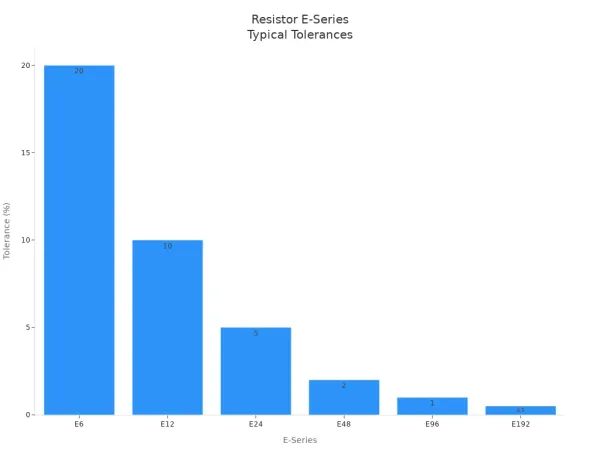
You also need to know about tolerance. Tolerance tells you how close the actual value is to the labeled value. The international standard groups resistors into E-series, each with its own tolerance range. You can see how the tolerance changes in the table below.
| E-Series | Number of Values per Decade | Typical Tolerance |
|---|---|---|
| E6 | 6 | ±20% |
| E12 | 12 | ±10% |
| E24 | 24 | ±5% |
| E48 | 48 | ±2% |
| E96 | 96 | ±1% |
| E192 | 192 | ±0.5%, ±0.25%, ±0.1% |
Note: You should always check the tolerance when you select a 1k resistor for your project.
Common Uses
You find the 1k resistor in many electronic circuits. You use it to protect LEDs by limiting the current. You also use it as a pull-up or pull-down resistor in digital circuits to keep signals stable. In voltage divider circuits, the 1k resistor helps you set the right voltage for sensors or other components. You often use it for sensor interfacing, where it matches impedance and conditions signals. The 1k ohm resistor also works in signal conditioning, such as filters and attenuators, to keep signals accurate.
Here are some of the most frequent uses for a 1k resistor:
- LED current limiting
- Pull-up and pull-down resistors in digital circuits
- Voltage dividers for scaling voltages
- Sensor interfacing for impedance matching
- Signal conditioning in filters and attenuators
- Basic circuit prototyping
You use the 1k resistor in both analog and digital circuits. In analog circuits, it helps you control voltage and current, build filters, and set timing. In digital circuits, you use it to stabilize signals and protect microcontroller pins.
Tip: You should keep a supply of 1k ohm resistors in your toolbox. They solve many problems in electronics projects.
Resistor Color Code

How Color Codes Work
You see colored bands on almost every resistor. These bands help you find the value of the resistor quickly. The resistor color coding system started in the 1920s. The Radio Manufacturers Association created it so you could read resistor values without needing numbers printed on tiny parts. The first radios with color-coded resistors appeared in 1930. Over time, the system changed and became an international standard. Today, you use the IEC 60062:2016 standard for resistor color code.
Most resistors have between 3 and 6 color bands. You usually find 4-band resistors in your projects. The first two bands show the significant digits. The third band is the multiplier. The fourth band tells you the tolerance. High precision resistors use 5 bands, which add another digit for more accuracy. Some special resistors have 6 bands, but you rarely see them.
Here is a simple table to help you remember:
| Number of Bands | What They Mean |
|---|---|
| 4 | 2 digits, multiplier, tolerance |
| 5 | 3 digits, multiplier, tolerance |
| 6 | 3 digits, multiplier, tolerance, temperature |
Tip: Always start reading resistor color codes from the end closest to the tolerance band. This helps you avoid mistakes.
Why Color Coding Matters
You need to understand resistor color coding because it saves you time and prevents errors. When you build circuits, you must pick the right resistor. The color bands let you check the value fast. You do not need to measure each resistor with a tool. This makes your work easier and safer.
The resistor color code system uses colors because they are easy to print and see on small parts. You can read the value from any angle. This helps you when you work with many resistors at once. You also avoid confusion from faded or smudged numbers.
You may face some problems when reading resistor color codes. Poor lighting can make colors hard to see. Some colors look similar, like red and brown or green and blue. You might read the bands in the wrong order. Color blindness can also make reading resistor color coding difficult. You can use apps or a magnifying glass to help you see the colors better.
Understanding resistor color coding helps you choose the right resistor for your project. You avoid mistakes and keep your circuits working well. You use the 1k resistor color code to find the right part for your needs. Practice reading resistor color codes often. You will get faster and more accurate.
1K Resistor Color Code
4-Band Color Code
You often see the 4-band color code when you work with a 1k resistor. This system uses four colored bands to show the resistor’s value and tolerance. You read the bands from left to right, with the gold band (tolerance) on the far right. The 1k resistor color code for a 4-band resistor is Brown, Black, Red, Gold.
Here is what each band means for a 1k resistor:
- Brown: This is the first band. It stands for the digit '1'.
- Black: This is the second band. It stands for the digit '0'.
- Red: This is the third band. It is the multiplier, which means you multiply by 100.
- Gold: This is the fourth band. It shows the tolerance, which is ±5%.
When you put these together, you get 10 (from the first two bands) times 100 (from the third band), which equals 1000 ohm. The gold band tells you the resistor can be 5% higher or lower than 1000 ohm. So, the actual value can range from 950 ohm to 1050 ohm.
Tip: Always check the gold band is on the right before you start reading resistor color codes.
Here is a quick reference for the 4-band 1k resistor color code:
| Band Position | Color | Value/Meaning |
|---|---|---|
| 1st | Brown | 1 (first digit) |
| 2nd | Black | 0 (second digit) |
| 3rd | Red | ×100 (multiplier) |
| 4th | Gold | ±5% (tolerance) |
You can also use a resistor color code chart to help you remember the values for each color. This chart makes reading resistor color codes much easier, especially when you have many resistors to check.
5-Band Color Code
Some 1k resistors use a 5-band color code. This system gives you more accuracy because it uses three digits instead of two. You often find 5-band resistors in circuits that need precise values, like measurement tools or audio equipment.
For a 1k resistor with a 5-band color code, you usually see these colors:
- Brown (1st digit): 1
- Black (2nd digit): 0
- Black (3rd digit): 0
- Brown or Red (multiplier): ×10 or ×100
- Brown, Red, or Gold (tolerance): ±1%, ±2%, or ±5%
The most common 5-band code for a 1k resistor is Brown, Black, Black, Brown, Brown. This means:
- 1 (Brown), 0 (Black), 0 (Black) = 100
- Multiplier Brown = ×10
- Tolerance Brown = ±1%
So, 100 × 10 = 1000 ohm, with a tighter tolerance of ±1%. You may also see other combinations, but the key is that the first three bands give you more digits for better accuracy. This is why 5-band resistors are used in precision circuits.
Note: 5-band resistors often have a brown or red tolerance band, which means the resistor value is even closer to the labeled value than a gold band.
How to Read the Bands
You need to follow a few simple steps to read the bands on a 1k resistor correctly. This helps you avoid mistakes and makes sure you use the right resistor in your project.
- Hold the resistor so the tolerance band (gold, brown, or red) is on the right.
- Start reading from the leftmost band.
- Identify each color and match it to its value using a resistor color code chart.
- Write down the digits from the first two (4-band) or three (5-band) bands.
- Multiply by the value from the multiplier band.
- Check the tolerance band to know how much the actual value can vary.
Always use good lighting when reading resistor color codes. If the bands look faded or hard to see, use a magnifying glass. Double-check your reading with a resistor color code chart to avoid errors.
Here is a helpful table for quick identification of the most common bands:
| Color | Digit Value | Multiplier | Tolerance ± % |
|---|---|---|---|
| Black | 0 | ×1 | |
| Brown | 1 | ×10 | ±1% |
| Red | 2 | ×100 | ±2% |
| Gold | ×0.1 | ±5% | |
| Silver | ×0.01 | ±10% |
You can see from the table that gold always means a tolerance of ±5%. This is important for the 1k resistor color code because it tells you how much the resistor value can change.
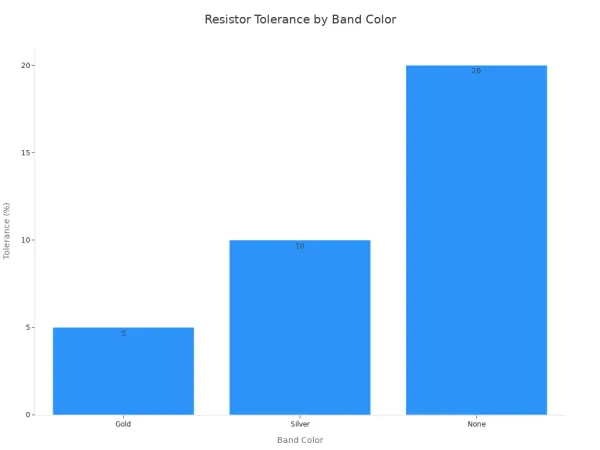
If you ever find a resistor with unusual colors or more bands, check the manufacturer’s datasheet or a detailed resistor color code chart. Some special resistors use extra bands or different codes, so a reference table helps you avoid mistakes.
Remember: Practice reading resistor color codes often. The more you practice, the faster and more accurate you become at identifying a 1k resistor.
Troubleshooting Resistor Color Code
Common Mistakes
You may face several challenges when you try to identify a resistor by its color code. One common mistake is reading the bands in the wrong direction. If you start from the tolerance band instead of the correct end, you will get the wrong value. Poor lighting can make colors look similar, especially brown, red, and black. Sometimes, manufacturing variations cause bands to appear faded or uneven. You might confuse gold and silver bands, which changes the tolerance reading.
Another mistake happens when you rush and skip double-checking the resistor value. Some resistors have bands that are close together, making it hard to tell where one ends and another begins. If you do not use a color code chart, you may mix up the digits or multipliers. Color blindness can also make it difficult to tell certain bands apart.
Tip: Always pause and check each band carefully before you use a resistor in your circuit.
Tips for Accurate Reading
You can avoid most errors by following a few simple steps. Good lighting helps you see the color bands clearly. Use a magnifying glass if the bands look faded or the resistor is very small. Keep a resistor color code chart nearby for quick reference. Practice reading color codes often to build confidence.
Here are some helpful techniques:
- Start reading the color bands from the end opposite the tolerance band.
- Use a multimeter to verify the resistor value if you feel unsure.
- Try high-quality LED or daylight bulbs to improve color perception.
- Use digital tools or mobile apps to double-check color identification.
- For color-blind users, rely on electronic measurement tools or apps that adjust color output.
- Choose metal foil resistors for higher accuracy in sensitive circuits.
| Problem | Solution |
|---|---|
| Poor lighting | Use bright, natural light |
| Faded bands | Use a magnifying glass |
| Color confusion | Refer to a color code chart or app |
| Wrong reading direction | Start from the correct end |
| Manufacturing issues | Double-check with a multimeter |
Note: Regular practice and careful observation help you master resistor color code reading. You will make fewer mistakes and build better circuits.
1K Resistor in Circuits
Applications
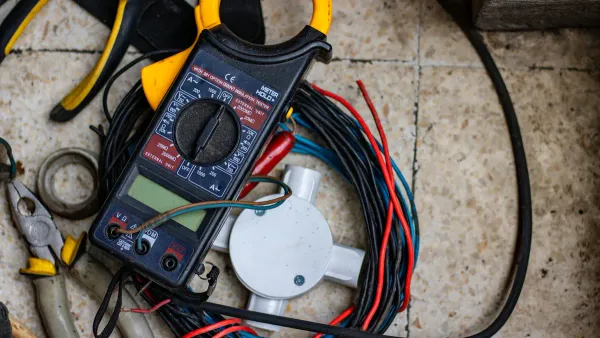
You use a 1k resistor in many consumer electronics projects. This resistor helps you control current and voltage, making your circuits safer and more reliable. You often see it in audio power amplifiers for phase adjustment. It works as an emitter load in push-pull amplifier circuits, which improves transistor performance. You can use a 1k resistor as a sacrificial element in overcurrent protection circuits. It helps balance and stabilize electronic circuits. You also find it in timing and signal conditioning circuits. In audio circuits, a 1k resistor stabilizes the operating point and controls the gain of amplifier stages. This improves the quality of audio signals. You use it in feedback networks to set gain and ensure stable operation.
- Current limiting
- Voltage dividing
- Biasing sensitive components
- Signal conditioning
- Timing circuits
- Overcurrent protection
Tip: You can choose different types of resistors, such as carbon film, metal film, wirewound, or SMD, based on your project’s needs.
Selection Tips
You need to select the right resistor for your circuit. Start by checking the resistance value and tolerance. Make sure the resistor meets your precision requirements. Look at the power rating. If your circuit uses high current, pick a resistor with a higher power rating to prevent overheating. Consider the material and packaging type. Through-hole resistors work well for breadboards, while surface mount resistors save space on PCBs. Think about environmental factors like temperature and humidity. Choose a resistor that stays stable under these conditions. Decide if you need a 4-band resistor with ±5% tolerance or a 5-band resistor with ±1% or ±2% tolerance. Use Ohm’s law (V = IR) to calculate voltage drop and ensure safe operation.
| Resistor Type | Typical Power Rating | Stability |
|---|---|---|
| Metal Film | Less than 3 Watts | High (1%) |
| Carbon | Less than 5 Watts | Low (20%) |
| Wirewound | Up to 500 Watts | High (1%) |
Note: Wirewound resistors are best for high-current applications. If your resistor operates near its maximum rating, add cooling or heatsinking.
Safety Notes
You must handle and install resistors with care. Avoid using hard steel tools, which can damage the protective coating. Damaged coatings reduce resistor performance. Always operate resistors within derated power limits. Pick a resistor with at least double the expected power dissipation for safety. Watch for thermal and electrical stresses, such as current surges and heat from nearby components. Do not bend or flex the PCB after soldering, as this can break the resistor or change its value. Keep resistors away from solvents, which can degrade their properties. If a resistor overloads, it may emit smoke or gas. Incorrect identification of a 1k resistor can cause overheating and circuit failure. Replace faulty resistors quickly to restore safety.
Safety Alert: Always double-check resistor values before installation. Proper selection and handling prevent damage and keep your circuits safe.
You can identify a 1k resistor quickly by following these steps:
- Find the first band (Brown) for digit '1'.
- Check the second band (Black) for digit '0'.
- Look at the third band (Red) for the multiplier '100'.
- Note the fourth band (Gold) for ±5% tolerance.
- Calculate: 10 × 100 = 1,000 ohms.
- Understand the tolerance range is 950 to 1,050 ohms.
Practicing resistor color code reading helps you avoid mistakes and builds your confidence. Accurate resistor identification keeps your circuits safe and reliable. You can use online color code calculators or guides to improve your skills. Try reading different resistors in your projects to master this important skill.
For more learning, explore resistor guides and calculators to deepen your understanding of circuit design.
FAQ
What does "1K" mean on a resistor?
"1K" means the resistor has a value of 1,000 ohms. The letter "K" stands for "kilo," which means one thousand. You use this value to control current in your circuits.
How do you know which end to start reading the color bands?
You start reading from the end closest to the tolerance band, usually gold or silver. Keep this band on the right. This helps you read the value correctly every time.
Can you use a multimeter to check a 1K resistor?
Yes, you can use a multimeter to measure resistance. Set the meter to the ohms setting. Touch the probes to each end of the resistor. The display will show the resistance value.
What if the color bands look faded or hard to see?
Use a magnifying glass or bright light to see the bands better. You can also check the value with a multimeter if you feel unsure.
Why do some 1K resistors have five color bands?
Five-band resistors give you more accuracy. You see them in circuits that need precise values. The extra band adds another digit, which helps you get a closer match to the labeled value.