A Practical Guide to Buck-Boost Transformers in 2025
Your valuable equipment underperforms. Sometimes it fails completely. A common cause is a voltage mismatch, like a 240V mach

Your valuable equipment underperforms. Sometimes it fails completely. A common cause is a voltage mismatch, like a 240V machine running on a 208V supply. This problem has a simple, cost-effective solution.
Are you struggling with voltage mismatches that threaten your valuable equipment?
You may wonder, what is a buck boost transformer? It is a tool that corrects these voltage issues. A buck-boost transformer can restore your equipment’s performance and prevent costly damage.
Key Takeaways
- A buck-boost transformer fixes small voltage problems. It changes voltage by 5% to 20%. This helps your equipment work correctly.
- Use a buck-boost transformer to match equipment voltage. It helps when your power supply does not match your machine's needs. This protects motors and other devices.
- Choosing the right transformer is easy. You need to know your starting voltage, ending voltage, and power needs. This ensures you pick the correct model.
- Buck-boost transformers save money. They are cheaper than other voltage fixers. They also make your equipment last longer and work better.
What is a Buck-Boost Transformer?:
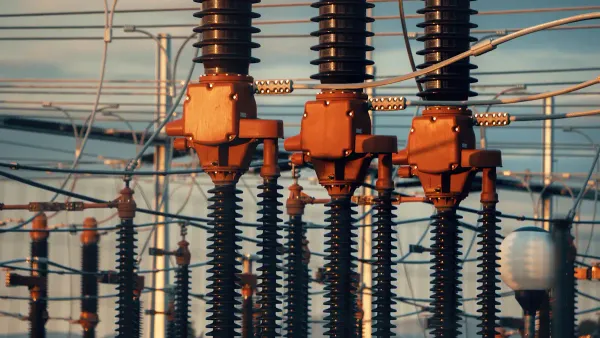
So, what is a buck boost transformer? Think of it as a simple tool to fix a steady voltage problem. It is not a complex voltage stabilizer. Instead, this device makes a small, permanent voltage change to match your equipment's needs. The primary job of a buck-boost transformer is to adjust voltage consistently.
The Core Function of Voltage Optimization:
You use this transformer for minor voltage adjustment. Most applications require a correction between 5% and 20%. This small but crucial change ensures your machines run correctly. It protects them from the stress of incorrect voltage. A common question is, what is a buck boost transformer's main role? Its role is optimization, not regulation of rapid voltage fluctuations.
Note: Buck-Boost vs. Voltage Regulator A buck-boost transformer is not a voltage regulator. It makes a fixed change to a stable voltage source. A voltage regulator, on the other hand, actively manages a fluctuating input to provide a constant output.
Feature Buck-Boost Converter Contact Voltage Regulator Voltage Regulation Steps voltage up or down by a fixed amount. Provides a precise and stable output from a varying input. Efficiency Highly efficient with minimal power loss. May have power losses due to its resistive element. Size Very compact and lightweight. Can be large, especially for high-power needs.
How It "Bucks" to Decrease Voltage:
When your supply voltage is too high, the transformer "bucks" it. This means it subtracts a small amount of voltage from the line. For example, it can take a 240V supply and reduce it to 228V, which is a 5% decrease.
How It "Boosts" to Increase Voltage:
When your supply voltage is too low, the transformer "boosts" it. It adds a small amount of voltage to the line. This action can turn a 208V supply into a 240V output, protecting a motor designed for 240V.
The Autotransformer Connection Explained:
You will almost always connect a buck-boost transformer as an autotransformer. An autotransformer uses a single shared winding, making it smaller and more economical than a standard isolation transformer, which has two separate windings. This connection is why understanding what is a buck boost transformer involves knowing its wiring.
| Characteristic | Isolation Transformer | Autotransformer |
|---|---|---|
| Winding | Separate primary & secondary | Single shared winding |
| Size & Cost | Larger & higher cost | Smaller & lower cost |
| Isolation | Provides electrical isolation | No electrical isolation |
Because there is no isolation, you must follow safety codes. The National Electrical Code (NEC®) has specific rules for this setup.
According to NEC® Section 450.4, each buck-boost autotransformer 600 volts, nominal, or less shall be protected by an individual overcurrent device installed in series with each ungrounded input conductor.
This ensures your installation is both safe and compliant.
When to Use a Buck-Boost Transformer:

You now know what a buck-boost transformer is. The next step is learning when to use one. These devices solve very specific voltage problems. Recognizing these situations helps you protect your equipment and improve system efficiency.
Correcting Voltage Drop in Long Wire Runs:
Imagine electricity flowing through a long wire like water through a long hose. The pressure drops the farther it travels. Similarly, voltage decreases over long electrical runs. This is called voltage drop. It can cause motors to run slow, lights to dim, and heaters to produce less heat.
You can calculate the expected voltage drop in a circuit. The basic formulas use current, wire resistance, and length:
- Single-phase circuits:
Voltage Drop = 2 · I · R · L - Three-phase circuits:
Voltage Drop = √3 · I · R · L
Here, I is the current, R is the wire resistance per unit of length, and L is the one-way length of the wire.
💡 Real-World Scenario: You install a 240V water pump 500 feet away from the service panel. Due to voltage drop, the pump only receives 225V. This under-voltage can cause the motor to overheat and fail prematurely. By installing a buck-boost transformer at the pump, you can boost the voltage back up to the required 240V.
Matching Equipment to Service Voltage:
The most common reason you will use a buck-boost transformer is to match your equipment's voltage rating to the building's service voltage. In North America, service voltages can vary significantly between residential, commercial, and industrial sites.
| Description | L–N Vac | L–L Vac | Usage Examples |
|---|---|---|---|
| 1-Phase, 3-Wire | 120 | 240 | Heavy-duty appliances (water heater, AC) |
| 3-Phase, 4-Wire Wye | 120 | 208 | Commercial plug loads, smaller HVAC |
| 3-Phase, 4-Wire Wye | 277 | 480 | Larger facilities, 277V lighting, larger HVAC |
| 3-Phase, 3-Wire Delta | – | 240, 480 | Industrial motor loads |
A frequent problem arises when you have a machine rated for 240V but the facility only provides 208V. Running a 240V motor on a 208V supply forces it to draw more current, leading to overheating and a shorter lifespan. A buck-boost connection easily solves this by boosting the 208V supply to the 230-240V range the motor needs.
Powering International or Non-Standard Loads:
Your facility might purchase equipment from another country. Global voltage standards are very different. Most of Europe and Asia use 220V or 230V systems, while the US primarily uses 120V and 240/208V. Japan is another exception, with a 100V standard.
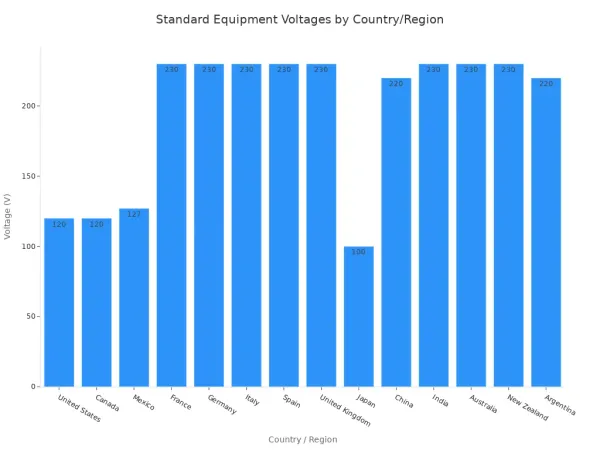
You can use a buck-boost transformer to make small adjustments to power this equipment safely. For example, you can buck a 240V supply down to 228V to better accommodate a 230V European machine. This simple connection prevents you from needing a large, expensive isolation transformer for a minor voltage change.
Common Applications for HVAC and Lighting:
HVAC and lighting systems are sensitive to incorrect voltage. They are also some of the most common places you will find buck-boost applications. HVAC compressor motors, in particular, suffer when supplied with the wrong voltage.
Warning: The Dangers of Incorrect Voltage for Motors An improper voltage supply puts significant stress on an HVAC compressor motor.
- Overheating: Low voltage increases current draw, causing motor windings to overheat. A sustained 10°C rise in temperature can cut the motor's insulation life in half.
- Reduced Lifespan: Constant overheating and mechanical stress from voltage imbalances lead to premature bearing wear and insulation breakdown, causing motor failure.
- Poor Performance: A motor running on low voltage loses efficiency and power, resulting in reduced cooling capacity and higher energy bills.
You can use a buck-boost connection to supply the correct voltage to rooftop AC units, air handlers, and large lighting panels (such as 277V systems). This ensures equipment runs efficiently, performs as designed, and reaches its expected operational lifespan.
How to Choose the Right Buck-Boost Transformer:
Choosing the correct device might seem complex, but you can simplify it into a few clear steps. Following this process ensures you select a transformer that perfectly matches your needs, protecting your equipment and your budget.
Step 1: Identify Line and Load Voltage:
First, you must know your starting and ending voltages.
- Line Voltage: This is the voltage your utility provides to the equipment. You can measure this at the source with a multimeter.
- Load Voltage: This is the voltage your equipment is designed to run on. You can find this information on the equipment's nameplate.
Knowing these two numbers is the most critical part of the process. Common industrial and commercial voltages include:
- 120 Volts: Used for standard outlets and lighting.
- 208 Volts: A common three-phase voltage in commercial buildings.
- 240 Volts: Used for larger appliances and many single-phase motors.
- 277 Volts: Powers commercial lighting systems.
- 480 Volts: Powers large industrial motors and equipment.
- 600 Volts: Used for heavy machinery, especially in Canada.
These voltages often exist in specific pairings depending on the building's electrical system.
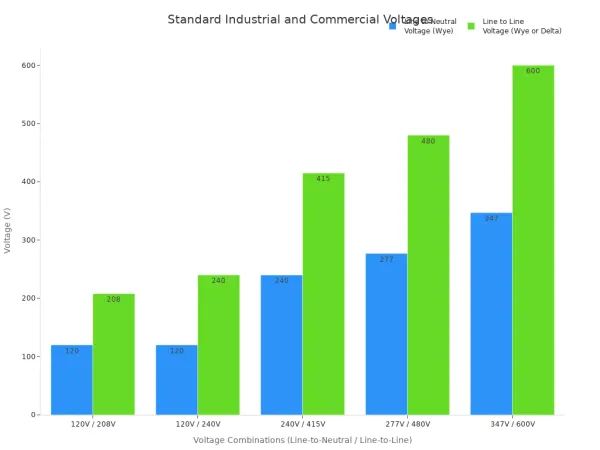
For example, if your line voltage is 208V but your air conditioner's nameplate says 240V, you know you need to "boost" the voltage.
Step 2: Calculate the Required Load kVA:
Next, you need to determine the amount of power your equipment requires. This is measured in kilovolt-amperes (kVA). You can find the necessary information (volts and amps) on the equipment's nameplate.
For Single-Phase Loads: You calculate the kVA using a simple formula. You multiply the load voltage by the load current and then divide by 1,000.
Load kVA = (Load Voltage x Load Amps) / 1,000
Example: A 240V motor draws 25 amps.
(240 V x 25 A) / 1,000 = 6 kVAYou would need a transformer rated for at least 6 kVA.
For Three-Phase Loads: The calculation is similar but includes one extra step. You multiply the voltage, current, and the square root of 3 (which is approximately 1.732).
Load kVA = (Load Voltage x Load Amps x 1.732) / 1,000
Example: A three-phase machine runs on 480V and draws 10 amps.
(480 V x 10 A x 1.732) / 1,000 = 8.31 kVAYou should select the next standard size up, likely a 10 kVA model.
Step 3: Determine Single-Phase or Three-Phase Needs:
Your electrical system determines how many transformers you need.
- Single-Phase Power: This is a simple two-wire circuit. You will only need one transformer unit for a single-phase connection.
- Three-Phase Power: This system uses three wires (Delta) or four wires (Wye). For three-phase applications, you will need two or three transformer units.
The most common and recommended three-phase connections are:
| Input System | Connection Type | Transformers Needed |
|---|---|---|
| 3-Phase, 4-Wire Wye | Wye | 3 |
| 3-Phase, 3-Wire (any) | Open-Delta | 2 |
When using two transformers in an "open-delta" connection, the B-phase wire passes straight through, while the other two transformers buck or boost the A and C phases. This setup is cost-effective but creates a slight voltage imbalance. It is acceptable for motor loads but not recommended for sensitive electronics.
⚠️ Important Connection Rules To ensure safety and proper operation, you must follow specific wiring guidelines.
- Acceptable: Wye-to-Wye and any 3-wire input to an Open-Delta output are standard and reliable.
- Not Recommended: You should avoid connecting a Delta input to a Wye output. This can create an unbalanced neutral current. A closed-delta connection is also not advised because it is less efficient and can cause phase shifting.
Step 4: Select the Correct Model Number:
With all your information gathered, you are ready for the final step. Manufacturers provide selection charts that make finding the right model easy.
To use a chart, you will find your:
- Line (Input) Voltage
- Load (Output) Voltage
- Load kVA
- Phase (Single or Three)
The chart will then point you to the exact model number you need.
💡 Let's put it all together: You have a 208V line voltage and need to power a 240V single-phase motor that draws 20 amps.
- Line/Load Voltage: 208V input, 240V output.
- Load kVA:
(240V x 20A) / 1000 = 4.8 kVA. You'll need a 5 kVA unit.- Phase: Single-phase.
- Selection: You would look at the manufacturer's chart for a single-phase, 5 kVA transformer listed for a 208V to 240V boost.
If navigating these final steps feels daunting, expert help is available. For instance, Nova Technology Company (HK) Limited, a HiSilicon-designated solutions partner, specializes in helping customers identify and implement the correct power solutions. Their expertise can ensure you select the most efficient and reliable transformer for your specific application.
Key Benefits of a Buck-Boost Transformer:
After you select the right model, you will see several key advantages. These devices offer more than just a voltage fix. They provide economic and operational benefits that protect your investments and improve your facility's efficiency.
Cost-Effectiveness and Economy:
You will save a significant amount of money. A buck-boost transformer is a very economical solution for voltage correction. It is much cheaper than buying a large, standard isolation transformer for the same job.
You can expect dollar savings greater than 75% when you choose a buck-boost transformer over an insulating type. One user even reported solving a problem for under $100, avoiding a new service installation that would have cost around $10,000.
This makes it an excellent choice for budget-conscious projects.
Improved Equipment Performance and Lifespan:
Your equipment will run better and last longer. Incorrect voltage harms motors and other devices. A 10% drop in voltage can have a major negative impact on equipment health and its ability to achieve optimal performance.
| Impact Area | 10% Undervoltage Effect |
|---|---|
| Torque Reduction | 19% |
| Temperature Rise | 6 to 7°C increase |
This extra heat and reduced power cause premature wear and failure. A buck-boost transformer provides the correct voltage, which allows your machinery to deliver optimal performance. This simple fix ensures better overall performance and helps your equipment reach its full operational lifespan, giving you the optimal performance you expect.
High Efficiency and Compact Size:
You get a powerful solution in a small package. A buck-boost transformer connects as an autotransformer. It only needs to transform a small portion of the electrical energy. The rest of the power flows directly through the unit. This design makes it much smaller, lighter, and more efficient than an isolation transformer of the same kVA size. Its compact nature makes installation easier, especially in tight spaces.
Versatility for Multiple Applications:
You can use this one device for many different jobs. The buck-boost transformer is a flexible tool. You can use it to correct voltage for HVAC systems, lighting panels, and individual motors. It also helps you power international equipment with non-standard voltage needs. This versatility makes it a valuable component in any electrician's or facility manager's toolkit.
You now know what is a buck boost transformer: a simple, affordable tool. It fixes small but important voltage problems. You can follow the selection guide in this article. This helps you protect your valuable equipment and avoid expensive repairs.
Stop letting incorrect voltage control your equipment's performance. You can take charge with the right buck-boost solution.
FAQ
Can I use a buck-boost transformer for my whole house?
You generally do not use a buck-boost transformer for an entire house. These devices are best for specific equipment or circuits with voltage issues. For whole-house problems, you should consult an electrician to check the main electrical service.
What happens if I pick the wrong size transformer?
An undersized transformer will overheat and fail. This can damage both the transformer and your equipment. An oversized transformer works fine but costs you more money than necessary. You should always choose the correct kVA rating for your load.
Is a buck-boost transformer the same as a step-up/step-down transformer?
They are similar but used differently. You connect a buck-boost transformer as an autotransformer for small voltage changes (5-20%). A standard step-up/step-down transformer is an isolation transformer, which is larger and used for bigger voltage changes.
Do buck-boost transformers need maintenance? 🛠️
These transformers require very little maintenance. You should keep them clean and dry. Periodically check that the electrical connections are tight and secure. This simple care ensures a long and reliable service life for the unit.