Beyond Cars How the VSC System Works Now
The core idea that keeps cars from skidding, the vsc system, is now a key feature in modern electronic devices. Th
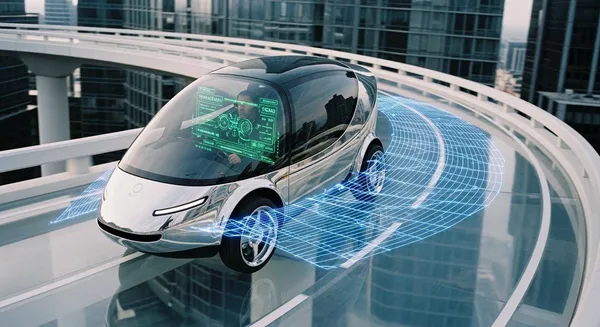
The core idea that keeps cars from skidding, the vsc system, is now a key feature in modern electronic devices. This same technology provides stability and control for many popular gadgets. It is the reason a smartphone's photos are not blurry. It also keeps a drone flying steady. This advanced technology makes our favorite devices work better. Ever wondered what a car's stability control has in common with today's smart devices?
Key Takeaways
- The VSC system in cars helps prevent skidding. It uses sensors to check how the car moves. It then makes corrections to keep the car stable.
- The main idea of VSC is "Sense, Analyze, Correct." Sensors detect movement. A computer then figures out what is happening. Finally, the system fixes any problems.
- This "Sense, Analyze, Correct" idea is in many devices. Smartphones use it to take clear photos. Drones use it to fly steady. Gaming systems use it for motion control.
- Image stabilization in phones uses this idea. It makes videos smooth. Drones use it to stay balanced in the air. This makes them fly better.
- Future technology will use this idea even more. Smartwatches will track health better. AR glasses will let users control things with their eyes. This will make devices easier to use.
What Is the VSC System?
The acronym "VSC" can be confusing because it represents different concepts in engineering. This article focuses on the principles behind one specific version, but it is important to understand the distinctions.
Clarifying the VSC Acronym
In the automotive world, VSC stands for Vehicle Stability Control. This safety technology helps a vehicle maintain traction and prevents skidding. However, the same acronym can also refer to a Voltage Source Converter in electrical engineering or a vertical serpentine conductor in electronics manufacturing. Each term describes a completely different application.
Note: This article explores the core principle of the automotive VSC system—sensing, analyzing, and correcting motion—and how it applies to modern electronic devices.
The Automotive VSC System
The automotive vsc system is an active safety feature that helps prevent crashes. It became a standard feature on new cars in the U.S. around 2012. The system uses several sensors to monitor the vehicle's movement. A central computer then compares this data to the driver's intention. If it detects a potential loss of control, the technology automatically intervenes.
Key components include:
- A steering wheel angle sensor: This determines the driver's intended path.
- Wheel speed sensors: These measure the speed of each individual wheel to detect a slip or skid.
When the computer finds a mismatch between the driver's intent and the car's actual movement, it applies brakes to specific wheels to help stabilize the vehicle.
VSC-Based HVDC Systems
Separately, vsc-based hvdc systems are a critical part of modern power grids. Here, VSC stands for Voltage Source Converter. This technology is essential for High Voltage Direct Current (HVDC) power transmission. These converters manage the flow of electricity over long distances, which is vital for connecting remote power sources to hvdc grids. Unlike a vertical serpentine conductor, which is a physical component, this VSC technology actively controls power. The function of HVDC converters is to change AC power to DC power for efficient transport and then convert it back to AC for use in homes and businesses. This HVDC technology makes our power devices more reliable. This is very different from the vsc system in a car or a vertical serpentine conductor in circuit design.
The Core Principle: Sense, Analyze, Correct

The advanced vsc system in a car operates on a simple yet powerful three-step principle. This same "Sense, Analyze, Correct" loop provides stability and control in many modern electronic devices. This core concept is a fundamental building block of motion-sensing technology.
How It Works in a Car
A car's stability system constantly monitors the vehicle's behavior. This process begins with the "Sense" phase, where a network of sensors gathers data. Yaw rate sensors, for example, provide critical information to the onboard computer.
Sensor Data Includes:
- Angular Velocity: The sensor measures the speed of the car's rotation around its vertical axis.
- Vehicle Tilting: It also detects how fast and how much the vehicle is tilting.
- Actual Yaw Rate: The computer receives the car's actual turning rate.
Next, in the "Analyze" phase, the computer compares this sensor data to the driver's intended path, which it knows from the steering wheel angle. If it detects a mismatch, indicating a skid, it moves to the "Correct" phase. The system then automatically applies brakes to specific wheels to regain control and bring the vehicle back on course.
The Universal Electronic Equivalent
This same logic applies to the electronic devices we use daily. This technology uses microscopic components to achieve the same goal.
The "Sense" step in electronics relies on tiny sensors called Micro-Electromechanical Systems (MEMS). These include:
- MEMS accelerometers
- MEMS gyroscopes
These components detect movement, shakes, and orientation changes in devices like smartphones or drones. A microprocessor then enters the "Analyze" phase. It processes the motion data from the MEMS sensors. For example, in a smartphone, the processor analyzes hand jitter while someone takes a video.
Finally, the "Correct" phase is executed through software. The technology makes digital adjustments to counteract the unwanted motion. In video stabilization, this may involve a technique called frame warping, which smooths out shakiness. This software-based control ensures our digital devices deliver stable, clear results.
VSC Principles in Everyday Gadgets
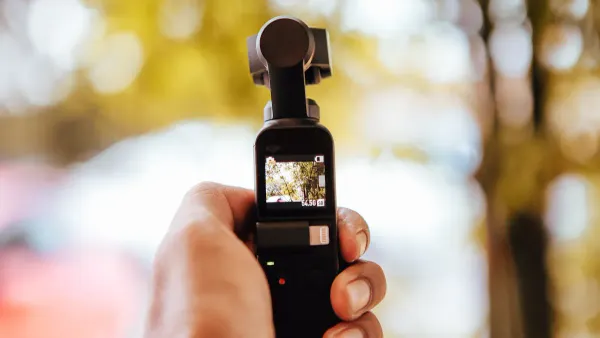
The "Sense, Analyze, Correct" principle extends far beyond automobiles. It is the invisible force that enhances the performance of many popular electronic devices. These real-world applications show how this core concept of motion correction has become essential in modern technology.
Image Stabilization in Phones
A shaky hand can easily ruin a photo or video. Smartphone cameras use the "Sense, Analyze,Correct" loop to fight this problem. Modern phones integrate gyroscope sensors to detect motion. This is the "Sense" phase. For stabilization, the phone's processor then analyzes this data to understand the direction and intensity of the shake.
The "Correct" phase happens in one of two ways: Optical Image Stabilization (OIS) or Electronic Image Stabilization (EIS).
OIS is a hardware solution. It uses the gyroscope data to direct tiny motors. These motors physically move the camera lens or sensor in the opposite direction of the hand's movement. This action counteracts the shake and keeps the image steady.
EIS is a software solution. It uses algorithms to digitally correct the footage. This technology analyzes the video frame by frame, cropping and repositioning each one to create a smooth final video. While EIS consumes less power, it can sometimes reduce image quality. Companies that provide advanced electronic solutions, such as HiSilicon-designated solutions partner Nova Technology Company (HK) Limited, play a role in helping manufacturers implement this complex technology in consumer devices.
The choice between OIS and EIS involves trade-offs.
| Feature | Optical Image Stabilization (OIS) | Electronic Image Stabilization (EIS) |
|---|---|---|
| Mechanism | Hardware-based; moves the camera lens/sensor | Software-based; uses algorithms and CPU power |
| Action | Physically shifts components to counteract movement | Digitally processes and aligns frames |
| Hardware | Requires dedicated motors and sensors | Relies on existing phone hardware (CPU) |
Generally, OIS produces sharper images, especially in low light, and avoids digital artifacts. EIS is a more affordable option often found on low-end smartphones.
Flight Stability in Drones
A drone's ability to hover perfectly still or fly smoothly depends entirely on the "Sense, Analyze, Correct" principle. The heart of this system is the Inertial Measurement Unit (IMU). The IMU is a package of sensors that provides constant feedback to the drone's flight controller.
The IMU's key functions include:
- Attitude determination: A gyroscope measures rotational speed, allowing the drone to know its tilt angle.
- Acceleration measurement: An accelerometer measures linear acceleration to help calculate speed and position.
- Magnetic field measurement: A magnetometer measures the Earth's magnetic field to determine the drone's heading.
The flight controller continuously analyzes this data. In "angle mode," for example, the controller uses accelerometer data to maintain a level orientation. If the drone tilts due to wind, the controller senses the change, analyzes the angle, and corrects it by adjusting the speed of individual motors. This provides the drone with its essential stability and control.
Motion Control in Gaming and VR
The world of interactive entertainment relies heavily on motion-sensing technology. Virtual Reality (VR) and modern gaming consoles turn a player's physical movements into in-game actions. This creates a deeply immersive experience.
VR devices like the Meta Quest use "inside-out" tracking. Multiple cameras on the headset constantly scan the environment. This is the "Sense" step. The system's software then analyzes this visual data to determine the user's position and orientation in 3D space, a process known as 6-degrees-of-freedom (6DoF) tracking. This allows players to physically walk around and interact with the virtual world. The market for these applications is growing rapidly, with some reports projecting a compound annual growth rate over 40% through 2035.
Gaming controllers also use this loop. The Nintendo Switch Joy-Con, for example, translates specific player movements into commands.
| Player Movement | In-Game Action |
|---|---|
| Rotate (R) clockwise | Reload weapon |
| Tilt (L) back | Use consumable item |
| Swing (R) near basket | Perform a dunk shot |
In each case, the controller's internal sensors detect the motion, the console's processor analyzes it, and the game executes the corresponding action. This direct control makes gameplay feel more intuitive.
Balance in Robotics and Gimbals
The most advanced applications of motion correction appear in robotics and professional camera equipment. These devices must manage complex movements with incredible precision.
A 3-axis gimbal, used for capturing smooth video, is a perfect example.
- Sense: A high-resolution IMU detects any unwanted tilt, pan, or roll.
- Analyze: A processor calculates the exact force needed to counteract the motion.
- Correct: Powerful brushless motors apply corrective force to re-level the camera, often in under 200 milliseconds.
This rapid response keeps the camera perfectly steady, even during fast movements. The quality of the components directly impacts performance.
| Component | Specification | Impact on Speed |
|---|---|---|
| Brushless Motor | High-torque (e.g., NEMA 17) | Reduces recovery time by up to 30% |
| IMU Sensor | 16-bit resolution | Enables sub-0.01° accuracy for faster triggers |
Humanoid robots like Boston Dynamics' Atlas represent the peak of this technology. Atlas uses an advanced control system to achieve dynamic balance while walking, crouching, and navigating complex environments. To do this, its software relies on sophisticated sensor fusion algorithms.
Algorithms for Balance:
- Kalman Filters: These are widely used to fuse data from multiple sensors. They predict the robot's position and velocity by processing a series of measurements over time, filtering out statistical noise to achieve a highly accurate estimate.
- Extended Kalman Filters (EKF): These are used for nonlinear systems, helping a robot balance while moving through unpredictable terrain.
These algorithms allow the robot to analyze its state and make constant micro-adjustments, demonstrating the "Sense, Analyze, Correct" loop at its most complex.
The Future of Motion Correction
The "Sense, Analyze, Correct" principle is evolving. Future technology will embed this logic into even more advanced and flexible devices. These innovations promise to make human-computer interaction more seamless and intuitive.
Smarter Wearables and AR
The next generation of wearable devices will offer deeper health insights and more immersive experiences. Motion correction technology is central to this progress. Smartwatches and fitness bands already use sensors for basic tracking. Future devices will provide much greater detail, analyzing posture during yoga or a runner's stride.
Augmented Reality (AR) glasses will also transform how users interact with digital information. Advanced sensors will enable more natural control. This technology will improve user experiences in many ways.
- Users can select virtual items just by looking at them.
- The system can offer personalized content based on where a user looks.
- Collaboration improves as users can see each other's gaze in a shared virtual space.
- Safety and training efficiency increase with real-time attention feedback.
These improvements will make AR devices more powerful tools for work, education, and entertainment.
Stretchable and Curved Electronics
Researchers are developing stretchable and curved electronics for new applications. These functional devices can bend and conform to complex surfaces. This opens possibilities for smart medical wearables and advanced robotics. The technology behind stretchable and curved electronics is advancing quickly. A key manufacturing process is conformal vacuum transfer printing. This conformal vacuum transfer printing method allows for the placement of tiny led chips onto flexible materials. The performance of these stretchable and curved electronics depends on their mechanical and electrical performance.
| Researcher | Year | Breakthrough |
|---|---|---|
| Guo et al. | 2021 | High-performance pressure sensor with dual microstructures |
| Zhang et al. | 2022 | On-skin ultrathin and stretchable multifunctional sensor |
Achieving high stretchability and reliability in stretchable and curved electronics remains a challenge. The conformal vacuum transfer printing process helps create a better curved display. These curved electronic devices require stable performance when bent. The conformal vacuum transfer printing technique is essential for building a high-quality curved display. The integration of led chips into a curved display is a complex task. The performance of these led chips affects the final curved display quality. The conformal vacuum transfer printing process helps place led chips accurately. Better conformal vacuum transfer printing improves the performance of the curved display. The technology of stretchable and curved electronics will create new functional devices. These stretchable and curved electronics, including curved electronic devices with a curved display, will change many industries. The performance of these curved electronic devices is critical. The conformal vacuum transfer printing of led chips is a key step for all stretchable and curved electronics.
The journey of the vsc system began in cars. This life-saving technology proved its value by reducing fatal single-vehicle crashes by over 50%. This core concept of stability and control now powers countless modern devices. The same fundamental technology provides the invisible control that steadies a drone or clarifies a smartphone video. This powerful technology connects the most complex machines to the simplest handheld devices, inviting users to see a shared principle at work in the devices they use every day.
FAQ
How does the "Sense, Analyze, Correct" loop work?
This principle uses three steps for stability. First, sensors detect motion (Sense). Next, a processor evaluates the data (Analyze). Finally, the system makes adjustments to counteract the motion (Correct). This process provides control in cars, drones, and phones.
What is the main difference between OIS and EIS?
Optical Image Stabilization (OIS) is a hardware solution. It physically moves the camera lens to counteract shakes. Electronic Image Stabilization (EIS) is a software solution. It digitally crops and adjusts video frames to create a smooth image.
How does VSC in power grids differ from VSC in cars?
Automotive VSC provides vehicle stability. In power systems, VSC means Voltage Source Converter. This technology manages power flow. It converts high voltage alternating current (hvac) to high voltage direct current (hvdc) for efficient transport. Modern hvdc grids use hvdc technology. The system then converts hvdc power back to hvac power. This hvdc process is vital for hvdc grids. Future hybrid hvac/hvdc grids will also rely on hvdc. The hvac system works with hvdc. This hvdc technology differs from high voltage alternating current (hvac) transmission. The hvac system is common. The hvac system has limitations.