What the Integrated Circuit Does in Intelligent Sensing Solutions
An integrated circuit acts like the brain in sensors. The ic takes signals from sensors and changes them into helpful data. Each ic does jobs like measuring, filtering, and sending data.
An integrated circuit acts like the brain in sensors. The ic takes signals from sensors and changes them into helpful data. Each ic does jobs like measuring, filtering, and sending data. Smart sensors need the chip to handle data fast and correctly. This chip lets sensors use less energy and work right away. Now, almost all sensors have an ic for quick results. Engineers pick the best integrated circuit to make smart sensing strong and dependable.
Without the ic, sensors would not give correct or fast data for today’s technology.
Key Takeaways
-
Integrated circuits work like the brain for smart sensors. They change signals into helpful data fast and correctly. ICs help sensors use less energy by managing power. They turn off parts when not needed. This helps devices last longer. These chips make sensors smaller and lighter. They can fit into tiny things like smartwatches and medical tools. ICs help sensors talk quickly and safely with other devices. This helps with real-time decisions and teamwork. With ICs, sensors are more reliable and correct. People can trust the data for safety and better choices.
Integrated Circuit Functions
Signal Processing
Integrated circuits help with signal processing in smart sensors. Sensors pick up signals from the world around them. These signals can have noise or extra stuff that is not needed. The ic uses filters and amplifiers to clean up the signals. The chip makes weak signals stronger so the microprocessor can read them. Many sensors have an analog front-end circuit inside the ic. This part gets the signal ready for more data work. The microchip keeps the signal correct and steady. The microcontroller uses this clean signal to make choices.
Note: Signal processing in the ic helps sensors work well, even when it is noisy or things change.
Data Conversion
Sensors notice things like heat or light and make analog signals. The integrated circuit changes these analog signals into digital data. This step is called analog-to-digital conversion. The ic has special parts to do this job. The chip sends the digital data to the microprocessor to study it. Data conversion lets sensors work with digital things like computers or smart gadgets. The microcontroller can use this data right away for actions. This conversion makes data work faster and better.
Control Logic
The ic handles control logic in smart sensing. Control logic tells sensors when to start or stop checking things. The integrated circuit can change how sensitive the sensors are. The chip also controls power use, so sensors save energy. The microprocessor listens to the ic to do its jobs. The microcontroller can change how sensors act if needed. This control helps sensors be smart and flexible.
-
Control logic jobs include:
-
Turning sensors on or off
-
Changing when sensors measure
-
Setting how sensors work
-
Communication
Communication is another big job for the integrated circuit in sensors. The ic helps sensors send data to other devices. The chip can use wires or wireless ways to share information. The microprocessor gets this data and can send orders back to the sensors. The microcontroller is often the link between sensors and the main system. Communication rules like I2C or SPI are built into the ic. This setup lets sensors work together in a group.
Sensors need the ic to talk fast and safely with other system parts.
ICs in Intelligent Sensing Solutions
Real-Time Processing
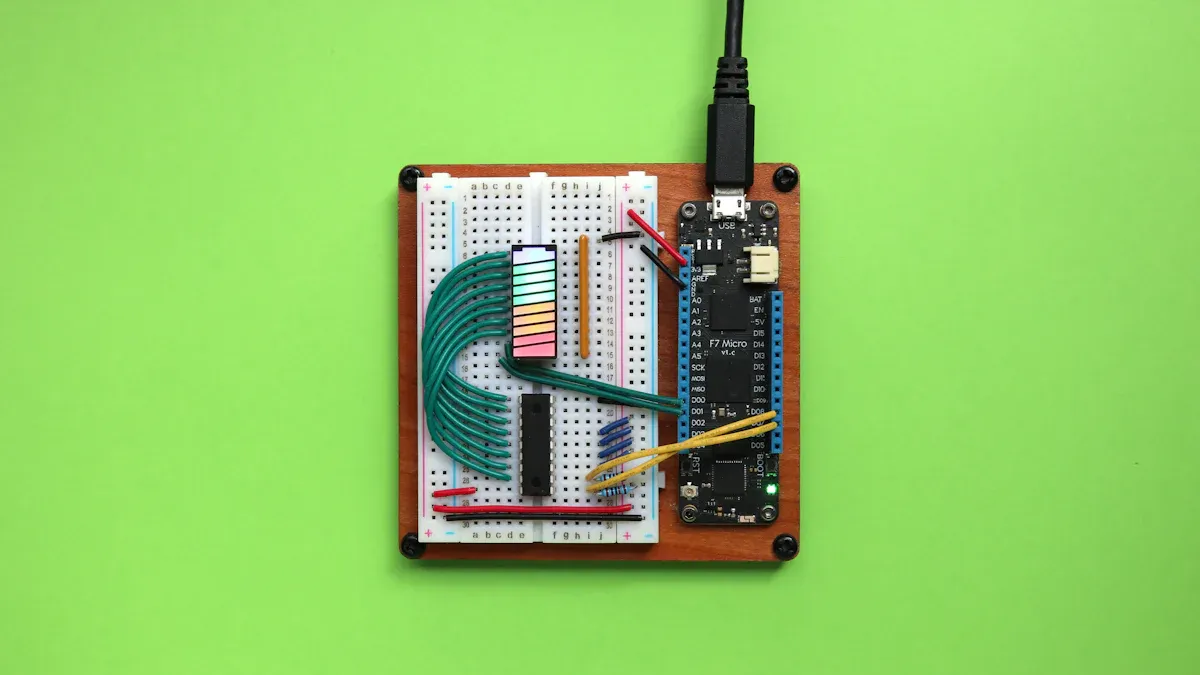
ICs help sensors work with data right away. These chips handle signals as soon as they come in. The microchip inside each sensor can clean, check, and study information fast. This quick work lets sensors respond to changes quickly. For example, a smart thermostat sensor can change the temperature as soon as it senses something new. Real-time data keeps systems safe and working well. ICs also help sensors share data with other devices right away. Many factories use sensors with ICs to watch machines and stop problems early. The IC makes sure real-time data moves easily from the sensor to the main system.
Tip: Real-time data helps smart sensors make fast choices and work better.
Energy Efficiency
ICs are important for saving energy. Sensors often need to use less power. The chip in each sensor has special parts to use less energy. Some ICs can turn off parts of the sensor when not needed. This helps sensors last longer on batteries. Saving energy also means less heat and less waste. ICs control power so sensors can work for a long time. Many smart home devices use sensors with energy-saving ICs. These chips help devices run longer without new batteries. ICs also save energy by using smart power control.
Miniaturization
ICs let sensors be small and light. The chip puts many jobs into one tiny part. This makes it easy to put sensors in small places, like a smartwatch or medical tool. Small sensors can go almost anywhere. IC packaging keeps the chip safe and helps it connect to other parts. Some ICs are made for special jobs. These are called application-specific ICs, or ASICs. ASICs help sensors work better and fit special shapes. Making sensors smaller also uses less material and costs less. ICs help smart sensors be easy to carry and use.
-
Miniaturization benefits:
-
Smaller sensor size
-
Lighter weight
-
Easier installation
-
Reliability
ICs make sensors strong and reliable. The chip inside each sensor can handle heat, cold, or shaking. IC packaging keeps the microchip safe from dust and water. Reliable sensors keep working even if things change. ICs also help sensors check if they are working right. Some chips can find and fix errors before they get worse. Application-specific ICs make sensors more reliable for their jobs. Reliable sensors mean fewer breaks and less time fixing things. ICs help sensors send real-time data without mistakes. This reliability is important for safety in cars, factories, and hospitals.
Note: Reliable ICs help sensors give real-time data and keep systems working well.
Application Examples
Environmental Monitoring
Smart sensors are important for watching the environment. They measure air, temperature, and humidity all the time. Cities use them to check pollution and warn people if air is bad. Farmers use sensors to see if soil is wet enough for crops. Forest rangers put sensors in forests to find fires early. The integrated circuit inside each sensor helps it send data fast. This quick work lets people fix problems before they get worse. Smart sensors also save energy, so they last longer in far places.
Smart sensors keep the environment safe by giving quick and correct data.
Industrial Automation
Factories need sensors to keep machines working well. These sensors check pressure, speed, and temperature in factories. If a sensor finds a problem, it tells the control system. The integrated circuit in the sensor handles this signal right away. This fast action helps stop accidents and keeps workers safe. Sensors also help machines use less energy and last longer. Smart sensors in factories can talk to each other and share data. This teamwork makes factories work better and break less.
-
Sensors in factories:
-
Watch machine health
-
Control robot arms
-
Track product quality
-
Consumer Devices
Smart devices use sensors to make life easier. Phones, watches, and home gadgets have many sensors inside. These sensors count steps, check heart rate, and change screen light. The integrated circuit in each sensor helps devices react fast and save battery. In 2024, the digital IC market was $176.50 billion. This shows how important these chips are for smart devices. Experts think the market will grow to $554.17 billion by 2037. That is a 9.2% growth each year. Almost everyone has a mobile phone, and there are over 7.2 billion smartphones used now. The table below gives more facts about smart devices and integrated circuits:
|
Statistic / Data Point |
Value / Description |
|---|---|
|
Global digital IC market size (2024) |
USD 176.50 billion |
|
Projected digital IC market size (2037) |
USD 554.17 billion |
|
CAGR (2025-2037) |
9.2% |
|
Mobile phone ownership worldwide |
97.7% of people |
|
Smartphones sold worldwide annually |
About 1.2 billion units |
|
Total smartphones in use worldwide |
Over 7.2 billion |
|
Consumer electronics segment share in digital IC market |
Biggest share because of small size, IoT, and need for good devices |
Smart sensors and integrated circuits help devices work better, use less power, and do more things.
Performance Impact
Accuracy
Integrated circuits help sensors give very exact results. The chip inside checks signals and takes away mistakes. This makes sure the data is right. Many sensors have special parts in the chip to keep numbers steady. For example, temperature sensors in hospitals must be very exact to keep people safe. When sensors use machine learning, the chip helps find patterns and make results better. Accurate sensors help people trust what they see.
Accurate sensors help doctors, engineers, and scientists make good choices every day.
Speed
Sensors must work fast for many jobs. The integrated circuit lets sensors handle data quickly. This speed helps sensors react to changes right away. For example, car sensors must spot danger and send alerts in seconds. Fast sensors also help in sports, where timing is important. The chip inside can do many jobs at once. This quick work gives fresh data for smart choices.
-
Fast sensors:
-
React to danger
-
Track movement
-
Help real-time systems
-
Scalability
Many systems use lots of sensors at once. Integrated circuits make it easy to add more sensors. The chip helps each sensor talk to the main system. This lets factories, farms, and cities use hundreds or thousands of sensors. When more sensors join, the system still works well. Machine learning uses data from many sensors to find trends and make guesses.
|
Area |
Number of Sensors |
Example Use |
|---|---|---|
|
Smart City |
10,000+ |
Traffic, pollution |
|
Factory |
1,000+ |
Machines, safety |
|
Farm |
500+ |
Soil, weather |
AI Integration
Sensors now work with machine learning and artificial intelligence. The integrated circuit helps sensors collect and send data for smart study. These chips can run simple machine learning models inside the sensor. This lets sensors make choices without waiting for a computer. For example, a sensor can spot a fire or leak and send an alert fast. AI integration helps sensors learn from new data and get better over time.
Sensors with AI can find problems, save energy, and keep people safe.
-
Integrated circuits help smart sensors by working with signals, changing data, controlling actions, and letting sensors talk to other devices.
-
These chips make sensors more exact, faster, and use less power.
-
ICs also let devices get smaller, work better, and use AI to be smarter.
Smart sensors keep getting better because of ICs. People will have safer, easier, and newer ways to use sensors as these chips change how sensing works in the future.
FAQ
What does an integrated circuit do in smart sensors?
An integrated circuit helps smart sensors handle data. The chip takes signals and makes them clean. It changes these signals into digital data. This lets sensors give real-time information for smart systems.
How does an IC improve energy efficiency in sensors?
The ic helps control how much power sensors use. The microchip can turn off some parts when not needed. This saves battery and helps smart devices last longer.
Why is real-time data important in intelligent sensing solutions?
Real-time data lets sensors act fast when things change. The microcontroller and microprocessor use this data to decide quickly. This helps keep systems safe and working well.
Can integrated circuits help with machine learning in sensors?
Yes, the chip inside a sensor can do simple machine learning. The microchip looks for patterns and learns from new data. This helps smart sensors get better over time.
What role does miniaturization play in smart devices?
Miniaturization lets the ic and microchip fit in small places. Smart devices get lighter and easier to use. The microcontroller and microprocessor still process all the data in these tiny sensors.