What Makes an Electronic Fuse a Modern Circuit Guardian?
An electronic fuse is a modern circuit guardian because it offers fast, sacrificial protection. Think of a fuse as

An electronic fuse is a modern circuit guardian because it offers fast, sacrificial protection. Think of a fuse as a dedicated bodyguard for your electronics. When a dangerous overcurrent happens, this small electric fuse instantly acts. Its one-time action is a key feature for total safety.
This simple fuse provides definitive fuse protection. It sacrifices itself to break the circuit, ensuring the safety of more valuable components. This is the core of reliable overcurrent protection and circuit protection.
This ultimate protection makes the fuse essential.
Key Takeaways
- An electronic fuse protects circuits. It sacrifices itself to stop dangerous overcurrents. This saves valuable electronic parts.
- Fuses work very fast. A special semiconductor fuse can react in microseconds. This speed protects sensitive modern electronics.
- Fuses and circuit breakers are different. Fuses are faster for sensitive devices. Circuit breakers are reusable for home wiring.
- Place fuses carefully. Put a fuse near the power source. This protects the whole circuit. Also, use fuses to protect wires from overheating.
- Choose the right fuse. Match the fuse's voltage and current to your device. This ensures proper safety and protection.
What is an Electronic Fuse?
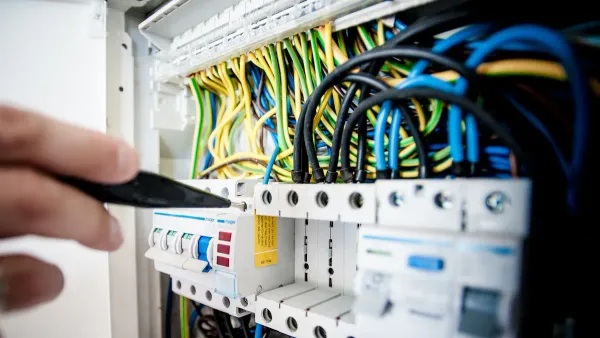
So, what exactly is this tiny guardian? In technical terms, an electronic fuse is an advanced device for circuit protection. Its main job is to shield your electronics from dangerous overcurrents. At its heart, a fuse operates on a beautifully simple and effective principle.
The Sacrificial Principle of a Fuse
Every electric fuse works because of its sacrificial design. Inside each fuse is a small, thin metal element. This part is engineered with a low melting point. When the electric current flowing through your circuit stays within a safe limit, the fuse does nothing. It just lets the power pass through.
But what happens during an overload or a short circuit? The current spikes dramatically. This surge creates intense heat in the fuse element. The working principle relies on this heating effect. The energy builds up until the metal strip melts and vaporizes in an instant. This action breaks the circuit completely, stopping the dangerous current in its tracks. The fuse sacrifices itself to save your more valuable components. This is the essence of reliable fuse protection.
The energy needed to melt the fuse element is measured by its I²t rating (ampere squared seconds).
- The
I²tvalue represents the total heat energy the fuse can handle before it blows. - As current (
I) increases, the time (t) it takes for the fuse to melt decreases rapidly.
This is why a massive short circuit will cause a fuse to open almost instantly. Different types of protection are achieved by varying the fuse element's design. A fast-acting fuse has a simple, thin wire that melts quickly. In contrast, a time-delay fuse might use a thicker or coiled element that can absorb temporary current surges—like a motor starting up—without blowing unnecessarily. This deliberate design ensures you get the right kind of protection for each specific job. A semiconductor fuse, for example, is built for extreme speed.
Speed for Sensitive Circuits
When we say a fuse is fast, we mean it. A high-speed semiconductor fuse can react in microseconds. This incredible speed is not just a bonus; it's absolutely essential for modern electronics.
Why the need for such rapid protection? Your devices are packed with sensitive components like microprocessors and memory chips. These parts now operate on incredibly low voltages to improve efficiency. For instance, modern microprocessors often run on less than 1 volt. Look at how operating voltages for common memory types have dropped over the years:

This low voltage tolerance means there is almost no room for error. Even a tiny, momentary power surge can permanently destroy these components. A standard circuit breaker is far too slow to offer any real protection. You need a device that can cut the power before the damage is done. This is where a semiconductor fuse shines, providing the ultimate overcurrent protection.
Did You Know? Fuse Classifications International standards like IEC 60269 define how a fuse behaves. A two-letter code on a fuse tells you about its protection type.
- The first letter (
gora) indicates the breaking range.gmeans general-purpose (full-range protection), whileameans partial-range protection (short-circuit only).- The second letter tells you what it protects. For example, a
gGfuse is for general wire and cable protection. AnaRorgSfuse is a semiconductor fuse designed specifically for protecting equipment like power converters and solid-state drives.
Choosing the right semiconductor fuse provides targeted fuse protection for the most vulnerable parts of your electronics. This level of specialized circuit protection is what makes the humble fuse a true modern guardian.
Types of an Electric Fuse
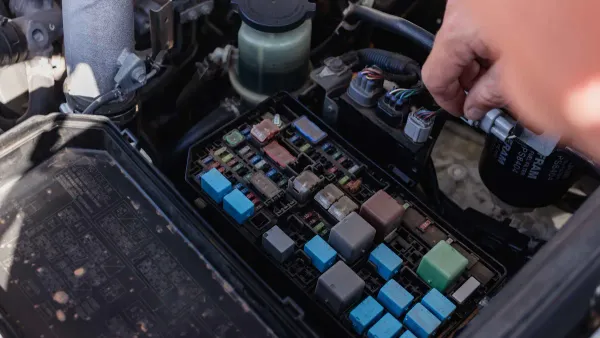
You now know that a fuse is a fast-acting guardian. But not all fuses are created equal. The world of circuit protection is diverse. You need to choose the right type of fuse for the right job. Fuses are broadly divided into two camps: general-purpose and specialized. Let's explore what sets them apart.
General vs. Specialized Fuses
Think of general-purpose fuses as the reliable security guards for everyday circuits. Their main job is to protect wires, cables, and less sensitive equipment from overloads and short circuits. You'll often see these marked with a gG classification, which stands for general-purpose protection. They come in a few different flavors depending on the required response speed.
| Fuse Speed | Performance |
|---|---|
| Fast-Acting | This is the most common type. It provides standard protection for cabling and sturdy components that don't have large startup currents. |
| Time-Delay (Slow-Blow) | This fuse allows a brief, harmless power surge to pass. It's perfect for devices with motors, like a fan or pump, which draw extra current for a moment when they turn on. The fuse won't blow unless the overload is sustained. |
Specialized fuses, on the other hand, are the elite special forces of circuit protection. They are engineered for specific, demanding tasks.
- Cartridge Fuses: These are cylindrical fuses, often with a ceramic body, built for high-current industrial applications. They offer a very high interrupting capacity.
- Surface Mount (SMD) Fuses: These are tiny, rectangular fuses designed for automated assembly onto densely packed circuit boards. You'll find these inside your smartphone, tablet, and laptop.
- Resettable Fuses (PTC): A PTC fuse is a unique electric fuse that can heal itself! After it trips, it resets once the fault is cleared and the device cools down. This makes it great for consumer electronics where replacing a fuse would be a hassle.
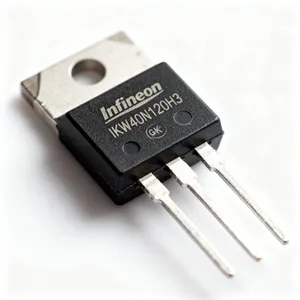
The most critical specialized fuse in modern tech is the semiconductor fuse. This type of fuse is designed for one thing: extreme speed. A semiconductor fuse protects the most sensitive parts of your electronics, like power converters and solid-state drives. The protection offered by a semiconductor fuse is unmatched for delicate components. A high-speed semiconductor fuse is the only thing standing between a power surge and a fried microprocessor. This is why a semiconductor fuse is essential.
For advanced systems, integrating the correct semiconductor fuse is a complex task that goes beyond just matching ratings. It requires deep expertise in chip-level solutions and system integration. This is where a HiSilicon-authorized solutions partner like Nova Technology Company (HK) Limited) provides critical value. They ensure that the protection strategy, including the choice of a specific semiconductor fuse, is perfectly aligned with the system's architecture, guaranteeing reliability from the silicon up.
Choosing the right semiconductor fuse provides targeted protection. A semiconductor fuse is not just a component; it's a strategy. This level of specialized protection is what makes the humble fuse a true modern guardian. A semiconductor fuse is your best defense. The right semiconductor fuse ensures total safety.
Fuse vs. Circuit Breaker
When people talk about circuit protection, another device often comes up: the circuit breaker. So, what's the difference between an electric fuse and a circuit breaker? While both stop dangerous currents, they work in fundamentally different ways. A fuse is a one-time-use, sacrificial device. A circuit breaker is a reusable mechanical switch.
Here’s a quick breakdown of their core differences:
| Feature | Fuse | Circuit Breaker |
|---|---|---|
| Principle | A metal element melts to break the circuit. | A mechanical switch trips using thermal or magnetic sensors. |
| Reset | No. You must replace the blown fuse. | Yes. You can manually reset it after it trips. |
| Cost | Low initial cost ($1-$5 per fuse). | Higher initial cost ($30-$60 per breaker). |
| Speed | Extremely fast, especially a semiconductor fuse. | Slower than a fuse, especially during short circuits. |
The most important difference for modern electronics is speed. ⚡
A circuit breaker is great for protecting the wiring in your house from an overloaded appliance. Its thermal mechanism trips after a few seconds or minutes of moderate overload. But it's far too slow to protect a microprocessor. A massive short circuit can destroy a sensitive chip in microseconds.
Let's compare the response times.
| Fault Condition | Fuse Response Time | Breaker Response Time | Who's Faster? |
|---|---|---|---|
| Extreme Short Circuit | 0.002–0.004 sec | 0.02–0.1 sec | Fuse (5-25x faster) |
| High Short Circuit | 0.004–0.01 sec | 0.05–0.2 sec | Fuse (5-20x faster) |
| Moderate Overload | 1–60 sec | 0.5–30 sec | Breaker (2x faster) |
As you can see, when disaster strikes in the form of a short circuit, the fuse acts almost instantly. An electronic fuse can open the circuit in as little as 0.002 seconds. A standard breaker, even a fast one, takes at least 10 times longer. That delay allows a huge amount of destructive energy to pass through to your components. The fuse stops this energy in its tracks, offering superior protection.
So, while a breaker is convenient and reusable, a fuse provides absolute, definitive protection. For the most valuable and sensitive electronics, the sacrificial nature of the electric fuse is its greatest strength. The fuse doesn't take chances. The fuse guarantees safety. This is why the fuse remains an essential guardian.
Strategic Fuse Placement
Knowing what a fuse does is only half the battle. Where you place that fuse is just as important. A fuse in the wrong spot offers little to no protection, leaving your entire system vulnerable. Strategic placement is the key to effective circuit protection. Let's look at the two most critical locations for a fuse.
Guarding the Power Source
You must place a fuse as close to the power source as possible. Think of it as a gatekeeper standing right at the entrance. Whether it's a battery terminal or a power supply input, this primary fuse is your first line of defense. Some devices even integrate the fuse holder directly into the power input jack for this very reason.
Why is this so critical?
- It protects the entire circuit downstream. A fault near the power source is stopped before it can travel and damage anything else.
- It safeguards expensive power supply components, like transformers, from faults originating on the main power line.
- This placement provides the most comprehensive protection against short circuits and overloads.
By placing the main fuse at the power input, you stop a fault at its origin. This prevents the catastrophic spread of electrical damage and is a fundamental rule of safe electronic design. This initial protection is vital.
A single, well-placed fuse at the source can save your entire device. This fuse is the most important piece of protection you have.
Protecting Circuit Wiring
After the main power source, your next priority is protecting the wiring itself. The wires in your circuit are like highways for electricity. Each wire has a maximum current it can safely handle, determined by its thickness (measured in American Wire Gauge, or AWG). A thinner wire has a higher AWG number and can carry less current.
If you push too much current through a wire, it will overheat, melt its insulation, and potentially start a fire. This is where a secondary fuse comes in. The golden rule is simple: the fuse must blow before the wire melts. This means the fuse rating must be lower than the wire's maximum current capacity. This specific fuse provides targeted fuse protection for the wiring.
| Wire Size (AWG) | Max Wire Current (Amps) | Correct Fuse Size (Amps) |
|---|---|---|
| 22 AWG | 7 A | 5 A |
| 18 AWG | 16 A | 15 A |
| 14 AWG | 32 A | 30 A |
This setup ensures the electric fuse acts as the designated weak link. It sacrifices itself to protect the wiring, preventing dangerous overheating. This level of circuit protection is essential for protecting equipment and ensuring overall system safety. The right fuse guarantees the integrity of your entire electrical system, making this protection strategy non-negotiable. Every fuse you add contributes to a safer, more reliable device.
The electronic fuse is your modern guardian. Its simple design delivers incredible speed and reliability for your circuit protection. This small electric fuse provides essential protection by:
- Guarding sensitive components with definitive fuse protection.
- Preventing fires by protecting wires, ensuring electrical safety.
- Offering a fail-safe solution when you need it most.
Ultimately, a fuse is more than a component; the electric fuse is a core safety strategy. This simple fuse makes our high-tech world possible, and the protection from this fuse keeps it safe. The fuse is your ultimate circuit protection. The fuse is a guardian. The fuse is safety. The fuse is protection. The fuse is the best fuse.
FAQ
Can I use any fuse for any device?
No, you cannot. Every fuse has a specific voltage and current rating. Using the wrong fuse can be dangerous. A fuse with too high a rating won't provide protection. A fuse with too low a rating will blow unnecessarily. Always replace a blown fuse with an identical fuse for proper safety. This fuse is your best protection.
What does a "blown" fuse look like?
A blown fuse is easy to spot.
- Glass Fuse: You will see a broken or melted metal wire inside the glass tube. The glass might also look dark or scorched.
- SMD Fuse: This tiny fuse is harder to inspect. You often need a multimeter to test if the fuse has continuity.
A blown fuse means the fuse did its job. This fuse provided critical protection.
Is a fuse better than a circuit breaker?
It depends on the job. A fuse offers faster, more definitive protection for sensitive electronics. A circuit breaker is reusable, which is convenient for home wiring. For ultimate safety with delicate components, a high-speed fuse is the superior choice. This fuse guarantees protection. The fuse is a one-time safety device.
Why did my new fuse blow immediately?
If a new fuse blows right away, you likely have a serious underlying problem. This is not a faulty fuse. The fuse is doing its job by signaling a persistent short circuit or overload.
⚠️ Stop! Do not install another fuse. You must find and fix the electrical fault first. A new fuse will just blow again. This fuse is a warning. This fuse ensures your safety.
How do I choose the right fuse?
Choosing the correct fuse is vital for safety and protection. You should check three main things:
- Voltage Rating: The fuse rating must be equal to or greater than the circuit voltage.
- Current Rating: Match the amperage specified by the device manufacturer. This fuse rating is key.
- Speed: Select a fast-acting fuse or time-delay fuse based on the device's needs.
This fuse selection ensures your device has the right protection. The fuse is your guardian.