What Drives PCB Assembly Costs and How It Affects Your Electronics Manufacturing Budget
PCB assembly costs depend on several key factors. Design complexity, board size, layer count, materials, and component choice all affect the final price. Production volume, lead time, and quality demands also play a role. Shipping and hidden costs can surprise many teams. Understanding these factors helps companies control price and meet both budget and product requirements. Smart PCB decisions allow teams to balance cost with quality and ensure project success.
PCB assembly costs depend on several key factors. Design complexity, board size, layer count, materials, and component choice all affect the final price. Production volume, lead time, and quality demands also play a role. Shipping and hidden costs can surprise many teams. Understanding these factors helps companies control price and meet both budget and product requirements. Smart PCB decisions allow teams to balance cost with quality and ensure project success.
Key Takeaways
-
PCB assembly costs depend on design complexity, board size, materials, and production volume, so understanding these helps control your budget.
-
Choosing standard components and simplifying designs can lower costs without sacrificing quality.
-
Larger batch sizes reduce the cost per board by spreading fixed setup expenses over more units.
-
Hidden costs like shipping, customs, and rework can add up, so plan ahead to avoid surprises.
-
Strong collaboration with suppliers and investing in quality control improve reliability and reduce long-term expenses.
Factors That Influence Prices
Design Complexity
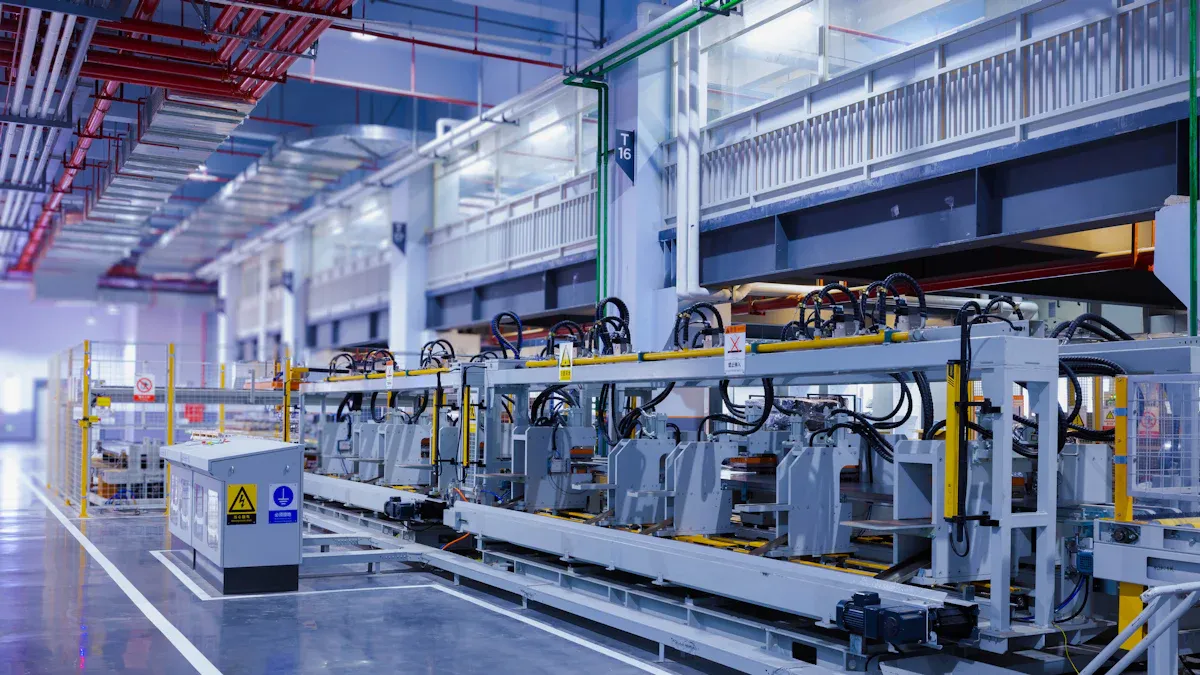
Design complexity stands as one of the main factors that influence prices in PCB assembly. When engineers create intricate layouts or include advanced features, the manufacturing process becomes more demanding. Circuit complexity often requires specialized skills and equipment, which can increase the price. More complex designs may also need additional testing and quality checks, further impacting the budget.
Engineering Collaboration and Quality Control
Collaboration with experienced engineers, especially those from Fortune 500 companies, helps ensure advanced design maturity and strict quality control. This partnership allows manufacturers to meet high standards and deliver reliable results. Quality control at every stage reduces the risk of defects, which can save costs in the long run.
Board Size and Layers
Board size and the number of layers are critical factors that influence prices. Larger boards use more materials and require longer processing times. The number of layers directly affects the cost, as each additional layer increases manufacturing complexity. The table below summarizes how these variables impact the price:
|
Characteristic |
Impact on Cost |
Explanation |
|---|---|---|
|
Board Size |
Increases cost with size |
Larger boards use more materials and take longer to process. |
|
Layer Count |
Major cost driver |
More layers mean higher complexity and more precise fabrication steps. |
|
Reduces per-unit cost |
Higher volumes lower the cost per board due to economies of scale. |
Manufacturers must balance the need for performance with budget constraints. High-layer-count PCBs offer better circuit density but come with increased costs and longer lead times.
Component Selection
Component selection is another set of factors that influence prices. The type and number of materials and components, as well as their packaging and assembly method, all play a role. For example, boards with many small or complex parts require more precise assembly and inspection, which raises the price. Double-sided assembly and advanced soldering techniques can also add to the cost.
Robust Component Sourcing and Quality Assurance
A reliable supply chain for materials and components ensures consistent quality and reduces the risk of delays. Long-term partnerships with trusted suppliers help maintain high standards. Membership in industry organizations, such as ERAI, guarantees the authenticity of components. These practices give customers confidence in both the integrity of the materials and the final product.
PCB Manufacturing and Assembly
Material Choices
Material selection plays a major role in pcb manufacturing and assembly. Manufacturers often choose between FR4, CEM-1, and aluminum substrates. FR4 remains the most cost-effective and widely used option. Aluminum substrates cost more because they offer better thermal performance. Polyimide materials provide high heat resistance and flexibility, but increase pcb manufacturing cost. Copper foil thickness also affects manufacturing costs. Thicker copper supports higher currents but raises production expenses. Manufacturers like Versa Electronics help reduce manufacturing cost by recommending alternative materials that maintain quality.
-
Common substrate materials:
-
FR4 (cost-effective, standard)
-
Aluminum (higher cost, better heat dissipation)
-
Polyimide (premium, flexible, heat-resistant)
-
Soldering and Assembly Methods
Soldering and assembly methods impact pcb manufacturing cost and overall manufacturing costs. Surface Mount Technology (SMT) uses automation and suits high-volume pcb manufacturing. Through-Hole Technology (THT) requires more manual labor and fits applications needing mechanical strength. SMT reduces labor intensity and manufacturing cost, especially for large orders. All-SMD assembly can cost up to 50% more than through-hole assembly. BGA assembly costs about 20% more than other SMD components. Double-sided assembly increases manufacturing costs because the board passes through the assembly line twice. Automated assembly lowers manufacturing costs compared to manual processes.
|
Aspect |
SMT (Surface Mount) |
THT (Through-Hole) |
|---|---|---|
|
Cost Efficiency |
High, automated |
Lower, more manual labor |
|
Labor Intensity |
Low |
High |
|
Typical Cost per Board |
Higher than SMT |
Ordering components in bulk reduces price per component due to volume discounts.
Surface Finish Options
Surface finish options affect both pcb manufacturing cost and product reliability. Hard gold finishes cost the most because of high gold content. Nickel-less ENIG Premium and organic barrier finishes use less gold, lowering manufacturing costs while keeping signal integrity. ENIG offers strong corrosion resistance but increases manufacturing cost. HASL is more economical but may cause soldering issues in fine-pitch designs. OSP is cost-effective and eco-friendly but has a shorter shelf life. Manufacturers must balance performance, reliability, and manufacturing costs when choosing a surface finish. Optimizing design and batching orders can help manage pcb manufacturing and assembly expenses.
PCB Assembly Costs
Bill of Materials (BOM)
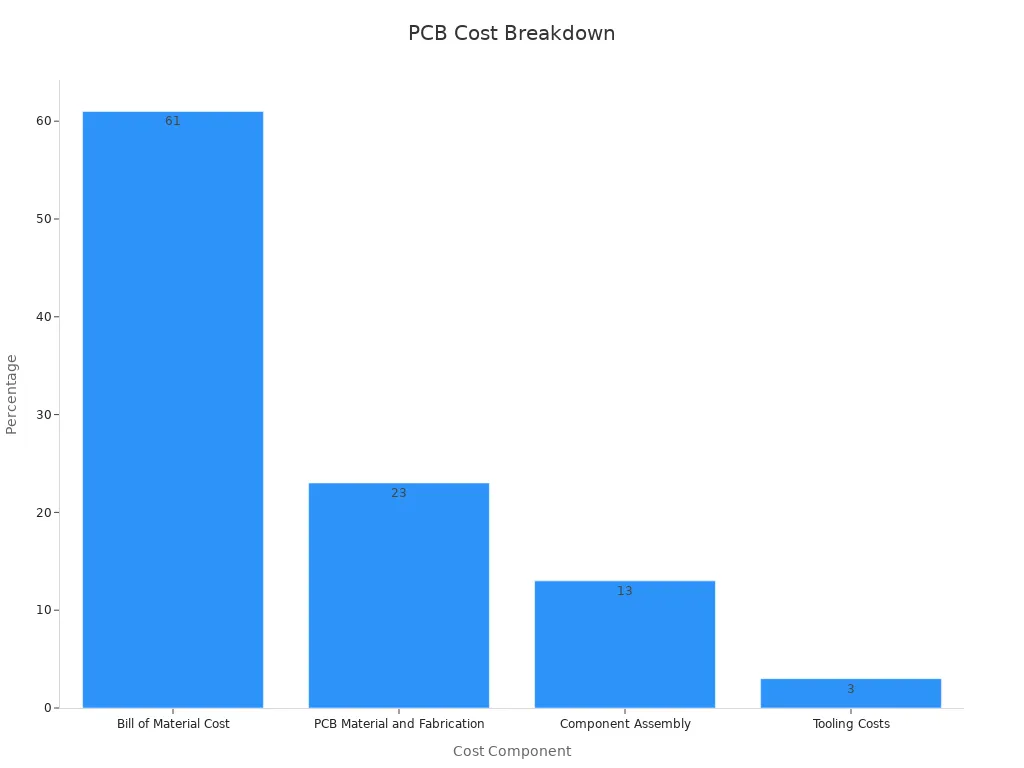
The Bill of Materials (BOM) forms the foundation of pcb assembly costs. Every electronic device requires a unique set of components, such as resistors, capacitors, integrated circuits, and connectors. The type, quantity, and sourcing channel for each part directly influence the pcb assembly cost. For example, resistors may cost between $0.10 and $1 each, while integrated circuits can range from $1 to $10 per unit. Connectors add another $0.10 to $5 per piece. Sourcing components in bulk often reduces the average assembly price, especially for high-volume projects.
Component costs can fluctuate due to market demand, supply chain disruptions, or the need for specialized parts. Materials like solder paste also contribute to the overall cost, with prices ranging from $20 to $80 per syringe or jar. The BOM must account for every item, including small passive parts and specialty chips. A well-optimized BOM helps control the cost structure and ensures reliable assembly.
Tip: Engineers can lower pcb assembly costs by selecting standard, widely available components and avoiding obsolete or hard-to-source parts.
Labor and Overhead
Labor and overhead represent significant portions of pcb assembly costs. Skilled technicians assemble and inspect each board, with labor rates ranging from $15 to $50 per hour. The complexity of the assembly process, such as double-sided mounting or fine-pitch components, increases labor time and expense. Overhead costs, including rent, utilities, equipment maintenance, and depreciation, typically account for 20% to 40% of the total cost.
|
Production Volume |
Cost Per Unit (USD) |
|---|---|
|
1-10 units |
$50 - $200 |
|
10-100 units |
$20 - $100 |
|
100-1000 units |
$10 - $50 |
|
1000-10000 units |
$5 - $30 |
|
10000+ units |
$2 - $20 |
This table shows how the cost per unit drops as production volume increases. High-volume orders benefit from economies of scale, which reduce both labor and overhead costs per board. Small batch runs, on the other hand, face higher costs due to setup time and less efficient use of resources.
-
Overhead costs include:
-
Rent and facility expenses
-
Utilities and energy consumption
-
Equipment maintenance and depreciation
-
Testing and Quality Control
Testing and quality control ensure that every assembled board meets performance and reliability standards. These processes add to pcb assembly costs but help prevent costly failures in the field. Manufacturers use several inspection methods, such as Automated Optical Inspection (AOI), X-ray analysis, In-Circuit Testing (ICT), and functional testing. Each method checks for defects, soldering issues, or faulty components.
Testing and inspection costs range from $0.10 to $2 per board, depending on the complexity and required thoroughness. The cost structure also includes investments in test equipment, technician training, and ongoing maintenance. Companies track quality metrics like defect rates, first-pass yield, and customer satisfaction to measure the effectiveness of their testing and quality control programs.
|
Metric Category |
Metrics / Factors |
|---|---|
|
Quality Metrics |
Defect rate tracking, First-pass yield, Reliability testing, Customer satisfaction |
|
Cost-Related Factors |
Equipment costs, Training, Maintenance, Productivity impact, ROI |
Note: Keeping up with new testing technologies requires regular investment in equipment and staff training. This ongoing commitment helps maintain high product quality and reduces long-term costs.
PCB assembly costs reflect the combined impact of BOM, labor, overhead, and testing and quality control. Each factor shapes the final price and influences the average assembly price for any project.
Production Volume and Lead Time
Batch Size
Batch size plays a major role in determining production costs for PCB assembly. When a manufacturer produces only a few units, the setup and tooling costs get divided among those units. This makes the price per board much higher. For example, a single prototype may cost $10 to $15 per unit, while a batch of ten units can lower the cost per unit to $5 to $8. Larger batch sizes allow companies to spread fixed costs over more boards, which reduces the price for each one.
Manufacturers often see the following effects as batch size increases:
-
Prototype runs have higher per-unit setup costs because there are fewer units.
-
Bulk pricing discounts start to apply only in high-volume production.
-
Tooling and programming costs remain fixed, so larger batches lower the per-unit cost.
-
Minimum order quantities and lead times affect both cost and planning.
-
Economies of scale help optimize processes and reduce production costs as quantity and production volume rise.
-
Larger batch sizes reduce the cost per unit by using economies of scale.
-
Increasing quantity and production volume can lower costs without reducing quality.
Choosing the right batch size helps companies control their production costs and meet their budget goals.
Expedited Orders
Lead time also affects the final price of PCB assembly. Customers who need boards quickly often pay a premium for expedited orders. Manufacturers must adjust their schedules, pay overtime, or use faster shipping methods to meet tight deadlines. These changes increase production costs and can impact the overall budget.
Shorter lead times may also limit the ability to source components at the best price. When time is short, companies may need to buy parts from more expensive suppliers or pay extra for rush shipping. Planning ahead and allowing for standard lead times helps keep production costs and price under control.
Tip: Companies can save money by planning production schedules early and avoiding last-minute orders.
Hidden and Indirect Costs
Hidden and indirect costs can surprise many companies during electronics manufacturing. These expenses often go unnoticed at the start but can have a big impact on the final budget. Teams must plan for these extra charges to avoid going over budget.
Shipping and Logistics
Shipping and logistics play a major role in the total cost of PCB assembly. The price depends on several factors:
-
Package weight and size
-
Shipping method, such as express couriers or standard air freight
-
Destination country
-
Delivery urgency
Shipping costs can add a lot to the unit price of each board. For example, sending PCBs to the USA often involves both international and domestic delivery. Express shipping arrives in 3-7 days but costs more, while postal services take 10-20 days at a lower price. Companies can save money by combining several orders into one shipment. Choosing the right shipping method based on urgency and budget helps control pcb assembly costs. Always check shipping prices before placing an order, as they can change based on the method and destination.
Customs and Import Fees
Customs and import fees also affect the total cost. Tariffs are taxes on imported goods, usually set as a percentage of the shipment’s value. For instance, a 10% tariff on a $15,000 shipment adds $1,500 to the bill. These fees increase the landed cost and can change without warning. Tariffs depend on the product type, where it comes from, and current trade agreements. Companies must track these changes to avoid budget surprises.
Prototyping and Rework
Prototyping and rework are other hidden costs that can impact projects. Making prototypes helps teams find design problems early, but each prototype adds to the total cost. If a board has errors, rework may be needed, which means extra labor and materials. Part shortages can also cause delays and force teams to pay more for quick replacements. Planning for these risks helps keep projects on track and within budget.
Note: Hidden costs like shipping, customs, prototyping, and rework can quickly add up. Teams should include them in their project plans to avoid unexpected expenses.
Cost of PCB Assembly: Control Strategies
Design Optimization
Design optimization stands as one of the most effective ways to manage the cost of pcb assembly. Engineers can reduce expenses by simplifying circuit layouts, minimizing the number of layers, and selecting standard components. For example, a consumer electronics company reduced PCB layers from six to four and used panelization for batch production. These changes led to a 22% reduction in PCB production costs while maintaining product reliability. In industrial control systems, using hybrid materials and rigorous design-for-manufacturability processes cut material costs by 18% and improved manufacturing yield by 15%. Regular review of the Bill of Materials (BOM) and design choices helps teams identify savings opportunities and avoid unnecessary complexity.
|
Strategy |
Description |
Cost Impact |
|---|---|---|
|
Fewer, simpler components |
Lower purchase and assembly expenses |
|
|
Reduce Layer Count |
Fewer PCB layers |
Saves on materials and complexity |
|
Use Standard Components |
Common, widely available parts |
Reduces component and supply costs |
|
Minimize PCB Size and Shape |
Smaller, simpler boards |
Less material and processing time |
Tip: Continuous design optimization supports long-term cost-control strategies and improves project outcomes.
Standardization and DFA
Standardization and Design-for-Assembly (DFA) both play key roles in reducing the cost of pcb assembly. Standardizing PCB footprints allows manufacturers to reuse placement equipment and lower tooling expenses. DFA strategies, such as grouping components and providing clear markings, make assembly faster and less error-prone. Using interchangeable hardware like snap-fits and press-fits further streamlines the process. Industry studies show that using niche parts can increase costs by up to 15%. Early analysis of assembly challenges during the design phase helps prevent costly rework and supports efficient manufacturing.
-
Standardized components simplify inventory management and support automation.
-
DFA reduces assembly time by consolidating functions and simplifying attachment methods.
-
Comprehensive documentation, including clear assembly drawings and BOMs, prevents errors and supports smooth workflows.
Supplier Collaboration
Strong supplier collaboration helps companies control the cost of pcb assembly. Working closely with manufacturers during the design phase allows teams to optimize stackup, routing, and material choices. This approach can reduce board costs by 15-30%. Using design software and panelization tools with supplier input lowers material waste and setup costs by up to 25% per order. Managing lead times together helps avoid rush fees, saving 10-30% per order. Educated customers who communicate clearly with suppliers make better decisions, reduce errors, and prevent delays.
|
Cost-Saving Mechanism |
Description |
Estimated Savings (%) |
|---|---|---|
|
Optimized PCB Stackup and Routing |
Reduce layer count and material usage through collaboration |
|
|
Reduce material waste and setup costs with supplier input |
10-25% per order |
|
|
Manage Lead Times Effectively |
Plan schedules to avoid rush fees |
10-30% per order |
Note: Ongoing collaboration with suppliers ensures continuous improvement and supports effective cost-control strategies.
PCB Manufacturing Cost: Summary
Balancing Cost and Quality
Balancing pcb manufacturing cost with product quality remains a top priority for electronics manufacturers. Companies must look beyond the initial fabrication price and consider the total cost of ownership. This includes expenses for rework, scrap, testing, repair, and field service. Material selection plays a key role in both cost and quality. Using standard laminates like FR-4 helps control manufacturing cost and reduces risks linked to premium materials. Layer count also impacts both manufacturing costs and reliability. Too many layers increase manufacturing cost, while too few can cause malfunctions.
Manufacturers often face trade-offs when choosing between low-cost suppliers and those with proven quality systems. Lowest bid fabricators may seem attractive, but they can lead to higher long-term manufacturing costs due to failures, re-spins, and delays. Investing in quality control systems, such as automated inspections and rigorous testing, reduces failure rates and rework costs. Companies that focus on robust material selection, continuous staff training, and process improvement produce high-quality pcbs while managing manufacturing cost.
Tip: Investing in quality at every stage of pcb manufacturing lowers total manufacturing costs and improves product reliability.
Key factors that illustrate the balance between cost and quality:
-
Total cost of ownership includes fabrication, rework, testing, and field service.
-
Layer count and material selection affect both cost and reliability.
-
Quality control systems reduce failure rates and associated costs.
-
Upfront investment in quality reduces long-term manufacturing costs.
Key Takeaways
Manufacturers can manage pcb manufacturing cost by understanding the main cost drivers and making informed decisions at each step. The following table summarizes the most important factors:
|
Cost Driver Category |
Key Factors and Description |
Relative Impact / Notes |
|---|---|---|
|
Material Costs |
Substrate type, board size, layer count |
Most significant after order volume; material type greatly affects pcb manufacturing cost |
|
Board Size and Layers |
Dimensions, layer count, copper thickness |
Larger size and more layers increase manufacturing costs |
|
Process Costs |
Drilling, lamination, soldermask, inspection |
Higher complexity increases manufacturing cost |
|
Assembly Process Costs |
Soldering, placement, testing |
Labor and process complexity drive manufacturing costs |
|
Skilled labor, regional cost differences, supply chain logistics |
Labor cost varies by region; supply chain resilience affects manufacturing cost |
Manufacturers should:
-
Use standard components and panelized designs to improve efficiency.
-
Invest in quality assurance and reliability testing to avoid costly failures.
-
Build strong supplier relationships to optimize supply chain and reduce risk.
-
Continuously train staff and upgrade automation to maintain quality while controlling manufacturing costs.
By following these strategies, companies can achieve a balance between pcb manufacturing cost and product quality, ensuring reliable and cost-effective manufacturing outcomes.
PCB assembly costs depend on many factors, such as design complexity, board size, materials, and production volume. Hidden costs like shipping and rework can also affect the budget. Companies that understand these drivers make better decisions and avoid surprises.
Tip: Teams should review costs often, choose standard parts, and keep strong supplier communication. Ongoing optimization helps balance quality and cost for every project.
FAQ
What is the biggest factor affecting PCB assembly cost?
Material selection and board complexity usually have the largest impact. Larger boards with more layers and advanced materials increase costs. Companies can manage expenses by choosing standard materials and simple designs.
How can teams reduce hidden costs in PCB assembly?
Teams should plan for shipping, customs, and possible rework. They can ask suppliers for detailed quotes and review all project steps. Early planning helps avoid last-minute expenses.
Why does production volume change the price per board?
Manufacturers spread setup and tooling costs over more units in large batches. This lowers the price per board. Small runs cost more because each board carries a bigger share of these fixed costs.
Do faster lead times always increase PCB assembly costs?
Rush orders often require overtime, premium shipping, or quick sourcing of parts. These actions raise costs. Planning ahead allows teams to use standard schedules and save money.