Understanding Application Specific Integrated Circuits (ASICs)
Application specific integrated circuits (ASICs) are special chips made for certain jobs. They work faster and better than regular chips for one task. For example, ASICs are used in smartphones, gaming consoles, and crypto mining machines.
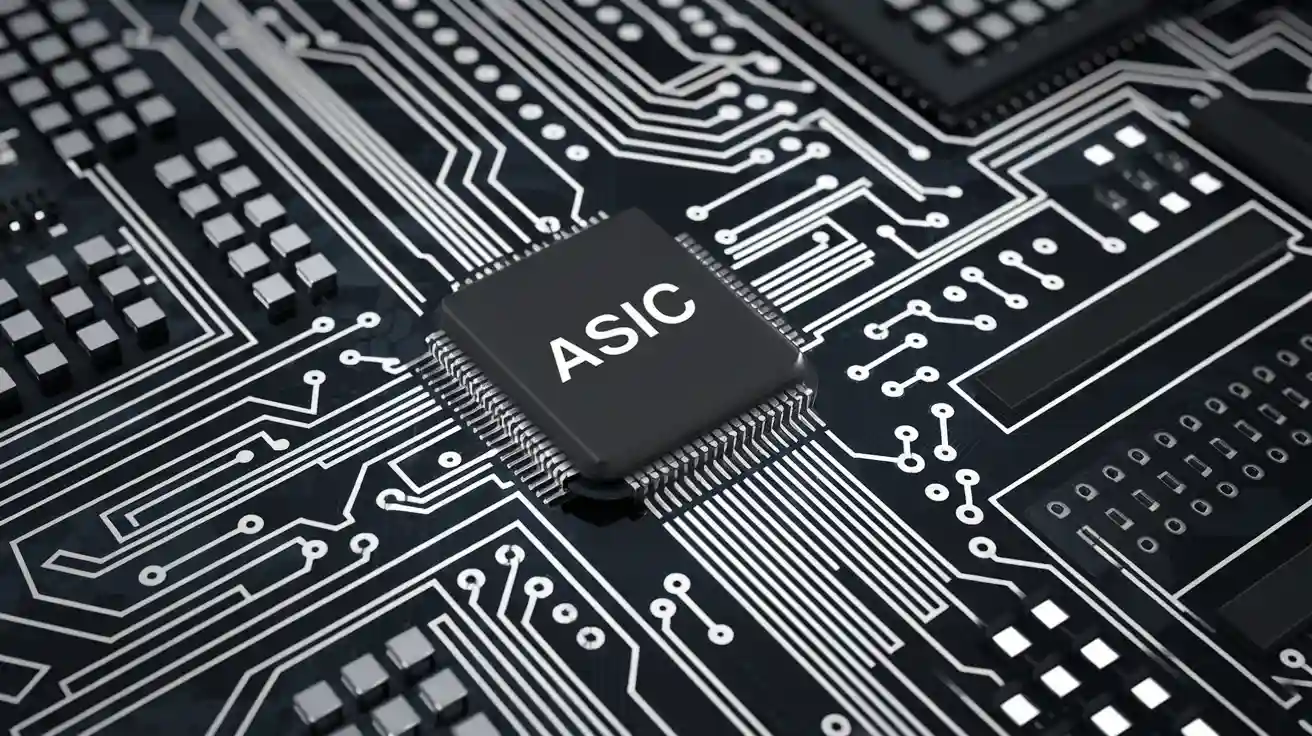
Application specific integrated circuits (ASICs) are special chips made for certain jobs. They work faster and better than regular chips for one task. For example, ASICs are used in smartphones, gaming consoles, and crypto mining machines.
These chips are becoming more important in industries today. In 2024, the global ASIC market was worth $17.65 billion. Experts think it will grow by 6.1% each year from 2025 to 2030. Semi-custom ASICs, a common type, made up about 49.9% of the market in 2024. By 2025, 75% of mobile phone users may have smartphones. ASICs will keep helping mobile technology improve.
Key Takeaways
-
ASICs are special chips made for certain tasks. They work faster and better than regular chips.
-
These chips are important in things like phones, internet systems, and mining cryptocurrency. They save energy and work well.
-
There are three kinds of ASICs: full custom, semi-custom, and programmable. Each type has different uses and abilities.
-
ASICs do a great job at specific tasks but cost a lot to make. Once made, they can't change, so they don't work well in new situations.
-
Knowing what ASICs can and can't do helps you pick the right one for your project. This makes sure it works well for what you need.
What Are Application Specific Integrated Circuits?
Definition and Purpose
An application specific integrated circuit is a chip made for one job. It is not like general-purpose chips that do many tasks. These chips are great at doing one thing really well. For example, they help cameras in smartphones take better pictures. They also help network switches move data quickly or electric cars read sensor information fast.
These chips are very important in today's technology. Their designs are made for specific uses, which makes them work better. They use less power and process information faster. They are used in robots in factories or in cars to help drivers with advanced systems. ASICs are key to many new technologies.
Key Features
ASIC chips have special features that make them different from other chips:
-
Custom Design: Each chip is made for one task to work its best. For example, in health tools like ECG monitors, they process signals accurately.
-
High Efficiency: These chips use less power because they focus on one job. This makes them great for devices like smartwatches and phones.
-
Compact Size: They are smaller than other chips, so devices can be lighter and smaller.
-
Reliability: They are made for specific tasks, so they last longer. For example, satellites use them for sending signals and fixing errors.
These features make ASICs very useful in areas like healthcare, communication, and factories.
Differences from General-Purpose Chips
You might wonder how ASIC chips are different from general-purpose chips like CPUs. The main difference is their design and what they do. General-purpose chips can do many things but are slower and less efficient for specific tasks.
Here’s a simple comparison:
|
Feature |
ASIC Chips |
General-Purpose Chips |
|---|---|---|
|
Purpose |
Made for one job |
Can do many jobs |
|
Performance |
Works faster and better for one task |
Works okay for many tasks |
|
Power Consumption |
Uses less power |
Uses more power |
|
Flexibility |
Does one thing only |
Can do many things |
|
Cost |
Costs more to make but cheaper per chip |
Costs less to make but pricier per chip |
For example, ASIC chips are better for cryptocurrency mining because they are made for it. General-purpose chips like GPUs can do mining but are slower. General-purpose chips are good for tasks that need flexibility.
Knowing these differences shows why ASICs are chosen for jobs needing speed, accuracy, and reliability.
How Application Specific Integrated Circuits Work
Design Process
The ASIC design process starts by deciding what the chip will do. Engineers set performance goals to match the chip's purpose. Next, they draw a plan showing how the chip handles data. This plan is called a schematic and shows the chip's logic. After that, they create a layout to arrange tiny parts on the silicon wafer.
Each step in the asic design flow is important. Every phase builds on the one before it. For example, in smartphones, chips are designed to improve cameras or save battery. Following this process ensures the chip works well for its job.
Fabrication and Manufacturing
The ASIC fabrication process turns the design into a real chip. First, photolithography uses light to copy the layout onto a silicon wafer. Then, chemicals remove extra material and add layers to make connections. Finally, the wafer is cut into small chips, each being an ASIC.
This process needs to be very exact. Each step ensures the chip works correctly. For example, car chips must survive heat and shaking. Careful manufacturing makes ASICs strong and reliable for tough jobs.
Optimization for Specific Applications
Optimization makes the chip work as well as possible. Engineers adjust the design to use less power, work faster, or be more accurate. For example, cryptocurrency mining chips are made to solve hard math problems quickly. Healthcare chips are adjusted to read signals very precisely.
Customizing the chip for its job ensures top performance. This step is key in the asic design process. It decides how well the chip does its task. Whether it's for a smartwatch or a satellite, optimization makes a good chip even better.
Tip: Sometimes, you must choose between speed and saving power. The choice depends on what the chip is used for.
Types of Application Specific Integrated Circuits

There are three main types of ASICs. Each type is made for different needs. These needs depend on cost, performance, and design options. Let’s look at these types to see how they work.
Full Custom ASICs
Full custom ASICs are the most specialized chips. They are built completely from scratch for one job. Engineers design every part, like the logic gates and layout. These chips work the best and use power efficiently. For example, they are used in medical imaging tools or space equipment.
Making full custom ASICs costs a lot of money and time. Skilled engineers and advanced tools are needed. Even though they are expensive, they are worth it for top performance.
Semi-Custom ASICs
Semi-custom ASICs are a mix of custom design and lower cost. They use pre-made libraries or templates to save time. There are two types of semi-custom ASICs:
-
Standard Cell-based ASICs: These chips use pre-designed parts from a library. This makes them cheaper and faster to make. They are common in electronics like phones.
-
Gate Array-based ASICs: These chips have a grid of gates that aren’t connected. Engineers connect them during the last steps of production. This method is quick and good for tight deadlines.
Semi-custom ASICs are flexible and affordable. They are used in cars and communication devices.
Programmable ASICs
Programmable ASICs, also called FPGAs, can be changed after they are made. You can reprogram them to do different tasks. This makes them great for testing or projects that might change. For example, labs and research centers use them.
Programmable ASICs are flexible but less efficient. They use more power and don’t perform as well as other types.
Here’s a simple comparison of the types of ASICs:
|
Type |
Description |
|---|---|
|
Full-Custom ASIC |
Designed from scratch for one job, offers the best performance and efficiency. |
|
Semi-Custom ASIC |
Combines customization with lower cost, includes Standard Cell-based and Gate Array-based types. |
|
Standard Cell-based |
Uses pre-made parts for faster design and lower costs. |
|
Gate Array-based |
Has a fixed grid of gates connected during production for quicker results. |
Knowing these types helps you pick the right ASIC. Whether you need speed, low cost, or flexibility, there’s a chip for your needs.
Applications of Application Specific Integrated Circuits
Consumer Electronics
You use ASIC chips daily in gadgets like phones and watches. These chips make devices work faster and better. For example, in phones, they help cameras take clearer pictures quickly. In smartwatches, they save battery by focusing on key tasks.
ASICs also help make devices smaller and lighter. Custom designs allow manufacturers to shrink gadgets without losing power. This is why modern phones are thin but still very powerful. Below is a table showing how ASICs improve electronics:
|
Metric |
Description |
|---|---|
|
Targeted Performance |
Made for specific tasks, giving faster and better results. |
|
Power Efficiency |
Uses less energy, great for battery-powered devices. |
|
Miniaturization |
Smaller circuits make compact and portable gadgets possible. |
|
Enhanced Efficiency |
Faster processing and lower energy use improve device function. |
|
Improved Performance |
Handles tasks with speed and accuracy for better results. |
|
Customization Opportunities |
Designs fit exact needs, helping products stand out. |
ASIC chips are changing electronics, making them smarter and easier to use.
Telecommunications
ASIC chips are key for fast and reliable communication. They are used in routers and switches to move data quickly. These chips run special programs like error fixing and data compression. This helps keep internet connections smooth and fast.
ASICs also help 5G networks work better. They handle hard tasks like signal control and device connections. For example, in 5G towers, ASIC chips manage many devices at once. This makes communication easy in crowded places.
These chips also save energy in telecom equipment. By focusing only on needed tasks, they use less power. This lowers costs and helps the environment. ASICs are vital for improving communication systems.
Cryptocurrency Mining
Mining cryptocurrency depends on ASIC chips for speed and efficiency. These chips solve hard math problems needed for mining coins like Bitcoin. They work faster and use less energy than regular computer chips.
ASIC mining machines are built for tough jobs. They perform calculations quickly and save electricity, making mining cheaper. They are strong and last a long time, but they only work for certain tasks.
ASIC chips have changed cryptocurrency mining. They make mining faster and more profitable. Whether you're new or experienced, these chips help you succeed in mining.
Automotive and Aerospace Industries
ASICs are very important in cars and airplanes. These industries need chips that are precise, reliable, and efficient. ASICs are used in systems that need fast processing and low energy use.
Automotive Applications
Modern cars use ASICs to improve safety, performance, and comfort. They power systems like lane-keeping, crash prevention, and smart cruise control. These chips quickly process data from sensors, cameras, and radars to make driving safer.
Electric cars also depend on ASICs. These chips help manage batteries, saving energy and making them last longer. They also control motors for smoother driving and braking.
Here’s how ASICs help cars:
-
Safety Systems: They process sensor data to avoid crashes.
-
Energy Efficiency: They save power in electric cars by managing energy use.
-
Infotainment: They make navigation faster and improve connectivity in multimedia systems.
Aerospace Applications
In airplanes and space, ASICs are used for navigation, communication, and control. Satellites use these chips to send signals and stay connected to Earth. They also help spacecraft calculate paths and check systems.
Planes use ASICs in their control systems. These chips give accurate readings from tools like altimeters and gyroscopes. They also help autopilot systems for smoother flights.
Key ways ASICs help in aerospace:
-
Signal Processing: They handle lots of data from sensors and communication tools.
-
Reliability: They work well in tough conditions like heat and space radiation.
-
Precision: They ensure accurate navigation and control for satellites and planes.
Note: ASICs are specially made for the needs of cars and planes. Their ability to do specific tasks well makes them key to new technology in these fields.
Advantages and Limitations of Application Specific Integrated Circuits
Benefits
ASICs have many benefits that make them important today. They are great at doing one job very well. Unlike general-purpose chips, they are made for specific tasks. This makes them faster and more accurate. For example, ASICs can be over 35 times faster in deep learning than regular chips. This is why they are used in fields like artificial intelligence and machine learning.
Another big benefit is their ability to save power. These chips use less energy because they are designed for one type of work. This is helpful for devices like smartphones and smartwatches that need long battery life. ASICs also help make gadgets smaller and lighter. Their tiny size lets manufacturers create portable devices without losing performance.
ASICs are also very reliable for repeated tasks. Their special design ensures stable and accurate results. This makes them perfect for jobs like cryptocurrency mining and telecommunications. Because of these advantages, ASICs are growing in popularity. AI-related ASICs are expected to grow by 24.4% each year from 2023 to 2033.
Drawbacks
Even with their benefits, ASICs have some downsides. One big problem is their high cost to make. Designing and building ASICs takes a lot of money, time, and skill. They cost more per chip because they are made for smaller markets compared to regular chips.
Another issue is their lack of flexibility. ASICs are made for one job only. They cannot be changed or reprogrammed for other tasks. This makes them less useful than general-purpose chips or programmable chips like FPGAs. ASICs can only run certain programs, which limits their use in changing situations.
Making ASICs is also hard and takes skilled engineers. This can slow down production and increase costs. While ASICs are great for specific tasks, they don’t work well for jobs needing many functions. These drawbacks show the trade-offs when choosing ASICs over general-purpose chips.
|
Metric |
ASICs |
General-Purpose Chips |
|---|---|---|
|
Performance |
Optimized for one task |
Works for many tasks |
|
Power Efficiency |
Uses less energy |
Uses more energy |
|
Cost of Development |
Costs more per chip |
Costs less per chip |
|
Speed-up in ML workloads |
Slower for special tasks |
|
|
Market Growth Rate |
AI chips grow 24.4% yearly |
N/A |
Note: ASICs are great for specific tasks but cost more and are less flexible than general-purpose chips.
Comparison of ASICs with GPUs and FPGAs
Performance
Each technology has its own strengths in performance. ASICs are the fastest and most efficient for one specific task. They are built to handle a single job, making them great for speed and low power use. For example, they are ideal for cryptocurrency mining or steady workloads in data centers.
GPUs are best for managing large amounts of data at once. They are commonly used in gaming, machine learning, and image processing. If you need to train AI models or create detailed graphics, GPUs are a strong choice.
FPGAs are excellent when flexibility is important. They work well for real-time tasks like telecommunications or car systems. You can reprogram them to fit new needs, which makes them great for testing and changing projects.
Cost and Efficiency
The cost and efficiency of these chips depend on your goals. ASICs cost a lot to design and make, but they save money over time for stable uses. Once made, they are cheaper to produce in bulk and use less energy.
FPGAs are less expensive upfront because they don’t need custom designs. They are good for smaller budgets or projects that might change. However, they use more power and are less efficient than ASICs.
GPUs are in the middle. They cost less than ASICs for general tasks but are not as efficient for specific jobs. If you need a balance between cost and performance, GPUs are a good option.
Flexibility and Scalability
FPGAs are the most flexible. You can reprogram them for different tasks, making them perfect for changing projects. This is why they are often used in research and development.
ASICs are not flexible. Once made, they can only do the job they were designed for. But they are highly scalable. If you need millions of chips for one purpose, ASICs are the best choice.
GPUs offer some flexibility. They can handle many tasks but are not as adaptable as FPGAs. For scalability, GPUs are widely available and work in many industries, making them versatile.
Tip: Think about your needs for performance, cost, and flexibility. This will help you pick the right technology.
Challenges in Application Specific Integrated Circuit Design and Production
Development Costs
Making an application specific integrated circuit (ASIC) costs a lot of money. The design needs special tools and skilled workers, which adds to the expense. Testing the chip to make sure it works perfectly also costs a lot. These steps make the process long and expensive.
Small companies may struggle with the high upfront costs. Unlike regular chips, ASICs are made for one specific job. This custom design is harder and costs more to create. For example, full custom ASICs, built from scratch, are the priciest to make.
Another problem is that ASICs cannot change once they are made. If new technology comes out, the chip might not work anymore. This makes the high cost even riskier for companies.
Design Cycles
Designing ASICs takes a long time and many steps. First, engineers decide what the chip will do and set goals. Then, they draw plans and arrange parts, which takes careful work. After that, the chip is tested and improved many times.
This long process can slow down production. If you need the chip quickly, the design cycle might not fit your schedule. Small companies or projects with tight budgets often find this timeline hard to manage. Mistakes during design can also cause delays and extra costs.
Customization Risks
Customizing ASICs has both good and bad sides. It lets you make a chip that fits your needs, but it also has risks. One big risk is that the chip might become outdated. Technology changes fast, and today’s chip might not work for tomorrow’s needs.
For small projects, the high cost of custom chips may not be worth it. Smaller companies might spend a lot on a chip that becomes useless before they earn back their money. This makes custom ASICs risky for industries that change quickly.
Tip: To avoid problems, plan for future needs and follow market trends.
Application specific integrated circuits (ASICs) are crucial in today’s technology. These chips are made to do one job very well. They are efficient and reliable for specific tasks. There are three main types: full-custom, semi-custom, and programmable. Each type offers different levels of performance and flexibility. ASICs are used in many areas, like smartphones and cryptocurrency mining, to push innovation forward.
But ASICs also have downsides. They work great for specific tasks but can be expensive to develop. They are not flexible once made, which can be a problem. The table below shows the pros and cons of ASICs:
|
Aspect |
Benefits of ASICs |
Drawbacks of ASICs |
|---|---|---|
|
Design Complexity |
Easier with pre-made parts |
Harder for fully custom designs |
|
Cost |
Cheaper for large-scale production |
High upfront design costs |
|
Performance |
Excellent for one task |
Can’t adapt to new tasks |
|
Time to Market |
Quicker with ready-made tools |
Slower for custom designs |
ASICs are key to improving technology, but they have limits. Knowing their pros and cons helps you decide if they’re right for your project.
FAQ
What is the main advantage of using ASICs?
ASICs are great at doing one job very well. They use less power and work faster than general-purpose chips. This makes them perfect for things like cryptocurrency mining, telecom systems, and advanced car features.
Can you reprogram an ASIC after it is manufactured?
No, ASICs cannot be reprogrammed. They are made for one specific job and stay that way. If you need a chip you can change, FPGAs are a better choice since they can be reprogrammed.
Why are ASICs expensive to develop?
ASICs cost a lot because they need custom designs and special tools. Skilled engineers are required, and testing adds to the expense. But when made in large numbers, they become more affordable.
How do ASICs differ from FPGAs?
|
Feature |
ASICs |
FPGAs |
|---|---|---|
|
Flexibility |
Made for one task only |
Can be reprogrammed |
|
Efficiency |
Very efficient |
Less efficient |
|
Cost |
High upfront cost |
Lower starting cost |
Are ASICs suitable for small-scale projects?
ASICs are not the best for small projects because they cost a lot to make and can only do one job. For smaller budgets or flexible needs, FPGAs or general-purpose chips work better.
Tip: Think about your project’s size and needs before picking ASICs to make sure they fit your goals.