Top 10 Key Factors Driving Success for Connector Distribution Corps
Industry leaders in connector distribution succeed by focusing on 10 key factors. These key factors include brand reputation, supply chain agility, and product innovation.

Industry leaders in connector distribution succeed by focusing on 10 key factors. These key factors include brand reputation, supply chain agility, and product innovation. Experts understand that these key factors help companies compete effectively, build customer trust, and achieve strong results.
Identifying and leveraging these key factors enables teams to respond quickly to changes and customer demands. Success comes from consistently evaluating these key factors and applying them daily.
Key Takeaways
-
A strong brand reputation makes customers trust the company. It helps companies grow by bringing back old buyers and getting new ones.
-
Using clear strategic KPIs helps companies stay focused on their goals. It also helps them plan for steady growth in a tough market.
-
Agile supply chains and quick operations help companies handle changes fast. They can deliver products to customers more quickly.
-
Creating new high-speed connectors and using AI technology keeps companies ahead. This helps them meet new needs in the market.
-
Focusing on quality, certifications, and great customer support builds trust. It also makes customers want to come back again.
Key Factors for Market Leadership
Brand Reputation
Brand reputation is very important in connector distribution. Companies with good reputations earn trust from customers. This trust makes customers come back and buy again. A good brand image helps a company get noticed. When messages are the same everywhere, people remember and trust the brand. Being honest and real helps people feel close to the brand. These things make customers tell others about the brand. This brings in new buyers and helps the company grow.
-
A good brand reputation helps sell more and grow the market.
-
When customers talk about the brand, more people want to buy.
-
In connector distribution, these things help companies stay ahead and win.
Strategic KPIs
Top connector distribution companies use strategic KPIs to lead the market. Leaders look at revenue growth, gross margin, and production rates. These KPIs help set goals and make smart choices. Comparing these numbers to others in the industry helps with planning.
Strategic KPIs help people stay on track and reach goals.
Process metrics like production efficiency and throughput help watch how things are going. They also show where things can get better. When KPIs match industry standards, companies can set good targets and keep growing.
|
Metric / Aspect |
Details |
|---|---|
|
Market Size (2025) |
|
|
Market Size (2032 projected) |
USD 147.44 billion |
|
CAGR (2025-2032) |
7.1% |
|
Leading Companies |
TE Connectivity, Molex, Amphenol Corporation, among others |
|
Strategic Leadership Actions |
Mergers & acquisitions, partnerships, product development strategies |
|
Regional Market Insights |
Asia Pacific leads in market share; Europe and North America show strong growth |
The connector distribution market looks good for the future. Companies that focus on KPIs and brand reputation will grow and get bigger over time.
Shaping Growth Through Supply Chain Evolution

Agility in Logistics
Agility in logistics helps connector distribution companies grow. When companies are agile, they can turn problems into chances. They use new technology to watch shipments and guess what customers need. They also make sure they have the right amount of products. Amazon uses robots and smart computers to deliver packages fast and keep track of products. Kodak uses computers to watch shipments and decide which ones are most important. These steps help companies react fast to changes and keep growing.
Agility is like a superpower for logistics. It helps teams handle worker shortages, trade problems, and sudden big orders. Agile partners give the tools and systems needed to move products well, even when things are tough. Without agility, companies have real problems that slow them down and make it hard to compete.
|
Company |
Agile Logistics Practice |
Impact on Supply Chain Performance |
|---|---|---|
|
Amazon |
Robotics, multi-echelon warehousing, machine learning |
Enables same/next-day delivery, precise inventory flow |
|
Kodak |
Automated shipment tracking and analytics |
Reduced manual inquiries by 80%, optimized shipment prioritization |
|
Alibaba |
Hybrid global-local fulfillment network |
Minimizes customs friction, improves last-mile delivery agility |
|
Zara |
Proximity manufacturing, fast design-to-shelf logistics |
Collapses turnaround to under two weeks, highly responsive supply chain |
Responsive Operations
Responsive operations use technology and data to help companies grow. Companies use machines, smart guessing, and real-time information to work faster and make fewer mistakes. These tools help teams keep track of products, match supply with demand, and deliver quickly. For example, using smart data in warehouses can make orders go out 15% faster and move more products. Better ways to load and unload trucks help companies handle busy times.
Supply chain plans that focus on being strong and clear also help growth. Companies get more flexible by using different suppliers and routes. They set clear goals and make sure their work matches big plans. Zara’s supply chain uses speed and flexibility to keep stores full of new items, which helps them react fast and keep growing.
Making operations modern and efficient depends on technology, machines, and ai. These tools help companies change quickly, stay steady, and keep growing for a long time.
Product Innovation in Connectors
High-Speed Connectivity
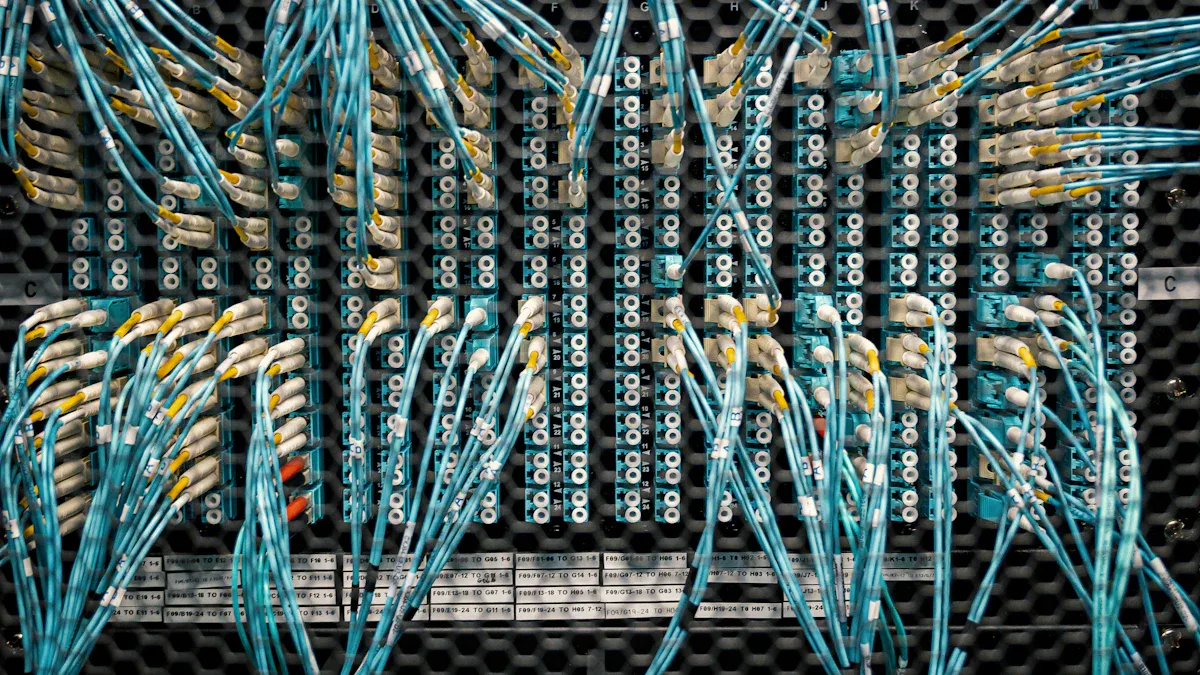
Connector distributors help make new products by adding high-speed solutions. These solutions help move data faster and more reliably. Fibre optic cables and connectors, like multicore and hollow core optical cables, help send data quickly over 5g networks and in the cloud. Companies use multi-fiber connectors that fit up to 64 fibres in small spaces. This helps fix crowding problems in data centers and telecom hubs. Expanded beam technology keeps the connection clean, so data stays fast.
-
Co-packaged optics and new pluggable transceiver formats like QSFP-DD, OSFP, and OSFP-XD let data move at speeds up to 102.4 Tb/s.
-
Linear drive optics use less power, make less heat, lower delay, and cost less. This is important for high-speed fibre optic connectors in crowded places.
-
Connectors with less electrical resistance and built-in thermal conduction help solve heat problems.
-
Groups like the Optical Internetworking Forum make rules so everyone can use these new technologies.
-
Self-driving cars and 5g networks need fast, low-delay connections, so more people want high-performance connectors.
The world market for high-speed backplane connectors is expected to grow from USD 2.74 billion in 2024 to USD 5.08 billion by 2033. This growth comes from more data centers, 5g, and Industry 4.0. North America is first to use new technology. Asia-Pacific grows fast because of telecom and factories. Top companies spend money on research to make better charging and high-speed data connectors.
AI and Emerging Tech
AI and new technology change how connector distributors make new products. AI-powered 3D modeling helps make prototypes faster. It uses feedback from people and machines to improve high-speed data connectors and fibre solutions. Predictive analytics help design safer and more comfortable products. AI-based platforms let companies make special products for each customer in cloud and telecom.
|
Type of AI-Enhanced KPI |
Description |
Benefits |
Example |
|---|---|---|---|
|
Smart Descriptive KPIs |
Look at old and new data to explain what happened or is happening |
Give better understanding of performance problems and reasons |
Sanofi’s AI tool shows how KPIs are connected |
|
Smart Predictive KPIs |
Guess what will happen next using important signs |
Help take action early to avoid problems or find chances |
GE uses AI to check order pipelines for revenue growth |
|
Smart Prescriptive KPIs |
Tell what to do to get better results |
Suggest fixes and help teams work together |
Sanofi’s KPIs suggest sales changes using supply chain data |
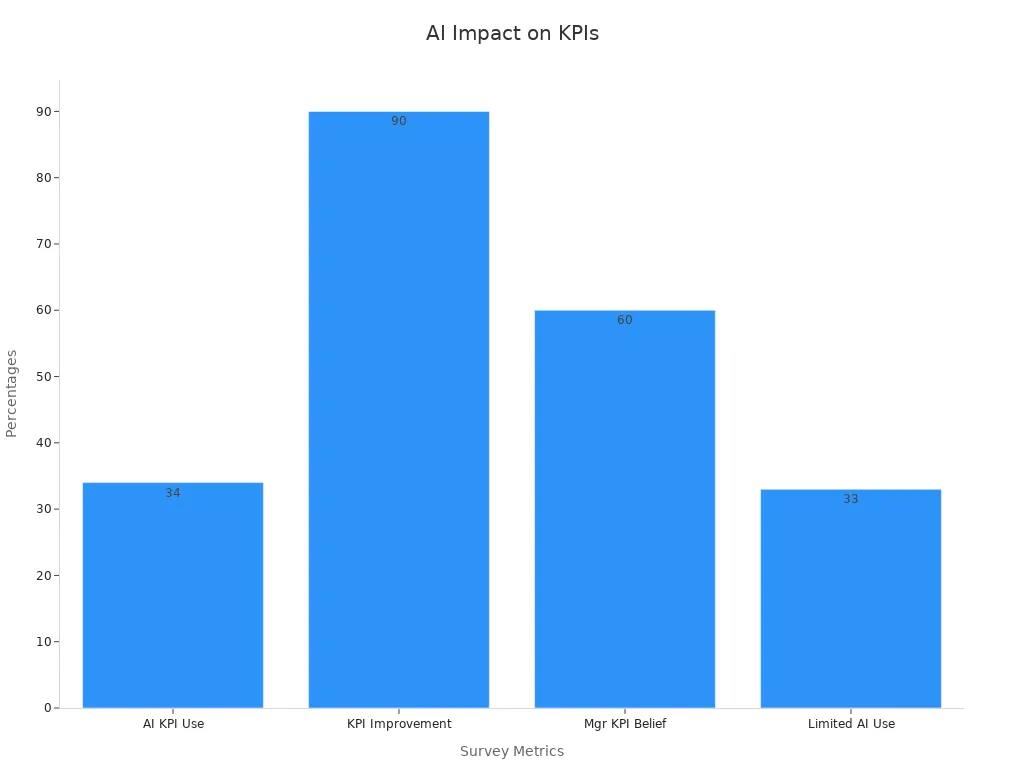
IoT sensors in equipment collect live data. This helps give feedback all the time and supports the need for fast data connectors in 5g and cloud. Studies show 34% of companies use AI to make new KPIs. About 90% say it helps them plan, work together, and be more efficient. Companies that use AI and new technology stay ahead. They bring new ideas to connectors for telecom, fibre, and high-speed markets.
Quality and Certifications
Industry Standards
Connector distribution companies must follow strict rules for safety. Certifications like UL 1977, UL 2238, and IEC 61984:2008 are important. These rules make sure connectors work well and are safe. When companies follow these standards, they can sell in more places. It also helps them get products approved faster.
-
Meeting certifications like UL 2238 and IEC 61984:2008 keeps products safe and working well.
-
New rules say connectors must pass tough tests for strength, fire, and heat.
-
Connectors need to handle strong pulling, like over 150N in tests.
-
Certified connectors are safer and work better in many ways.
-
Companies that follow these rules have less downtime and save money.
Certification helps companies make better connectors. It makes them try new ideas and meet new needs. If companies do not follow the rules, they can lose approvals and face problems. By following standards, connector distributors keep their good name and stay ahead.
Third-Party Validation
Third-party validation gives connector companies extra trust. Labs that are not part of the company test the connectors. They check if the connectors are safe and work well. This testing shows connectors can handle real-life use. Customers look at these results when picking connectors for important jobs.
A table below shows why third-party validation is good for connectors:
|
Benefit |
Description |
|---|---|
|
Increased Trust |
Customers trust connectors tested by independent labs. |
|
Verified Performance |
Testing proves connectors meet strict performance needs. |
|
Faster Market Access |
Certified connectors enter markets more quickly. |
|
Lower Risk |
Third-party checks reduce the chance of product failure. |
Connector distributors who use third-party validation show they care about quality. They help customers feel sure about what they buy. This focus on quality and performance makes top companies stand out.
Comprehensive Cable Connectors and Adapters
Diverse Product Range
Connector distribution leaders have many types of cable connectors and adapters. They help different industries with their needs. These companies supply high-speed connectors for data centers and fibre networks. They also provide connectors for telecom systems. Their products include adapters for RF, microwave, and fibre uses. These connectors and adapters can handle speeds up to 40 Gbps. They also work with voltages up to 1,500 V DC. Some connectors are made to carry up to 200 A of current. They can protect against water and dust up to IP69K. Hybrid connectors can send signal, data, and power together. This makes them useful for complex systems.
Having many cable connectors and adapters helps keep signals strong. It also keeps passive intermodulation low and supports high frequencies. This is important for telecom, military, and space jobs.
|
Metric / Application |
Description |
|---|---|
|
Low Insertion Loss |
Keeps signals clear in RF and microwave uses. |
|
-165 dBc, needed for clear signals in communication systems. |
|
|
Frequency Capability |
Works up to 110 GHz, good for telecom and test equipment. |
|
Military and Space Applications |
Reliable in tough places like space and military missions. |
|
Fast Prototyping and Production |
Helps make and use cable assemblies quickly for important systems. |
Specialized Applications
Connector distributors help with special jobs by giving connectors for fast, tough, and small spaces. More people want connectors for 5G, electric cars, and factory robots. Companies use high-speed fibre connectors for telecom and cloud work. Small connectors fit tiny electronics. Tough adapters last in cars and factories.
The connector market will grow from USD 86.86 billion in 2023 to USD 127.97 billion by 2032. This is because more people need special cable connectors and adapters. These are used in telecom, cars, and electronics. North America and Asia Pacific help companies send fibre solutions fast. Distributors use new ways to make and check connectors. This makes sure their products meet strict rules.
|
Metric / Benefit |
Description |
|---|---|
|
High-density connectors help set up systems faster. |
|
|
Cost Control |
Standard connectors lower mistakes and help things work together. |
|
Scalability |
Solutions can grow as needs change. |
|
Space Utilization |
More cables in less space saves room in racks. |
|
Resource Efficiency |
Fewer cable types make things easier and cost less. |
Customer-Centric Service
Tailored Solutions
Connector distribution leaders know each customer is different. They make special solutions for connectors, cable connectors and adapters, and adapters. These solutions fit what each customer needs. When Huel needed a special delivery, the distributor made a plan. This plan saved 58 full-time days every month. It also made money tracking easier and helped work go smoothly. Customers who get custom cable connectors and adapters get faster help and feel happier. These solutions help companies keep up with changes in telecom, cars, and factories.
Custom connectors and adapters help keep customers coming back. Companies that give custom cable connectors and adapters get more repeat buyers and good reviews. They also become known for quick and good service.
-
PepsiCo had 15% happier customers after using tech for custom connectors and adapters.
-
Mercedes-Benz saw 10% more happy customers and 20% fewer calls by meeting customer needs for cable connectors and adapters.
Support Teams
Support teams are very important in connector distribution. They answer questions about connectors, cable connectors and adapters, and adapters. Fast and smart support helps customers fix problems and get what they need. Companies use key numbers to see how well support teams do:
|
Metric Name |
Description |
Relevance to Support Team Effectiveness in Connector Distribution Operations |
|---|---|---|
|
Resolution Rate |
Percentage of issues resolved by the support team |
Measures the ability to effectively solve customer problems, indicating service quality |
|
First Contact Resolution |
Percentage of issues resolved on the first interaction |
Reflects efficiency and effectiveness in handling requests promptly |
|
Customer Effort Score |
Measures how much effort customers expend to get their issues resolved |
Lower effort indicates better service quality and smoother customer experience |
|
Average Handle Time |
Average time taken to resolve a ticket |
Indicates operational efficiency and resource management |
|
First Response Time |
Time taken to respond to a customer inquiry |
Measures responsiveness, critical for customer satisfaction |
|
Escalation Rate |
Percentage of tickets escalated to higher support levels |
Lower escalation suggests better frontline resolution capability |
|
Ticket Volume |
Number of support tickets received |
Helps assess workload and demand trends, important for resource planning |
|
Cost per Ticket |
Average cost incurred per support ticket |
Reflects operational cost efficiency |
|
Net Promoter Score (NPS) |
Customer loyalty and satisfaction score based on likelihood to recommend |
Indicates overall customer satisfaction and loyalty, key for long-term service quality |
|
Customer Churn Rate |
Percentage of customers discontinuing service |
High churn signals dissatisfaction, critical for assessing support impact on retention |
Support teams that answer fast to connector needs help companies earn trust. They keep customers happy and stop them from leaving. By watching these numbers, connector distributors make service better and meet more needs for cable connectors and adapters everywhere.
Pricing and Perceptions
Value Strategies
Connector distribution companies use value strategies to change how customers see their products. They look at what other companies charge before setting their own prices. Stores like Target use price matching so customers feel treated fairly. Best Buy uses special software to change prices fast and stay in the game. Lidl checks what others charge and keeps its own costs low. Zara changes prices each season to keep its brand strong and stay in a good spot in the market.
Companies that use competitive pricing find the best prices. This helps them get more customers and keep their place in the market.
Value strategies also mean working with other companies. Top companies team up to reach new customers and make their products better. For example, 3M works with Guardhat to make safety products smarter. Amphenol joins with ABB to grow in e-mobility and infrastructure. These moves help companies meet new needs and do better in different areas.
-
Value strategies help companies sell more and enter new markets.
-
They let companies react fast when the market changes.
-
Companies use these plans to make products better and keep customers happy.
Performance Feedback
Performance feedback helps companies change their prices and value plans. Companies ask customers and check the market to see if their prices are right. They use this feedback to make products better and stay ahead.
|
Feedback Source |
Impact on Performance |
Market Influence |
|---|---|---|
|
Customer Surveys |
Shows product value |
Guides pricing changes |
|
Sales Data |
Tracks market trends |
Reveals performance gaps |
|
Competitor Analysis |
Finds market shifts |
Improves performance |
Market research shows companies with real-time pricing data make better choices. They can change prices quickly to fit what the market wants. This keeps them doing well and helps them stay important. Companies also use tricks like ending prices in .99 to make products seem cheaper and boost sales.
Companies that listen to feedback and change their plans lead the market. They keep doing well and earn customer trust for a long time.
Sustainability Initiatives
Environmental Practices
Connector distribution companies care about the environment. They use eco-friendly materials and design products to last longer. They also plan how to recycle products when they are old. These actions help cut down on waste and keep the planet cleaner. Many top brands talk about sustainable distribution in their plans. This shows that being green is very important in this industry.
-
Companies pay a lot of attention to using sustainable materials.
-
Eco-design and end-of-life recovery help make products last and be recycled.
-
Sustainable manufacturing means every step helps the planet.
Companies like UCT follow special rules for being responsible. They use the ideas of reduce, reuse, and recycle. They join groups like SuCCESS2030 to make supply chains better. UCT recovers materials, cleans without chemicals, and reuses packaging. These steps help both the earth and the business.
A study from Italy shows companies can use up to 70 ways to check how green they are. These checks are tied to worker rewards and company goals. This helps connector distributors see their progress and push teams to do better for the planet.
Operational Efficiency
Operational efficiency is very important for connector distributors. Companies use numbers to check how well they save energy and cut waste. These numbers help them use less and spend less money.
|
Metric |
Purpose |
Benefit to Sustainability |
|---|---|---|
|
Compares costs to revenue |
Shows resource use |
|
|
Energy Consumption |
Tracks energy savings |
Reduces emissions |
|
Waste Reduction |
Measures less waste |
Supports cleaner operations |
|
Quality Measures |
Checks product standards |
Maintains high performance |
Technology helps companies work better. Tools like AI, IoT, and data analytics help watch things in real time. They also help fix problems before they get big. Google saves energy by using these tools, which helps the planet.
By always trying to get better and using new tech, connector distributors stay ahead. When they focus on working well, they meet green goals, save money, and make good products.
Strategic Partnerships
Manufacturer Alliances
Connector distribution companies get stronger by teaming up with manufacturers. These partnerships help both sides find new markets and share what they have. Working together also helps them make new products faster. Companies often join to improve supply chains or reach more customers. Trust and talking openly are very important for these partnerships.
-
GoPro and Red Bull worked together. GoPro’s cameras and Red Bull’s events made cool videos and stronger brands.
-
Amazon and American Express teamed up to give special deals. This brought in more buyers and made people stay loyal.
-
BMW and Toyota shared research on fuel-cell technology. This helped them save money and invent new things faster.
Performance numbers show why these partnerships matter. They help companies make more money and spend less. New products come out faster. More customers stay happy and keep coming back.
A study showed that trust between partners makes teamwork better. When companies share and work closely, they handle problems better. These partnerships also help keep jobs safe and support local people.
Strategic alliances help connector distributors fill in what they lack. They lower risks and help companies keep up in a fast-changing world.
Industry Networks
Industry networks link many connector distribution companies together. These networks help companies share news and learn good ways to work. They also help companies react fast when things change. A strong network keeps information moving, even if some companies have trouble.
|
Empirical Evidence Aspect |
Description |
Implication for Connector Distribution Sector |
|---|---|---|
|
Checks how well information moves between companies. |
Keeps supply chains steady when problems happen. |
|
|
Area Under Curve (AUC) |
Shows how strong the network is under stress. |
Helps design networks to be tougher. |
|
Multi-layer Supplier–Buyer Data |
Looks at important deals to map the main network. |
Focuses on key links and avoids extra noise. |
|
Degree Distribution and Centralization |
Sees how connections are spread out. |
Less centralization means networks are harder to break. |
|
Robustness to Random vs Targeted Attacks |
Compares how networks handle different problems. |
Flexible networks bounce back faster and keep working. |
After big world events, these networks became less centered on just a few companies. Now, they are stronger and can handle surprises better. This helps connector distributors keep doing well, even when things get tough.
Adapting to Market Trends
Defense and Automotive
Connector distribution companies are growing because of defense and automotive needs. The automotive industry is the biggest part, making up 35% of the market. Electric vehicles and driver-assistance systems need special connectors for power and data. These cars use more electronics, so they need faster and more reliable connectors. Asia-Pacific is first in the market because factories are growing fast. North America is also growing because it has strong car and airplane industries.
The defense sector wants new and better connectors. Aerospace and defense companies need small, strong connectors that work in tough places. Smart connectors with sensors and tough materials are now used a lot. North America leads here because of big airplane centers and defense spending. Asia-Pacific is close behind, with help from governments and more defense projects. These changes help the market grow and push companies to try new technology.
Companies that focus on these areas do well by meeting strict rules and using new technology like 5g. This helps them grow and become leaders in making new things.
Infrastructure Investments
Spending money on buildings and digital tools helps connector companies grow. The RJ45 connectors market will go from $3.2 billion in 2024 to $5.9 billion in 2034, growing at 6.3% each year. This happens because more people need better internet and more data centers. Fast internet, 5g, and more devices mean we need better connectors. North America is first because it spends a lot on IT and telecom. Asia-Pacific is growing fast because of new factories and cities.
People make a lot of data, about 403 billion GB every day. This means more connectors are needed for data centers, fiber networks, and cloud computing. Companies spend money on both buildings, like towers and fiber, and digital things, like AI and cloud. Europe and Latin America also grow because of smart homes, robots, and telecom. Making data centers use less power makes these investments even better.
|
Market Driver/Trend |
Description |
|---|---|
|
People want smaller connectors for wearables and phones. |
|
|
High-Speed Connectivity |
5g and fiber optic connectors help move data faster. |
|
Industry Diversification |
Companies grow into cars, telecom, airplanes, and electronics. |
|
Innovation and R&D Investment |
Companies spend money on new technology to stay ahead. |
|
Supply Chain and Production Expansion |
More factories and better supply chains help meet demand. |
|
Competitive Landscape |
Big companies focus on quality, new ideas, and smart growth. |
Connector companies that follow these trends and use 5g technology keep their spot in a fast-changing world. They help the world grow and meet the need for better digital tools.
Connector distribution corps do well in 2025 by focusing on 10 main things. They make sure they have enough connectors, cable connectors and adapters, and adapters for what people want. Teams watch the market and change cable connectors and adapters when needed. Companies spend money on connectors that fit new needs in the market. They add more cable connectors and adapters to get more buyers. Leaders check adapters and connectors to keep up with what people want.
Teams that pay attention to key things, market changes, and what people want for connectors, cable connectors and adapters, and adapters stay ahead. They change, create new ideas, and lead others.
-
Check how things are going by watching demand for cable connectors and adapters.
-
Spend money on connectors and adapters that people need.
-
Watch for changes in what people want for cable connectors and adapters.
FAQ
What makes a connector distribution company stand out in 2025?
A company stands out by earning trust and using new technology. They offer many products for different needs. Good partnerships and caring about quality help them lead.
How do connector distributors handle supply chain disruptions?
They track shipments in real time and use flexible plans. Teams can change suppliers or routes fast. Technology helps spot problems early and fix them quickly.
Why are certifications important for connector distributors?
Certifications show products are safe and high quality. Customers trust connectors with certifications more. Certified distributors can sell in new places faster.
How do companies ensure customer satisfaction?
Support teams answer questions fast and help customers. Companies make special solutions and listen to what people say. They watch service numbers to keep getting better.
What role does sustainability play in connector distribution?
Sustainability guides how products are made and used. Companies pick eco-friendly materials and try to make less waste. They set goals and reward teams for being green.