Top 10 Electronic Components and Integrated Circuits for Smart Sensing Applications
Smart sensing systems use important electronic components integrated circuits to make devices smarter. They can sense motion or check temperature with these components. Sensors, microcontrollers, and wireless modules are key to their work. Integrated circuits help process data and send information quickly. These components together support modern sensing tools. They make smart homes and medical devices work well.
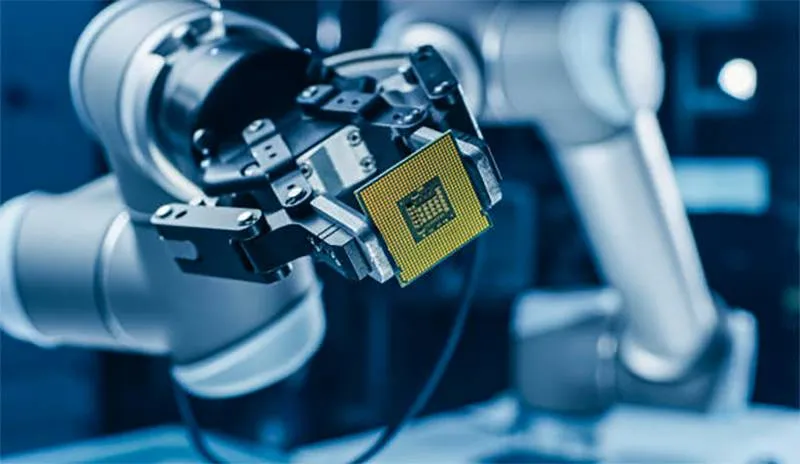
Smart sensing systems use important electronic components integrated circuits to make devices smarter. They can sense motion or check temperature with these components. Sensors, microcontrollers, and wireless modules are key to their work. Integrated circuits help process data and send information quickly. These components together support modern sensing tools. They make smart homes and medical devices work well.
Key Takeaways
-
Microcontrollers act like the brains of smart systems. They handle sensor data and control actions. Pick one that fits your project needs.
-
Operational amplifiers boost weak signals from sensors. This makes the data clearer and more dependable for use.
-
Analog-to-digital converters (ADCs) change analog signals into digital ones. This helps devices understand and use the information better.
-
Wireless communication modules let devices connect without wires. They make setup easier and more flexible for smart systems.
-
Power management ICs (PMICs) save energy in devices. They help batteries last longer and make systems work better.
Microcontrollers for Smart Sensing
Functions in Sensing Systems
Microcontrollers act as the "brains" of smart sensing systems. They take data from sensors and decide what actions to perform. Think of them as tiny computers that handle tasks like checking temperature or sensing motion. Without microcontrollers, smart devices couldn’t use the data they collect.
One main job is helping sensors talk to other parts. They turn raw data into useful information, like changing a voltage into a temperature reading. They also control when and how data is shared with other devices, keeping everything running smoothly.
Another key role is saving power. Many microcontrollers are built to use very little energy. This is important for gadgets like smartwatches or wireless sensors. For example, the lolin ESP32 microcontroller uses only 0.05 mA in deep sleep mode. This helps devices last years without needing new batteries.
Popular Models and Applications
There are many microcontrollers to choose from, each good for different jobs. Picking the right one depends on what your project needs. Here are some popular models and their uses:
-
Arduino Pro Mini: Great for small projects and easy to program. It uses only 8 mA in active mode. You’ll see it in home automation or simple monitoring systems.
-
lolin ESP32: A powerful, energy-saving option with Wi-Fi and Bluetooth. It’s perfect for IoT projects like remote weather stations. It can run for up to 48 months in smart sensing systems.
-
Wemos D1 Mini: Best for projects needing more processing power. It’s used in smart home devices like light switches or cameras. However, it uses more energy, about 74 mA in active mode, so it’s better for devices with steady power.
The need for microcontrollers in smart sensing is growing fast. In 2023, the U.S. market was worth $4.5 billion, growing at 10.6% yearly. Worldwide, IoT microcontrollers are expected to grow from $5.8 billion in 2024 to $26.7 billion by 2030. This shows how important they are in today’s technology.
Whether it’s a smart thermostat or an industrial monitor, microcontrollers are vital. They make devices smarter, more efficient, and reliable.
Operational Amplifiers in Sensing Circuits
Signal Conditioning Role
Operational amplifiers are important in smart sensing systems. They take weak signals from sensors and make them stronger. This helps other parts of the system use the signals better. They also clean up signals by removing noise or unwanted parts. This makes the data clearer and more reliable.
These amplifiers are used in many sensing systems. They keep the input impedance high, so they don’t affect the sensor's readings. At the same time, they have low output impedance, making it easy to send signals to other parts. Whether amplifying, filtering, or fixing signals, they help sensors work well.
For example, in temperature sensing, they turn small voltage changes into readable temperature values. In factories, they stabilize signals from strain gauges to measure force or pressure. Their ability to do these tasks makes them very useful in sensing technology.
Commonly Used Models
Choosing the right operational amplifier depends on your project needs. Some models are popular because they work well in many systems. Here are a few examples:
-
LM358: LM358 is a simple and affordable amplifier. It’s great for basic circuits like temperature or light sensors.
-
OPA2335: OPA2335 model is very precise and has low noise. It’s perfect for medical devices that need accurate readings.
-
AD620: AD620 amplifier is strong and stable. It’s ideal for measuring force or pressure in industrial systems.
These amplifiers make sensing systems work better. They are reliable, flexible, and easy to use. Whether for smart homes or medical tools, operational amplifiers are a key part of modern devices.
Analog-to-Digital Converters in Smart Sensing
Why They Matter for Data
Analog-to-digital converters (ADCs) act like helpers for smart systems. They change analog signals, like sound or temperature, into digital data. This digital data is what devices need to work properly. Without ADCs, smart gadgets couldn’t understand the signals they receive.
Think about a smart thermostat. The temperature sensor sends an analog signal. The thermostat, however, needs digital data to adjust heating or cooling. ADCs make this conversion happen. They ensure the data is correct and ready to use. This helps devices work better and more dependably.
ADCs also improve the quality of the data. They reduce mistakes during the conversion process. This keeps the information clear and accurate. Whether it’s a heart monitor or a motion-detecting camera, ADCs make sure the data is useful and reliable.
How to Pick the Right ADC
When picking an ADC, check its speed, resolution, and power use. Different ADCs are better for different tasks. Here’s a comparison of two common types:
|
Feature |
SAR ADC with DWT Compression |
LC-ADC |
|---|---|---|
|
Bit Compression Ratio (BCR) |
80% |
|
|
Percent Root Difference (PRD) |
Similar |
Similar |
|
Data Length in Bits |
Higher for 82% of signals |
Lower for 82% of signals |
The LC-ADC is great for handling more data efficiently. The SAR ADC works better for tasks needing longer data lengths. Your choice depends on what your project requires.
ADCs are key parts of smart sensing systems. They help devices process data accurately and efficiently. This makes gadgets smarter and more effective.
Digital Signal Processors for Real-Time Analysis
Uses in Smart Sensing
Digital signal processors (DSPs) are like heroes for smart sensing. They handle lots of data fast and accurately. This makes them great for tasks needing quick results. In healthcare, DSPs process heart rate or brain activity data instantly. This helps doctors make fast and smart decisions. In factories, they check vibrations or pressure to stop machine problems early.
DSPs are also used in military systems. Modern sensors in defense create tons of data. DSPs process this data quickly, helping during important missions. They also use AI to make better decisions faster. For example, drones avoid obstacles, and radars find threats with DSPs. These processors are key for mission success.
Why DSPs Are Better
You might ask why DSPs are better than regular processors. The reason is their special design. DSPs are made to filter, compress, and study signals. They are faster and more efficient with real-time data than general processors.
Another benefit is how well they work with amplifiers. Amplifiers make weak signals stronger, and DSPs process this data without delay. This ensures accurate results, like tracking air quality or motion in homes.
DSPs also use less power than general processors for the same tasks. This makes them perfect for gadgets like smartwatches or remote sensors. Their AI abilities let them do hard jobs, like face or voice recognition, easily. If you’re creating a smart sensing system, DSPs are a must-have.
Sensors and Sensor ICs
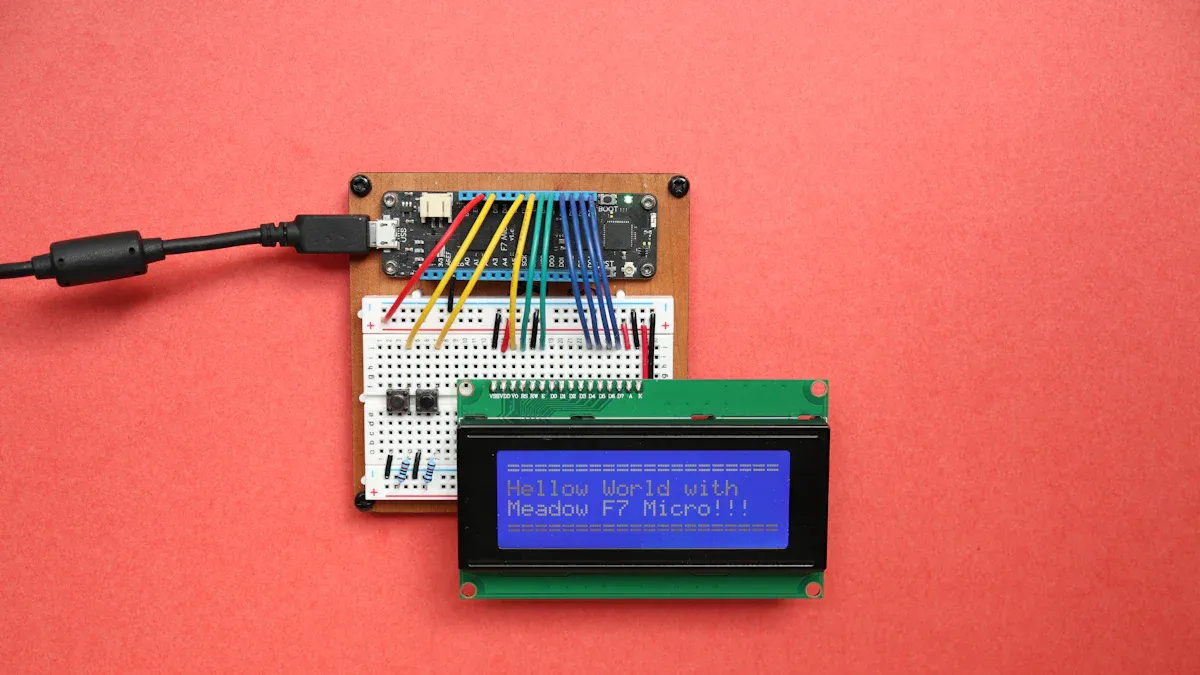
Sensors and sensor ICs are the core of smart sensing systems. They notice changes around them and turn these into signals devices can use. From checking air quality to tracking heartbeats, sensors make it all happen. Let’s explore different types of sensors and their roles in electronics.
Types of Sensors
Sensors come in various types, each made for specific jobs. Here are some common ones used in smart sensing:
-
Temperature Sensors: These check heat levels. They’re found in smart thermostats and medical tools like thermometers.
-
Motion Sensors: These spot movement. They’re used in security alarms and automatic lights.
-
Pressure Sensors: These measure force or pressure. They’re key in factories and car systems.
-
Light Sensors: These sense light strength. Phones use them to adjust screen brightness.
-
Gas Sensors: These detect gases like carbon dioxide or methane. They’re important for air quality checks and smart homes.
Sensors are becoming more popular quickly. Wearable gadgets, like fitness bands, are boosting this demand. Smaller and portable sensors are also trending. MEMS sensors are tiny and very accurate, making them useful in many industries.
Fun Fact! Industry 4.0 is increasing the use of sensors in factories and automation. High-precision sensors are now vital in healthcare and cars.
Here’s a quick view of sensor market segments:
|
Details |
|
|---|---|
|
By Technology |
Includes System-in-Package (SIP), System-on-Chip (SoC), MEMS, CMOS, etc. |
|
By Component |
Comprises ADCs, DACs, transceivers, amplifiers, microcontrollers, etc. |
|
By Network Connectivity |
Covers wired (e.g., Ethernet) and wireless (e.g., Wi-Fi, Zigbee) options. |
|
By End-User Industry |
Encompasses industrial automation, consumer electronics, healthcare, etc. |
Integration with Electronics
Sensors work best when paired with electronics. Sensor ICs make this possible by combining tasks like signal processing and communication into one chip. This makes devices smaller and more efficient.
For example, a smart home system might use a sensor IC to detect motion, process the data, and turn on lights. This setup is simple and reliable.
But real-world use can be tricky. Sensors face challenges like temperature changes or wear and tear. These can affect how well they work. To fix this, techniques like drift correction are used. These methods keep sensors accurate even in tough conditions.
Here’s how sensor ICs improve reliability and efficiency:
|
Aspect |
Description |
|---|---|
|
Reliability |
Integrated sensors are crucial for constant monitoring and automatic systems. |
|
Application Areas |
Uses include smart farming, personalized healthcare, and water management. |
|
Challenges |
Real-world conditions can lower accuracy compared to lab settings. |
|
Drift Correction |
Drift correction keeps sensors working well in tough environments. |
|
Validation |
Tests with real and fake sensor data ensure accuracy. |
As IoT and AI grow, sensors and sensor ICs are becoming smarter. Together, they create systems that handle hard tasks easily and efficiently.
Wireless Communication Modules for IoT
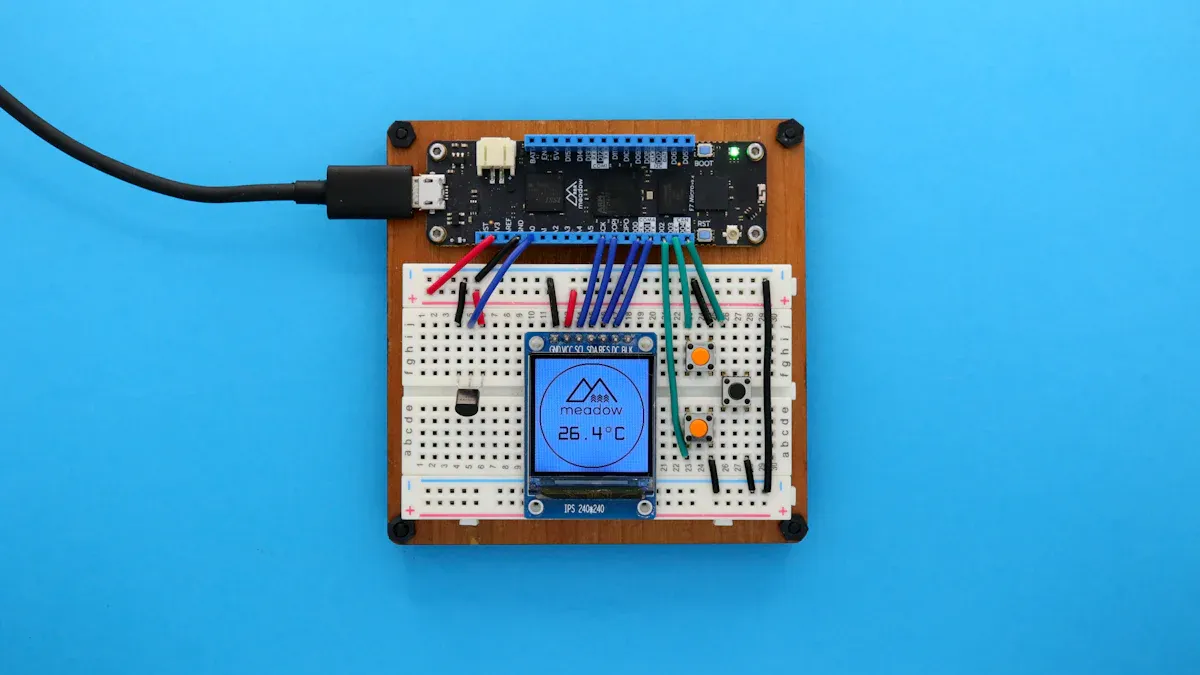
Protocols and Connectivity
Wireless modules help devices connect without using wires. They are key in making smart homes and industrial sensors work better. But how do these devices connect? That’s where protocols come in.
Different tasks need different ways to connect. For example, fitness trackers send small data, so they use Bluetooth Low Energy (BLE). Security cameras send videos, so they need Wi-Fi or 5G. Picking the right protocol helps devices save power and work well.
Here’s a simple guide to common IoT protocols:
|
Application Type |
Recommended Connectivity |
Notes |
|---|---|---|
|
Wearables with batteries |
BLE, Sub-1GHz |
Uses very little energy, sends small data |
|
Remote sensors |
LoRaWAN, NB-IoT |
Works far away, sends data less often |
|
Smart home devices |
Thread, Zigbee |
Uses low power, connects in a mesh network |
|
Tracking moving items |
LTE-M |
Good range, uses moderate power |
|
High-data devices (e.g., cameras) |
Wi-Fi, 5G |
Needs steady power or frequent charging |
Think about power, data size, and range when choosing a protocol. The right choice makes your system better and saves money.
Benefits in Sensing Systems
Wireless modules have many benefits for sensing systems. First, they remove the need for wires. This makes devices easier to set up and maintain. Imagine setting up a smart home without drilling holes—sounds easy, right?
Another benefit is flexibility. You can place sensors anywhere, even in hard-to-reach places. This is great for checking air quality in remote areas or tracking animals in the wild.
Wireless modules also allow real-time data sharing. For example, a smart thermostat can quickly adjust your home’s temperature based on sensor data. This makes your home more comfortable and saves energy.
Lastly, wireless modules make it easy to add more devices. You don’t need to change the whole system. Whether you’re growing a smart farm or upgrading a factory, wireless modules make it simple.
Tip: Pick a module that fits your project’s needs. Planning ahead helps create better and more reliable systems.
Wireless communication modules are a must for IoT. They make smart sensing systems easier to use, more flexible, and efficient.
Power Management ICs for Energy Efficiency
Types and Applications
Power management ICs (PMICs) are like energy controllers for smart devices. They help gadgets use power wisely, saving battery life and cutting waste. PMICs do jobs like controlling voltage, sharing power, and storing energy. Without them, devices wouldn’t last long or work well.
PMICs are used in many devices. They’re key for wearables, smart home tools, and factory sensors. For example, a fitness tracker uses PMICs to keep its battery working for days while checking your heart rate. In factories, PMICs help sensors run smoothly even in tough conditions.
The need for PMICs is growing quickly. Here’s why they matter:
-
The global PMIC market was worth USD 32.7 billion in 2023.
-
By 2033, it’s expected to reach USD 57.9 billion, growing at 5.9% yearly.
-
PMICs improve power use and make devices more energy-efficient, especially in smart sensing systems.
Modern PMICs are getting better to handle new problems. They now include features like smarter amplifiers and advanced voltage controls. This makes them great for IoT devices that need to balance power and performance.
Challenges in Smart Sensing
Smart sensing systems have tricky power problems to solve. One big issue is balancing energy use with performance. Devices like amplifiers need to work fast without draining batteries. Advanced PMICs help by adjusting to changing power needs.
Another problem is tough environments. Outdoor sensors, like those in streetlights, face heat and humidity. These can affect how PMICs manage power. Engineers use strong designs and energy-saving parts to fix these issues.
Here are real examples of PMICs solving power problems:
|
Case Study |
Energy Savings |
Description |
|---|---|---|
|
Sheffield Smart Streetlights |
LED streetlights with traffic-based energy control. |
|
|
Bellido-Outeiriño Smart Streetlights |
30–40% |
Uses DALI protocol and IEEE 802.15.4 for communication. |
|
Streets Ahead |
Up to 65% |
Automated streetlights cutting energy use and carbon emissions. |
These examples show how PMICs make smart sensing systems better. With the right tech, devices can be powerful and eco-friendly.
Memory Components for Data Storage
Memory components are vital for saving and managing data in smart sensing systems. Whether it’s a fitness tracker or a factory sensor, picking the right memory is important. Let’s look at the types of memory and how to choose the best one.
Types of Memory
Different memory types have different uses. Here’s a simple overview:
|
Memory Component |
Capacity Range |
Key Features |
|---|---|---|
|
Hard Disk Drives (HDD) |
Large storage, low cost, but sensitive to damage. |
|
|
Zip Drive |
Maximum of 108 bytes |
Small and portable, but mostly outdated now. |
|
Magnetic-core memory |
Maximum of 10⁶ bytes |
Reliable and non-volatile, but replaced by newer options like SRAM. |
HDDs are popular for their big storage and affordability. Newer versions with graphene coatings are tougher and store more data. However, Zip drives and magnetic-core memory are rarely used today.
For smart sensing, flash memory and SSDs are common. They are faster, stronger, and better for devices needing quick data processing.
Selection Considerations
Choosing memory depends on your project’s needs. Ask yourself: How much data will it handle? Does it need long-term storage? Will it face tough conditions?
Here are some tips to help:
-
Capacity: For lots of data, pick high-capacity memory like HDDs or SSDs.
-
Durability: Outdoor or industrial sensors need memory that handles heat and vibrations.
-
Speed: Devices like medical monitors need fast memory, such as SSDs.
-
Power Efficiency: Wearables with batteries need memory that saves energy.
Pro Tip: Think about how long the memory will last. Heat, cold, and frequent use can affect its performance over time.
By knowing the memory types and your project’s needs, you can make sure your smart sensing system works well and efficiently.
Application-Specific Integrated Circuits for Customization
Why ASICs Are Better
Application-specific integrated circuits (ASICs) are like custom tools for devices. Unlike regular chips, ASICs are made for one specific job. This makes them faster, more reliable, and very efficient. You’ll see better performance with these chips.
One big plus is they save energy. For example, the CSS555C ASIC uses 10% less power than older 555 timer chips. This is great for battery-powered gadgets like fitness trackers or remote sensors. ASICs are also smaller because they combine many functions into one chip. This makes them perfect for tiny devices or systems with little space.
Another advantage is they handle more data quickly. ASICs have better bandwidth, which is important for smart sensing. They can process video from cameras or check air quality without delays. In fact, ASICs are expected to make up over 36% of the consumer electronics market in 2024. This shows how useful they are.
Where ASICs Are Used
ASICs are found in many smart sensing systems. In healthcare, they power devices like portable heart monitors, giving fast and accurate results. In factories, they’re used in sensors to measure pressure, temperature, or vibrations. These chips help machines work better and avoid problems.
Smart homes also use ASICs. Motion detectors and smart thermostats rely on them to process data quickly. This makes homes more comfortable and saves energy. Even in farming, ASICs are helpful. They’re used in soil moisture sensors and weather trackers, helping farmers plan better.
ASICs are the best choice for high performance and reliability. They’re small, energy-saving, and designed for smart sensing needs. If your project needs to handle tough tasks, ASICs are a smart option.
Field-Programmable Gate Arrays for Flexibility
Use Cases in Sensing Systems
Field-Programmable Gate Arrays (FPGAs) are very adaptable tools. You can reprogram them to match your project’s needs. This makes them great for smart sensing systems that change over time.
FPGAs are used in systems needing fast data processing. For example, they work in wireless sensor networks (WSNs) to manage data from many sensors. They’re also helpful in smart cameras for analyzing video feeds. These cameras can detect motion or recognize objects quickly. In healthcare, FPGAs power portable ultrasound machines. They process images in real-time without delays.
FPGAs can handle tough algorithms too. They’re good for projects using artificial intelligence (AI) or machine learning. For example, they help self-driving cars detect obstacles. This makes them a top choice for advanced sensing systems in industries like automotive.
Tip: FPGAs are great for projects needing flexibility and fast data processing. They adjust to your needs and perform well.
Comparison with Other ICs
How do FPGAs compare to other integrated circuits like DSPs and ASICs? Here’s a simple breakdown:
|
Feature |
FPGA Benefits |
Other ICs (DSPs, ASICs) |
|---|---|---|
|
Reconfigurability |
Can be changed to fit new tasks easily. |
Limited ability to change functions. |
|
Power Use |
Uses less energy for efficient processing. |
Often uses more energy. |
|
Processing Power |
Handles complex tasks with built-in DSP blocks. |
May need extra parts for similar tasks. |
|
Memory |
Has lots of internal RAM for quick data access. |
Often depends on external memory. |
|
Applications |
Works well for tasks like image processing and WSNs. |
Better for very specific tasks. |
FPGAs are flexible and fast. Unlike ASICs, which are made for one job, FPGAs can be updated for new tasks. They also use less power than DSPs, making them good for energy-saving systems. Their built-in memory reduces the need for extra parts, making designs simpler.
Still, FPGAs aren’t always the best option. If your project needs a very specific solution, ASICs might work better. But for most smart sensing systems, FPGAs offer a mix of flexibility, speed, and energy efficiency.
Note: Pick between FPGAs and other ICs based on your project’s needs. Think about flexibility, energy use, and processing speed before choosing.
Smart sensing systems need key electronic parts to work well. Microcontrollers, sensors, and wireless modules team up to make smart devices that help in daily life. Integrated circuits manage data, power, and communication to keep devices running smoothly.
The future of smart sensing is exciting with new ideas coming up. Photonic circuits use light to send data faster and save energy. Flexible electronics are making wearables and smart clothes easier to use. Materials like graphene and gallium nitride improve how devices perform. AI helps design better circuits, and IoT needs smaller, smarter parts.
Here’s a simple view of these improvements:
|
Innovation Type |
What It Does |
|---|---|
|
Photonic Circuits |
Use light for faster data and less energy in data centers. |
|
Low Power Tech |
Focus on saving energy while keeping performance high. |
|
Flexible Electronics |
Make wearables and smart clothes more useful and portable. |
|
New Semiconductor Materials |
Graphene and gallium nitride make devices work better and use less energy. |
|
AI Circuit Design |
AI tools make designing circuits faster and more reliable. |
|
IoT Integration |
Smaller, smarter circuits meet the growing needs of IoT devices. |
These changes are shaping smarter, faster, and greener smart sensing systems. By using these advanced parts, devices can become even more helpful and efficient.
FAQ
What are smart sensing systems?
Smart sensing systems use sensors and electronics to gather and share data. They help gadgets like smart thermostats or fitness bands understand their environment. These systems make devices smarter and work better.
Why are microcontrollers important in smart sensing?
Microcontrollers are like the "brains" of smart devices. They process data from sensors and decide what to do next. They also save power, making them great for gadgets like wearables or remote sensors.
How do wireless modules improve smart sensing?
Wireless modules let devices connect without wires. They make setting up systems easy, even in tricky spots. For example, they help smart home gadgets like cameras share data quickly.
What’s the difference between ASICs and FPGAs?
ASICs are made for one specific job, so they’re very efficient. FPGAs can be reprogrammed and used for different tasks. This makes FPGAs great for projects that might change over time.
Are power management ICs necessary for smart devices?
Yes! Power management ICs help gadgets use energy better. They make batteries last longer and keep devices working well. For example, they help wearables collect data without running out of power.
Tip: Pick components that match your project’s energy and performance needs.