Solutions Driving the Evolution of Integrated Circuit Radio Technology
Innovative ideas have transformed how integrated circuit radio technology functions today. Engineers blend smart designs with new technology to create smaller circuits.
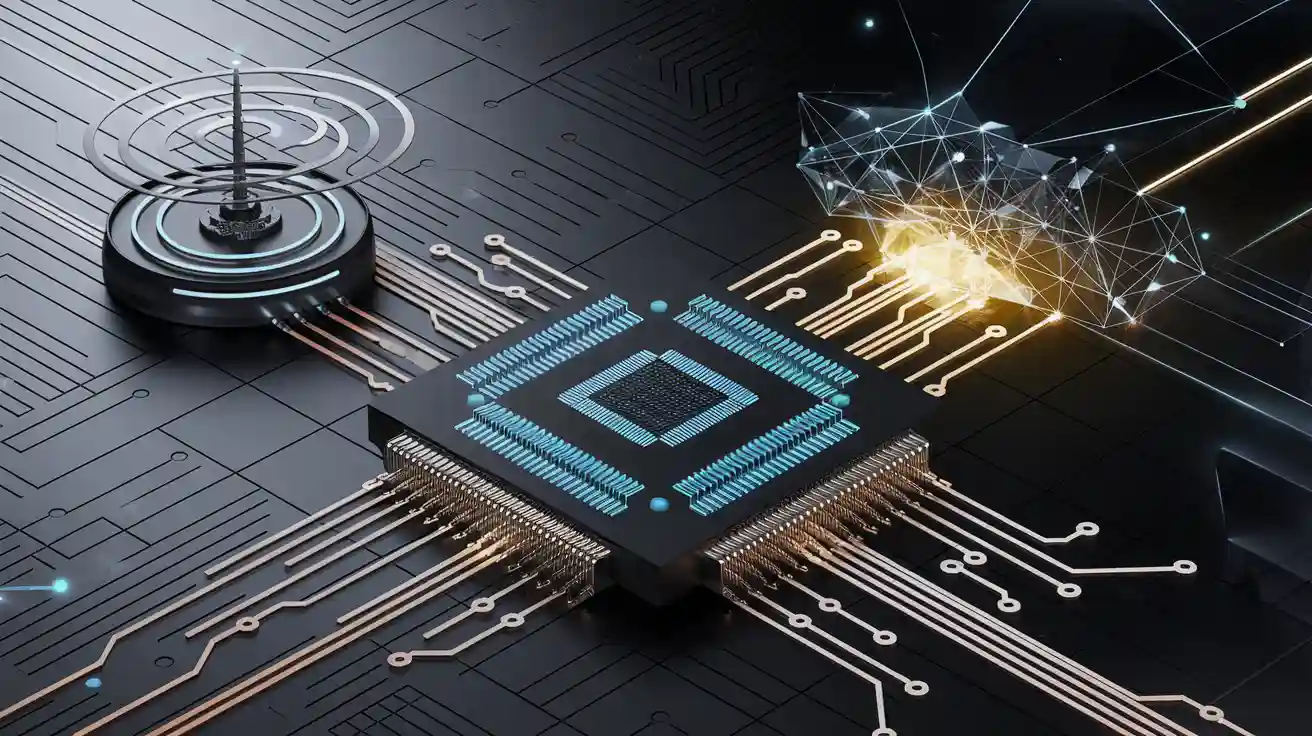
Innovative ideas have transformed how integrated circuit radio technology functions today. Engineers blend smart designs with new technology to create smaller circuits. These integrated circuits are now faster and consume less energy. This advancement facilitates easier connections between devices and enhances their overall performance. Companies like Hisilicon Solutions continue to refine these designs. These developments have significantly improved global communication and paved the way for future progress.
Key Takeaways
-
Integrated circuits changed radio tech by making gadgets smaller and faster.
-
The transistor, invented in 1947, started the path to modern electronics.
-
System-on-Chip (SoC) puts many functions on one chip to save energy.
-
5G networks need better chips to handle data fast without overheating.
-
Engineers use green materials to make chips that are better for the planet.
Historical Foundations of Integrated Circuit Radio
The Birth of the Transistor
The transistor was invented in 1947 and changed electronics forever. John Bardeen, Walter Brattain, and William Shockley created it at Bell Labs. It replaced large vacuum tubes, making devices smaller and better. This invention helped shrink circuits, which are key for modern communication.
During this time, several important changes happened:
-
People wanted smaller and faster devices, leading to transistors.
-
MOSFETs (Metal-Oxide-Semiconductor Field-Effect Transistors) improved circuit performance.
-
MOSFETs replaced BJTs (Bipolar Junction Transistors) for energy-saving designs.
The transistor didn’t just improve electronics; it started the journey to integrated circuits.
Early Integrated Circuits and Their Impact
Integrated circuits were first made in 1958 by Jack Kilby and Robert Noyce. They combined parts like transistors, resistors, and capacitors on one chip. This made devices cheaper, smaller, and simpler to build.
Big moments in integrated circuit history include:
-
Transistors (1947) made shrinking circuits possible.
-
Integrated circuits (1958) changed how electronics were designed.
-
Microprocessors (1971) allowed programmable computers and devices.
-
System-on-Chip (SoC) technology combined many functions on one chip.
These breakthroughs changed electronics and opened doors for new uses in communication and computing.
Initial Applications in Radio Technology
Integrated circuits quickly improved radio technology. In 1966, General Electric made the first integrated circuit radio, the P1740. It showed how circuits could boost performance and lower costs.
In the late 1990s, radio systems advanced further:
|
Year |
Development |
Impact |
|---|---|---|
|
Satellite radio circuits by STMicroelectronics |
Made satellite radios cheaper, helping education and entertainment in poor areas. |
|
|
1996 |
STA001, STA002, STA003 circuits |
Helped decode audio and process signals for mobile satellite radios. |
|
1996-1997 |
Full receiver architecture |
Replaced analog radios with satellite radios that worked anywhere satellites reached. |
These early uses proved how integrated circuits could make radios smaller, faster, and more affordable. They helped improve communication worldwide.
Key Milestones in the Evolution of Integrated Circuits
Moore's Law and Its Influence
In 1965, Gordon Moore shared an idea called Moore's Law. He said the number of transistors on a chip would double every two years. This idea has helped improve how small and fast chips can be.
Chipmakers have used Moore's Law to plan for the future. It has helped make microprocessors cheaper and memory bigger. Faster computers and better storage match what Moore's Law predicted.
But chips haven’t always grown at the same speed. Studies show growth sometimes speeds up or slows down. A special model helps explain these changes better, showing how chip progress is more complex than it seems.
Microprocessors Revolutionizing ICs
The transistor, made in 1947, and integrated circuits, created in 1959, led to microprocessors. These chips made devices smaller and smarter.
The Intel 4004, made in 1971, was the first microprocessor. It could do 4-bit tasks and inspired more research. Later, the Intel 8086 added 16-bit tasks and faster operations. By 1989, the Intel 80486DX had over a million transistors and could do advanced math. This showed how quickly chips were improving.
Microprocessors changed electronics by making them faster and using less power. They also allowed devices to handle harder tasks. These chips still shape the future of technology.
System-on-Chip (SoC) for Radio Integration
System-on-chip (SoC) technology puts many functions on one chip. This makes designs simpler and more efficient, especially for radios.
SoC chips reduce interference between radio and digital parts. They use special materials to lose less signal, as little as 0.03 dB/mm at 2 GHz. Regular materials lose more, about 0.1 dB/mm. SoC chips also use less power, which is great for mobile devices.
Modern communication systems rely on SoC technology. By combining many features on one chip, SoC designs make radios work better and save energy.
Modern Innovations in Integrated Circuit Radio
5G and Its Impact on IC Design
5G networks have changed how integrated circuits are designed. These networks need faster speeds, less delay, and better energy use. Engineers have made advanced chips to handle large amounts of data. Smaller circuits help fit more parts into tiny spaces.
Hisilicon Solutions is a top company in this area. Their smart designs combine many features into one chip for easy communication. Using system-on-chip (SoC) technology, they improve performance and save energy. This keeps 5G devices working well, even when used a lot.
Designing circuits for 5G has brought new problems. Engineers must fix issues like overheating and signal problems. Better materials and designs have solved these challenges, making 5G systems stronger and more efficient.
Advances in RFIC Technology
Radio Frequency Integrated Circuits (RFICs) have greatly improved recently. These circuits help devices send and receive signals better. Researchers are making RFICs work faster and more accurately with new designs.
Important RFIC improvements include:
-
Using digital signal processing for better accuracy and efficiency.
-
Switching to low-cost CMOS for both digital and analog circuits.
-
Replacing old systems with local control and transmission methods.
-
Adding features like strong receivers, antenna arrays, and flexible frequencies.
These changes make RFICs more useful and powerful. Hisilicon Solutions has helped by creating advanced RFICs for fast communication and low energy use. Their designs set high standards for quality and dependability.
Energy-Efficient Integrated Circuits
Saving energy is now a big goal for integrated circuits. As devices get stronger, they need more power. Engineers are making circuits that use less energy but still work well.
Several things help save energy:
-
Measuring energy use carefully during development.
-
Using both hardware and software to lower energy needs.
-
Smart software design avoids energy-heavy processes for greener tech.
Hisilicon Solutions focuses on energy-saving designs. Their SoC chips combine many functions, cutting energy waste and boosting performance. This meets the need for eco-friendly devices that cost less to run.
Integrated circuits keep improving to save energy. New materials, designs, and methods help make electronics better for people and the planet. This progress supports a greener future for everyone.
Challenges and Future Directions in IC Evolution
Tackling Design and Manufacturing Problems
Making integrated circuits has become harder over time. Supply chain issues cause delays in production. Costs are rising, making advanced circuits expensive. Designs are also more complex, needing better tools and skills.
Experts suggest these solutions to fix the problems:
-
Use supply chains from different regions to avoid delays.
-
Invest in new manufacturing methods to work faster.
-
Find new markets to balance the high costs.
These ideas help improve integrated circuits and solve current issues.
The Potential of 3D Integrated Circuits
3D integrated circuits are a big step forward in technology. They stack circuit layers to work faster and use less energy. These chips also make devices smaller, perfect for wearables and implants.
Here’s how 3D chips are better than older methods:
|
Feature/Benefit |
Older Methods Problems |
|
|---|---|---|
|
Multifunction incorporation |
Combines many functions in one chip |
Can’t combine many functions |
|
Manufacturing complexity |
Easier to make with parallel processes |
Harder to make, more risks |
|
Device miniaturization |
Makes very small devices |
Devices are bigger |
|
Scalability |
Produces many devices at once |
Can’t scale easily |
|
Reliability |
Works well for a long time |
May have reliability problems |
|
Application potential |
Great for wearables and medical implants |
Limited uses |
3D chips show how future circuits can be smaller, faster, and more efficient.
Eco-Friendly Practices in IC Development
Sustainability is now important in making integrated circuits. Engineers use green materials and methods to protect the planet. For example, recycled resistors and organic capacitors reduce pollution. Nanomaterials in sensors save energy, and solid-state batteries last longer and create less waste.
Here’s a table of eco-friendly practices in IC development:
|
Component Type |
Material/Technology |
Cost |
Environmental Impact |
|---|---|---|---|
|
Resistors |
Recycled metal film |
Medium |
Less pollution and mining |
|
Capacitors |
Organic polymers |
High |
Biodegradable, safer for the planet |
|
Sensors |
Nanomaterials |
High |
Saves energy, works efficiently |
|
Batteries |
Solid-state, recyclable materials |
High |
Less waste, lasts longer |
|
Integrated circuits (ICs) |
Silicon-on-insulator |
Medium to High |
Uses less power, stays cooler |
These green methods help the environment and improve technology for the future.
The progress of integrated circuit radio technology comes from smart ideas. Teams from companies and schools work together to improve circuits. They create low-power designs for IoT and mixed-signal systems. These help wireless communication become cheaper and more efficient. Research on mm-wave circuits for 5G and beyond shows how important integrated circuits are today.
New ideas are key to solving problems and finding new possibilities. As people want advanced tech like 6G, integrated circuits will be very important. They will help make communication faster, stronger, and better for the environment.
FAQ
What is an integrated circuit, and why is it important in radio technology?
An integrated circuit (IC) is a tiny chip with many parts. It has things like transistors and resistors inside. ICs make radios smaller and simpler by combining functions. This helps save space, money, and energy, improving communication devices.
How does 5G benefit from integrated circuit advancements?
5G networks need ICs to work faster and better. These chips process data quickly and use less energy. Engineers make them small to fit more parts in devices. This keeps 5G gadgets reliable, even when used a lot.
What challenges do engineers face when designing integrated circuits?
Engineers face problems like heat, signal issues, and high costs. They fix these by using stronger materials and smarter designs. New manufacturing methods also help make ICs better and more dependable.
Why are energy-efficient integrated circuits important?
Energy-saving ICs use less power, cutting costs and pollution. They are key for devices like phones and IoT gadgets. These circuits help batteries last longer, which is very important.
What role does System-on-Chip (SoC) technology play in radios?
SoC technology puts many functions on one chip. It handles tasks like sending signals and processing data. This saves space, reduces interference, and uses less energy. It’s perfect for today’s radio systems.