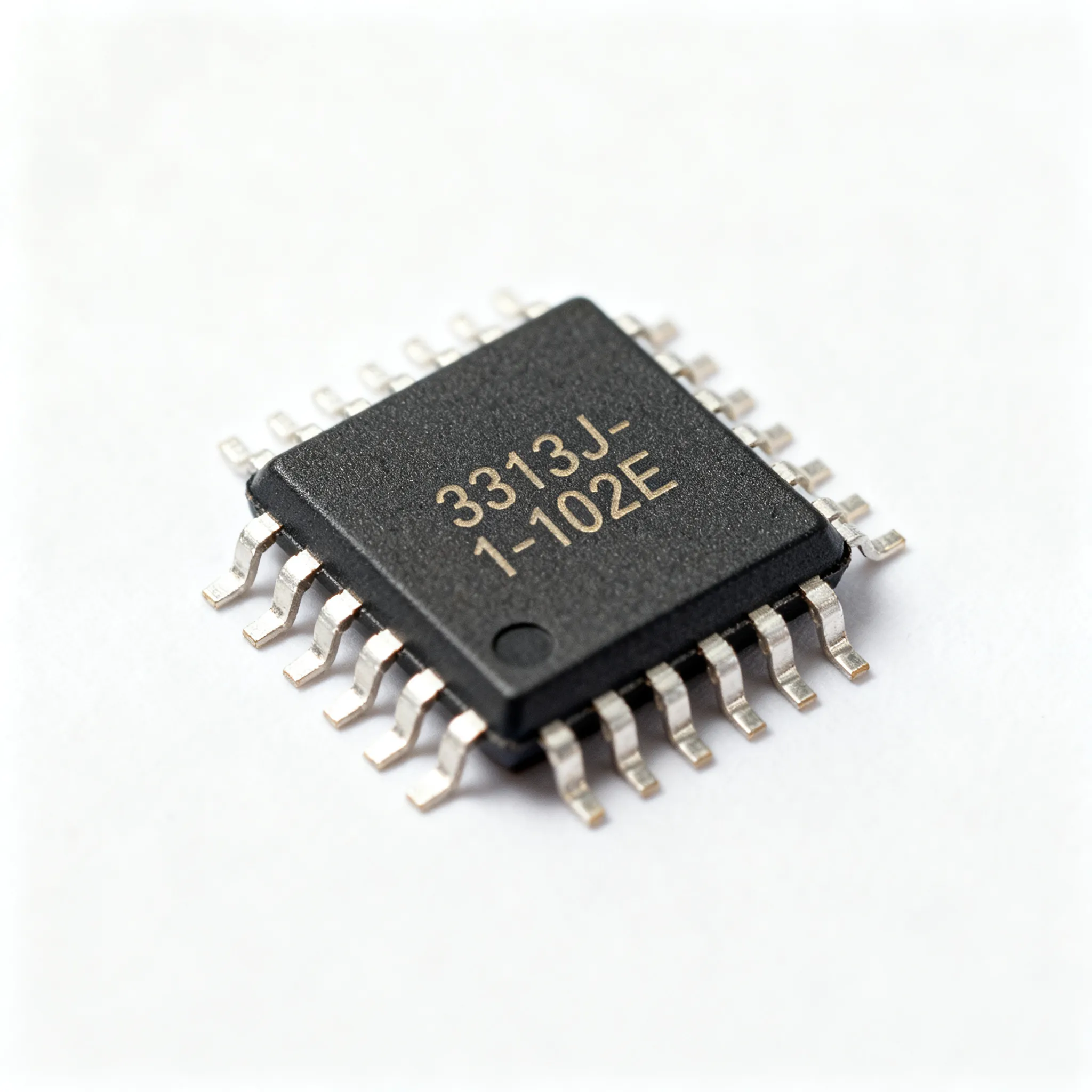
Oscillator vs Crystal: Selecting the Right Timing Solution for Your Electronic Application
Choosing the right timing tool is very important for your device. When considering oscillator vs crystal, it's essential to understand how each affects performance.
Choosing the right timing tool is very important for your device. When considering oscillator vs crystal, it's essential to understand how each affects performance. Crystals are better for tasks needing exact timing, while oscillators are easier to implement since they come with a full timing setup. The wrong choice between oscillator vs crystal can lead to problems, make your design less reliable, or even damage your device. Knowing the differences between oscillator vs crystal helps ensure your device operates as planned without issues.
Key Takeaways
-
Crystals keep time well but need extra parts to work. They are good for cheap and accurate projects.
-
Oscillators are simpler to use because they have built-in parts. They work best for reliable and quick setups.
-
Think about the environment when picking timing tools. Oscillators survive harsh conditions better than crystals, so they fit industrial and car uses.
-
MEMS oscillators are great for IoT devices. They use less power and last longer, helping batteries and performance.
-
Study your project needs closely. Pick crystals for easy, low-cost designs. Use oscillators for stable and advanced systems.
Oscillator vs Crystal: Key Differences
What is a Crystal?
A crystal, like quartz, is a simple electronic part. It is important for keeping time accurately. Quartz crystals have a special ability called the piezoelectric effect. This means they create a steady frequency when electricity is applied. When voltage is added, the crystal changes shape. As it goes back to its original shape, it makes a small voltage. This lets the crystal vibrate at a steady rate, which is great for precise timing.
The way a quartz crystal works depends on how it is cut and its material. These things decide its frequency and how well it vibrates. Quartz crystals are used in many devices like watches, radios, and small computers. They are cheap and reliable but need extra parts to work. This can make designing with them harder.
What is an Oscillator?
An oscillator is a more advanced electronic part. It creates repeating signals, like waves, on its own. Unlike crystals, oscillators combine the resonator and other parts into one device. This makes them easier to use. Oscillators change direct current (DC) into alternating current (AC). They are used in clocks, sound systems, and communication devices.
There are different kinds of oscillators, such as crystal, LC, and RC oscillators. Each type works best for certain tasks. For example, crystal oscillators are very accurate, while LC oscillators are affected by temperature. Oscillators are often found in circuit boards and chips. They provide the signals needed for electronics to work.
Functionality Comparison
When looking at oscillator vs crystal, their differences are clear. Crystals need extra parts to work, but oscillators are ready to use. This makes oscillators simpler for designs that need to be reliable.
Crystals are best for tasks needing very steady and accurate timing. But they can have problems like changes in frequency due to temperature. Oscillators have extra features, like spread spectrum clocking, to lower noise and follow rules about interference.
The table below shows the main differences:
|
Comparison Aspect |
Crystals (XTAL) |
Oscillators (XO) |
|---|---|---|
|
Cost Implications |
Cheaper per unit but harder to design with |
Better for small projects due to built-in parts |
|
Design Considerations |
Needs extra parts and more time to fix issues |
Easier to use and solves timing problems well |
|
Startup Issues |
Can fail to start in cold conditions, needing fixes |
No starting problems, saving time and money |
|
EMI Compliance |
More likely to cause noise, needing extra fixes |
Built-in features to reduce noise easily |
Frequency Stability and Accuracy
When making electronic devices, timing must be very accurate. Frequency stability and accuracy decide how well your device works in different conditions. Quartz crystals and oscillators both help with this, but they work differently.
Quartz crystals are great at keeping a steady frequency. They vibrate at a fixed rate because of their special piezoelectric properties. This makes them very accurate. But things like temperature changes can affect how they work. For better stability, TCXOs (temperature-compensated crystal oscillators) are a good choice. They adjust for temperature changes, making them useful in tough environments.
Oscillators, like OCXOs (oven-controlled crystal oscillators), are even more stable. They keep their inside temperature steady, so they work well even in extreme conditions. This makes them perfect for precise tasks like communication systems and industrial machines.
Frequency stability is also important for reducing phase noise. Oscillators often have features to lower phase noise, giving clean and steady signals. This helps devices like GPS receivers and wireless systems that need exact timing.
-
Key points about frequency stability and accuracy:
-
TCXOs stay stable in changing temperatures.
-
OCXOs are very precise by keeping a steady temperature.
-
The crystal oscillator market may grow to $3.4 billion by 2028.
-
In 2023, over 2 billion crystal oscillators were made yearly, with 35% used in semiconductors.
-
When picking between a quartz crystal and an oscillator, think about your needs. Crystals are cheap and accurate but might need extra parts. Oscillators are easier to use and have advanced features, making them better for complex designs.
By knowing the differences in stability and accuracy, you can choose the best timing tool for your device. Whether you care about cost, precision, or handling tough conditions, both quartz crystals and oscillators are reliable options.
Factors to Think About When Picking a Timing Tool
Cost and Design Choices
Choosing between a crystal and an oscillator depends on cost and design. Crystals, like quartz ones, are cheaper for making many devices. But they need extra parts, like load capacitors, to work. Adding these parts takes more time and money, especially for tricky designs.
Oscillators are easier to use because they come ready to work. They don’t need extra parts, saving time and money for smaller projects. Engineers can focus on other tasks since oscillators are simple to set up. They also last longer, cutting down on repair costs over time.
Studies show oscillators are great for small projects or jobs needing exact timing. Crystals are better for making lots of devices cheaply. The choice between them depends on your design and how many you need to make.
Reliability and How Long They Last
Reliability matters for devices that need to work well all the time. Oscillators, especially MEMS ones, are tough and handle shocks and vibrations better than crystals. This makes them good for hard jobs like running big machines or data centers.
MEMS oscillators are very dependable. They fail much less often than quartz crystals and last billions of hours. Quartz crystals can break more easily if they’re bumped or stressed.
|
Type of Oscillator |
Fails Less Often |
Lasts Longer |
Costs Less to Fix |
|---|---|---|---|
|
MEMS |
Yes |
Yes |
Yes |
|
Quartz |
No |
No |
No |
If your device needs to work for a long time without problems, oscillators are better. They keep working well even in tough conditions, making them perfect for important tasks.
Handling Tough Environments
Temperature and humidity can change how timing tools work. Quartz crystals don’t do well in wet places. Water can make them less accurate and wear out faster. High humidity can even damage them inside, making them stop working sooner.
To keep quartz crystals working well, store them in dry places. Humidity levels between 30% and 75% are best. Oscillators, especially MEMS ones, are stronger and work fine in extreme conditions. This makes them great for jobs in factories or cars.
If your device will face changing weather or wet places, oscillators are a smarter choice. They stay reliable even when conditions are tough, ensuring your device works as it should.
EMI Compliance and Noise
Electromagnetic interference (EMI) can mess up how devices work. It often comes from clock signals in your system. When designing, think about how timing tools affect EMI and noise. Both quartz crystals and oscillators handle this differently.
Quartz crystals don’t have built-in ways to lower EMI. They need extra parts to manage noise. This makes designs harder and may fail EMI tests. If your device must follow strict EMI rules, this could be a problem.
Oscillators have advanced features to deal with EMI issues. MEMS oscillators use spread spectrum clocking to lower clock signal energy. This reduces EMI without hurting timing accuracy. Some oscillators also have FlexEdge™, which adjusts clock signal rise and fall times. This helps cut down interference even more.
Clock signals often cause the most EMI in systems. This can make prototypes fail EMI tests. SiTime MEMS oscillators offer easy ways to reduce EMI. Spread spectrum clocking is one method. FlexEdge™ is another, letting you adjust clock signal speeds. Crystals, being passive, lack these EMI-reducing features.
When picking between a crystal and an oscillator, think about your needs. Oscillators are better for strict EMI rules and make designs simpler. Crystals are cheaper but may need extra parts to meet standards.
By knowing how each handles EMI, you can choose wisely. Whether you want simplicity or low cost, the right timing tool keeps your device running smoothly without interference.
Application-Specific Recommendations
Consumer Electronics
Timing tools are very important for gadgets to work well. Quartz crystals are often used in watches and small devices because they are cheap and accurate. MEMS oscillators are becoming popular in smartphones, IoT devices, and mobile gadgets. They help save battery life and make devices smaller, which is great for modern designs.
For example, MEMS oscillators make smartphones last longer on a charge and allow smaller designs. In medical devices, quartz oscillators with low noise improve heart rate readings in ECG machines. This helps doctors give better care. The table below shows how these timing tools perform:
|
Application Area |
Timing Tool Type |
How It Helps Devices |
Effect on Market Share |
|---|---|---|---|
|
Smartphone |
MEMS oscillators |
Longer battery life and smaller device size |
Better sales and more customer interest |
|
Medical Devices |
Low-noise quartz oscillators |
More accurate heart rate readings in ECG machines |
More hospital contracts |
|
Automotive |
Temperature-controlled oscillators |
Reliable engine control even in tough conditions |
Better fuel use and eco-friendly designs |
Industrial and Automotive Applications
Factories and cars need timing tools that can handle tough conditions. Quartz crystals are precise, but oscillators, especially temperature-controlled ones, work better in these environments. Oscillators meet strict car standards like AEC-Q100, making them reliable in extreme situations.
The Si5332 clock is an example of a great oscillator. It has 60% less jitter than other options, making systems more reliable. It also combines many clocks into one chip, saving space and cutting costs. These features make oscillators perfect for car engines and factory machines.
|
Evidence Type |
What It Shows |
|---|---|
|
Car Standards |
Timing tools must meet AEC-Q100 rules to work well in tough conditions. |
|
Performance |
The Si5332 clock has 60% less jitter, improving system reliability. |
|
Cost Savings |
Combining clocks into one chip saves space and lowers costs. |
Communication Systems
Communication systems need exact timing for good network connections and clear audio and video. MEMS oscillators are better than quartz ones in many ways, like handling shocks, staying stable in different temperatures, and reducing phase noise. They have ultra-low phase noise (-165 dBc/Hz at 10 kHz) and can resist vibrations up to 20,000 g, making them great for tough jobs.
Quartz oscillators are accurate but can fail under extreme conditions. MEMS oscillators are more stable and reliable, keeping communication smooth. The table below compares their features:
|
Feature |
MEMS Oscillators |
Quartz Oscillators |
|---|---|---|
|
Phase Noise |
Very low (-165 dBc/Hz at 10 kHz) |
Very low |
|
Shock Resistance |
Handles 20,000 g, no vibration issues |
Can fail or jump frequency |
|
Temperature Stability |
±0.1 ppm (-40°C to 105°C) |
Limited, may jump frequency |
Picking the right timing tool improves communication systems. It helps with better audio and video, stable networks, and overall performance.
IoT and Low-Power Devices
IoT devices need accurate timing to work well. These devices often use small power sources like batteries or solar energy. Picking the right timing tool helps save power and improve performance.
Timing tools like oscillators and crystals help manage energy use. MEMS oscillators are great for IoT devices. They use less power and are very reliable, making them ideal for devices that run all the time. Crystals are accurate but may need extra parts to save energy.
Saving energy is important for IoT devices. It helps them use less power when active or resting. The table below shows how timing tools match energy-saving methods:
|
Energy-Saving Method |
Effect on Timing Tools |
|---|---|
|
Low-power parts |
Uses less energy when active |
|
Sleep modes |
Saves power when resting |
|
Less data transmission |
Lowers energy during communication |
|
Solar or other energy |
Provides lasting power |
Small batteries or solar panels can power IoT devices. This makes devices cheaper and smaller. Sleep modes let devices rest when not needed, saving energy. Using power wisely helps devices last longer and work reliably.
MEMS oscillators are great for these needs. They support sleep modes and lower phase noise, keeping devices stable in tough conditions. Their small size and energy-saving features make them perfect for smart sensors, wearables, and home gadgets.
When choosing timing tools for IoT devices, focus on saving energy and being reliable. Oscillators have advanced features that make designs easier and better. Crystals work for simple tasks but need careful setup to save energy.
Emerging Trends in Timing Solutions
Introduction to MEMS Oscillators
MEMS oscillators are changing how timing tools work. They use tiny machines called micro-electromechanical systems (MEMS) to create exact frequencies. Unlike quartz parts, MEMS oscillators fit well with modern gadgets. They are small and work reliably.
MEMS oscillators are better for tough conditions. They handle shocks, vibrations, and temperature changes better than quartz crystals. This makes them perfect for cars, factory machines, and smart devices like IoT gadgets.
New MEMS technology has made these oscillators even better. Programmable MEMS oscillators let you set frequencies digitally. This makes them useful for many tasks. With the rise of 5G networks and faster data needs, MEMS oscillators are becoming more popular.
MEMS vs Quartz Crystal Oscillators
MEMS oscillators and quartz crystal oscillators have clear differences. MEMS oscillators are smaller and lighter, so they fit into tiny devices. Quartz oscillators are very accurate but can break easily and lose accuracy under stress.
|
Feature |
MEMS Oscillators |
Quartz Crystal Oscillators |
|---|---|---|
|
Size |
Smaller and compact |
Larger in size |
|
Sensitivity to EMI |
Less affected |
More sensitive |
|
Frequency Stability |
Stable in most designs |
Very steady with little change |
|
Cost |
Cheaper to make |
Costlier due to precise crafting |
MEMS oscillators work well in places with lots of movement, where quartz might fail. They can adjust frequencies digitally and stay steady in extreme temperatures. But quartz oscillators are still great for tasks needing super-high accuracy, like scientific tools.
Advantages of MEMS Technology
MEMS oscillators have many benefits over quartz ones. First, they are very strong. They resist damage from stress and weather changes, lasting longer and failing less. This makes them great for hard jobs like running cars or factory machines.
Second, MEMS oscillators are affordable. They are cheaper to make in large amounts, so they’re good for big projects. They also use less power, which is important for small gadgets like wearables and IoT devices that run on tiny batteries.
Lastly, MEMS oscillators have advanced features. They can reduce electromagnetic interference (EMI) with spread spectrum clocking. They also let you program frequencies, making designs easier. These features make MEMS oscillators key for new tech like 5G and IoT.
Tip: For places with lots of movement or temperature changes, MEMS oscillators are more reliable and flexible than quartz crystals.
Limitations of MEMS Timing Solutions
MEMS oscillators are advanced but have some drawbacks. While they are better than quartz oscillators in many ways, they may not work well for every task.
One issue is their use in very precise jobs. Tasks like GPS and scientific tools need extremely steady timing. MEMS oscillators are stable but not as accurate as quartz OCXOs. Quartz oscillators are great at keeping exact frequencies in controlled settings, making them better for high-accuracy needs.
Environmental factors can also cause problems. MEMS oscillators handle shocks, vibrations, and temperature changes better than quartz crystals. However, they are still affected by strong electromagnetic interference (EMI). Quartz oscillators may need extra parts to block EMI, but this can improve noise control in some designs.
Cost is another challenge. MEMS oscillators are cheaper for large projects, but their design and setup can cost more than quartz crystals. For low-budget projects, quartz is often a better choice if extreme accuracy isn’t needed.
Lastly, MEMS oscillators might not fit older systems made for quartz crystals. These systems often need specific frequency features that MEMS oscillators may not match exactly.
Knowing the differences between oscillators and crystals helps you choose wisely. Quartz crystals are accurate and cheap for making many devices. Oscillators are easier to use and have advanced features for complex systems.
Think about cost, reliability, and how they handle tough conditions. For important tasks, pick oscillators with better stability. For simple jobs, quartz crystals are a good and affordable choice.
Use this table to help decide:
|
Quadrant |
Description |
What to Do |
|---|---|---|
|
Tolerate |
Works okay but not very important. |
Spend little to keep it running. |
|
Invest |
Very important and adds a lot of value. |
Put money into making it better. |
|
Migrate |
Needs to be upgraded to something better. |
Plan to switch to new tools. |
|
Eliminate |
Old or not useful anymore. |
Replace it with something newer. |
Match your timing tool to what your device needs. This helps it work well and last longer. Whether you pick a crystal or oscillator, focus on what your design needs for the best results.
FAQ
What is the main difference between a crystal and an oscillator?
A crystal gives a steady frequency but needs extra parts to work. An oscillator includes these parts, making it ready to use right away.
Why are crystals commonly used in electronic devices?
Crystals are cheap and very accurate. Their special properties keep time well, so they’re great for watches, radios, and small computers.
Can a crystal work in extreme environmental conditions?
Crystals can struggle in tough conditions like heat or humidity. But TCXOs (temperature-compensated crystal oscillators) help them work better in such environments.
Are oscillators better for reducing electromagnetic interference (EMI)?
Yes, oscillators often have features to lower EMI, like spread spectrum clocking. Crystals don’t have these features and need extra parts to reduce EMI.
Which is more suitable for IoT devices: a crystal or an oscillator?
Oscillators, especially MEMS ones, are better for IoT devices. They use less power, handle stress well, and are easier to design with. Crystals work for simpler and cheaper projects.